
Recent from talks
Land reclamation
Knowledge base stats:
Talk channels stats:
Members stats:
Land reclamation
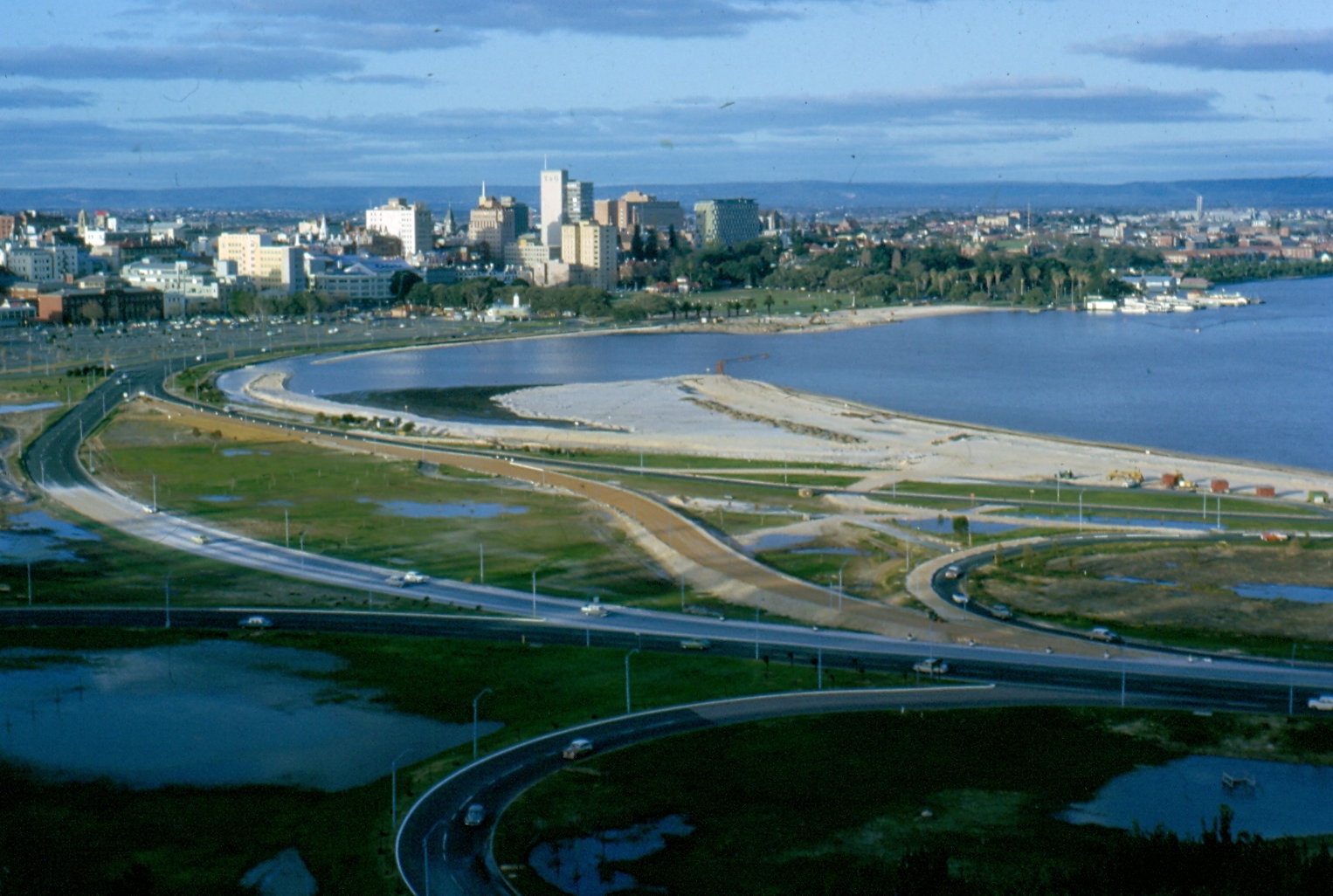
Land reclamation, often known as reclamation, and also known as land fill (not to be confused with a waste landfill), is the process of creating new land from oceans, seas, riverbeds or lake beds. The land reclaimed is known as reclamation ground, reclaimed land, or land fill.
In ancient Egypt, the rulers of the Twelfth Dynasty (c. 2000–1800 BC) undertook a far-sighted land reclamation scheme to increase agricultural output. They constructed levees and canals to connect the Faiyum with the Bahr Yussef waterway, diverting water that would have flowed into Lake Moeris and causing gradual evaporation around the lake's edges, creating new farmland from the reclaimed land. A similar land reclamation system using dams and drainage canals was used in the Greek Copaic Basin during the Middle Helladic Period (c. 1900–1600 BC). Another early large-scale project was the Beemster Polder in the Netherlands, adding 70 square kilometres (27 sq mi) of land in 1612. In Hong Kong, the Praya Reclamation Scheme added 20 to 24 hectares (50 to 60 acres) of land in 1890 during the second phase of construction. It was one of the most ambitious projects undertaken during the era of colonial Hong Kong. Some 20% of land in the Tokyo Bay area has been reclaimed, most notably Odaiba artificial island. The city of Rio de Janeiro was largely built on reclaimed land, as was Wellington, New Zealand.
Land reclamation can be achieved by a number of different methods. The simplest method involves filling the area with large amounts of heavy rock and/or cement, then filling with clay and dirt until the desired height is reached. The process is called "infilling" and the material used to fill the space is generally called "infill". Draining of submerged wetlands is often used to reclaim land for agricultural use. Deep cement mixing is used typically in situations in which the material displaced by either dredging or draining may be contaminated and hence needs to be contained. Land dredging is also another method of land reclamation. It is the removal of sediments and debris from the bottom of a body of water. It is commonly used for maintaining reclaimed land masses as sedimentation, a natural process, fills channels and harbors.


Hub AI
Land reclamation AI simulator
(@Land reclamation_simulator)
Land reclamation
Land reclamation, often known as reclamation, and also known as land fill (not to be confused with a waste landfill), is the process of creating new land from oceans, seas, riverbeds or lake beds. The land reclaimed is known as reclamation ground, reclaimed land, or land fill.
In ancient Egypt, the rulers of the Twelfth Dynasty (c. 2000–1800 BC) undertook a far-sighted land reclamation scheme to increase agricultural output. They constructed levees and canals to connect the Faiyum with the Bahr Yussef waterway, diverting water that would have flowed into Lake Moeris and causing gradual evaporation around the lake's edges, creating new farmland from the reclaimed land. A similar land reclamation system using dams and drainage canals was used in the Greek Copaic Basin during the Middle Helladic Period (c. 1900–1600 BC). Another early large-scale project was the Beemster Polder in the Netherlands, adding 70 square kilometres (27 sq mi) of land in 1612. In Hong Kong, the Praya Reclamation Scheme added 20 to 24 hectares (50 to 60 acres) of land in 1890 during the second phase of construction. It was one of the most ambitious projects undertaken during the era of colonial Hong Kong. Some 20% of land in the Tokyo Bay area has been reclaimed, most notably Odaiba artificial island. The city of Rio de Janeiro was largely built on reclaimed land, as was Wellington, New Zealand.
Land reclamation can be achieved by a number of different methods. The simplest method involves filling the area with large amounts of heavy rock and/or cement, then filling with clay and dirt until the desired height is reached. The process is called "infilling" and the material used to fill the space is generally called "infill". Draining of submerged wetlands is often used to reclaim land for agricultural use. Deep cement mixing is used typically in situations in which the material displaced by either dredging or draining may be contaminated and hence needs to be contained. Land dredging is also another method of land reclamation. It is the removal of sediments and debris from the bottom of a body of water. It is commonly used for maintaining reclaimed land masses as sedimentation, a natural process, fills channels and harbors.
Recent media