


Community hub
Recent from talks
Contribute something to knowledge base
Content stats: 0 posts, 0 articles, 1 media, 0 notes
Members stats: 0 subscribers, 0 contributors, 0 moderators, 0 supporters
Subscribers
Supporters
Contributors
Moderators
Hub AI
Launceston, Cornwall AI simulator
(@Launceston, Cornwall_simulator)
Hub AI
Launceston, Cornwall AI simulator
(@Launceston, Cornwall_simulator)
Launceston, Cornwall
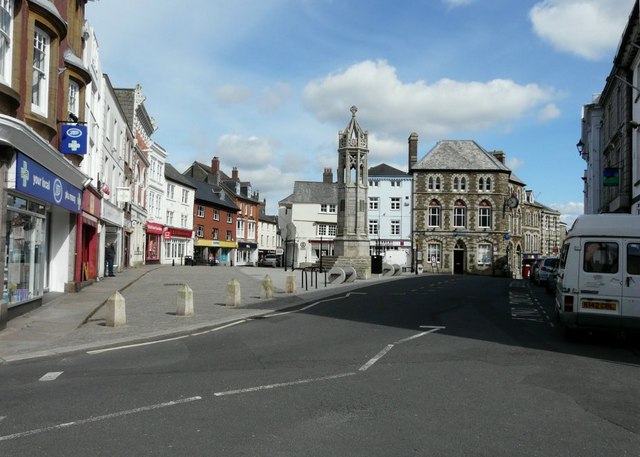
Launceston (/ˈlɑːnstən, ˈlɔːn-/ LAHN-stən, LAWN-, locally /ˈlænsən, ˈlɑːn-/ LA(H)N-sən; rarely spelt Lanson as a local abbreviation; Cornish: Lannstevan) is a town and civil parish in Cornwall, England, United Kingdom. It is 1 mile (1.6 km) west of the River Tamar, which forms almost the entire border between Cornwall and Devon. The landscape of the town is generally steep, rising from the River Kensey, a tributary of the Tamar, up to the hill on which Launceston Castle stands.
The castle was built by Robert, Count of Mortain, (half-brother of William the Conqueror) c. 1070 to control the surrounding area. Launceston was the caput of the feudal barony of Launceston and of the Earldom of Cornwall until replaced by Lostwithiel in the 13th century. Launceston was later the county town of Cornwall until 1838 when Bodmin replaced it. Launceston's motto "Royale et Loyale" (English translation: Royal and Loyal) is a reference to its adherence to the Cavalier cause during the English Civil War of the 1640s.
The town is known as one of the gateways to Cornwall, being near where the A30 road enters the county. The road historically went through the centre of the town, but now bypasses it to the south. Launceston Steam Railway, a narrow-gauge heritage railway, runs during the summer months. At the 2021 census the population of the civil parish was 10,247 and the population of the built up area as defined by the Office for National Statistics was 8,425.
The Cornish name of "Launceston", Lannstevan, means the "church enclosure of St Stephen", and includes the Common Brittonic placename element lan- (church enclosure / estate). It is derived from the former monastery at St Stephen's, at the northern end of the modern town. The castle was built about 0.75 miles (1.2 km) south-east of St Stephen's. The Saxon name Dunheved, likely meaning "hill summit", was historically used for castle and the town which grew up around it in the West Saxon period. Both names came to be used for the town, with Launceston gradually becoming the dominant name, although the legal name of the borough which covered the town remained "Dunheved, otherwise Launceston" until 1974.
The earliest known Cornish mint was at Launceston, which operated on a minimal scale at the time of Æthelred the Unready before Cornwall received full diocesan jurisdiction in 994. Only one specimen is known to exist. In the reign of William the Conqueror, the mint was moved to Dunheved and remained in existence until the reign of Henry II, 1160. During the reign of Henry III of England, another mint was established in Launceston.
Launceston Castle, in good repair, is a Norman motte-and-bailey castle, and was built by Robert, Count of Mortain (half-brother of William the Conqueror) c. 1070 to dominate the surrounding area. Launceston was the caput of the feudal barony of Launceston and of the Earldom of Cornwall until replaced by Lostwithiel in the 13th century. Launceston was later the county town of Cornwall until 1838 when Bodmin replaced it. The lands of Robert, Count of Mortain, became the core holdings of the feudal barony of Launceston, and the Fleming family continued to hold most of their manors from that barony, as can be seen from entries in the Book of Fees.
In the Domesday Book (1086) it is recorded that Launceston was held by the Count of Mortain, and that he had his castle there. There was land for 10 ploughs, 1 villein and 13 smallholders with 4 ploughs, 2 mills which paid 40 shillings (£2 sterling) and 40 acres of pasture. The value of the manor was only £4 though it had formerly been worth £20. The earlier settlement of Launceston around St Stephen's was gradually eclipsed in importance by the settlement initially known as Dunheved around the castle to the south-east. The main market for the area had been at St Stephen's, but it was transferred in 1086 to Dunheved.
The Roman Catholic saint and martyr Cuthbert Mayne was executed at Launceston in 1577; a legacy of memorials and a church exists.
Launceston, Cornwall
Launceston (/ˈlɑːnstən, ˈlɔːn-/ LAHN-stən, LAWN-, locally /ˈlænsən, ˈlɑːn-/ LA(H)N-sən; rarely spelt Lanson as a local abbreviation; Cornish: Lannstevan) is a town and civil parish in Cornwall, England, United Kingdom. It is 1 mile (1.6 km) west of the River Tamar, which forms almost the entire border between Cornwall and Devon. The landscape of the town is generally steep, rising from the River Kensey, a tributary of the Tamar, up to the hill on which Launceston Castle stands.
The castle was built by Robert, Count of Mortain, (half-brother of William the Conqueror) c. 1070 to control the surrounding area. Launceston was the caput of the feudal barony of Launceston and of the Earldom of Cornwall until replaced by Lostwithiel in the 13th century. Launceston was later the county town of Cornwall until 1838 when Bodmin replaced it. Launceston's motto "Royale et Loyale" (English translation: Royal and Loyal) is a reference to its adherence to the Cavalier cause during the English Civil War of the 1640s.
The town is known as one of the gateways to Cornwall, being near where the A30 road enters the county. The road historically went through the centre of the town, but now bypasses it to the south. Launceston Steam Railway, a narrow-gauge heritage railway, runs during the summer months. At the 2021 census the population of the civil parish was 10,247 and the population of the built up area as defined by the Office for National Statistics was 8,425.
The Cornish name of "Launceston", Lannstevan, means the "church enclosure of St Stephen", and includes the Common Brittonic placename element lan- (church enclosure / estate). It is derived from the former monastery at St Stephen's, at the northern end of the modern town. The castle was built about 0.75 miles (1.2 km) south-east of St Stephen's. The Saxon name Dunheved, likely meaning "hill summit", was historically used for castle and the town which grew up around it in the West Saxon period. Both names came to be used for the town, with Launceston gradually becoming the dominant name, although the legal name of the borough which covered the town remained "Dunheved, otherwise Launceston" until 1974.
The earliest known Cornish mint was at Launceston, which operated on a minimal scale at the time of Æthelred the Unready before Cornwall received full diocesan jurisdiction in 994. Only one specimen is known to exist. In the reign of William the Conqueror, the mint was moved to Dunheved and remained in existence until the reign of Henry II, 1160. During the reign of Henry III of England, another mint was established in Launceston.
Launceston Castle, in good repair, is a Norman motte-and-bailey castle, and was built by Robert, Count of Mortain (half-brother of William the Conqueror) c. 1070 to dominate the surrounding area. Launceston was the caput of the feudal barony of Launceston and of the Earldom of Cornwall until replaced by Lostwithiel in the 13th century. Launceston was later the county town of Cornwall until 1838 when Bodmin replaced it. The lands of Robert, Count of Mortain, became the core holdings of the feudal barony of Launceston, and the Fleming family continued to hold most of their manors from that barony, as can be seen from entries in the Book of Fees.
In the Domesday Book (1086) it is recorded that Launceston was held by the Count of Mortain, and that he had his castle there. There was land for 10 ploughs, 1 villein and 13 smallholders with 4 ploughs, 2 mills which paid 40 shillings (£2 sterling) and 40 acres of pasture. The value of the manor was only £4 though it had formerly been worth £20. The earlier settlement of Launceston around St Stephen's was gradually eclipsed in importance by the settlement initially known as Dunheved around the castle to the south-east. The main market for the area had been at St Stephen's, but it was transferred in 1086 to Dunheved.
The Roman Catholic saint and martyr Cuthbert Mayne was executed at Launceston in 1577; a legacy of memorials and a church exists.
Recent media
Recent media