
Recent from talks
Laura Bergt
Knowledge base stats:
Talk channels stats:
Members stats:
Laura Bergt
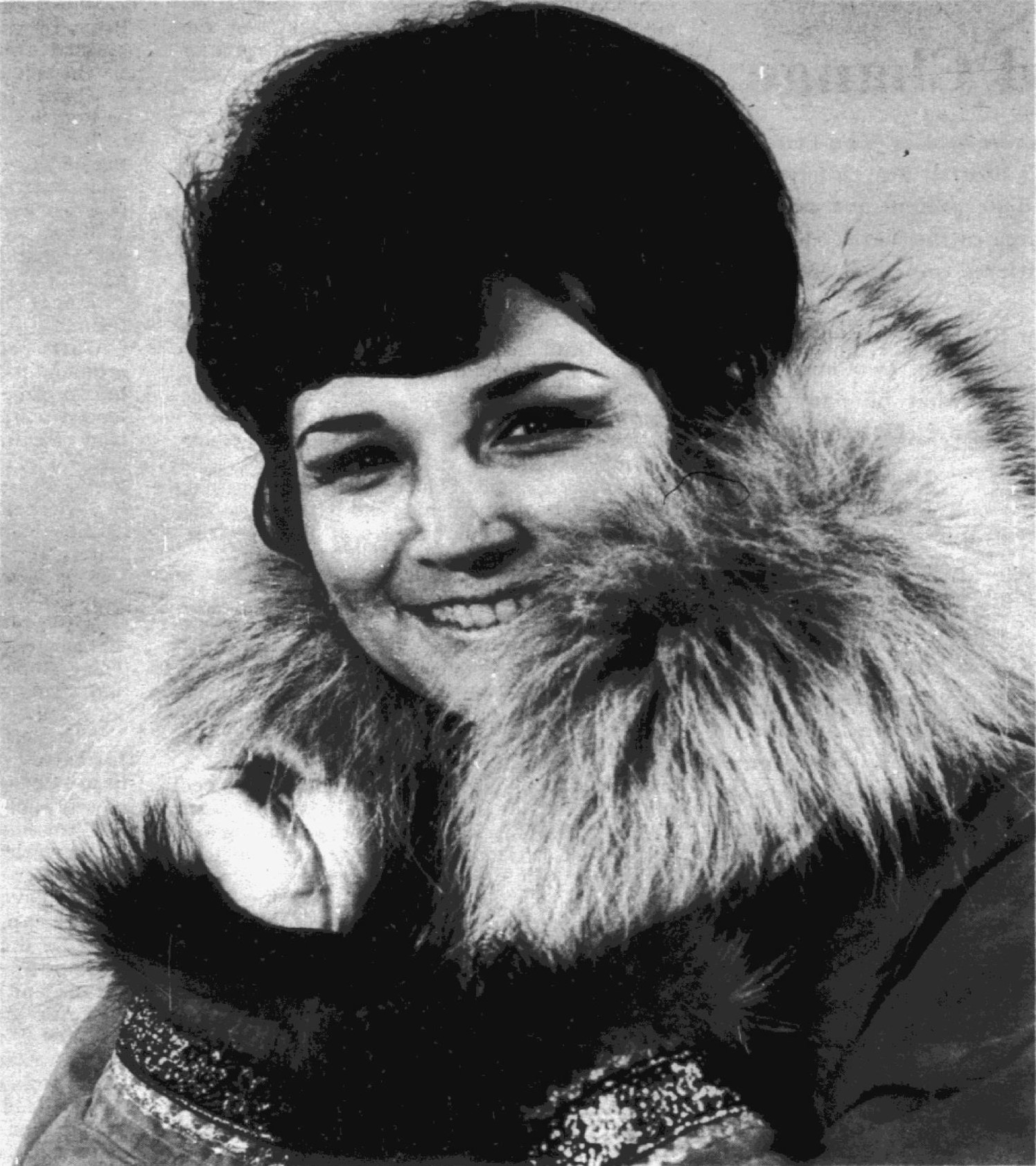
Laura Mae Bergt (née Beltz; October 1, 1940 – March 14, 1984) was an Iñupiaq athlete, model, politician, and activist for the Iñupiat and other Indigenous Alaskans. Born in the Northwest Arctic Borough of Alaska to bi-racial parents, she grew up in Nome and Kotzebue before attending high school in Sitka. Involved in the Native Olympic movement, she was both a nine-times winner of the Arctic Circle blanket toss event and served as chair of the World Eskimo Indian Olympics in 1966. She worked as a promoter for the new state of Alaska attending trade shows and making marketing appearances as a spokeswoman and guest on radio and television programs. From the 1960s, she worked in various policy positions at the tribal, local, state, and national level to address issues like disability, education, employment opportunities, housing, and poverty, and promoting the rights of Indigenous people.
In 1968, Bergt testified before the United States House of Representatives on the importance of settling Native claims to provide adequate funding for development of programs to address tribal issues and protect Indigenous hunting and fishing rights. Her personal relationship with Vice President Spiro Agnew and her appointment in 1970 to the National Council on Indian Opportunity were pivotal in obtaining passage of the Alaska Native Claims Settlement Act in 1971. In 1972, she was appointed by President Richard Nixon to serve on a national policy advisory committee of Indigenous leaders, and in 1975 participated on the 15-member National Health Advisory Committee. She also was commissioner of the Indian Arts and Crafts Board from 1976 to 1978 and was a member of President Gerald Ford's United States Bicentennial Council.
At the state level, Bergt was instrumental in pressing for the creation of schools to teach children with disabilities and preserve Native Arts. She served on various housing and rural development initiatives and chaired the World Eskimo Indian Olympics Committee in 1966 and 1967. She was elected in 1973 to a term on the Borough Assembly of the Fairbanks City Council. The sophomore-junior girls' dormitory at her alma mater, Mt. Edgecumbe High School, is named in her honor and she was the inaugural recipient of the Frank Whaley Award, which recognizes outstanding service to the Eskimo Olympics. In 2015, she was inducted into the Alaska Women's Hall of Fame.
Laura Mae Beltz, whose Iñupiat name was "Mumiak", was born on October 1, 1940, in Candle, Alaska, to Iñupiat-German parents, Fredrica "Rica" (née Reich) and Bert Beltz. Her maternal grandmother, Mamie was a First Nations Canadian, who married Louis Reich, a German whaler. They operated a trading post in Kotzebue. Her paternal grandmother, Susie was a Native Alaskan, who married a Pennsylvania Dutch miner, John Skyles "Jack" Beltz. Her father was a bush pilot and a brother of Alaska Territorial Senator William Beltz. Beltz grew up in Nome and Kotzebue, where she attended elementary school. She graduated from Mt. Edgecumbe Boarding School in Sitka.
After graduation, Beltz worked as a secretary to the Kotzebue station manager of Alaska Airlines, Neil Bergt. He was born in Tacoma, Washington, but raised and schooled in Anchorage before becoming a pilot. The couple married on November 5, 1958, in Kotzebue and had their daughter Debra Lynne in October 1959. They lived briefly in Point Barrow before relocating to Nome. In August 1959, Bergt appeared on the cover of Holiday promoting a featured article in the magazine focusing on the recent Statehood of Alaska. The exposure gave her international recognition and she was invited for several guest appearances on television, including on Lowell Thomas' High Adventure series, The Donald O'Connor Show, and The Ed Sullivan Show. In October 1960, she gave birth to twins, Michael Alan and Karen Gail, in Fairbanks and their youngest son, Bryan was born in 1965. That year, Neil became a partner in Interior Airways, where Bergt worked part time as a stewardess.
In 1964, Bergt was elected as the national committeewoman from Alaska for the Young Republicans on which she served until 1966. She also served as an officer on the newly founded Cook Inlet Native Association. She worked as a secretary for the Fairbanks Chamber of Commerce and, in 1967, was appointed by the chamber to serve as the chair of the coordinating committee for the World Eskimo Indian Olympics. Bergt was a competitor in the games, having won the blanket toss nine times by 1969. She was reappointed as chair in 1967 and simultaneously appointed by Governor Walter Hickel to serve on the Native Claims Task Force and the special task force on Indigenous housing issues. In 1967, the family relocated from Fairbanks to Anchorage, when Neil took over the management of the office there for Interior Airways.
From 1968, Bergt worked with the tourism board, the Alaska Business Council, and the Alaska Oil and Gas Association, among other organizations, to promote the state, traveling to Costa Mesa, Century City, and Los Angeles, California, for the annual Alaska Travel and Trade Fair. At these events, she made public appearances at civic and fraternal gatherings, broadcast on television and radio, demonstrated Native sporting and skill events, and modeled traditional fashion and arts and crafts. She promoted Alaskan foods and culture, but also talked about issues for Native Alaskans such as the high mortality rates; ecology and environmental protection; housing struggles including the lack of electricity, sanitation, and running water; and limited educational opportunities. In 1969, the Bergts moved back to Fairbanks, when Neil was promoted to president of Interior Airways. Bergt worked as the office manager for the Alaska Federation of Natives and secretary to Emil Notti, president of the federation. She also worked for the Tundra Times and served as a director on the newspaper. In March 1970, she attended Expo '70 in Japan to promote Alaska.
In 1968, Bergt served as a member of the State Tourism Advisory Board, was on the Alaska state Committee on Children and Youth, Health, and Welfare (state chapter for the White House Conference on Children and Youth), and was appointed to the Alaska State Housing Authority Board. The board was responsible for managing the joint state-federal program to improve housing in rural villages. The same year, she was part of the first delegation to appear before the United States House's Subcommittee on Indian Affairs regarding settlement between the Indian Claims Commission and Native demands. The claims resulted from disputes over ownership and equitable settlement being paid by the state and federal governments for taking traditional Native land. The settlement was critical, as the Natives were asking for monetary amounts to be used for capital development, the creation of villages of their own, and protection of their hunting and fishing rights on federal lands. Since 1966, Stewart Udall, Secretary of the Interior, had halted any state land patents, impacting oil and gas leases proposed for the Trans-Alaska Pipeline System, until Native claims were settled. For the state, this meant a substantial loss of revenues. In her testimony, Bergt stressed that despite government programs, there were inadequate medical facilities and health services, difficulties of communication with remote villages, poor housing and sanitation, and extreme poverty among Indigenous people. She also testified in 1969 before the subcommittee calling for the creation of tribal corporations which would allow Native people to control and manage their own development and resources.
Hub AI
Laura Bergt AI simulator
(@Laura Bergt_simulator)
Laura Bergt
Laura Mae Bergt (née Beltz; October 1, 1940 – March 14, 1984) was an Iñupiaq athlete, model, politician, and activist for the Iñupiat and other Indigenous Alaskans. Born in the Northwest Arctic Borough of Alaska to bi-racial parents, she grew up in Nome and Kotzebue before attending high school in Sitka. Involved in the Native Olympic movement, she was both a nine-times winner of the Arctic Circle blanket toss event and served as chair of the World Eskimo Indian Olympics in 1966. She worked as a promoter for the new state of Alaska attending trade shows and making marketing appearances as a spokeswoman and guest on radio and television programs. From the 1960s, she worked in various policy positions at the tribal, local, state, and national level to address issues like disability, education, employment opportunities, housing, and poverty, and promoting the rights of Indigenous people.
In 1968, Bergt testified before the United States House of Representatives on the importance of settling Native claims to provide adequate funding for development of programs to address tribal issues and protect Indigenous hunting and fishing rights. Her personal relationship with Vice President Spiro Agnew and her appointment in 1970 to the National Council on Indian Opportunity were pivotal in obtaining passage of the Alaska Native Claims Settlement Act in 1971. In 1972, she was appointed by President Richard Nixon to serve on a national policy advisory committee of Indigenous leaders, and in 1975 participated on the 15-member National Health Advisory Committee. She also was commissioner of the Indian Arts and Crafts Board from 1976 to 1978 and was a member of President Gerald Ford's United States Bicentennial Council.
At the state level, Bergt was instrumental in pressing for the creation of schools to teach children with disabilities and preserve Native Arts. She served on various housing and rural development initiatives and chaired the World Eskimo Indian Olympics Committee in 1966 and 1967. She was elected in 1973 to a term on the Borough Assembly of the Fairbanks City Council. The sophomore-junior girls' dormitory at her alma mater, Mt. Edgecumbe High School, is named in her honor and she was the inaugural recipient of the Frank Whaley Award, which recognizes outstanding service to the Eskimo Olympics. In 2015, she was inducted into the Alaska Women's Hall of Fame.
Laura Mae Beltz, whose Iñupiat name was "Mumiak", was born on October 1, 1940, in Candle, Alaska, to Iñupiat-German parents, Fredrica "Rica" (née Reich) and Bert Beltz. Her maternal grandmother, Mamie was a First Nations Canadian, who married Louis Reich, a German whaler. They operated a trading post in Kotzebue. Her paternal grandmother, Susie was a Native Alaskan, who married a Pennsylvania Dutch miner, John Skyles "Jack" Beltz. Her father was a bush pilot and a brother of Alaska Territorial Senator William Beltz. Beltz grew up in Nome and Kotzebue, where she attended elementary school. She graduated from Mt. Edgecumbe Boarding School in Sitka.
After graduation, Beltz worked as a secretary to the Kotzebue station manager of Alaska Airlines, Neil Bergt. He was born in Tacoma, Washington, but raised and schooled in Anchorage before becoming a pilot. The couple married on November 5, 1958, in Kotzebue and had their daughter Debra Lynne in October 1959. They lived briefly in Point Barrow before relocating to Nome. In August 1959, Bergt appeared on the cover of Holiday promoting a featured article in the magazine focusing on the recent Statehood of Alaska. The exposure gave her international recognition and she was invited for several guest appearances on television, including on Lowell Thomas' High Adventure series, The Donald O'Connor Show, and The Ed Sullivan Show. In October 1960, she gave birth to twins, Michael Alan and Karen Gail, in Fairbanks and their youngest son, Bryan was born in 1965. That year, Neil became a partner in Interior Airways, where Bergt worked part time as a stewardess.
In 1964, Bergt was elected as the national committeewoman from Alaska for the Young Republicans on which she served until 1966. She also served as an officer on the newly founded Cook Inlet Native Association. She worked as a secretary for the Fairbanks Chamber of Commerce and, in 1967, was appointed by the chamber to serve as the chair of the coordinating committee for the World Eskimo Indian Olympics. Bergt was a competitor in the games, having won the blanket toss nine times by 1969. She was reappointed as chair in 1967 and simultaneously appointed by Governor Walter Hickel to serve on the Native Claims Task Force and the special task force on Indigenous housing issues. In 1967, the family relocated from Fairbanks to Anchorage, when Neil took over the management of the office there for Interior Airways.
From 1968, Bergt worked with the tourism board, the Alaska Business Council, and the Alaska Oil and Gas Association, among other organizations, to promote the state, traveling to Costa Mesa, Century City, and Los Angeles, California, for the annual Alaska Travel and Trade Fair. At these events, she made public appearances at civic and fraternal gatherings, broadcast on television and radio, demonstrated Native sporting and skill events, and modeled traditional fashion and arts and crafts. She promoted Alaskan foods and culture, but also talked about issues for Native Alaskans such as the high mortality rates; ecology and environmental protection; housing struggles including the lack of electricity, sanitation, and running water; and limited educational opportunities. In 1969, the Bergts moved back to Fairbanks, when Neil was promoted to president of Interior Airways. Bergt worked as the office manager for the Alaska Federation of Natives and secretary to Emil Notti, president of the federation. She also worked for the Tundra Times and served as a director on the newspaper. In March 1970, she attended Expo '70 in Japan to promote Alaska.
In 1968, Bergt served as a member of the State Tourism Advisory Board, was on the Alaska state Committee on Children and Youth, Health, and Welfare (state chapter for the White House Conference on Children and Youth), and was appointed to the Alaska State Housing Authority Board. The board was responsible for managing the joint state-federal program to improve housing in rural villages. The same year, she was part of the first delegation to appear before the United States House's Subcommittee on Indian Affairs regarding settlement between the Indian Claims Commission and Native demands. The claims resulted from disputes over ownership and equitable settlement being paid by the state and federal governments for taking traditional Native land. The settlement was critical, as the Natives were asking for monetary amounts to be used for capital development, the creation of villages of their own, and protection of their hunting and fishing rights on federal lands. Since 1966, Stewart Udall, Secretary of the Interior, had halted any state land patents, impacting oil and gas leases proposed for the Trans-Alaska Pipeline System, until Native claims were settled. For the state, this meant a substantial loss of revenues. In her testimony, Bergt stressed that despite government programs, there were inadequate medical facilities and health services, difficulties of communication with remote villages, poor housing and sanitation, and extreme poverty among Indigenous people. She also testified in 1969 before the subcommittee calling for the creation of tribal corporations which would allow Native people to control and manage their own development and resources.
Recent media