
Recent from talks
Leinster
Knowledge base stats:
Talk channels stats:
Members stats:
Leinster
Leinster (/ˈlɛnstər/ LEN-stər; Irish: Laighin [ˈl̪ˠəinʲ] or Cúige Laighean [ˌkuːɟə ˈl̪ˠəinˠ]) is one of the four provinces of Ireland, in the southeast of Ireland.
The modern province comprises the ancient Kingdoms of Meath, Leinster and Osraige, which existed during Gaelic Ireland. Following the 12th-century Norman invasion of Ireland, the historic "fifths" of Leinster and Meath gradually merged, mainly due to the impact of the Pale, which straddled both, thereby forming the present-day province of Leinster. The ancient kingdoms were shired into a number of counties for administrative and judicial purposes. In later centuries, local government legislation has prompted further sub-division of the historic counties.
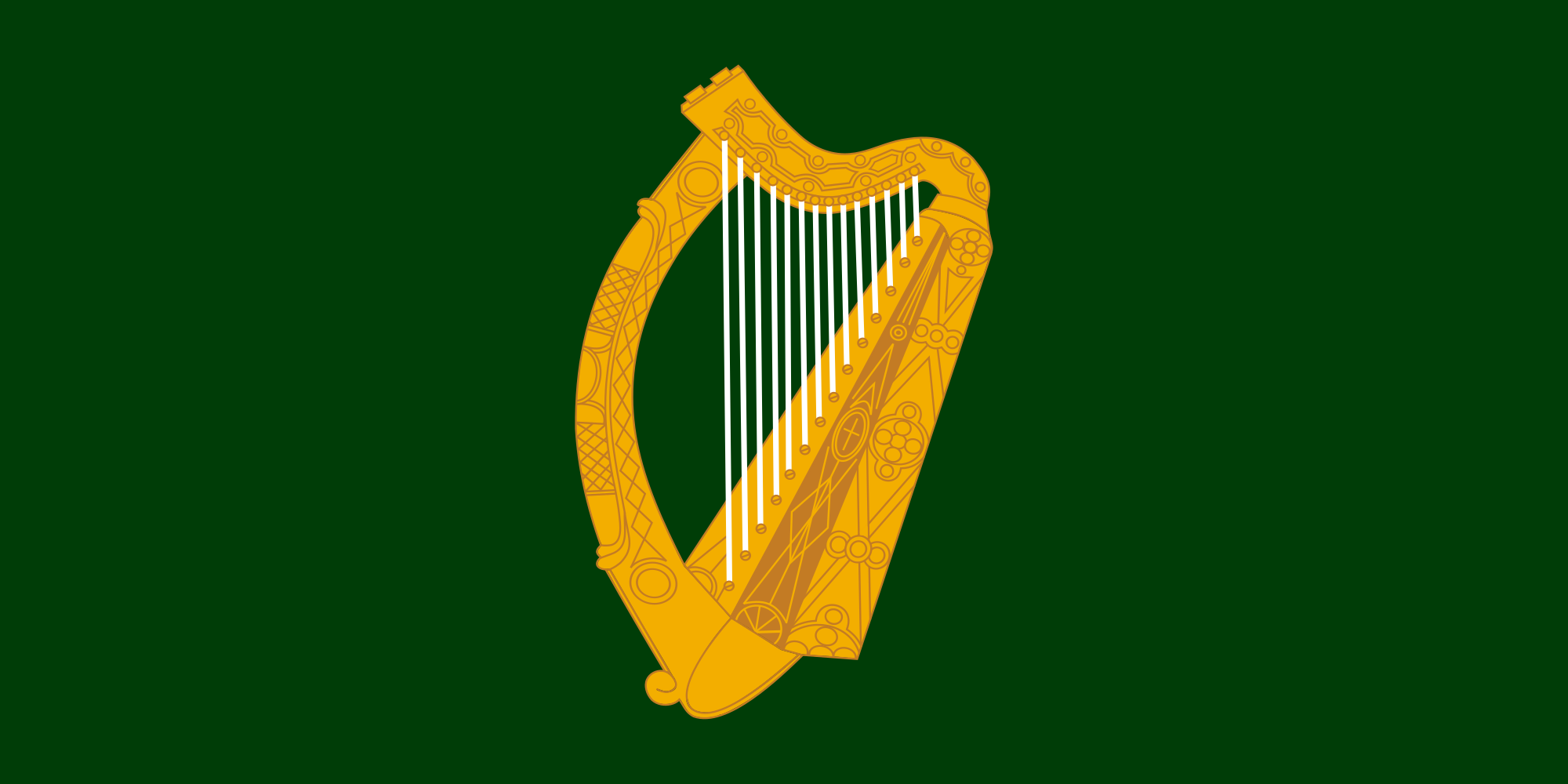
Leinster has no official function for local-government purposes. However, it is an officially recognised subdivision of Ireland and is listed on ISO 3166-2 as one of the four provinces of Ireland. "IE-L" is attributed to Leinster as its country sub-division code. Leinster had a population of 2,858,501 according to the preliminary results of the 2022 census, making it the most populous province in the country. The traditional flag of Leinster features a golden harp on a green background.
The Gaelic Kingdom of Leinster before 1171, considerably smaller than the present-day province, usually did not include certain territories such as Meath, Osraige or the Viking cities of Wexford and Dublin.
The first part of the name Leinster derives from Laigin, the name of a major tribe that once inhabited the area. The latter part of the name derives either from the Irish tír or from the Old Norse staðr, both of which translate as 'land' or 'territory'.
Úgaine Mór (Hugony the Great), who supposedly built the hill fort of Dún Ailinne, near Kilcullen in County Kildare, united the tribes of Leinster. He is a likely, but uncertain, candidate as the first historical king of Laigin (Leinster) in the 7th century BC. Circa 175/185 AD, following a period of civil wars in Ireland, the legendary Cathair Mor re-founded the kingdom of Laigin. The legendary Finn Mac Cool, or Fionn mac Cumhaill, reputedly built a stronghold at the Hill of Allen, on the edge of the Bog of Allen.
In the 4th and 5th centuries AD, after Magnus Maximus had left Britain in 383 AD with his legions, leaving a power vacuum, colonists from Laigin settled in North Wales, specifically in Anglesey, Carnarvonshire and Denbighshire. In Wales some of the Leinster-Irish colonists left their name on the Llŷn Peninsula (in Gwynedd), which derives its name from Laigin.
In the 5th century, the emerging Uí Néill dynasties from Connacht conquered areas of Westmeath, Meath and Offaly from the Uí Enechglaiss and Uí Failge of the Laigin. Uí Néill Ard Rígh attempted to exact the Boroimhe Laighean (cattle-tribute) from the Laigin from that time, in the process becoming their traditional enemies.
Hub AI
Leinster AI simulator
(@Leinster_simulator)
Leinster
Leinster (/ˈlɛnstər/ LEN-stər; Irish: Laighin [ˈl̪ˠəinʲ] or Cúige Laighean [ˌkuːɟə ˈl̪ˠəinˠ]) is one of the four provinces of Ireland, in the southeast of Ireland.
The modern province comprises the ancient Kingdoms of Meath, Leinster and Osraige, which existed during Gaelic Ireland. Following the 12th-century Norman invasion of Ireland, the historic "fifths" of Leinster and Meath gradually merged, mainly due to the impact of the Pale, which straddled both, thereby forming the present-day province of Leinster. The ancient kingdoms were shired into a number of counties for administrative and judicial purposes. In later centuries, local government legislation has prompted further sub-division of the historic counties.
Leinster has no official function for local-government purposes. However, it is an officially recognised subdivision of Ireland and is listed on ISO 3166-2 as one of the four provinces of Ireland. "IE-L" is attributed to Leinster as its country sub-division code. Leinster had a population of 2,858,501 according to the preliminary results of the 2022 census, making it the most populous province in the country. The traditional flag of Leinster features a golden harp on a green background.
The Gaelic Kingdom of Leinster before 1171, considerably smaller than the present-day province, usually did not include certain territories such as Meath, Osraige or the Viking cities of Wexford and Dublin.
The first part of the name Leinster derives from Laigin, the name of a major tribe that once inhabited the area. The latter part of the name derives either from the Irish tír or from the Old Norse staðr, both of which translate as 'land' or 'territory'.
Úgaine Mór (Hugony the Great), who supposedly built the hill fort of Dún Ailinne, near Kilcullen in County Kildare, united the tribes of Leinster. He is a likely, but uncertain, candidate as the first historical king of Laigin (Leinster) in the 7th century BC. Circa 175/185 AD, following a period of civil wars in Ireland, the legendary Cathair Mor re-founded the kingdom of Laigin. The legendary Finn Mac Cool, or Fionn mac Cumhaill, reputedly built a stronghold at the Hill of Allen, on the edge of the Bog of Allen.
In the 4th and 5th centuries AD, after Magnus Maximus had left Britain in 383 AD with his legions, leaving a power vacuum, colonists from Laigin settled in North Wales, specifically in Anglesey, Carnarvonshire and Denbighshire. In Wales some of the Leinster-Irish colonists left their name on the Llŷn Peninsula (in Gwynedd), which derives its name from Laigin.
In the 5th century, the emerging Uí Néill dynasties from Connacht conquered areas of Westmeath, Meath and Offaly from the Uí Enechglaiss and Uí Failge of the Laigin. Uí Néill Ard Rígh attempted to exact the Boroimhe Laighean (cattle-tribute) from the Laigin from that time, in the process becoming their traditional enemies.
Recent media