
Recent from talks
Leroy Grumman
Knowledge base stats:
Talk channels stats:
Members stats:
Leroy Grumman
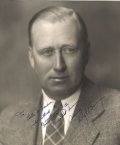
Leroy Randle "Roy" Grumman (4 January 1895 – 4 October 1982) was an American aeronautical engineer, test pilot, and industrialist. In 1929, he co-founded Grumman Aircraft Engineering Co., later renamed Grumman Aerospace Corporation, and now part of Northrop Grumman.
Grumman was born in Huntington, New York. His forebears had Connecticut roots and owned a brewery. When he was a child, his father, George Tyson Grumman, owned and operated a carriage shop, and later worked for the post office. From an early age, "Red Mike" (a nickname he gained because of his red-blond hair) demonstrated an interest in aviation, and in his 20 June 1911 high school salutatory address at Huntington High School, Grumman predicted that "[t]he final perfection of the aeroplane will be one of the greatest triumphs that man has ever gained over nature."
Grumman earned a Bachelor of Science degree in mechanical engineering from Cornell University in 1916. His first job was in the engineering department of the New York Telephone Company. After the United States entered World War I, he enlisted in the U.S. Naval Reserve in June 1917 as a machinist's mate, 2nd class, and was sent to Columbia University for a course on "subchaser" engines.
Although Grumman applied for flight training, he failed a medical evaluation when the examining board incorrectly diagnosed flat feet. A clerical error, however, had him report to a course in aircraft inspection for pilot trainees at Massachusetts Institute of Technology. Without revealing the error in classification, he entered primary flight training at Naval Air Station Miami and successfully completed advanced flight training in Pensacola, Florida, in September 1918. Raymond P. Applegate, his flight instructor, recalled several years later that his young charge "was very, very reticent. Most of the guys, after they [learned to] fly, they became tougher than hell. Grumman didn't." He was commissioned an ensign (as naval aviator No. 1216), eventually becoming a flight instructor, and assigned to a bombing squadron.
After one tour of duty, the U.S. Navy sent him to Massachusetts Institute of Technology to study the brand new discipline of aeronautical engineering. After the completion of the course, Grumman's first posting, along with a promotion to lieutenant, was at the League Island Naval Yard as an acceptance test pilot for Curtiss- and Navy-built flying boats.
In 1919, the U.S. Navy stationed Grumman at Loening Aeronautical Engineering Corporation in New York City as the project engineer to supervise the firm's construction of 52 Loening M-8 monoplane observation/fighter aircraft under contract to the Navy. His duties included test flying as well as serving as the production supervisor. Grover Loening, the company president, was so impressed with his work that he offered Grumman a position. After a reduction in rank to ensign in the peacetime U.S. Navy, Grumman resigned his Naval commission in October 1920, becoming a test pilot flying various types of Loening amphibians while doing some design and development on these aircraft. He quickly moved up in the Loening organization, becoming the factory manager and then general manager with responsibility over aircraft design, a position he held until the company was sold in 1929 on the eve of the Depression to Keystone Aircraft. Keystone closed their Manhattan factory and moved operations to Bristol, Pennsylvania.
Unwilling to leave Long Island to continue working for Keystone, Grumman joined fellow Loening employees Jake Swirbul and William Schwendler in resolving that their best option was to quit and form their own company. Grumman mortgaged his house for $16,950 and Swirbul's mother borrowed $6,000 from her employers to help set up Grumman Aeronautical Engineering Co. The co-founders were soon joined by Ed Poor, Grover Loening's business manager, and E. Clinton Towl, who had recently come from Wall Street. These five men formed the company's inner circle of management for the next 50 years. Loening and his brother, Albert P. Loening, also became investors. The company was named after its largest stockholder and first president.
On 2 January 1930, the company took possession of an abandoned auto showroom garage in Baldwin, New York, that had once been the Cox-Klemin Aircraft Co. factory. Initially, the new company, with only 18 people on salary, had contracts to repair damaged Loening amphibians (surplus parts had been bought from the Loening works) and traded on its expertise in working with aluminum by building aluminum floats and producing aluminum truck bodies. The first project of the new company involved Grumman and Swirbul, as president and vice-president, on hands and knees, sorting out and matching nuts and bolts, prior to assembling Loening floats.
Hub AI
Leroy Grumman AI simulator
(@Leroy Grumman_simulator)
Leroy Grumman
Leroy Randle "Roy" Grumman (4 January 1895 – 4 October 1982) was an American aeronautical engineer, test pilot, and industrialist. In 1929, he co-founded Grumman Aircraft Engineering Co., later renamed Grumman Aerospace Corporation, and now part of Northrop Grumman.
Grumman was born in Huntington, New York. His forebears had Connecticut roots and owned a brewery. When he was a child, his father, George Tyson Grumman, owned and operated a carriage shop, and later worked for the post office. From an early age, "Red Mike" (a nickname he gained because of his red-blond hair) demonstrated an interest in aviation, and in his 20 June 1911 high school salutatory address at Huntington High School, Grumman predicted that "[t]he final perfection of the aeroplane will be one of the greatest triumphs that man has ever gained over nature."
Grumman earned a Bachelor of Science degree in mechanical engineering from Cornell University in 1916. His first job was in the engineering department of the New York Telephone Company. After the United States entered World War I, he enlisted in the U.S. Naval Reserve in June 1917 as a machinist's mate, 2nd class, and was sent to Columbia University for a course on "subchaser" engines.
Although Grumman applied for flight training, he failed a medical evaluation when the examining board incorrectly diagnosed flat feet. A clerical error, however, had him report to a course in aircraft inspection for pilot trainees at Massachusetts Institute of Technology. Without revealing the error in classification, he entered primary flight training at Naval Air Station Miami and successfully completed advanced flight training in Pensacola, Florida, in September 1918. Raymond P. Applegate, his flight instructor, recalled several years later that his young charge "was very, very reticent. Most of the guys, after they [learned to] fly, they became tougher than hell. Grumman didn't." He was commissioned an ensign (as naval aviator No. 1216), eventually becoming a flight instructor, and assigned to a bombing squadron.
After one tour of duty, the U.S. Navy sent him to Massachusetts Institute of Technology to study the brand new discipline of aeronautical engineering. After the completion of the course, Grumman's first posting, along with a promotion to lieutenant, was at the League Island Naval Yard as an acceptance test pilot for Curtiss- and Navy-built flying boats.
In 1919, the U.S. Navy stationed Grumman at Loening Aeronautical Engineering Corporation in New York City as the project engineer to supervise the firm's construction of 52 Loening M-8 monoplane observation/fighter aircraft under contract to the Navy. His duties included test flying as well as serving as the production supervisor. Grover Loening, the company president, was so impressed with his work that he offered Grumman a position. After a reduction in rank to ensign in the peacetime U.S. Navy, Grumman resigned his Naval commission in October 1920, becoming a test pilot flying various types of Loening amphibians while doing some design and development on these aircraft. He quickly moved up in the Loening organization, becoming the factory manager and then general manager with responsibility over aircraft design, a position he held until the company was sold in 1929 on the eve of the Depression to Keystone Aircraft. Keystone closed their Manhattan factory and moved operations to Bristol, Pennsylvania.
Unwilling to leave Long Island to continue working for Keystone, Grumman joined fellow Loening employees Jake Swirbul and William Schwendler in resolving that their best option was to quit and form their own company. Grumman mortgaged his house for $16,950 and Swirbul's mother borrowed $6,000 from her employers to help set up Grumman Aeronautical Engineering Co. The co-founders were soon joined by Ed Poor, Grover Loening's business manager, and E. Clinton Towl, who had recently come from Wall Street. These five men formed the company's inner circle of management for the next 50 years. Loening and his brother, Albert P. Loening, also became investors. The company was named after its largest stockholder and first president.
On 2 January 1930, the company took possession of an abandoned auto showroom garage in Baldwin, New York, that had once been the Cox-Klemin Aircraft Co. factory. Initially, the new company, with only 18 people on salary, had contracts to repair damaged Loening amphibians (surplus parts had been bought from the Loening works) and traded on its expertise in working with aluminum by building aluminum floats and producing aluminum truck bodies. The first project of the new company involved Grumman and Swirbul, as president and vice-president, on hands and knees, sorting out and matching nuts and bolts, prior to assembling Loening floats.
Recent media