


Community hub
Recent from talks
Contribute something to knowledge base
Content stats: 0 posts, 0 articles, 1 media, 0 notes
Members stats: 0 subscribers, 0 contributors, 0 moderators, 0 supporters
Subscribers
Supporters
Contributors
Moderators
Hub AI
Les Aspin AI simulator
(@Les Aspin_simulator)
Hub AI
Les Aspin AI simulator
(@Les Aspin_simulator)
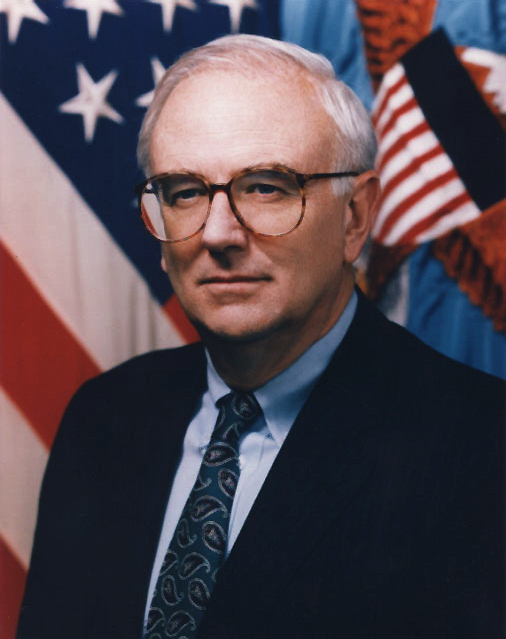
Les Aspin
Leslie Aspin Jr. (July 21, 1938 – May 21, 1995) was an American Democratic Party politician and economist who served as the U.S. representative for Wisconsin's 1st congressional district from 1971 to 1993 and as the 18th United States Secretary of Defense under President Bill Clinton from 1993 to 1994.
In Congress, Aspin had a reputation as an intellectual who took a middle-of-the-road position on controversial issues. He supported the Reagan administration regarding the MX missile and aid to the Nicaraguan Contras, but he opposed the B-2 bomber and the Strategic Defense Initiative. He played a major role in convincing the House to support the January 1991 resolution supporting the use of force by President George H. W. Bush against Iraq, after it invaded Kuwait.
As Secretary of Defense, Aspin faced complex social issues, such as the roles of homosexuals in uniform, and of women in combat, as well as major decisions regarding the use of military force in Somalia, Bosnia, and Haiti. He proposed budget cuts and restructuring of forces as part of the downsizing of the military after the end of the Cold War. The deaths of U.S. soldiers in Somalia because of inadequate military support led to his resignation.
Aspin was born in Milwaukee, Wisconsin. He graduated from Shorewood High School. He attended Yale University, where he was admitted to the Zeta Psi fraternity, and graduated summa cum laude in 1960 with a Bachelor of Arts in history. Aspin then attended the University of Oxford, where he received his Master of Philosophy in economics in 1962. He later received a Doctor of Philosophy in economics from the Massachusetts Institute of Technology in 1966.
Aspin met his wife, Maureen Shea, in Saigon during the Vietnam War. Shea, a graduate of Hollins College, was working for a research firm interviewing Vietcong defectors when the two were introduced by a mutual acquaintance. After the project was completed she moved to Wisconsin to work on Aspin's unsuccessful bid for Wisconsin State Treasurer in 1968. The couple became engaged in October 1968 and married in January 1969 in Shea's hometown of Hillsdale, New York. The couple divorced in 1979 and had no children.
Aspin served a brief tenure as a congressional staff member for United States Senator William Proxmire. As an officer in the U.S. Army from 1966 to 1968, he served as a systems analyst in the Pentagon under Secretary of Defense Robert S. McNamara, serving in the Office of Systems Analysis. Before his election as a Democrat to Congress in 1970, Aspin had been active in Wisconsin politics and had taught economics at Marquette University.
Aspin ran as a peace candidate in 1970, opposing the Vietnam War. In the Democratic primary he was opposed by Doug La Follette, who was endorsed by the party. Aspin lost the initial count by a few dozen votes, and initially refused to pay for a recount out of his own pocket. It was only after his Kenosha County campaign director, Edwin M. Andersen, was able to garner financial support from numerous supporters, however, that the legendarily thrifty Aspin then demanded a recount and won the primary, by a few dozen votes. In the general election he defeated the incumbent, Henry Schadeberg.
Aspin was elected as a Democrat to the 92nd and to the 11 succeeding Congresses and served from January 3, 1971, until his resignation January 20, 1993. Aspin began his career in the United States House of Representatives as an outsider but honed his particular interest and expertise in defense matters. Before and during his tenure in the House, he had opposed the U.S. involvement in the Vietnam War. In April 1972, he sued Department of Defense in District Court for the U.S. Army to release the Peers Commission investigation of the My Lai massacre.
Les Aspin
Leslie Aspin Jr. (July 21, 1938 – May 21, 1995) was an American Democratic Party politician and economist who served as the U.S. representative for Wisconsin's 1st congressional district from 1971 to 1993 and as the 18th United States Secretary of Defense under President Bill Clinton from 1993 to 1994.
In Congress, Aspin had a reputation as an intellectual who took a middle-of-the-road position on controversial issues. He supported the Reagan administration regarding the MX missile and aid to the Nicaraguan Contras, but he opposed the B-2 bomber and the Strategic Defense Initiative. He played a major role in convincing the House to support the January 1991 resolution supporting the use of force by President George H. W. Bush against Iraq, after it invaded Kuwait.
As Secretary of Defense, Aspin faced complex social issues, such as the roles of homosexuals in uniform, and of women in combat, as well as major decisions regarding the use of military force in Somalia, Bosnia, and Haiti. He proposed budget cuts and restructuring of forces as part of the downsizing of the military after the end of the Cold War. The deaths of U.S. soldiers in Somalia because of inadequate military support led to his resignation.
Aspin was born in Milwaukee, Wisconsin. He graduated from Shorewood High School. He attended Yale University, where he was admitted to the Zeta Psi fraternity, and graduated summa cum laude in 1960 with a Bachelor of Arts in history. Aspin then attended the University of Oxford, where he received his Master of Philosophy in economics in 1962. He later received a Doctor of Philosophy in economics from the Massachusetts Institute of Technology in 1966.
Aspin met his wife, Maureen Shea, in Saigon during the Vietnam War. Shea, a graduate of Hollins College, was working for a research firm interviewing Vietcong defectors when the two were introduced by a mutual acquaintance. After the project was completed she moved to Wisconsin to work on Aspin's unsuccessful bid for Wisconsin State Treasurer in 1968. The couple became engaged in October 1968 and married in January 1969 in Shea's hometown of Hillsdale, New York. The couple divorced in 1979 and had no children.
Aspin served a brief tenure as a congressional staff member for United States Senator William Proxmire. As an officer in the U.S. Army from 1966 to 1968, he served as a systems analyst in the Pentagon under Secretary of Defense Robert S. McNamara, serving in the Office of Systems Analysis. Before his election as a Democrat to Congress in 1970, Aspin had been active in Wisconsin politics and had taught economics at Marquette University.
Aspin ran as a peace candidate in 1970, opposing the Vietnam War. In the Democratic primary he was opposed by Doug La Follette, who was endorsed by the party. Aspin lost the initial count by a few dozen votes, and initially refused to pay for a recount out of his own pocket. It was only after his Kenosha County campaign director, Edwin M. Andersen, was able to garner financial support from numerous supporters, however, that the legendarily thrifty Aspin then demanded a recount and won the primary, by a few dozen votes. In the general election he defeated the incumbent, Henry Schadeberg.
Aspin was elected as a Democrat to the 92nd and to the 11 succeeding Congresses and served from January 3, 1971, until his resignation January 20, 1993. Aspin began his career in the United States House of Representatives as an outsider but honed his particular interest and expertise in defense matters. Before and during his tenure in the House, he had opposed the U.S. involvement in the Vietnam War. In April 1972, he sued Department of Defense in District Court for the U.S. Army to release the Peers Commission investigation of the My Lai massacre.
Recent media
Recent media