Hubbry Logo
Les ThorntonLes ThorntonMain
Open search
Les Thornton
Community hub
Les Thornton
logo
8 pages, 0 posts
0 subscribers
Be the first to start a discussion here.
Les Thornton
Les Thornton
from Wikipedia

Les Thornton (9 April 1934 – 1 February 2019) was a British professional wrestler who competed in Great Britain, Japan, and North America throughout the 1970s and 1980s most notably for Joint Promotions, Stampede Wrestling, the World Wrestling Federation, and various National Wrestling Alliance territories.

Key Information

Professional wrestling career

[edit]
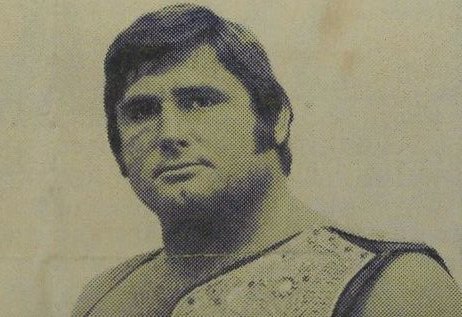
Thorton as the NWA World Junior Heavyweight Champion, circa 1984

Thornton participated in cricket, football, boxing and rugby as a youth. He served in the British Navy, being stationed in Korea, where he continued boxing. Thornton later played professional rugby before being convinced to give professional wrestling a try by wrestler Bomber Bates. Thornton trained at Billy Riley's gym in Wigan, known infamously as the Snake Pit, where he built his foundations in amateur, catch, and professional wrestling.[3][4] In professional wrestling, he was known for his stiff forearm uppercuts, over the knee backbreakers, and suplexes. During his career, he was considered one of the best junior heavyweights in the world, having held the NWA World Junior Heavyweight title six times.[5] He had matches against top junior heavyweight wrestlers including Tiger Mask, Gino Hernandez, The Cobra, Dynamite Kid, Terry Taylor, Jerry Brisco, Al Madril, and Tatsumi Fujinami. Thorton also sometimes competed as a heavyweight; against heavyweights he notably fought Harley Race, Billy Robinson, Gene Lewis, Dory Funk Jr., and Pedro Morales. As a result of the hostile takeover by the World Wrestling Federation (WWF) of Georgia Championship Wrestling, Thornton joined the WWF, but in the "Hogan Era" as it stood, Thornton was often used as a jobber. On July 8, 1985, he took part in the King of the Ring, defeating Steve Lombardi in the first round before being defeated in the second round by Don Muraco.[6] Thornton was Mick Foley's tag team partner in Foley's first ever WWF match against The British Bulldogs. Near the end of his career, he formed his own promotion in Calgary called the Canadian Independent Wrestling Federation, which included wrestlers like Ricky Fuji and Big Titan, among others.

Championships and accomplishments

[edit]

1Only five of Thornton's reigns as NWA World Junior Heavyweight Champion are officially recognized by the National Wrestling Alliance.

References

[edit]

Further reading

[edit]
[edit]
Revisions and contributorsEdit on WikipediaRead on Wikipedia
from Grokipedia
Les Thornton (9 April 1934 – 1 February 2019) was a British professional wrestler celebrated for his technical expertise and catch-as-catch-can style, particularly as a six-time NWA World Junior Heavyweight Champion who competed across Europe, North America, and Japan from 1957 to 1991. Born in Manchester, England, Thornton trained at the renowned Snake Pit gym under Billy Riley, a catch wrestling pioneer, which honed his reputation as "The Man of 1,000 Holds." He debuted in British promotions like Joint Promotions in 1957, establishing himself as a light heavyweight star through rigorous, submission-based matches against top UK talents. By the early 1970s, Thornton expanded internationally, joining NWA territories such as Stampede Wrestling in Canada, where he captured regional titles including the Stampede North American Heavyweight Championship twice and the Stampede International Tag Team Championship once. His global travels included stints in Japan and the Caribbean, where he also secured the WWC Junior Heavyweight Championship for two reigns. Thornton's pinnacle came in the NWA, where he won the World Junior Heavyweight Championship six times between 1980 and 1984, defending it against notable opponents like Tony Charles and holding versions recognized across multiple territories simultaneously at one point. In the mid-1980s, he briefly joined the World Wrestling Federation (WWF), teaming with emerging stars like in matches against and serving as enhancement talent to showcase rising competitors. After retiring in 1991, Thornton settled in , , , where he opened a and trained local wrestlers while largely distancing himself from the industry. He died on 1 February 2019 in at age 84, leaving a legacy as one of the finest junior heavyweights of his era and an influence on the "bruiserweight" archetype blending toughness with technique.

Early life and training

Athletic background

Les Thornton was born on April 9, 1934, in , , . During his youth, Thornton engaged in a variety of sports that fostered his competitive spirit and physical conditioning, including , football (soccer), , and rugby. These activities, common in the working-class communities of , built his resilience and agility, contributing to his later suitability for the demands of . Thornton's athletic frame reached a height of 5 ft 9 in (175 cm) and a weight of approximately 225 lb (102 kg), attributes largely developed through his early involvement in these contact and team sports. The prevalence of rugged athletic pursuits in Lancashire's industrial heartland, such as rugby leagues and clubs, played a key role in shaping his interest in physically intense endeavors. Following his youth athletics, Thornton served in the British Navy as an , stationed in Korea, an experience that further disciplined his body and mind as a precursor to specialized training.

Wrestling training at the Snake Pit

Les Thornton, leveraging his prior experience as a professional rugby player, entered formal wrestling training in the mid-1950s at the renowned gymnasium in , , under the guidance of legendary trainer . The Snake Pit, established by Riley in 1948, was infamous for its grueling regimen that emphasized authentic techniques over performative elements, attracting aspiring wrestlers from around the world seeking to master the art. Thornton's training centered on the catch-as-catch-can style, a rigorous form of that prioritized technical precision, endurance, and a vast array of holds and counters. This intensive focus honed his mat-based expertise, earning him the enduring nickname "The Man of a Thousand Holds" for his exceptional command of submissions and transitional maneuvers. Riley's method, drawing from his own championship background in , instilled in Thornton a foundation of legitimacy and skill that distinguished him among peers. By 1957, at the age of 23, Thornton made his professional debut under the banner of Joint Promotions, the dominant British wrestling organization at the time. Early in his career, he adopted ring names such as Henri Pierlot and to embody various personas, allowing him to adapt to the theatrical demands of the circuit while showcasing his technical prowess.

Professional wrestling career

Career in the United Kingdom

Les Thornton made his professional wrestling debut in 1957, shortly after leaving the Royal Navy, initially performing under the ring name Henri Pierlot for independent promoters in the United Kingdom. His early training at Billy Riley's Snake Pit in Wigan honed his expertise in submission holds, laying the foundation for his technical style. Working the independent circuit through the late 1950s and early 1960s, Thornton faced a variety of local talents, including opponents like Black Panther, Dwight J. Ingleburgh, Charlie Scott, and Milo Popocopolis, which helped him develop versatility in both technical grappling and brawling exchanges. In October 1962, Thornton signed with the dominant British promotion Joint Promotions, marking a significant step in his career and leading to national exposure. He made his television debut for the promotion in November 1962, defeating Bill Rawlings in Preston, followed by a win over Roy Bull Davis in December. Over the and into the early , he established himself as a premier junior heavyweight, competing against established stars such as John Allan, Norman Walsh, and the powerhouse Georges Gordienko, often showcasing his mastery of intricate submission techniques in grueling bouts. His reputation as the "Man of a Thousand Holds" emerged during this period, earned through his ability to apply a vast array of locks and maneuvers that emphasized skill over brute force. One of Thornton's standout early feuds in Joint Promotions was with the aggressive Hans Streiger, highlighted by an electrifying match at that drew widespread acclaim for its intensity and technical prowess. He also engaged in brutal encounters with hard-hitting veterans like Bert Assirati, further solidifying his standing as a resilient technician capable of enduring punishing contests. To broaden his experience, Thornton traveled extensively within during the , participating in tournaments in where he made a strong impression against international competitors, such as a 1968 bout against Yvar Martinson in . By the early 1970s, having reverted to his real name from the Pierlot gimmick, Thornton had become a fixture on the British scene, known for his submission-focused matches that prioritized precision and endurance without yet pursuing major championship opportunities.

Transition to North America

In the early 1970s, Les Thornton relocated from the to , drawn by opportunities in the expanding scene; his reputation for technical proficiency, honed in British rings, had caught the attention of promoters seeking skilled international talent. He began his North American journey in 1970 by working in Canada's promotion based in , , under promoter , where the territory's emphasis on hard-hitting, athletic matches allowed him to showcase his submission-based style against established competitors. From , Thornton expanded into various (NWA) territories across the , including and Georgia, starting in 1970, where he competed in initial matches that required adaptation to significantly larger crowds—often numbering in the thousands compared to the more intimate venues—and differing rules that favored a blend of technical wrestling with high-impact entertainment elements. His English-style , rooted in catch-as-catch-can traditions, stood out as somewhat foreign to American audiences accustomed to flashier, storyline-driven bouts, prompting him to refine his approach to better engage spectators while maintaining his core strengths in mat work and chain wrestling. During this period, Thornton frequently teamed with fellow Welsh wrestler Tony Charles in tag team matches across NWA territories, forming a successful British duo that lasted approximately five years and capitalized on their shared technical synergy to compete against regional powerhouses. This partnership provided early stability and visibility in the competitive North American landscape. Additionally, Thornton's international appeal grew through tours in Japan starting in 1970 and 1971, with his first major exposure culminating in a high-profile match against Tiger Mask in 1982, which underscored his versatility and drew global attention to his career.

Major promotions and feuds

During the late 1970s and early 1980s, Les Thornton established himself as a key competitor in several (NWA) territories, particularly Mid-South Wrestling, , and NWA Georgia, where he showcased his technical prowess and contributed significantly to the junior heavyweight division. In Mid-South Wrestling, part of the Tri-State territory, Thornton captured the on March 1, 1980, via forfeit after champion failed to appear for a scheduled rematch in . He defended the title successfully for nearly a year across multiple promotions, including high-profile bouts that highlighted his submission-based style rooted in catch-as-catch-can wrestling. In NWA Florida, Thornton engaged in intense rivalries that elevated the local junior heavyweight scene, most notably a feud with Tony Charles, whom he both teamed with and opposed in tag team and singles competition. Their encounters, such as a 10-minute technical showcase in Southeastern Championship Wrestling where Charles secured victory via a body press, emphasized grappling and mat work over brawling, drawing praise for advancing sophisticated storytelling in lighter-weight divisions. Similarly, in NWA Georgia (Georgia Championship Wrestling), Thornton traded the NWA World Junior Heavyweight Title with Jerry Stubbs, losing it in Mobile, Alabama, on January 20, 1981, before regaining it ten days later in Dothan, Alabama, on January 30, 1981. These exchanges, often under masked gimmicks like Mr. Wrestling II (a role filled by various wrestlers in the territory), built compelling narratives around technical mastery and territorial pride. Thornton's feuds extended to international stars, further solidifying his role in globalizing the junior heavyweight class. He clashed with in hard-hitting matches that blended British strong style with American territory formats, influencing a generation of high-impact technicians. Another pivotal rivalry was with , featuring multiple bouts in Georgia, including matches in 1980 and a singles match on March 2, 1985, that underscored Thornton's resilience against the masked challenger's aerial and ground assaults. Internationally, Thornton defended against Japanese sensation Tiger Mask (Satoru Sayama), losing the NWA World Junior Heavyweight Title to him on May 25, 1982, in a bout that symbolized the influx of innovative lucha and elements into NWA storylines. Through these rivalries, Thornton elevated the division by prioritizing chain wrestling, submissions, and layered feuds that attracted crossover audiences. A unique achievement during this period was Thornton's simultaneous reign as both NWA World Junior Heavyweight Champion and WWF Junior Heavyweight Champion in 1981, a rare dual-title hold that bridged rival promotions and affirmed his status as a top global junior talent. This feat, accomplished while defending in territories like and Georgia, highlighted his versatility and helped legitimize the junior heavyweight category beyond regional boundaries.

World Wrestling Federation stint

Les Thornton joined the World Wrestling Federation in 1985, following the promotion's acquisition of shares in by the Brisco Brothers, which brought several talents including Thornton into the fold. During this expansion period, he participated in WWF's international tours, where he both wrestled and assisted in running events over seven weeks. In the WWF's Hulk Hogan-dominated era, Thornton served primarily as a jobber, enhancing the performances of established stars through competitive losses on house shows and television. His matches often showcased his technical prowess as a reliable opponent, with notable defeats including on April 28, 1985, on June 7, 1985, in the 1985 on July 8, 1985 (after Thornton himself advanced by pinning earlier that night), on August 10, 1985, and King Tonga (Haku) on February 17, 1986. These bouts, primarily at and other venues, underscored his role in building credibility for rising and top talents without pursuing his own singles push. Thornton's television exposure included appearances on , such as the August 26, 1986, taping where he teamed with debutant (billed as Jack Foley) against , losing via pinfall in a match that aired on September 13, 1986. As a seasoned veteran, Thornton provided informal guidance to younger wrestlers like Foley during this stint, drawing on his extensive experience to help navigate the promotion's demanding schedule. His work extended to numerous untelevised house shows in 1985 and 1986, where he consistently delivered solid performances as an enhancement talent.

Later career and retirement

Following his stint with the World Wrestling Federation in the mid-1980s, Les Thornton returned to in the late 1980s and founded the Canadian Independent Wrestling Federation (CIWF) in , . This promotion featured wrestlers such as and served as a platform for Thornton's continued involvement in the industry during the waning years of his active career. Throughout 1989 and 1990, Thornton participated in sporadic matches within regional promotions, often leveraging his technical expertise in smaller-scale events across . These appearances allowed him to maintain a presence in the wrestling scene while scaling back from full-time commitments. Thornton officially retired from in 1991, concluding a career that spanned 34 years since his debut in 1957. In retirement, Thornton transitioned to a non-wrestling lifestyle, settling in where he ran a and occasionally made guest appearances or contributed in training capacities to support emerging wrestlers.

Championships and accomplishments

NWA World Junior Heavyweight Championship reigns

Les Thornton captured the six times between 1980 and 1984, establishing himself as one of the division's premier technicians during a period of intense territorial competition. His reigns emphasized grappling-based matches that highlighted his training, often drawing praise for elevating the junior heavyweight style across NWA-affiliated promotions. Thornton's initial run began on March 1, 1980, in , where he claimed the title via forfeit after champion no-showed a scheduled defense; this 331-day reign ended on January 26, 1981, against Jerry in . He recaptured the belt just five days later on January 31, 1981, defeating Stubbs in , and held it for 127 days until losing to on June 7, 1981. Thornton then won it back from Taylor on June 20, 1981, in , for an 85-day tenure that concluded against Jerry Brisco on September 13, 1981, in . His fourth reign came on October 16, 1981, in , over Brisco, lasting 22 days before Joe Lightfoot dethroned him on November 7, 1981. Thornton secured his fifth NWA junior heavyweight title on November 14, 1981, defeating in , and defended it successfully for 192 days until () defeated him on May 25, 1982, in , . His sixth and final reign began in November 1983, when he won a tournament in , , to claim the title; it lasted approximately 210 days until vacated in June 1984 upon his transition to the WWF. Throughout these reigns, Thornton made notable defenses against elite competitors, including Chavo Guerrero Sr. in Florida Championship Wrestling and Nelson Royal in Mid-Atlantic Championship Wrestling, matches that underscored his endurance and submission expertise against agile opponents. These bouts, often exceeding 30 minutes, helped popularize technically oriented junior heavyweight wrestling in North American territories. Thornton's extended title holds, particularly the near-year-long first reign, cemented his reputation as a global ambassador for the weight class, influencing future champions through his blend of British catch-as-catch-can and international strong style.
ReignDate WonOpponent/EventLocationDurationLost To
1March 1, 1980Ron Starr (forfeit) / House showTulsa, OK331 daysJerry Stubbs (January 26, 1981, Mobile, AL)
2January 31, 1981Jerry Stubbs / House showDothan, AL127 daysTerry Taylor (June 7, 1981)
3June 20, 1981Terry Taylor / House showRoanoke, VA85 daysJerry Brisco (September 13, 1981, Orlando, FL)
4October 16, 1981Jerry Brisco / House showKnoxville, TN22 daysJoe Lightfoot (November 7, 1981)
5November 14, 1981Joe Lightfoot / House showSan Juan, PR192 daysTiger Mask (May 25, 1982, Tokyo, Japan)
6November 1983Tournament / House showManila, PH~210 daysVacated (June 1984)

Other regional and international titles

Throughout his career, Les Thornton captured several regional and international titles that highlighted his versatility and dominance in junior heavyweight and mid-heavyweight divisions across North American territories and beyond, often complementing his reigns. These accomplishments underscored his impact in key promotions like and the , where he defended against top competition and elevated local scenes. Thornton won the NWA Florida Junior Heavyweight Championship once, showcasing his technical prowess in the competitive during the late 1970s. In , he secured the NWA Georgia Tag Team Championship alongside partner Tony Charles in late 1975, holding the belts for approximately two months before dropping them to challengers like and Jerry Brisco; this reign contributed to the territory's tag division dynamics during a period of intense rivalries. Internationally, Thornton claimed the WWF International Junior Heavyweight Championship in 1985 as its final recognized holder before deactivation, representing the promotion in global defenses and affirming his status as a top junior heavyweight across major organizations. In Puerto Rico's , he reigned as WWC Junior Heavyweight Champion for a notable 471 days from July 24, 1980, to November 7, 1981, followed by a second run starting November 14, 1981, solidifying his influence in the circuit. Thornton's successes in further demonstrated his territorial reach, including two Stampede North American Heavyweight Championship reigns in 1971 and 1974, the Stampede British Commonwealth Mid-Heavyweight Championship for 37 days from September 18 to October 25, 1986, and the Stampede International Tag Team Championship with Frankie Laine in 1975. These victories, defended in high-profile matches against wrestlers like and , helped bridge British catch-as-catch-can styles with North American brawling. He also participated in Japanese tours, competing in tournaments and exhibitions that exposed his skills to audiences during the early , though he did not capture additional titles there. Other notable tag team accolades included the NWA Pacific Northwest Tag Team with for 60 days from June 4 to August 3, 1977, and the NWA Texas Tag Team with Tony Charles in 1976–1977, both reinforcing his role as a reliable partner in multi-territory bookings. Additionally, Thornton briefly held the NWA Americas Heavyweight for 29 days from May 16 to June 14, 1975, in Los Angeles, and the NWA Western States Tag Team with Jerry Kozak in October 1973. These regional wins collectively spanned over a dozen promotions, illustrating Thornton's adaptability and contributions to wrestling's territorial ecosystem.

Personal life and death

Family and post-retirement activities

Les Thornton was married to his second wife, , with whom he shared his later years in , , . , originally from the Calgary area, was by his side during his final days and announced his passing to the wrestling community. Details about their relationship remained largely private, reflecting Thornton's preference for a low-key personal life away from the spotlight of . Thornton had six children from his marriages, though he kept information about his immediate family out of the public eye, emphasizing privacy in his Calgary residence. This focus on family provided a contrast to his high-profile career, allowing him to nurture personal bonds after decades on the road. Following his retirement from active wrestling in 1990, Thornton settled into a quieter life in Calgary, where he and Terry ran a local gym to stay active and connected to fitness. He made occasional appearances at wrestling conventions, sharing stories from his extensive career with fans and peers without seeking the limelight. These engagements highlighted his enduring ties to the industry while prioritizing a relaxed routine. In a , Thornton reflected on his 33-year wrestling career, noting the immense travel across 49 U.S. states and 17 countries as both rewarding and exhausting. He described the physical toll, including a broken back from accumulated injuries, as a key factor in his decision to retire and focus on family and recovery. Thornton expressed no regrets, viewing the global journeys as integral to his growth as a performer, though they underscored the sacrifices of the profession.

Death and tributes

Les Thornton passed away on February 1, 2019, at the age of 84 in , , . His wife, Terry, noted that he peacefully took his leave at 11:15 a.m. with her by his side, though no specific was publicly disclosed. The wrestling community responded with numerous tributes honoring Thornton's technical prowess and contributions to the sport. Hall of Famer expressed his sorrow on social media, stating, "Very sorry to learn of the passing of former NWA world junior heavyweight champion Les Thornton." Fellow wrestler described him as "a serious wrestler and solid worker who always gave you a hell of a match," while Hector Guerrero called him "one of the best true wrestlers around." Former Champion Daniel Bryan () reflected on Thornton's influence, noting, "He did all this cool British mat wrestling, but within an American context." In lieu of a , which Thornton did not wish to have, his family requested donations to the Humane Society in his memory. His passing was widely covered in wrestling media outlets, including Slam Wrestling and Pro Wrestling Stories, which highlighted his legacy as a multiple-time NWA World Junior Heavyweight Champion and a pioneer in junior heavyweight divisions.

Legacy

Technical wrestling influence

Les Thornton's wrestling style was rooted in the rigorous catch wrestling traditions of England's training facility in , where he honed a mat-based approach emphasizing leverage, strength, and precise technique under the guidance of masters like . This foundation enabled him to execute submission holds with exceptional control, including innovative reversals of common locks like the hammerlock, which showcased his expertise in transitioning seamlessly between defensive and offensive positions. His contributions to extended globally, influencing the integration of catch-as-catch-can elements into professional bouts and elevating the technical demands on junior heavyweights. Thornton pioneered the "bruiserweight" archetype, embodying a compact, hard-hitting smaller wrestler who combined technical finesse with unyielding toughness, laying the groundwork for future competitors in the division. At 5-foot-9 and around 225 pounds, his stocky frame and crisp execution of moves like European uppercuts, over-the-knee backbreakers, and suplexes made him a credible threat against larger opponents, inspiring later stars who blended size disadvantages with mat mastery. This style proved particularly influential in the junior heavyweight landscape, where his ability to deliver stiff, realistic exchanges redefined expectations for athleticism and intensity in smaller divisions. His landmark matches against () and (Tom Billington) in promotions like served as blueprints for stiff, believable contests that prioritized realism over exaggeration. In these bouts, Thornton's technical precision clashed with high-flying and power-based offense, creating high-impact sequences that emphasized legitimate struggle and counter-wrestling, which became templates for international junior heavyweight feuds. Widely recognized as an original technician in the NWA, Thornton's six reigns with the validated his innovative approach and cemented his role in shaping the promotion's emphasis on skill-driven performances.

Mentorship and recognition

During his tenure in the World Wrestling Federation, Les Thornton served as Mick Foley's partner in Foley's WWF debut match against on September 13, 1986, where Thornton's rigorous in-ring style emphasized resilience and the fundamentals of , leaving a lasting impression on the young performer. Foley later recounted in his memoir how Thornton's legitimate toughness as a "shooter" tested him intensely from the outset, instilling essential lessons in durability and ring awareness that shaped Foley's early career approach. Thornton's technical expertise, honed at Billy Riley's in , formed the basis of his mentoring style as he provided informal guidance to junior wrestlers throughout his career. Later, near the end of his active wrestling years, Thornton founded the Canadian Independent Wrestling Federation (CIWF) in , , in 1987, where he oversaw a roster including emerging talents like , offering hands-on direction to develop their abilities in a professional setting. Thornton received formal recognition for his contributions when inducted into the Hall of Fame in 1995, honoring his impactful tenure in Canadian wrestling promotions. Following his death on February 1, 2019, he garnered posthumous acclaim in wrestling literature, notably through a 2023 profile titled "Les Thornton: Secret Life of The Original 'Bruiserweight,'" which celebrated his pioneering role as a compact, hard-hitting technician who influenced the archetype of resilient smaller competitors.

References

Add your contribution
Related Hubs
User Avatar
No comments yet.