
Recent from talks
Lewis Williams Douglas
Knowledge base stats:
Talk channels stats:
Members stats:
Lewis Williams Douglas
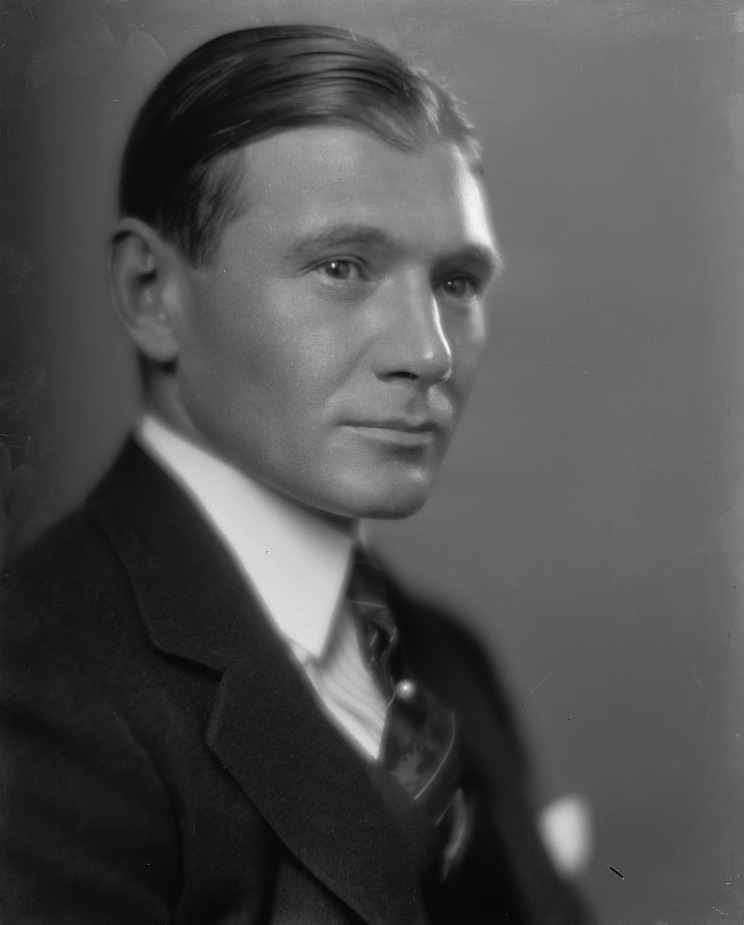
Lewis Williams Douglas (July 2, 1894 – March 7, 1974) was an American politician, diplomat, businessman and academic.
Douglas was the son of James Douglas, Jr., a mining executive employed by the Phelps Dodge Company, and his wife Josephine "Josalee" Williams Douglas. Growing up in Bisbee and Nacozari de García, at the age of 11 he was sent east at the insistence of his grandfather, James Douglas to attend school. He spent two years at Hackley School before transferring to Montclair Academy, where he won awards for both academic success and character development, graduating in the class of 1912.
On the advice of Arthur Curtiss James, Douglas attended Amherst College, where he joined Alpha Delta Phi and was involved in both athletics and student government. Though he did not take his coursework seriously at first, his performance improved after taking a course in logic from the college president, Alexander Meiklejohn, and graduated cum laude in 1916 with a degree in economics.
After his graduation, Douglas enrolled at Massachusetts Institute of Technology, where he took courses in preparation for a career as a mining engineer. When the United States joined the First World War, Douglas volunteered for service, receiving a commission as a Second Lieutenant in July 1917. Initially assigned to the field artillery, he later served as an assistant to General Henry A. Greene, the commander of the 91st Infantry Division and was promoted to First Lieutenant in the spring of 1918. Deployed to France in the summer of 1918, he served as an assistant G-3 in the operations branch of division headquarters, where he directed communications. He experienced action at Saint-Mihiel and in the Meuse-Argonne Offensive and received the Belgian Croix de Guerre for heroism.
Upon his discharge in February 1919, Douglas returned to Jerome, Arizona, where he renewed his acquaintance with Margaret "Peggy" Zinsser, with whom he soon fell in love. The following year he taught at Amherst (where he worked as a teaching assistant to Ernest Barker and R. H. Tawney) and Hackley School. After marrying Peggy on June 18, 1921, the young couple moved to Jerome, where Lewis took a job at his father's United Verde Extension mine.
In the summer of 1922, Douglas agreed to run as a candidate for one of the Jerome area's seats in the Arizona State House of Representatives. Though lacking political experience, his wealth, family name, and record of war service were decisive factors in his favor, as he won both a contested primary and the subsequent general election. Douglas served a single two-year term in the state legislature. A conservative Democrat, Douglas advocated fiscal responsibility and opposed labor legislation. He also objected to the recently signed Colorado River Compact, and proposed an amendment empowering the state to tax electricity produced within its borders.
Though some newspapers anticipated that he would seek election to the state senate in 1924, Douglas declined to run for any public office, pursuing a number of business ventures instead. When Carl Hayden, Arizona's lone Congressman, announced that he would challenge the state's incumbent junior senator, Ralph H. Cameron, in 1926, Douglas decided to enter the race to succeed Hayden. Once again benefiting from his family's wealth, name recognition and war record, and enjoying the support of the state's Democratic press, he easily bested five rivals for the Democratic nomination before defeating his Republican challenger in the general election by nearly 20,000 votes.
Douglas served as Arizona's Congressman from the 70th through the 73rd Congress. He sat on the Committee on Irrigation and Reclamation and the Committee on Public Lands, and got along well with most of his colleagues. Though a Democrat, he often voted with Republicans and gained a reputation as a man of principle. During the Great Depression he adhered to the economic orthodoxy of his time, arguing that low tariffs and a balanced federal budget were essential requirements for an economic recovery. Douglas was also an opponent of the bonus bill sought by unemployed veterans, and he was attacked harshly as a result of his position on it.
Hub AI
Lewis Williams Douglas AI simulator
(@Lewis Williams Douglas_simulator)
Lewis Williams Douglas
Lewis Williams Douglas (July 2, 1894 – March 7, 1974) was an American politician, diplomat, businessman and academic.
Douglas was the son of James Douglas, Jr., a mining executive employed by the Phelps Dodge Company, and his wife Josephine "Josalee" Williams Douglas. Growing up in Bisbee and Nacozari de García, at the age of 11 he was sent east at the insistence of his grandfather, James Douglas to attend school. He spent two years at Hackley School before transferring to Montclair Academy, where he won awards for both academic success and character development, graduating in the class of 1912.
On the advice of Arthur Curtiss James, Douglas attended Amherst College, where he joined Alpha Delta Phi and was involved in both athletics and student government. Though he did not take his coursework seriously at first, his performance improved after taking a course in logic from the college president, Alexander Meiklejohn, and graduated cum laude in 1916 with a degree in economics.
After his graduation, Douglas enrolled at Massachusetts Institute of Technology, where he took courses in preparation for a career as a mining engineer. When the United States joined the First World War, Douglas volunteered for service, receiving a commission as a Second Lieutenant in July 1917. Initially assigned to the field artillery, he later served as an assistant to General Henry A. Greene, the commander of the 91st Infantry Division and was promoted to First Lieutenant in the spring of 1918. Deployed to France in the summer of 1918, he served as an assistant G-3 in the operations branch of division headquarters, where he directed communications. He experienced action at Saint-Mihiel and in the Meuse-Argonne Offensive and received the Belgian Croix de Guerre for heroism.
Upon his discharge in February 1919, Douglas returned to Jerome, Arizona, where he renewed his acquaintance with Margaret "Peggy" Zinsser, with whom he soon fell in love. The following year he taught at Amherst (where he worked as a teaching assistant to Ernest Barker and R. H. Tawney) and Hackley School. After marrying Peggy on June 18, 1921, the young couple moved to Jerome, where Lewis took a job at his father's United Verde Extension mine.
In the summer of 1922, Douglas agreed to run as a candidate for one of the Jerome area's seats in the Arizona State House of Representatives. Though lacking political experience, his wealth, family name, and record of war service were decisive factors in his favor, as he won both a contested primary and the subsequent general election. Douglas served a single two-year term in the state legislature. A conservative Democrat, Douglas advocated fiscal responsibility and opposed labor legislation. He also objected to the recently signed Colorado River Compact, and proposed an amendment empowering the state to tax electricity produced within its borders.
Though some newspapers anticipated that he would seek election to the state senate in 1924, Douglas declined to run for any public office, pursuing a number of business ventures instead. When Carl Hayden, Arizona's lone Congressman, announced that he would challenge the state's incumbent junior senator, Ralph H. Cameron, in 1926, Douglas decided to enter the race to succeed Hayden. Once again benefiting from his family's wealth, name recognition and war record, and enjoying the support of the state's Democratic press, he easily bested five rivals for the Democratic nomination before defeating his Republican challenger in the general election by nearly 20,000 votes.
Douglas served as Arizona's Congressman from the 70th through the 73rd Congress. He sat on the Committee on Irrigation and Reclamation and the Committee on Public Lands, and got along well with most of his colleagues. Though a Democrat, he often voted with Republicans and gained a reputation as a man of principle. During the Great Depression he adhered to the economic orthodoxy of his time, arguing that low tariffs and a balanced federal budget were essential requirements for an economic recovery. Douglas was also an opponent of the bonus bill sought by unemployed veterans, and he was attacked harshly as a result of his position on it.
Recent media