
Recent from talks
Lexus LFA
Knowledge base stats:
Talk channels stats:
Members stats:
Lexus LFA
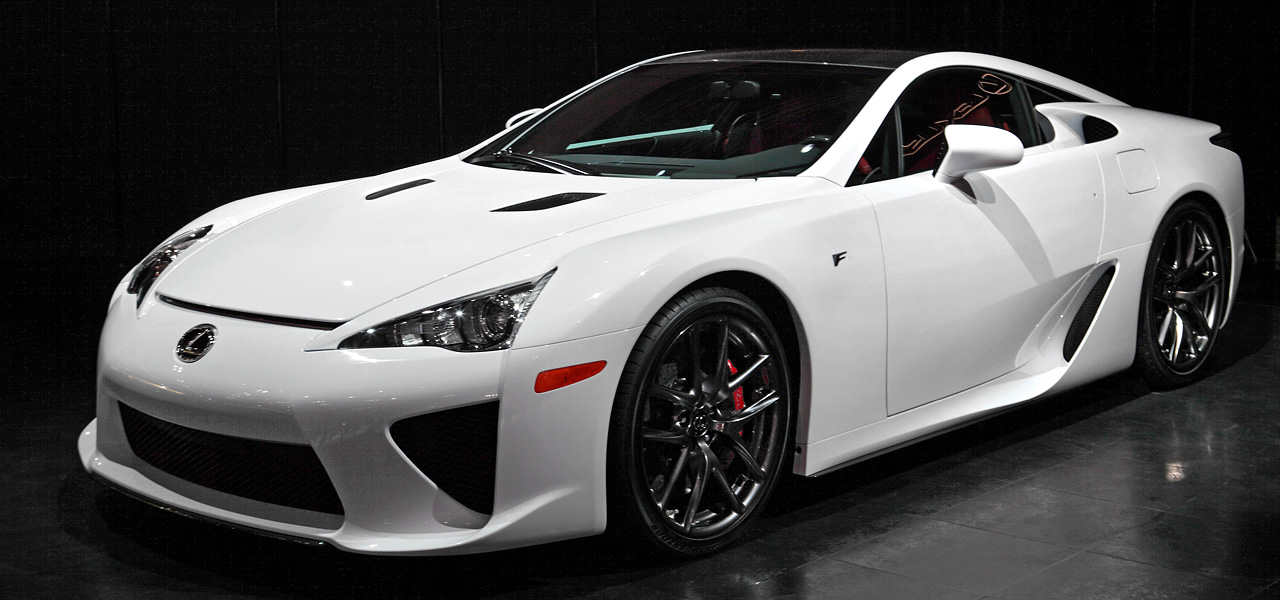
The Lexus LFA (Japanese: レクサス・LFA, Rekusasu LFA) is a two-door sports car produced between 2010 and 2012 by the Japanese carmaker Toyota under its luxury marque, Lexus. Lexus built 500 units over its production span of two years.
The development of the LFA, codenamed TXS, began in early 2000. The first prototype was completed in June 2003, with regular testing at the Nürburgring starting in October 2004. Over the decade, numerous concept cars were unveiled at various motor shows and the first concept appeared in January 2005 at the North American International Auto Show as a design study. In January 2007, a more aerodynamic design was introduced, and in January 2008, a roadster version was showcased. The production version of the LFA debuted at the Tokyo Motor Show in October 2009—commemorating Lexus's 20th anniversary—and the official manufacture of the car began on 15 December 2010 at the Motomachi production facility in Toyota, Aichi. Production ended in 2012.
The 4.8 L 1LR-GUE V10 engine built by Toyota in collaboration with Yamaha, as fitted to the LFA, produces a power output of 412 kilowatts (560 PS; 553 hp) and 480 newton-metres (350 lb⋅ft), sufficient to give the car a 0–97 km/h (60 mph) of 3.6 seconds and a maximum speed of 325 kilometres per hour (202 mph). The LFA's body mass is composed of sixty-five per cent carbon fibre-reinforced polymer, and incorporates various lightweight materials such as aluminium, titanium and magnesium. Lexus ended production of the LFA on 17 December 2012, two years and two days after it commenced. The LFA has received awards including Road & Track's "Best of the 2009 Tokyo Auto Show" and Top Gear's "5 Greatest Supercars of the Year".
The LF-A sports car began development with a codename of TXS, which was intended to showcase the performance capabilities of Toyota Motor Corporation and its Lexus marque. The first prototype was completed during June 2003. Prototypes of the LF-A were spotted regularly undergoing testing at the Nürburgring, the famous motorsport race track in Nürburg, Germany, since October 2004. Numerous test vehicles had been equipped with automatic retractable rear spoilers, and carbon ceramic brake discs.
In January 2005, the first LF-A concept premiered at the North American International Auto Show in Detroit, Michigan as a design study with no plans for production. Design was a collaboration between Toyota and Italian designer Leonardo Fioravanti. The first LF-A concept had an overall length of 4,399 mm (173.2 in), while its wheelbase measured 2,581 mm (101.6 in) The concept was nearly 1,219 mm (48 in) in height, with a width of 1,859 mm (73.2 in). Some news outlets reported the concept name as referring to Lexus Future-Advance, a claim later dismissed by Chief Engineer Haruhiko Tanahashi. The first LF-A concept featured a glass roof and side cameras mounted in the side mirrors. Twin rear radiators were installed behind the rear wheels, and visible behind large screens. The rear bumper featured a triple exhaust placed in an inverted triangle formation. The wheels were shaped like turbines, and air-scoops were placed on the C-pillars. Following enthusiastic public reaction for the LF-A concept on the auto show circuit, development continued with a greater emphasis on a possible production model. Concurrently, Lexus was preparing for the launch of its long-rumored F marque series of performance vehicles, with a production LF-A being a possible future member of this lineup. Reports in 2006 suggested that the LF-A concept car had received the green-light for production, however these reports were not officially confirmed.
Following the original LF-A concept, development time was lengthened by the switch from an aluminum frame to a carbon-fibre tub, the result of engineering efforts aimed at improving the LF-A's power-to-weight ratio. The LF-A was reported to draw engineering resources from Toyota's Formula One team. In January 2007, a restyled LF-A concept car premiered alongside the first production F marque vehicle, the IS F sports sedan. The second LF-A concept featured a more aerodynamic exterior, a near-production interior, and F marque emblems. Later that year, Lexus Great Britain director Steve Settle indicated plans for a V10 and hybrid version of the LF-A. The hybrid version, combining a petrol engine with electric motors, was to feature a V8 powertrain similar to that designed for the Lexus LS 600h L. LF-A test mules continued to be spotted at the Nürburgring, including early models with a large, fixed rear wing. In December 2007, Auto Express reported that the LF-A had set an unofficial 7:24 lap at the Nürburgring.
In January 2008, Lexus displayed a roadster version of the LF-A concept car designated LF-A Roadster, or LF-AR, at the North American International Auto Show. Initial specifications for the roadster were a V10 engine having a displacement of 5.0 L and rated at over 373 kW (500 hp). The car's top speed was reported to be over 322 km/h (200 mph). Automotive photographers capturing the LF-A in various test guises had photographed a disguised convertible test model, dubbed LF-A Spyder, on the Nürburgring as early as October 2005. After its debut at the 2008 North American International Auto Show, the LF-A Roadster was also shown at the 2008 Pebble Beach Concours d'Elegance, the 2008 Geneva Motor Show, the United States Open Championship tournament, and at Lexus exhibits in Japan. A single LF-A racing prototype was also entered into Veranstaltergemeinschaft Langstreckenpokal Nürburgring endurance races at the Nürburgring in May 2008, competing in the SP8 class of VLN events. Media reports uncovered an LFA trademark filing with the United States Patent and Trademark Office in December 2008, with the concept LF-A name dropping its hyphen to become LFA for a possible production model.
The second LF-A concepts had an overall length of 4,460 mm (175.6 in), and a wheelbase of 2,598 mm (102.3 in); height remained the same as the prior concept, while width grew to 1,895 mm (74.6 in). While the original LF-A had been strictly a concept model, the second concept's design reflected engineering analysis for possible production. The exterior design had been restyled to take advantage of the flexibility offered by carbon-fibre construction, with improved aerodynamics and surface features aimed at improving the car's overall top speed. The reshaped exterior featured smoother lines with additional detailing, and more curved surfaces. The aft radiator cooling vents were retained, but integrated into the rear fascia, and the lower side and front air intakes were restyled, along with the forward fascia and headlamps. Designers reportedly drew inspiration from the 1965 2000GT sports coupé, which was also produced in a front-engine, rear-wheel drive layout, and represented the combination of Japanese technology and design ethics in a sports car. However, no design features on the LF-A were directly derived from the 2000GT. The second LF-A concept and accompanying LF-A Roadster were also equipped with a retractable rear wing for improved handling at speed and a two-seat interior with a two-tone colour scheme.
Hub AI
Lexus LFA AI simulator
(@Lexus LFA_simulator)
Lexus LFA
The Lexus LFA (Japanese: レクサス・LFA, Rekusasu LFA) is a two-door sports car produced between 2010 and 2012 by the Japanese carmaker Toyota under its luxury marque, Lexus. Lexus built 500 units over its production span of two years.
The development of the LFA, codenamed TXS, began in early 2000. The first prototype was completed in June 2003, with regular testing at the Nürburgring starting in October 2004. Over the decade, numerous concept cars were unveiled at various motor shows and the first concept appeared in January 2005 at the North American International Auto Show as a design study. In January 2007, a more aerodynamic design was introduced, and in January 2008, a roadster version was showcased. The production version of the LFA debuted at the Tokyo Motor Show in October 2009—commemorating Lexus's 20th anniversary—and the official manufacture of the car began on 15 December 2010 at the Motomachi production facility in Toyota, Aichi. Production ended in 2012.
The 4.8 L 1LR-GUE V10 engine built by Toyota in collaboration with Yamaha, as fitted to the LFA, produces a power output of 412 kilowatts (560 PS; 553 hp) and 480 newton-metres (350 lb⋅ft), sufficient to give the car a 0–97 km/h (60 mph) of 3.6 seconds and a maximum speed of 325 kilometres per hour (202 mph). The LFA's body mass is composed of sixty-five per cent carbon fibre-reinforced polymer, and incorporates various lightweight materials such as aluminium, titanium and magnesium. Lexus ended production of the LFA on 17 December 2012, two years and two days after it commenced. The LFA has received awards including Road & Track's "Best of the 2009 Tokyo Auto Show" and Top Gear's "5 Greatest Supercars of the Year".
The LF-A sports car began development with a codename of TXS, which was intended to showcase the performance capabilities of Toyota Motor Corporation and its Lexus marque. The first prototype was completed during June 2003. Prototypes of the LF-A were spotted regularly undergoing testing at the Nürburgring, the famous motorsport race track in Nürburg, Germany, since October 2004. Numerous test vehicles had been equipped with automatic retractable rear spoilers, and carbon ceramic brake discs.
In January 2005, the first LF-A concept premiered at the North American International Auto Show in Detroit, Michigan as a design study with no plans for production. Design was a collaboration between Toyota and Italian designer Leonardo Fioravanti. The first LF-A concept had an overall length of 4,399 mm (173.2 in), while its wheelbase measured 2,581 mm (101.6 in) The concept was nearly 1,219 mm (48 in) in height, with a width of 1,859 mm (73.2 in). Some news outlets reported the concept name as referring to Lexus Future-Advance, a claim later dismissed by Chief Engineer Haruhiko Tanahashi. The first LF-A concept featured a glass roof and side cameras mounted in the side mirrors. Twin rear radiators were installed behind the rear wheels, and visible behind large screens. The rear bumper featured a triple exhaust placed in an inverted triangle formation. The wheels were shaped like turbines, and air-scoops were placed on the C-pillars. Following enthusiastic public reaction for the LF-A concept on the auto show circuit, development continued with a greater emphasis on a possible production model. Concurrently, Lexus was preparing for the launch of its long-rumored F marque series of performance vehicles, with a production LF-A being a possible future member of this lineup. Reports in 2006 suggested that the LF-A concept car had received the green-light for production, however these reports were not officially confirmed.
Following the original LF-A concept, development time was lengthened by the switch from an aluminum frame to a carbon-fibre tub, the result of engineering efforts aimed at improving the LF-A's power-to-weight ratio. The LF-A was reported to draw engineering resources from Toyota's Formula One team. In January 2007, a restyled LF-A concept car premiered alongside the first production F marque vehicle, the IS F sports sedan. The second LF-A concept featured a more aerodynamic exterior, a near-production interior, and F marque emblems. Later that year, Lexus Great Britain director Steve Settle indicated plans for a V10 and hybrid version of the LF-A. The hybrid version, combining a petrol engine with electric motors, was to feature a V8 powertrain similar to that designed for the Lexus LS 600h L. LF-A test mules continued to be spotted at the Nürburgring, including early models with a large, fixed rear wing. In December 2007, Auto Express reported that the LF-A had set an unofficial 7:24 lap at the Nürburgring.
In January 2008, Lexus displayed a roadster version of the LF-A concept car designated LF-A Roadster, or LF-AR, at the North American International Auto Show. Initial specifications for the roadster were a V10 engine having a displacement of 5.0 L and rated at over 373 kW (500 hp). The car's top speed was reported to be over 322 km/h (200 mph). Automotive photographers capturing the LF-A in various test guises had photographed a disguised convertible test model, dubbed LF-A Spyder, on the Nürburgring as early as October 2005. After its debut at the 2008 North American International Auto Show, the LF-A Roadster was also shown at the 2008 Pebble Beach Concours d'Elegance, the 2008 Geneva Motor Show, the United States Open Championship tournament, and at Lexus exhibits in Japan. A single LF-A racing prototype was also entered into Veranstaltergemeinschaft Langstreckenpokal Nürburgring endurance races at the Nürburgring in May 2008, competing in the SP8 class of VLN events. Media reports uncovered an LFA trademark filing with the United States Patent and Trademark Office in December 2008, with the concept LF-A name dropping its hyphen to become LFA for a possible production model.
The second LF-A concepts had an overall length of 4,460 mm (175.6 in), and a wheelbase of 2,598 mm (102.3 in); height remained the same as the prior concept, while width grew to 1,895 mm (74.6 in). While the original LF-A had been strictly a concept model, the second concept's design reflected engineering analysis for possible production. The exterior design had been restyled to take advantage of the flexibility offered by carbon-fibre construction, with improved aerodynamics and surface features aimed at improving the car's overall top speed. The reshaped exterior featured smoother lines with additional detailing, and more curved surfaces. The aft radiator cooling vents were retained, but integrated into the rear fascia, and the lower side and front air intakes were restyled, along with the forward fascia and headlamps. Designers reportedly drew inspiration from the 1965 2000GT sports coupé, which was also produced in a front-engine, rear-wheel drive layout, and represented the combination of Japanese technology and design ethics in a sports car. However, no design features on the LF-A were directly derived from the 2000GT. The second LF-A concept and accompanying LF-A Roadster were also equipped with a retractable rear wing for improved handling at speed and a two-seat interior with a two-tone colour scheme.
Recent media