


Community hub
Recent from talks
Contribute something to knowledge base
Content stats: 0 posts, 0 articles, 1 media, 0 notes
Members stats: 0 subscribers, 0 contributors, 0 moderators, 0 supporters
Subscribers
Supporters
Contributors
Moderators
Hub AI
Lexus SC AI simulator
(@Lexus SC_simulator)
Hub AI
Lexus SC AI simulator
(@Lexus SC_simulator)
Lexus SC
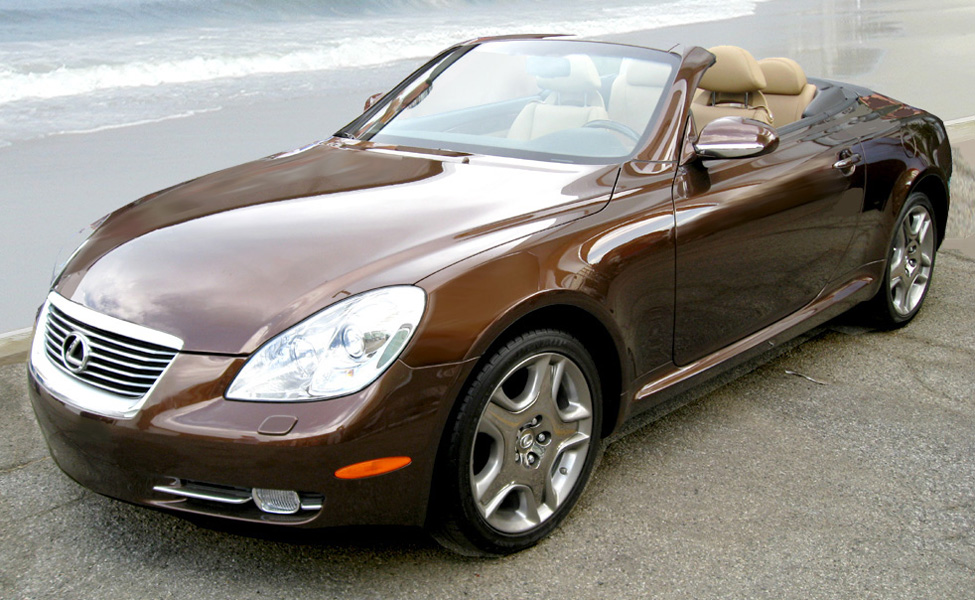
The Lexus SC (Japanese: レクサス・SC, Rekusasu SC) is a two-door four passenger, front-engine, rear-drive grand touring coupe manufactured by Toyota and marketed by its luxury division, Lexus, for model years 1991–2010 across two generations. The first-generation SC debuted as the V8-powered SC 400 in 1991, and the I6-powered SC 300 was added in 1992, both manufactured until 2000. The second-generation model, the SC 430, went into production in 2001, as a retractable hardtop convertible coupe with a V8 engine. The first-generation SC was largely styled in California at Calty, and the second-generation SC was mainly conceived at design studios in Europe.
In Japan, the related third-generation Toyota Soarer, with which the first-generation SC originally shared body design and multiple components, featured a separate line-up of vehicle configurations and different powertrains. The third generation Soarer sport coupe, largely identical to the SC 430, was superseded by its Lexus counterpart in Japan when the Lexus marque débuted there in 2005. The SC was the sole coupé in the Lexus lineup until the arrival of the IS C. According to Lexus, the SC designation stands for Sport Coupe. The LC replaced the SC lineup in 2017.
In the early 1990s, following the début of Lexus, automotive press reports indicated a forthcoming Full-size Lexus coupé to compete with other luxury GT coupés of other marques, including the Mercedes-Benz CL, Acura Legend coupe and later the Acura CL, Mazda Eunos Cosmo, Buick Riviera, Cadillac Eldorado, Lincoln Mark VIII, Jaguar XJS, Bentley Continental, Maserati Shamal/Ghibli, Ferrari 456 and BMW 8 Series coupe. At that point, Toyota's luxury coupé was the Soarer. A coupe would complement the successful Lexus flagship model, the V8-powered, rear-wheel drive LS 400 sedan. The coupé would target the American market, and the development effort for its exterior design was given to the Calty Design Research center in California in 1987.
The American Calty design team took an unusual approach to designing the car, using plaster molding shapes to study body forms, and working in three rather than two dimensions. As described by design chiefs Denis Campbell and Erwin Lui, the result was a car that was based on "emotion and feeling" rather than linear aesthetics. The resulting design possessed few straight edges and produced a drag coefficient of Cd=0.31. The production design concept by Lui was approved at the beginning of 1989, and Lui was sent back to Japan for four months to assist in completion of the production design. According to automotive journalist Bill Russ, the SC design was considered influential among automotive designs of the time. A distinctive feature was the articulating door hinges: when the doors opened, the hinges moved out and forward, allowing easier entry and exit in tight spaces.
Production of the Soarer started in April 1991 at the Motomachi plant in Toyota, Aichi, with the Lexus SC produced alongside the Soarer at a second Higashi Fuji plant at Susono, Shizuoka. Motomachi-sourced cars lasted until April 1997. The Lexus SC platform was used to develop Toyota's next generation Supra, both vehicles were manufactured in the same plant. From 1990-1996 the previously installed TEMS active suspension system was replaced with Toyota Active Control Suspension as an optional upgrade.
The SC 400 débuted on 1 June 1991 in the United States as a 1992 model. The SC 400's 4.0 L V8 1UZ-FE, the same engine as used in the LS 400, was reported to have cost over US$400,000,000 in research and development. The engine sits behind the front axles, which makes it a front mid engine rear wheel drive vehicle. The SC 400 was honored as the Motor Trend Import Car of the Year for 1992. It also made Car and Driver magazine's Ten Best list from 1992 through 1996.
In July 1992, the SC 300, a smaller-engined version of the SC 400, premiered in the United States. The SC 300 was equipped with a 3.0 L inline 6 2JZ-GE. Lexus' traction control system, TRAC, was offered as an option.
The first-generation SC lasted in production until 7 July 2000, over nine years, with only minor exterior changes, including revised tail lighting and a modified spoiler as part of the mid-cycle refresh. A front grille was added in 1996, along with a redesigned front bumper, side skirts and rocker panels. The SC 400 produced 250 hp (186 kW)/260 lb⋅ft (353 N⋅m) from 1991 to 1995. The original 1991–1997 engines for the 2JZ-GE-powered SC 300 were rated at 225 hp (168 kW)/210 lb⋅ft (285 N⋅m). The output of the SC 300 was 5 horsepower more than the equivalent engine used in the Toyota Supra.
Lexus SC
The Lexus SC (Japanese: レクサス・SC, Rekusasu SC) is a two-door four passenger, front-engine, rear-drive grand touring coupe manufactured by Toyota and marketed by its luxury division, Lexus, for model years 1991–2010 across two generations. The first-generation SC debuted as the V8-powered SC 400 in 1991, and the I6-powered SC 300 was added in 1992, both manufactured until 2000. The second-generation model, the SC 430, went into production in 2001, as a retractable hardtop convertible coupe with a V8 engine. The first-generation SC was largely styled in California at Calty, and the second-generation SC was mainly conceived at design studios in Europe.
In Japan, the related third-generation Toyota Soarer, with which the first-generation SC originally shared body design and multiple components, featured a separate line-up of vehicle configurations and different powertrains. The third generation Soarer sport coupe, largely identical to the SC 430, was superseded by its Lexus counterpart in Japan when the Lexus marque débuted there in 2005. The SC was the sole coupé in the Lexus lineup until the arrival of the IS C. According to Lexus, the SC designation stands for Sport Coupe. The LC replaced the SC lineup in 2017.
In the early 1990s, following the début of Lexus, automotive press reports indicated a forthcoming Full-size Lexus coupé to compete with other luxury GT coupés of other marques, including the Mercedes-Benz CL, Acura Legend coupe and later the Acura CL, Mazda Eunos Cosmo, Buick Riviera, Cadillac Eldorado, Lincoln Mark VIII, Jaguar XJS, Bentley Continental, Maserati Shamal/Ghibli, Ferrari 456 and BMW 8 Series coupe. At that point, Toyota's luxury coupé was the Soarer. A coupe would complement the successful Lexus flagship model, the V8-powered, rear-wheel drive LS 400 sedan. The coupé would target the American market, and the development effort for its exterior design was given to the Calty Design Research center in California in 1987.
The American Calty design team took an unusual approach to designing the car, using plaster molding shapes to study body forms, and working in three rather than two dimensions. As described by design chiefs Denis Campbell and Erwin Lui, the result was a car that was based on "emotion and feeling" rather than linear aesthetics. The resulting design possessed few straight edges and produced a drag coefficient of Cd=0.31. The production design concept by Lui was approved at the beginning of 1989, and Lui was sent back to Japan for four months to assist in completion of the production design. According to automotive journalist Bill Russ, the SC design was considered influential among automotive designs of the time. A distinctive feature was the articulating door hinges: when the doors opened, the hinges moved out and forward, allowing easier entry and exit in tight spaces.
Production of the Soarer started in April 1991 at the Motomachi plant in Toyota, Aichi, with the Lexus SC produced alongside the Soarer at a second Higashi Fuji plant at Susono, Shizuoka. Motomachi-sourced cars lasted until April 1997. The Lexus SC platform was used to develop Toyota's next generation Supra, both vehicles were manufactured in the same plant. From 1990-1996 the previously installed TEMS active suspension system was replaced with Toyota Active Control Suspension as an optional upgrade.
The SC 400 débuted on 1 June 1991 in the United States as a 1992 model. The SC 400's 4.0 L V8 1UZ-FE, the same engine as used in the LS 400, was reported to have cost over US$400,000,000 in research and development. The engine sits behind the front axles, which makes it a front mid engine rear wheel drive vehicle. The SC 400 was honored as the Motor Trend Import Car of the Year for 1992. It also made Car and Driver magazine's Ten Best list from 1992 through 1996.
In July 1992, the SC 300, a smaller-engined version of the SC 400, premiered in the United States. The SC 300 was equipped with a 3.0 L inline 6 2JZ-GE. Lexus' traction control system, TRAC, was offered as an option.
The first-generation SC lasted in production until 7 July 2000, over nine years, with only minor exterior changes, including revised tail lighting and a modified spoiler as part of the mid-cycle refresh. A front grille was added in 1996, along with a redesigned front bumper, side skirts and rocker panels. The SC 400 produced 250 hp (186 kW)/260 lb⋅ft (353 N⋅m) from 1991 to 1995. The original 1991–1997 engines for the 2JZ-GE-powered SC 300 were rated at 225 hp (168 kW)/210 lb⋅ft (285 N⋅m). The output of the SC 300 was 5 horsepower more than the equivalent engine used in the Toyota Supra.
Recent media
Recent media