



Community hub
Recent from talks
Contribute something to knowledge base
Content stats: 0 posts, 0 articles, 1 media, 0 notes
Members stats: 0 subscribers, 0 contributors, 0 moderators, 0 supporters
Subscribers
Supporters
Contributors
Moderators
Hub AI
Liang Sicheng AI simulator
(@Liang Sicheng_simulator)
Hub AI
Liang Sicheng AI simulator
(@Liang Sicheng_simulator)
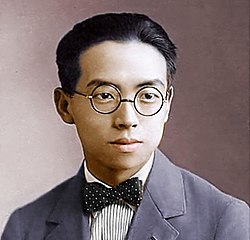
Liang Sicheng
Liang Sicheng (20 April 1901 – 9 January 1972) was a Chinese architect and architectural historian, known as the father of modern Chinese architecture. His father, Liang Qichao, was one of the most prominent Chinese scholars of the early 20th century. His wife was the architect and poet Lin Huiyin. His younger brother, Liang Siyong, was one of China's first archaeologists.
Liang authored the first modern history on Chinese architecture, and he was the founder of the Architecture Department of Northeastern University in 1928 and Tsinghua University in 1946. He was the Chinese representative of the Design Board which designed the United Nations headquarters in New York City. He, along with wife Lin Huiyin, Mo Zongjiang, and Ji Yutang, discovered and analyzed the first and second oldest timber structures still standing in China, located at Nanchan Temple and Foguang Temple at Mount Wutai.
He is recognized as the "Father of Modern Chinese Architecture". Princeton University, which awarded him an honorary doctoral degree in 1947, issued a statement praising him as "a creative architect who has also been a teacher of architectural history, a pioneer in historical research and exploration in Chinese architecture and planning, and a leader in the restoration and preservation of the priceless monuments of his country."
Liang Sicheng was born on 20 April 1901 in Tokyo, Japan, where his father, prolific scholar and reformist Liang Qichao, was in exile from China after the failed Hundred Days' Reform. During the waning years of the Qing dynasty, China's last imperial dynasty, the empire endured a series of foreign invasions and domestic struggles, beginning with the first Opium War in 1840. In 1898 the Guangxu Emperor, led by a circle of advisers, attempted to introduce drastic reforms to bring China onto the path to modernity. Liang was a leader of this movement. However, in the face of opposition from conservatives in the Qing court, the movement failed. The Empress Dowager Cixi, the emperor's adoptive mother and the power behind the throne, imprisoned the emperor, and executed many of the movement's leaders. Liang Qichao took refuge in Japan, where his eldest son was born.
After the Qing dynasty fell in 1911, Liang Sicheng's father returned to China from his exile in Japan. He briefly served in the government of the newly established Republic, which was taken over by a faction of warlords in Northern China (the "Beiyang clique", meaning Northern Ocean). Liang Qichao quit his government post and initiated a social and literary movement to introduce modern, Western thought to Chinese society.
Liang Sicheng was educated by his father in this progressive environment. In 1915, Liang entered Tsinghua College, a preparatory school in Beijing. (This college later became Tsinghua University.) In 1924, he and Lin went to University of Pennsylvania funded by the Boxer Indemnity Scholarship Program to study architecture under Paul Cret. Three years later, Liang received his master's degree in architecture. He greatly benefited from his education in America, which also prepared him for his future career as a scholar and professor in China.
In 1928, Liang married Lin Huiyin (known in English as Phyllis Lin), who had studied with him at the University of Pennsylvania and became an equally renowned scholar. She was recognized as an artist, architect and poet, admired by and friends with several famous scholars of her time, such as poet Xu Zhimo (with whom she also had a brief relationship), philosopher Jin Yuelin and economist Chen Daisun.
When the couple went back in 1928, they were invited by the Northeastern University in Shenyang. At that time Shenyang was under the control of Japanese troops, which was a big challenge to perform any professional practice. They went anyway, established the second School of Architecture in China, but also the first curriculum which took a western one (to be precise the curriculum from the University of Pennsylvania) as its prototype. Their effort was interrupted by Japan's occupation in the following year, but after 18 years, in 1946, the Liangs were again able to practice their professorship in Tsinghua University in Beijing. This time a more systematic and all-around curriculum was discreetly put forward, consisting of courses of fine arts, theory, history, science, and professional practice. This has become a reference for any other school of architecture later developed in China. This improvement also reflected the change of architectural style from the Beaux-Arts tradition to the modernist Bauhaus style since the 1920s.
Liang Sicheng
Liang Sicheng (20 April 1901 – 9 January 1972) was a Chinese architect and architectural historian, known as the father of modern Chinese architecture. His father, Liang Qichao, was one of the most prominent Chinese scholars of the early 20th century. His wife was the architect and poet Lin Huiyin. His younger brother, Liang Siyong, was one of China's first archaeologists.
Liang authored the first modern history on Chinese architecture, and he was the founder of the Architecture Department of Northeastern University in 1928 and Tsinghua University in 1946. He was the Chinese representative of the Design Board which designed the United Nations headquarters in New York City. He, along with wife Lin Huiyin, Mo Zongjiang, and Ji Yutang, discovered and analyzed the first and second oldest timber structures still standing in China, located at Nanchan Temple and Foguang Temple at Mount Wutai.
He is recognized as the "Father of Modern Chinese Architecture". Princeton University, which awarded him an honorary doctoral degree in 1947, issued a statement praising him as "a creative architect who has also been a teacher of architectural history, a pioneer in historical research and exploration in Chinese architecture and planning, and a leader in the restoration and preservation of the priceless monuments of his country."
Liang Sicheng was born on 20 April 1901 in Tokyo, Japan, where his father, prolific scholar and reformist Liang Qichao, was in exile from China after the failed Hundred Days' Reform. During the waning years of the Qing dynasty, China's last imperial dynasty, the empire endured a series of foreign invasions and domestic struggles, beginning with the first Opium War in 1840. In 1898 the Guangxu Emperor, led by a circle of advisers, attempted to introduce drastic reforms to bring China onto the path to modernity. Liang was a leader of this movement. However, in the face of opposition from conservatives in the Qing court, the movement failed. The Empress Dowager Cixi, the emperor's adoptive mother and the power behind the throne, imprisoned the emperor, and executed many of the movement's leaders. Liang Qichao took refuge in Japan, where his eldest son was born.
After the Qing dynasty fell in 1911, Liang Sicheng's father returned to China from his exile in Japan. He briefly served in the government of the newly established Republic, which was taken over by a faction of warlords in Northern China (the "Beiyang clique", meaning Northern Ocean). Liang Qichao quit his government post and initiated a social and literary movement to introduce modern, Western thought to Chinese society.
Liang Sicheng was educated by his father in this progressive environment. In 1915, Liang entered Tsinghua College, a preparatory school in Beijing. (This college later became Tsinghua University.) In 1924, he and Lin went to University of Pennsylvania funded by the Boxer Indemnity Scholarship Program to study architecture under Paul Cret. Three years later, Liang received his master's degree in architecture. He greatly benefited from his education in America, which also prepared him for his future career as a scholar and professor in China.
In 1928, Liang married Lin Huiyin (known in English as Phyllis Lin), who had studied with him at the University of Pennsylvania and became an equally renowned scholar. She was recognized as an artist, architect and poet, admired by and friends with several famous scholars of her time, such as poet Xu Zhimo (with whom she also had a brief relationship), philosopher Jin Yuelin and economist Chen Daisun.
When the couple went back in 1928, they were invited by the Northeastern University in Shenyang. At that time Shenyang was under the control of Japanese troops, which was a big challenge to perform any professional practice. They went anyway, established the second School of Architecture in China, but also the first curriculum which took a western one (to be precise the curriculum from the University of Pennsylvania) as its prototype. Their effort was interrupted by Japan's occupation in the following year, but after 18 years, in 1946, the Liangs were again able to practice their professorship in Tsinghua University in Beijing. This time a more systematic and all-around curriculum was discreetly put forward, consisting of courses of fine arts, theory, history, science, and professional practice. This has become a reference for any other school of architecture later developed in China. This improvement also reflected the change of architectural style from the Beaux-Arts tradition to the modernist Bauhaus style since the 1920s.
Recent media
Recent media