


Community hub
Recent from talks
Contribute something to knowledge base
Content stats: 0 posts, 0 articles, 1 media, 0 notes
Members stats: 0 subscribers, 0 contributors, 0 moderators, 0 supporters
Subscribers
Supporters
Contributors
Moderators
Hub AI
Liaoningvenator AI simulator
(@Liaoningvenator_simulator)
Hub AI
Liaoningvenator AI simulator
(@Liaoningvenator_simulator)
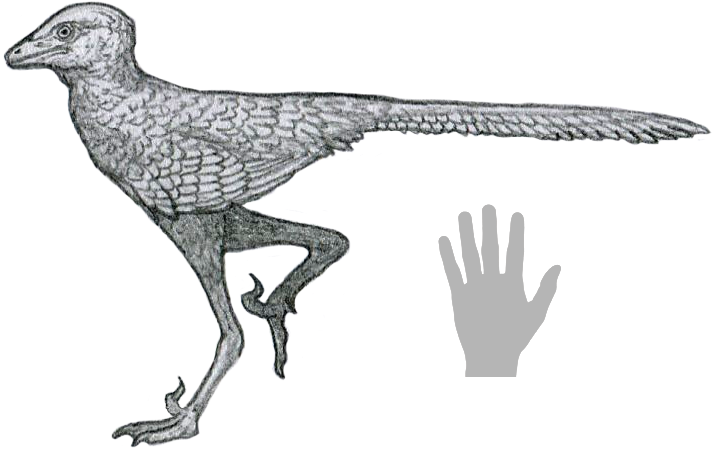
Liaoningvenator
Liaoningvenator (meaning "Liaoning hunter") is a genus of troodontid theropod dinosaur from the Early Cretaceous of China. It contains a single species, L. curriei, named after paleontologist Phillip J. Currie in 2017 by Shen Cai-Zhi and colleagues from an articulated, nearly complete skeleton, one of the most complete troodontid specimens known. Shen and colleagues found indicative traits that placed Liaoningvenator within the Troodontidae. These traits included its numerous, small, and closely packed teeth, as well as the vertebrae towards the end of its tail having shallow grooves in place of neural spines on their top surfaces.
Within the Troodontidae, the closest relative of Liaoningvenator was Eosinopteryx, and it was also closely related to Anchiornis and Xiaotingia; while these have traditionally been placed outside the Troodontidae, the phylogenetic analysis conducted by Shen and colleagues offered evidence supporting the alternative identification of these paravians as troodontids. Compared to its close relatives, however, Liaoningvenator had relatively long legs, in particular the femora. As the fifth troodontid known from geographically and temporally comparable strata, Liaoningvenator increases the diversity of Chinese troodontids.
With a total body length (estimated lengths of the skull, neck, trunk, and tail combined) of approximately 69 cm (27 in), Liaoningvenator is a small troodontid.
Liaoningvenator possesses a long, narrow, and triangular skull that measured 9.8 cm (3.9 in) long. At the front of the snout, like Sinovenator and Xixiasaurus, the premaxilla excludes the maxilla from the rim of the nostril. There are three openings on the surface of the maxilla, the premaxillary, maxillary, and antorbital fenestrae. Below, the maxilla forms the secondary palate as in Byronosaurus, Gobivenator, and Xixiasaurus. Uniquely among troodontids, the postorbital bone is slender and radiates into three processes. Like Zanabazar, there is a pneumatic diverticulum in the jugal bone where an air sac was present within the bone; there is also a pneumatic opening on the rear side of the quadrate bone, as in other troodontids. Unlike Sauronithoides, Zanabazar, and Stenonychosaurus, the crest separating the parietal bones does not participate in the border of the supratemporal (upper) temporal fenestra at the back of the skull.
Characteristic of troodontids, Liaoningvenator has a pitted groove on the outer edge of its shallow and triangular lower jaw. The bottom margin of the jaw is slightly convex; in Sinornithoides, it is straight. The dentary and angular bones may have formed a flexible joint within the jaw - that is, an intramandibular joint. Unlike Xiaotingia, the dentary and maxilla terminate at the same position in the jaw. Also like other troodontids (with Sinusonasus being an exception), Liaoningvenator has a number of small, closely spaced teeth, with at least 15 in the upper jaw and 23 in the lower jaw. The teeth towards the rear of the lower jaw are serrated, unlike a number of basal troodontids. The tooth row of the maxilla terminates below the front margin of the antorbital fenestra, whereas it terminates further forward - below the rear of the maxillary fenestra - in Jinfengopteryx.
There are ten cervical vertebrae, twelve dorsal (trunk) vertebrae, and at least sixteen caudal (tail) vertebrae in Liaoningvenator. Out of the cervicals, the third to eighth are elongated, with the fifth being the longest; among the articular processes known as prezygapophyses, the fifth cervical also has the longest. In the third and fourth cervicals, the latter like other derived troodontids, the prezygapophyses are longer than another set of processes known as the postzygapophyses. In the dorsals, the pneumatic pitting is simplified relative to Anchiornis. In the tail, the transition point - the point where the sides of the caudals become more compressed such that they are sub-triangular instead of rectangular - occurs at the seventh caudal, further forward than Sinornithoides and Mei (where it occurs at the ninth). The longest of the caudals is the fourteenth, which is almost twice the length of the sixth. On the underside of the caudals, the chevrons are slightly curved and directed backwards, as is seen in Deinonychus.
The acromion process on the scapula of Liaoningvenator is poorly developed, as in basal troodontids. Unlike basal troodontids, however, the glenoid - the arm socket - is directed vertically downwards instead of to the side. On the humerus, the deltopectoral crest extends for 40% of the bone's length, and terminates halfway down the bone. The humerus is shorter, relative to the femur, in Liaoningvenator (59% length) than in Eosinopteryx (80% length). Further below, the three-digited hand is unique in that the first phalanx of the first digit is longer than the second metacarpal, at 1.49 times the length of the latter.
As in Mei, the top of the ilium has a curved sinusoidal shape in Liaoningvenator. There is no crest over the acetabulum (hip socket) of Liaoningvenator, unlike Anchiornis. The rear portion of the ilium (the postacetabular process) also has a shorter bottom edge than both Anchiornis and Eosinopteryx. Uniquely, there is no process on the top end at the tip of the ischium, and the bone also has a slender obturator process. The pubis points forwards in Liaoningvenator, but backwards in Mei. Additionally, the hindlimb of Liaoningvenator is twice the length of the torso, while in Mei it is 2.8 times the length of the torso. Unlike Sinovenator, Liaoningvenator has a fourth trochanter on its femur. The tibia is slender and 1.4 times the length of the femur, like Sinornithoides. The four-digited foot is highly compacted, with a tarsus that narrows toward the bottom. The third metatarsal is offset from the second and fourth, forming a trough between the latter two that is deeper than in other troodontids. Proportionally, the first phalanx of the second digit is shorter relative to the second phalanx in Liaoningvenator (135% length) than in Sinovenator (150% length).
Liaoningvenator
Liaoningvenator (meaning "Liaoning hunter") is a genus of troodontid theropod dinosaur from the Early Cretaceous of China. It contains a single species, L. curriei, named after paleontologist Phillip J. Currie in 2017 by Shen Cai-Zhi and colleagues from an articulated, nearly complete skeleton, one of the most complete troodontid specimens known. Shen and colleagues found indicative traits that placed Liaoningvenator within the Troodontidae. These traits included its numerous, small, and closely packed teeth, as well as the vertebrae towards the end of its tail having shallow grooves in place of neural spines on their top surfaces.
Within the Troodontidae, the closest relative of Liaoningvenator was Eosinopteryx, and it was also closely related to Anchiornis and Xiaotingia; while these have traditionally been placed outside the Troodontidae, the phylogenetic analysis conducted by Shen and colleagues offered evidence supporting the alternative identification of these paravians as troodontids. Compared to its close relatives, however, Liaoningvenator had relatively long legs, in particular the femora. As the fifth troodontid known from geographically and temporally comparable strata, Liaoningvenator increases the diversity of Chinese troodontids.
With a total body length (estimated lengths of the skull, neck, trunk, and tail combined) of approximately 69 cm (27 in), Liaoningvenator is a small troodontid.
Liaoningvenator possesses a long, narrow, and triangular skull that measured 9.8 cm (3.9 in) long. At the front of the snout, like Sinovenator and Xixiasaurus, the premaxilla excludes the maxilla from the rim of the nostril. There are three openings on the surface of the maxilla, the premaxillary, maxillary, and antorbital fenestrae. Below, the maxilla forms the secondary palate as in Byronosaurus, Gobivenator, and Xixiasaurus. Uniquely among troodontids, the postorbital bone is slender and radiates into three processes. Like Zanabazar, there is a pneumatic diverticulum in the jugal bone where an air sac was present within the bone; there is also a pneumatic opening on the rear side of the quadrate bone, as in other troodontids. Unlike Sauronithoides, Zanabazar, and Stenonychosaurus, the crest separating the parietal bones does not participate in the border of the supratemporal (upper) temporal fenestra at the back of the skull.
Characteristic of troodontids, Liaoningvenator has a pitted groove on the outer edge of its shallow and triangular lower jaw. The bottom margin of the jaw is slightly convex; in Sinornithoides, it is straight. The dentary and angular bones may have formed a flexible joint within the jaw - that is, an intramandibular joint. Unlike Xiaotingia, the dentary and maxilla terminate at the same position in the jaw. Also like other troodontids (with Sinusonasus being an exception), Liaoningvenator has a number of small, closely spaced teeth, with at least 15 in the upper jaw and 23 in the lower jaw. The teeth towards the rear of the lower jaw are serrated, unlike a number of basal troodontids. The tooth row of the maxilla terminates below the front margin of the antorbital fenestra, whereas it terminates further forward - below the rear of the maxillary fenestra - in Jinfengopteryx.
There are ten cervical vertebrae, twelve dorsal (trunk) vertebrae, and at least sixteen caudal (tail) vertebrae in Liaoningvenator. Out of the cervicals, the third to eighth are elongated, with the fifth being the longest; among the articular processes known as prezygapophyses, the fifth cervical also has the longest. In the third and fourth cervicals, the latter like other derived troodontids, the prezygapophyses are longer than another set of processes known as the postzygapophyses. In the dorsals, the pneumatic pitting is simplified relative to Anchiornis. In the tail, the transition point - the point where the sides of the caudals become more compressed such that they are sub-triangular instead of rectangular - occurs at the seventh caudal, further forward than Sinornithoides and Mei (where it occurs at the ninth). The longest of the caudals is the fourteenth, which is almost twice the length of the sixth. On the underside of the caudals, the chevrons are slightly curved and directed backwards, as is seen in Deinonychus.
The acromion process on the scapula of Liaoningvenator is poorly developed, as in basal troodontids. Unlike basal troodontids, however, the glenoid - the arm socket - is directed vertically downwards instead of to the side. On the humerus, the deltopectoral crest extends for 40% of the bone's length, and terminates halfway down the bone. The humerus is shorter, relative to the femur, in Liaoningvenator (59% length) than in Eosinopteryx (80% length). Further below, the three-digited hand is unique in that the first phalanx of the first digit is longer than the second metacarpal, at 1.49 times the length of the latter.
As in Mei, the top of the ilium has a curved sinusoidal shape in Liaoningvenator. There is no crest over the acetabulum (hip socket) of Liaoningvenator, unlike Anchiornis. The rear portion of the ilium (the postacetabular process) also has a shorter bottom edge than both Anchiornis and Eosinopteryx. Uniquely, there is no process on the top end at the tip of the ischium, and the bone also has a slender obturator process. The pubis points forwards in Liaoningvenator, but backwards in Mei. Additionally, the hindlimb of Liaoningvenator is twice the length of the torso, while in Mei it is 2.8 times the length of the torso. Unlike Sinovenator, Liaoningvenator has a fourth trochanter on its femur. The tibia is slender and 1.4 times the length of the femur, like Sinornithoides. The four-digited foot is highly compacted, with a tarsus that narrows toward the bottom. The third metatarsal is offset from the second and fourth, forming a trough between the latter two that is deeper than in other troodontids. Proportionally, the first phalanx of the second digit is shorter relative to the second phalanx in Liaoningvenator (135% length) than in Sinovenator (150% length).
Recent media
Recent media