Recent from talks
Nothing was collected or created yet.
Herstal
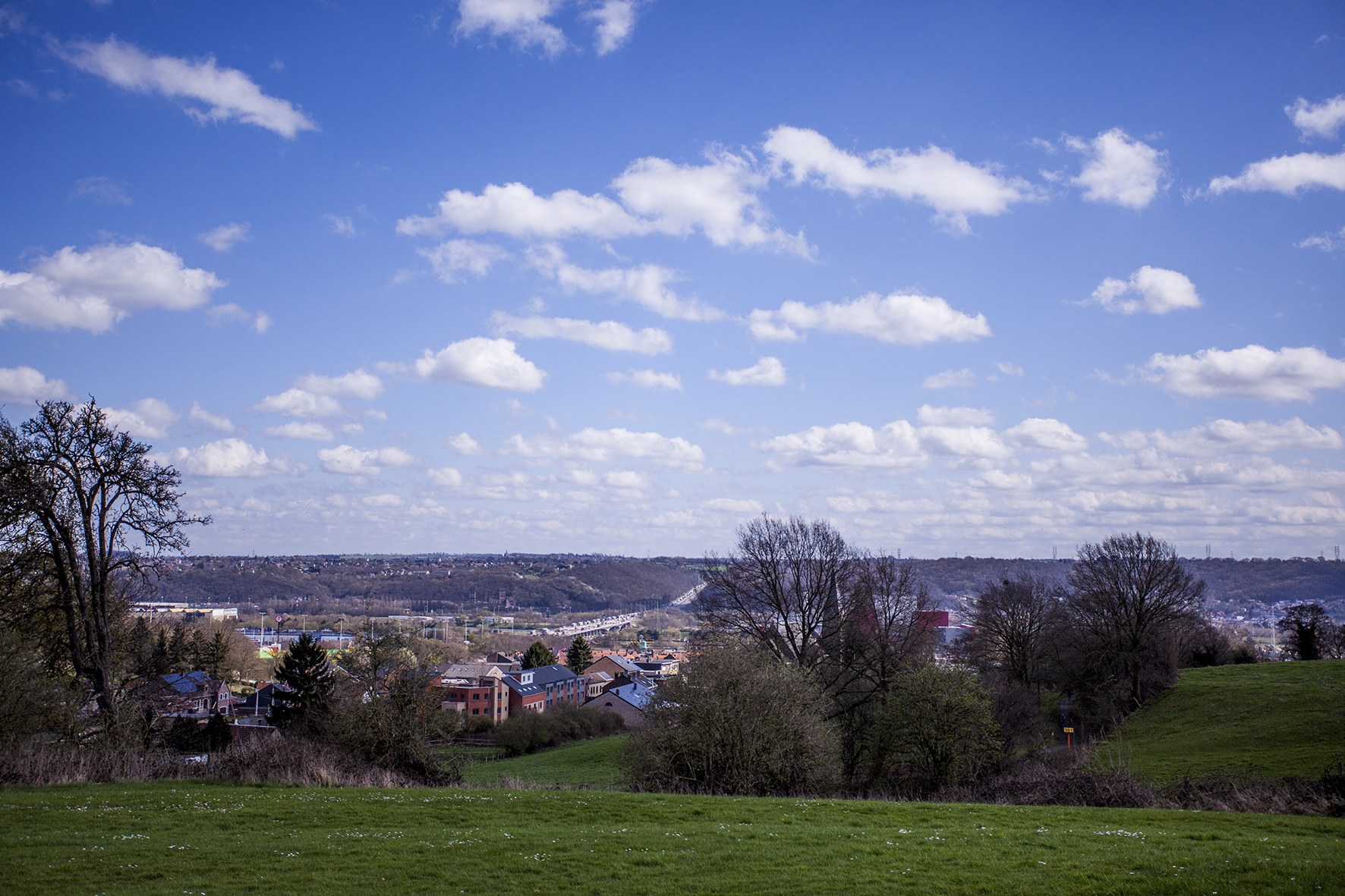
View on WikipediaHerstal (French pronunciation: [ɛʁstal] ⓘ; Walloon: Hesta), formerly known as Heristal, or Héristal (pronounced [eʁistal]), is a municipality and city[2] of Wallonia located in the province of Liège, Belgium. It lies along the Meuse river. Herstal is included in the "Greater Liège" agglomeration, which counts about 600,000 inhabitants.
Key Information
The municipality consists of the following districts: Herstal, Liers, Milmort, and Vottem.
A large armaments factory, the Fabrique Nationale or FN, and the biggest industrial zone of Wallonia (Haut-Sart) provide employment locally.
History
[edit]Merovingian and Carolingian golden age
[edit]The name Herstal is of Franconian origin, consisting of the elements hari ("army") and stal ("resting place", "camp"; compare Modern German Stall, "stable"). The first mention of Herstal is in Latin documents from ±718 (Cheristalius corrected to Charistalius) and 723 (Harastallius). The first possibly non-Latinized occurrences are Eristail (in 919) and Harstail (1197).[3][4]

Pippin of Herstal (ca 635–714), Mayor of the Palace and de facto ruler of Austrasia and Neustria and founder of the family that established the Carolingian dynasty, probably chose this location as his main residence because of its proximity to the major cities of Tongeren, Maastricht, and Liège. Pippin was the father of Charles Martel, victor of the decisive Battle of Tours that stopped the Arab-Muslim advance into northwestern Europe, and great grandfather of Charlemagne, also supposedly born in Herstal. Charlemagne lived for at least fifteen years in Herstal but later established his capital in Aachen, ending Herstal's period of medieval glory as capital of the empire.
Late Middle Ages and modern era
[edit]The town was incorporated into the Duchy of Lower Lotharingia, which became part of the Duchy of Brabant at the end of the 12th century. Despite its proximity to Liège, the territory of Herstal did not become part of the Prince-Bishopric of Liège until 1740, when the prince-bishop Georges-Louis de Berghes bought it from Frederick II of Prussia.[5] By that time, the town was mainly known for its able craftsmen: ceramists, blacksmiths, and clockmakers.
In the 19th century, Herstal became a city of coal and steel. It would, however, become world-famous thanks to the foundation of the Fabrique Nationale, a major armament factory, in 1889. Several motorcycle manufacturers also established themselves in town. On August 7, 1914, at the very beginning of World War I, the invading German army executed 27 civilians and destroyed 10 homes in Herstal.

After World War II, heavy industry saw a prolonged period of decline, drastically reducing the number of jobs in these areas. Today, Herstal's economy is picking up again, with more than 200 companies established on its territory, including Techspace Aero, which manufactures precision parts for the European Space Agency’s Ariane rocket.
Politics
[edit]| Municipal head | |
|---|---|
| Mayor | Frédéric Daerden (PS) |
| Deputies | Franco Ianeri (PS) Marc Haeken (PS) Jean-Louis Lefebvre (PS) Christian Laverdeur (PS) Léon Campstein (PS) André Namotte (E.P.H.) Isabelle Thomsin (PS) |
| Party | % | Diff. 2000 | Seat | Diff 2000 | Leader |
|---|---|---|---|---|---|
| PS | 50,86 | -1,14 | 20 | -1 | Albert Crépin |
| EPH (PSC) | 18,99 | +2,59 | 6 | +1 | Norbert Weytjens |
| MR[6] (PRL) | 14,14 | +3,24 | 4 | +1 | Jennifer Maus [7] |
| PTB[8] | 9,38 | +2,18 | 2 | 0 | Nadia Moscufo |
| ECOLO[9] | 6,62 | -2,28 | 1 | -1 | Anne-Marie Meunier-Balthasart |
Herstal is a left-wing/socialist stronghold. It was also the strongest area in support of the far-left Workers' Party of Belgium in the 2019 elections, gaining 27.55% of the votes in Herstal.[10]
Sites
[edit]Notable people
[edit]- Pippin of Herstal, Mayor of the Palace of Austrasia, Neustria and Burgundy (635 or 640–714)
- Charles Martel, Mayor of the Palace and Duke of the Franks (686–741)
- Charlemagne, king of the Franks and founder of the Holy Roman Empire (742 or 747–814, birth in Herstal is uncertain)
- John Browning, American firearms designer (1855–1926)
Twin cities
[edit]See also
[edit]References
[edit]- ^ "Wettelijke Bevolking per gemeente op 1 januari 2018". Statbel. Retrieved 9 March 2019.
- ^ "Décret accordant le titre de ville à la commune d'Herstal". www.ejustice.just.fgov.be (in French). Belgian Official Gazette. 30 April 2009. Retrieved 28 February 2025.
- ^ Wolfgang Haubrichs: The Multilingualism of the Early Middle Ages: Evidence from Peripheral Regions of the Regnum orientalium Francorum. In: Robert Gallagher, Edward Roberts, Francesca Tinti (eds.): The Languages of Early Medieval Charters: Latin, Germanic Vernaculars, and the Written Word. Leiden 2020, ISBN 9789004428119, p. 85f.
- ^ Maurits Gysseling, Herstal in the Toponymical Dictionary of Belgium, the Netherlands, Luxembourg, Northern France and West Germany (before 1226).
- ^ Histoire de la principauté de Liège, B. Dumoulin, J.L. Kupper, éd. priv., 2002, (ISBN 2708947753)
- ^ MR : Section de HERSTAL Archived 2012-06-05 at archive.today
- ^ "Jennifer Maus". Archived from the original on 2010-10-27. Retrieved 2009-03-18.
- ^ "liege.ptb.be: Actuel". Archived from the original on 2014-08-12. Retrieved 2008-12-13.
- ^ "ECOLO - Ecolo - Groupe local de Liège". Archived from the original on 2017-03-22. Retrieved 2008-12-13.
- ^ "Les résultats électoraux du PTB".
External links
[edit]- Official website (in French)
Herstal
View on GrokipediaGeography and Environment
Location and Physical Features
Herstal is a municipality located in the Wallonia region of Belgium, in the province of Liège, bordering the city of Liège to the east. It occupies a position along the right bank of the Meuse River, approximately 5 kilometers west of central Liège, within the broader Meuse Valley. The geographic coordinates of its center are approximately 50°40′N 5°38′E.[8][9] The municipality encompasses an area of 23.54 square kilometers, characterized by a mix of alluvial plains and gently rising terrain typical of the Meuse Valley. Elevations range from a low of 59 meters above sea level along the Meuse River to a high of 185 meters in the Vottem section, with an average altitude around 135 meters. This relief supports a landscape of riverine lowlands transitioning to higher plateaus, influenced by the river's meandering course and surrounding loess deposits.[10][11] The Meuse River forms a key physical boundary and feature, providing floodplain areas prone to historical flooding but also fertile soils that have shaped agricultural and industrial land use. Urban expansion has modified much of the natural terrain, yet remnants of wooded hills and green corridors persist, particularly toward the south and west.[9]Climate and Ecology
Herstal exhibits a temperate oceanic climate (Köppen Cfb), typical of the Liège region in Wallonia, with mild summers, cool winters, and consistent precipitation influenced by westerly Atlantic air masses. Average annual temperatures range from about 3°C in January to 18°C in July, with an overall yearly mean of approximately 10°C. Precipitation averages 962 mm annually, distributed relatively evenly across months but peaking in December, contributing to lush vegetation in surrounding areas despite urban constraints.[12] Ecologically, Herstal's landscape is predominantly urban-industrial, with limited natural habitats due to dense development, historical arms manufacturing, and proximity to major transport corridors like the Albert Canal. Riparian zones along the canal and nearby Meuse River provide modest corridors for aquatic and semi-aquatic species, but overall biodiversity remains low, mirroring Wallonia's broader pressures from habitat fragmentation, pollution, and urbanization. Industrial activities have historically contributed to local air and water contamination, though regulatory compliance by entities like FN Herstal emphasizes monitoring and mitigation. No designated nature reserves exist within the municipality, and ecological management prioritizes urban green spaces amid Belgium's national trends of species decline driven by similar anthropogenic factors.[13][14][15]Demographics
Population Trends
The population of Herstal has exhibited gradual growth since the late 20th century, driven primarily by net positive migration amid low natural increase typical of Walloon municipalities. On 1 January 2020, the municipality recorded 40,162 residents.[16] By 2022, population density reached 1,733 inhabitants per square kilometer across its approximately 23.5 square kilometers, corresponding to roughly 40,700 residents.[17] Historical data indicate a baseline of 36,356 inhabitants in 1990, reflecting an overall increase of about 10% over three decades to the early 2020s, with an average annual growth rate below 0.4%.[1] Projections estimate continued modest expansion to 41,032 by 2025, consistent with regional patterns of immigration offsetting aging demographics and subdued birth rates.[1]| Year | Population | Source Notes |
|---|---|---|
| 1990 | 36,356 | Census baseline |
| 2020 (Jan 1) | 40,162 | Official register |
| 2025 (est) | 41,032 | Projection based on trends |
Socioeconomic Composition
Herstal's socioeconomic composition reflects its industrial heritage and proximity to Liège, resulting in a predominantly working-class population with elevated unemployment and lower educational attainment compared to national averages. The median annual household income stood at €22,589 in 2020, below the Walloon regional median and indicative of modest living standards amid reliance on manufacturing and service sector jobs.[17] Social integration income recipients, a proxy for economic vulnerability, numbered 51.9 per 1,000 residents aged 18-64 in 2021, higher than provincial norms and signaling persistent poverty risks.[17] Employment is dominated by blue-collar occupations tied to local industries like arms production at FN Herstal, with an activity rate of 68.3% and employment rate of 56.7% among the working-age population in 2023. Unemployment remains a structural challenge, with administrative rates reaching 17.1% on average in 2023—more than double the national ILO figure of around 6%—and provisional estimates for 2024 suggesting persistence at similar levels. Among insured workers, the rate was 12.5% in 2022, underscoring disparities driven by deindustrialization and skill mismatches.[19][17] Single-parent households, at 14.1% of total households in 2022, and 14.8% of minors in jobless households as of December 2020, further highlight vulnerability to economic shocks.[17] Educational levels are relatively low, with only 15.9% of adults holding higher education qualifications as of the 2017 census, compared to over 40% nationally, limiting upward mobility and contributing to occupational segregation in manual labor. This profile aligns with Wallonia's broader socioeconomic patterns, where official statistics from bodies like Statbel and IWEPS reveal systemic underperformance relative to Flanders, attributable to historical industrial decline rather than policy alone.[17] Isolated elderly households, comprising 14.7% in 2022, add to social fragmentation, though community ties from factory work provide some resilience.[17]History
Prehistoric and Roman Periods
Archaeological evidence for prehistoric occupation in Herstal is limited, with the earliest documented activity dating to the Late Iron Age at the Pré Wigier site, where cremation burials indicate continuity from pre-Roman tribal practices in the Meuse Valley among the Tungri or related groups.[20] These findings, uncovered during rescue excavations in 1960–1961 amid construction, reveal regional variations in funerary rites, including differences in pyre construction and grave goods that suggest emerging social hierarchies prior to Roman influence.[20] Broader regional surveys in the Liège area document Paleolithic and Neolithic artifacts, but no specific prehistoric sites have been confirmed within Herstal's modern boundaries beyond this transitional Iron Age context. The Roman period, beginning with the conquest of Gallia Belgica after Julius Caesar's campaigns (57–50 BC), saw Herstal integrated into the province's infrastructure, positioned along a key route connecting the civitas capital at Tongeren (Atuatuca Tungrorum) to the Rhine frontier near modern Aachen. The Pré Wigier cemetery continued into the 1st–3rd centuries AD, featuring over 100 cremations analyzed for strontium isotopes, which indicate predominantly local origins for the deceased with low mobility, contrasting with higher variability in nearby sites and suggesting a stable rural community.[21] A distinctive artifact from this era is an articulated skeleton of a juvenile male European fallow deer (Dama dama), radiocarbon dated to the 2nd–3rd century AD (cal AD 140–340), confirmed via ancient DNA and morphology; this represents the earliest such find in Roman northwestern Europe, likely imported from Mediterranean regions for elite hunting, ornamental parks, or ritual purposes, highlighting connections to imperial trade networks. [22] By the late Roman period (4th century AD), the settlement likely transitioned into a fortified village amid declining provincial control, setting the stage for post-Roman developments.[20]Carolingian and Medieval Development
Herstal, known historically as Héristal, emerged as a key political center during the late 7th and early 8th centuries under Pippin II, Mayor of the Palace for Austrasia, who expanded his influence to effectively rule the Frankish kingdoms of Neustria and Burgundy as well.[23] Born around 635, Pippin established his residence at the villa Heristal, from which the locality derives its name, and consolidated power after his decisive victory at the Battle of Tertry in 687, marking the rise of the Carolingian family.[24] [25] As Duke and Prince of the Franks, he managed royal administration while Merovingian kings remained nominal rulers, laying the groundwork for his descendants' ascension.[26] Pippin's son, Charles Martel, and grandson, Pippin III (Pippin the Short), continued this trajectory from bases including Herstal, culminating in the crowning of Charlemagne as King of the Franks in 768.[27] Charlemagne, Pippin's great-grandson, maintained Herstal as one of his residences during his early reign, utilizing the established palatial complex before establishing Aachen as the primary capital around 794, which diminished Herstal's imperial prominence.[28] This shift reflected broader Carolingian administrative centralization, though Herstal retained associations with the dynasty's origins. Following the dissolution of the Carolingian Empire after Charlemagne's death in 814, Herstal entered a phase of localized medieval development within the region of Austrasia, increasingly integrated into the ecclesiastical territories of the Prince-Bishopric of Liège by the 10th century.[29] The locality's strategic position along trade routes sustained modest economic activity, but it lacked the political centrality of its Carolingian era, evolving into a subordinate settlement amid feudal fragmentation in the Low Countries.[30] Archaeological evidence from the area indicates continuity of settlement with Roman-era influences, though specific medieval fortifications or charters remain sparsely documented.[31]Industrial Era to Present
The industrialization of Herstal accelerated in the late 19th century, driven by the establishment of the Fabrique Nationale d'Armes de Guerre (FN) in 1889, a state-initiated factory aimed at producing 150,000 Mauser Model 1889 rifles under a government contract to bolster Belgium's military capabilities.[32] [6] Located in Herstal due to its proximity to Liège's metalworking traditions dating back centuries, FN began assembling its first rifles on December 31, 1891, marking the onset of large-scale arms manufacturing that would define the municipality's economy.[6] Initially supplementing rifle production with bicycles to utilize idle machinery, FN diversified into motorcycles, automobiles (produced until 1935), and trucks (until 1970), reflecting broader industrial expansion in the region.[33] During World War I, FN's facilities supported Allied forces with small arms and ammunition production, contributing to Belgium's defense efforts amid occupation threats.[34] The interwar period saw key innovations, including a 1897 partnership with American designer John Moses Browning, leading to iconic firearms like the Auto-5 shotgun and High Power pistol.[35] In World War II, German forces occupied the Herstal plant on May 28, 1940, but critical designs, such as the High Power pistol, were smuggled out beforehand, preserving technological continuity.[6] Post-liberation, FN rebuilt and expanded exports, becoming Europe's largest military small arms exporter by the 1950s, with products like the FN MAG machine gun adopted by NATO allies starting in 1958.[36] From the mid-20th century onward, Herstal's identity became synonymous with FN Herstal, part of the Herstal Group alongside Browning, employing thousands and anchoring the local economy amid deindustrialization in other sectors.[37] The company's resilience through geopolitical shifts enabled sustained growth, including diversification into ammunition and technology transfers.[38] In recent decades, FN secured major contracts, such as a €1.7 billion deal with the Belgian government in 2023 for light weapons and ammunition, and a 20-year small-calibre ammunition agreement in June 2024, generating €934 million in 2024 revenue amid heightened European defense demands.[39] [40] [41] Today, FN Herstal continues to innovate in small arms and systems, maintaining Herstal's role as a global hub for precision manufacturing while navigating export regulations and security challenges like drone threats to facilities.[42] [43]Economy
Arms Manufacturing and FN Herstal
FN Herstal, formally Fabrique Nationale Herstal, was founded on July 3, 1889, in Herstal, Belgium, as a state-initiated enterprise to produce 150,000 Mauser Model 1889 rifles under license for the Belgian Army, marking the onset of large-scale arms manufacturing in the region.[35] [37] The factory's establishment leveraged Herstal's proximity to Liège's industrial hub and skilled metalworking workforce, transforming the locality into a center for precision engineering in firearms. Initial production focused on bolt-action rifles, but the company rapidly diversified through collaborations with designers like John Browning, yielding iconic models such as the FN Model 1910 pistol and the Browning Auto-5 shotgun by the early 20th century.[44] [45] Over the subsequent decades, FN Herstal evolved into a global leader in small-caliber weapons and ammunition, producing assault rifles like the FAL (adopted by over 90 countries since 1953), the SCAR family for special operations, and machine guns such as the Minimi, alongside pistols including the Five-seveN and P90 submachine gun.[5] [43] The firm's manufacturing emphasizes modular designs, high reliability under extreme conditions, and integration of advanced materials, with facilities in Herstal handling design, prototyping, and assembly for military, law enforcement, and civilian markets. Ownership resides with the FN Browning Group (renamed from Herstal Group in June 2024), which is controlled by Wallonie Entreprendre under the Walloon Region of Belgium, ensuring regional economic alignment while enabling export-driven growth.[46] [47] FN Herstal's operations remain pivotal to Herstal's economy, employing a significant portion of the local workforce amid the municipality's industrial heritage, with the parent group supporting 4,100 direct jobs worldwide as of 2024.[5] In 2023, FN Herstal reported sales exceeding €300 million, contributing to the group's €934 million revenue in 2024, bolstered by cost efficiencies and surging demand from NATO allies' rearmament efforts.[47] [5] Key contracts include a €1.3 billion, 20-year agreement signed in 2023 with the Belgian Ministry of Defence for small-caliber ammunition and maintenance, alongside expansions in European production to meet geopolitical pressures from conflicts like Ukraine.[48] [49] This has driven nearly 20% annual growth since 2022, with Wallonia investing an additional €100 million in 2025 to sustain capacity amid projections for the Belgian defense sector to double by 2033, creating thousands of jobs.[41] [50] [51]Broader Industrial Base and Recent Developments
The Hauts-Sarts industrial park, spanning 450 hectares, serves as the cornerstone of Herstal's broader manufacturing economy, accommodating approximately 350 companies and employing nearly 10,000 workers in sectors including precision engineering, chemicals, and materials processing.[52] This zone hosts firms such as Vanhulen, specializing in high-precision springs for industrial applications, and Consolidated Precision Products Belgium, which produces thin-wall investment castings using equiaxed alloys for aerospace and industrial gas turbine components.[53][54] Chemical and materials enterprises further contribute, with Gemaco providing specialized corrosion-resistant materials for urea and nitric acid processes in fertilizer production, Lambert Chemicals distributing industrial solvents and additives from a 10,000 m² facility, and Emubel manufacturing bituminous emulsions and cutback binders for road infrastructure.[55][56][57] Iron and steel processing also persists in the area, supporting local metalworking traditions.[58] Recent developments reflect efforts to modernize and expand this base amid regional industrial revitalization. In 2024, Thales Belgium inaugurated a new production line at its Herstal facility to boost output of 70mm rockets by a factor of five by 2025, enhancing supply for European defense initiatives while leveraging local precision manufacturing expertise.[59] Concurrently, the Herstal Logistics project advanced with the erection of its first structural column in May 2025, introducing sustainable warehousing under the Circle® concept to capitalize on proximity to the Albert Canal for multimodal transport.[60] A district heating network project, launched in 2025, aims to recover up to 2,400 GWh of industrial waste heat annually across Wallonia, with Herstal as a pilot site to improve energy efficiency in manufacturing operations.[61] These initiatives underscore a shift toward sustainable and logistics-integrated industry, complementing traditional metal and chemical outputs.Government and Politics
Local Administration
Herstal's local government operates under the framework of Belgian municipal law, with power divided between a legislative municipal council (conseil communal) of 35 elected members and an executive collège communal comprising the mayor and six aldermen (échevins). The council, elected for six-year terms, approves budgets, bylaws, and major policies, while the collège executes daily administration and coordinates services.[62][63] The collège meets weekly under the council's oversight, focusing on areas like public safety, infrastructure, and social welfare.[64] Following the October 13, 2024, local elections, the council's majority is held by a coalition of the Parti Socialiste local list (PS-H), Engagés, and Mouvement Réformateur (MR), enabling the reappointment of Frédéric Daerden (PS) as mayor (bourgmestre). Daerden, who has led the municipality since 2006, oversees police, security, education, and intermunicipal coordination.[65][64] The opposition, primarily the Workers' Party (PTB) with 11 seats, declined to join the executive despite strong electoral performance.[65] The collège communal, sworn in on December 2, 2024, assigns specific competencies to its members:| Position | Name | Key Responsibilities |
|---|---|---|
| Bourgmestre | Frédéric Daerden | Police, governance coordination, security, education, communication |
| 1ère Échevine | Bernadette Vandenbergh | Civil status, population registry, cemeteries, local democracy |
| 2ème Échevin | Jean-Louis Lefèbvre | Public buildings, roads, economic development, mobility |
| 3ème Échevin | Stéphane Ochendzan | Youth, public spaces, social cohesion, seniors |
| 4ème Échevin | Thierry Willems | Commerce, events, sports, animal welfare |
| 5ème Échevine | Sylvia Spagnoletti | Culture, tourism, heritage |
| 6ème Échevin | Raphael Da Cas | Budget, finances, IT, personnel |
| Présidente du CPAS | Bojana Visic | Social action, employment, health, urbanism, environment |

