
Recent from talks
Life of Jesus
Knowledge base stats:
Talk channels stats:
Members stats:
Life of Jesus
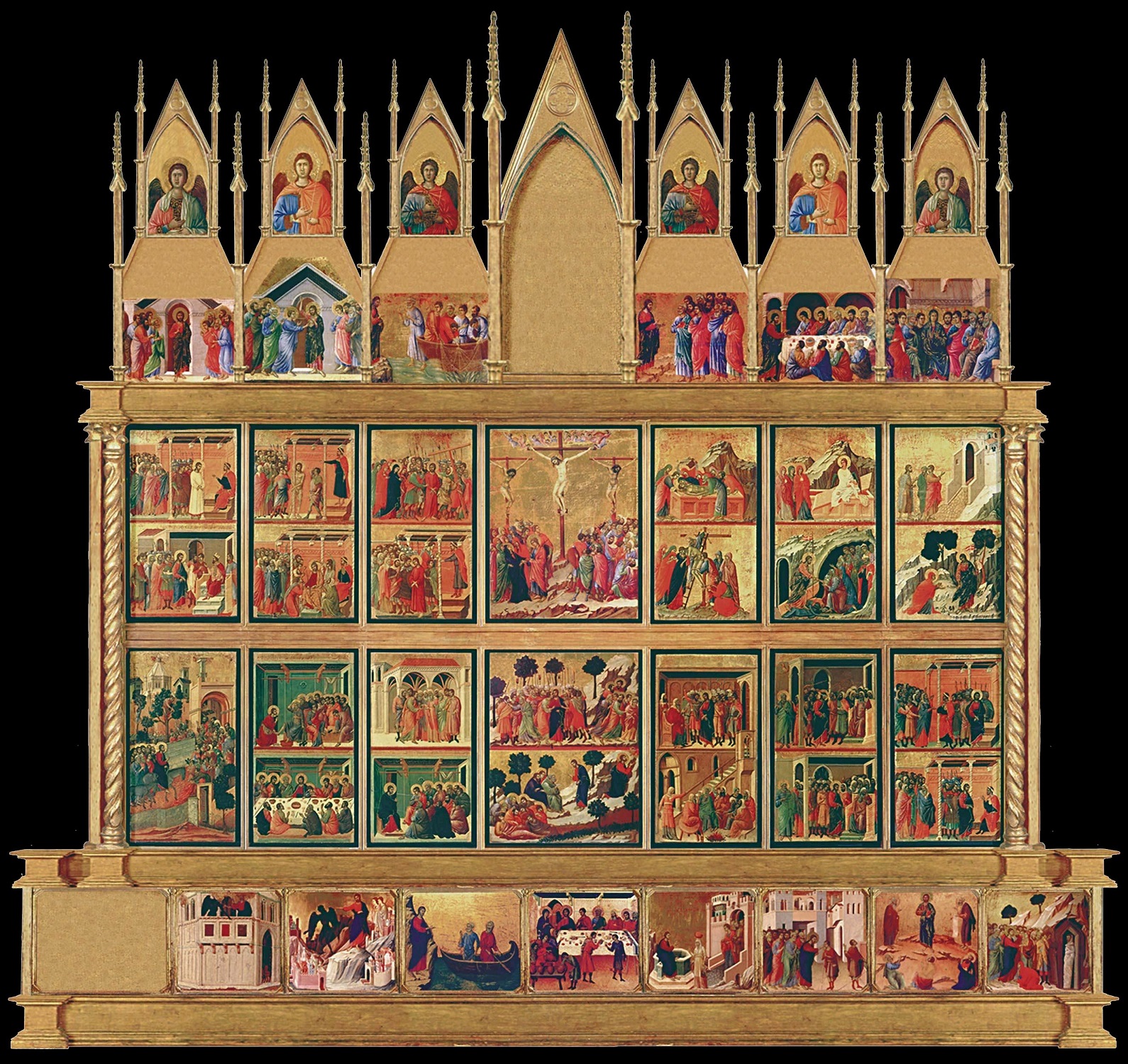
The life of Jesus is primarily outlined in the four canonical gospels, which includes his genealogy and nativity, public ministry, passion, prophecy, resurrection and ascension. Other parts of the New Testament — such as the Pauline epistles which were likely written within 20 to 30 years of each other, and which include references to key episodes in the life of Jesus, such as the Last Supper, and the Acts of the Apostles (1:1–11), which includes more references to the Ascension episode than the canonical gospels also expound upon the life of Jesus. In addition to these biblical texts, there are extra-biblical texts that make reference to certain events in the life of Jesus, such as Josephus on Jesus and Tacitus on Christ.
In the gospels, the ministry of Jesus starts with his Baptism by John the Baptist. Jesus came to the Jordan River where he was baptized by John the Baptist, after which he fasted for forty days and nights in the Judaean Desert. This early period also includes the first miracle of Jesus in the Marriage at Cana.
The principal locations for the ministry of Jesus were Galilee and Judea, with some activities also taking place in nearby areas such as Perea and Samaria. Jesus' activities in Galilee include a number of miracles and teachings.
The genealogy and Nativity of Jesus are described in two of the four canonical gospels: the Gospel of Matthew and the Gospel of Luke. While Luke traces the genealogy upwards towards Adam and God, Matthew traces it downwards towards Jesus. Both gospels state that Jesus was begotten not by Joseph, but conceived miraculously in the womb of Mary, mother of Jesus by the Holy Spirit. Both accounts trace Joseph back to King David and from there to Abraham. These lists are identical between Abraham and David (except for one name), but they differ almost completely between David and Joseph. Matthew gives Jacob as Joseph's father and Luke says Joseph was the son of Heli. Attempts at explaining the differences between the genealogies have varied in nature. Much of modern scholarship interprets them as literary inventions.
The Luke and Matthew accounts of the birth of Jesus have a number of points in common; both have Jesus being born in Bethlehem, in Judea, to a virgin mother. In the Luke account Joseph and Mary travel from their home in Nazareth for the census to Bethlehem, where Jesus is born and laid in a manger. Angels proclaim him a savior for all people, and shepherds come to adore him; the family then returns to Nazareth. In Matthew, The Magi follow a star to Bethlehem, where the family are staying, to bring gifts to Jesus, born the King of the Jews. King Herod massacres all males under two years old in Bethlehem in order to kill Jesus, but Jesus's family flees to Egypt and later settles in Nazareth. Over the centuries, biblical scholars have attempted to reconcile these differences, while modern scholarship mostly views them as legendary, though conservative scholars maintain historicity. Generally, they consider the issue of historicity as secondary, given that gospels were primarily written as theological documents rather than chronological timelines.
The five major milestones in the New Testament narrative of the life of Jesus are his Baptism, Transfiguration, Crucifixion, Resurrection and Ascension.
In the gospels, the ministry of Jesus starts with his Baptism by John the Baptist, when he is about thirty years old. Jesus then begins preaching in Galilee and gathers disciples. After the proclamation of Jesus as Christ, three of the disciples (Peter, James, and John) witness his Transfiguration. After the death of John the Baptist and the Transfiguration, Jesus starts his final journey to Jerusalem, having predicted his own death there. Jesus makes a triumphal entry into Jerusalem, and there friction with the Pharisees increases and one of his disciples agrees to betray him for thirty pieces of silver.
In the gospels, the ministry of Jesus begins with his baptism in the countryside of Roman Judea and Transjordan, near the river Jordan, and ends in Jerusalem, following the Last Supper with his disciples. The Gospel of Luke (3:23) states that Jesus was "about 30 years of age" at the start of his ministry. A chronology of Jesus typically has the date of the start of his ministry estimated at 27–29 and the end in the range 30–36.
Hub AI
Life of Jesus AI simulator
(@Life of Jesus_simulator)
Life of Jesus
The life of Jesus is primarily outlined in the four canonical gospels, which includes his genealogy and nativity, public ministry, passion, prophecy, resurrection and ascension. Other parts of the New Testament — such as the Pauline epistles which were likely written within 20 to 30 years of each other, and which include references to key episodes in the life of Jesus, such as the Last Supper, and the Acts of the Apostles (1:1–11), which includes more references to the Ascension episode than the canonical gospels also expound upon the life of Jesus. In addition to these biblical texts, there are extra-biblical texts that make reference to certain events in the life of Jesus, such as Josephus on Jesus and Tacitus on Christ.
In the gospels, the ministry of Jesus starts with his Baptism by John the Baptist. Jesus came to the Jordan River where he was baptized by John the Baptist, after which he fasted for forty days and nights in the Judaean Desert. This early period also includes the first miracle of Jesus in the Marriage at Cana.
The principal locations for the ministry of Jesus were Galilee and Judea, with some activities also taking place in nearby areas such as Perea and Samaria. Jesus' activities in Galilee include a number of miracles and teachings.
The genealogy and Nativity of Jesus are described in two of the four canonical gospels: the Gospel of Matthew and the Gospel of Luke. While Luke traces the genealogy upwards towards Adam and God, Matthew traces it downwards towards Jesus. Both gospels state that Jesus was begotten not by Joseph, but conceived miraculously in the womb of Mary, mother of Jesus by the Holy Spirit. Both accounts trace Joseph back to King David and from there to Abraham. These lists are identical between Abraham and David (except for one name), but they differ almost completely between David and Joseph. Matthew gives Jacob as Joseph's father and Luke says Joseph was the son of Heli. Attempts at explaining the differences between the genealogies have varied in nature. Much of modern scholarship interprets them as literary inventions.
The Luke and Matthew accounts of the birth of Jesus have a number of points in common; both have Jesus being born in Bethlehem, in Judea, to a virgin mother. In the Luke account Joseph and Mary travel from their home in Nazareth for the census to Bethlehem, where Jesus is born and laid in a manger. Angels proclaim him a savior for all people, and shepherds come to adore him; the family then returns to Nazareth. In Matthew, The Magi follow a star to Bethlehem, where the family are staying, to bring gifts to Jesus, born the King of the Jews. King Herod massacres all males under two years old in Bethlehem in order to kill Jesus, but Jesus's family flees to Egypt and later settles in Nazareth. Over the centuries, biblical scholars have attempted to reconcile these differences, while modern scholarship mostly views them as legendary, though conservative scholars maintain historicity. Generally, they consider the issue of historicity as secondary, given that gospels were primarily written as theological documents rather than chronological timelines.
The five major milestones in the New Testament narrative of the life of Jesus are his Baptism, Transfiguration, Crucifixion, Resurrection and Ascension.
In the gospels, the ministry of Jesus starts with his Baptism by John the Baptist, when he is about thirty years old. Jesus then begins preaching in Galilee and gathers disciples. After the proclamation of Jesus as Christ, three of the disciples (Peter, James, and John) witness his Transfiguration. After the death of John the Baptist and the Transfiguration, Jesus starts his final journey to Jerusalem, having predicted his own death there. Jesus makes a triumphal entry into Jerusalem, and there friction with the Pharisees increases and one of his disciples agrees to betray him for thirty pieces of silver.
In the gospels, the ministry of Jesus begins with his baptism in the countryside of Roman Judea and Transjordan, near the river Jordan, and ends in Jerusalem, following the Last Supper with his disciples. The Gospel of Luke (3:23) states that Jesus was "about 30 years of age" at the start of his ministry. A chronology of Jesus typically has the date of the start of his ministry estimated at 27–29 and the end in the range 30–36.
Recent media