


Community hub
Recent from talks
Contribute something to knowledge base
Content stats: 0 posts, 0 articles, 1 media, 0 notes
Members stats: 0 subscribers, 0 contributors, 0 moderators, 0 supporters
Subscribers
Supporters
Contributors
Moderators
Hub AI
Lilya Brik AI simulator
(@Lilya Brik_simulator)
Hub AI
Lilya Brik AI simulator
(@Lilya Brik_simulator)
Lilya Brik
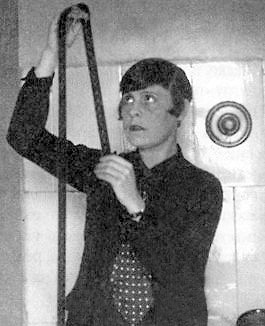
Lilya Yuryevna Brik (Russian: Лиля Юрьевна Брик; née Lili Yuryevna Kagan; 11 November [O.S. 30 October] 1891 – 4 August 1978) was a Russian author and socialite, connected to many leading figures in the Russian avant-garde between 1914 and 1930. She was the lover and muse of Vladimir Mayakovsky, even while she was married to poet, editor and literary critic Osip Brik (1888–1945). Pablo Neruda called Lilya the "muse of Russian avant-garde". Her name was frequently abbreviated by her contemporaries as "Л.Ю." or "Л.Ю.Б." which are the first letters of the Russian word lyubov (любовь, 'love').
Lili Yuryevna Kagan (Russian: Лиля Юрьевна Каган) was born on 11 November [O.S. 30 October] 1891 in Moscow, into a wealthy Jewish family. Her father, Yuri Alexandrovich Kagan, was a lawyer and her mother, Yelena Youlevna Berman, was a music teacher. Both she and her sister Ella "Elsa" received excellent education and were able to speak fluent German and French, and to play the piano. Lilya graduated from Moscow Institute of Architecture.
As teenagers, the sisters were famous for their beauty. Their portraits were done by Alexander Rodchenko, Alexander Tyshler, David Shterenberg, David Burlyuk, Fernand Léger and later by Henri Matisse and Marc Chagall. When she was twenty years old, Lilya married poet-futurist and poetry critic Osip Brik whom she had met when she was 14 and he was 17; they were married March 26, 1912. Her sister Elsa married Louis Aragon, a French writer.
The daughter of a prosperous Jewish jurist, the handsome, erotically obsessed, highly cultivated Lili grew up with an overwhelming ambition prevalent among women of the Russian intelligentsia: to be perpetuated in human memory by being the muse of a famous poet. ... The two made a pact to love each other "in the Chernyshevsky manner" – a reference to one of nineteenth-century Russia's most famous radical thinkers, who was an early advocate of "open marriages." Living at the heart of an artistic bohemia and receiving the intelligentsia in the salon of his delectable wife, Osip Brik, true to his promise, calmly accepted his wife's infidelities from the start. In fact, upon hearing his wife confess that she had gone to bed with the famous young poet Vladimir Mayakovsky, Brik exclaimed "How could you refuse anything to that man?" ... In 1918, when Mayakovsky and the Briks became inseparable, he simply moved in with them. Throughout the rest of his life, he made his home at a succession of flats that the Briks occupied.
Mayakovsky's sexual relationship with Lili lasted from 1917 to 1923, and afterwards he continued to have a close friendship with the couple: "For the rest of his life, Osip Brik, Lilya's husband, remained the poet's most trusted adviser, his most fervent proselytizer, and also a co-founder with him of the most dynamic avant-garde journal of the early Soviet era, Left Front of Art."
In 1915, Lilya's sister Elsa befriended aspiring futurist poet and graphic artist Vladimir Mayakovsky and invited him home, but he fell in love with Lilya. Despite the calamities of World War I, Russian Civil War and throughout the 1920s, their love affair caught and stayed in public attention, possibly because she did not divorce her husband.
After June 1915, Mayakovsky's lyrical poetry was almost exclusively devoted to Lilya (with notable exception of late 1920s to Tatyana Yakovleva). He frequently explicitly dedicated his poems or referred in them to Lilya by name, for example in his "Облако в штанах" ("A Cloud in Trousers", 1915), "Флейта-позвоночник" ("The Backbone Flute", 1916), "Про это" ("About This", 1922), "Лилечка! Вместо письма" ("Lilechka! Instead of a Letter").
In 1918, Mayakovsky wrote the scenario for the movie "Закованная фильмой" (Chained by the Film), in which he and Lilya starred. The movie Neptune – produced by a private movie company – has been lost, with the exception of a few trial shots. Gianni Toti used them in his 1980s movie.
Lilya Brik
Lilya Yuryevna Brik (Russian: Лиля Юрьевна Брик; née Lili Yuryevna Kagan; 11 November [O.S. 30 October] 1891 – 4 August 1978) was a Russian author and socialite, connected to many leading figures in the Russian avant-garde between 1914 and 1930. She was the lover and muse of Vladimir Mayakovsky, even while she was married to poet, editor and literary critic Osip Brik (1888–1945). Pablo Neruda called Lilya the "muse of Russian avant-garde". Her name was frequently abbreviated by her contemporaries as "Л.Ю." or "Л.Ю.Б." which are the first letters of the Russian word lyubov (любовь, 'love').
Lili Yuryevna Kagan (Russian: Лиля Юрьевна Каган) was born on 11 November [O.S. 30 October] 1891 in Moscow, into a wealthy Jewish family. Her father, Yuri Alexandrovich Kagan, was a lawyer and her mother, Yelena Youlevna Berman, was a music teacher. Both she and her sister Ella "Elsa" received excellent education and were able to speak fluent German and French, and to play the piano. Lilya graduated from Moscow Institute of Architecture.
As teenagers, the sisters were famous for their beauty. Their portraits were done by Alexander Rodchenko, Alexander Tyshler, David Shterenberg, David Burlyuk, Fernand Léger and later by Henri Matisse and Marc Chagall. When she was twenty years old, Lilya married poet-futurist and poetry critic Osip Brik whom she had met when she was 14 and he was 17; they were married March 26, 1912. Her sister Elsa married Louis Aragon, a French writer.
The daughter of a prosperous Jewish jurist, the handsome, erotically obsessed, highly cultivated Lili grew up with an overwhelming ambition prevalent among women of the Russian intelligentsia: to be perpetuated in human memory by being the muse of a famous poet. ... The two made a pact to love each other "in the Chernyshevsky manner" – a reference to one of nineteenth-century Russia's most famous radical thinkers, who was an early advocate of "open marriages." Living at the heart of an artistic bohemia and receiving the intelligentsia in the salon of his delectable wife, Osip Brik, true to his promise, calmly accepted his wife's infidelities from the start. In fact, upon hearing his wife confess that she had gone to bed with the famous young poet Vladimir Mayakovsky, Brik exclaimed "How could you refuse anything to that man?" ... In 1918, when Mayakovsky and the Briks became inseparable, he simply moved in with them. Throughout the rest of his life, he made his home at a succession of flats that the Briks occupied.
Mayakovsky's sexual relationship with Lili lasted from 1917 to 1923, and afterwards he continued to have a close friendship with the couple: "For the rest of his life, Osip Brik, Lilya's husband, remained the poet's most trusted adviser, his most fervent proselytizer, and also a co-founder with him of the most dynamic avant-garde journal of the early Soviet era, Left Front of Art."
In 1915, Lilya's sister Elsa befriended aspiring futurist poet and graphic artist Vladimir Mayakovsky and invited him home, but he fell in love with Lilya. Despite the calamities of World War I, Russian Civil War and throughout the 1920s, their love affair caught and stayed in public attention, possibly because she did not divorce her husband.
After June 1915, Mayakovsky's lyrical poetry was almost exclusively devoted to Lilya (with notable exception of late 1920s to Tatyana Yakovleva). He frequently explicitly dedicated his poems or referred in them to Lilya by name, for example in his "Облако в штанах" ("A Cloud in Trousers", 1915), "Флейта-позвоночник" ("The Backbone Flute", 1916), "Про это" ("About This", 1922), "Лилечка! Вместо письма" ("Lilechka! Instead of a Letter").
In 1918, Mayakovsky wrote the scenario for the movie "Закованная фильмой" (Chained by the Film), in which he and Lilya starred. The movie Neptune – produced by a private movie company – has been lost, with the exception of a few trial shots. Gianni Toti used them in his 1980s movie.
Recent media
Recent media