



Community hub
Recent from talks
Knowledge base stats:
Talk channels stats:
Members stats:
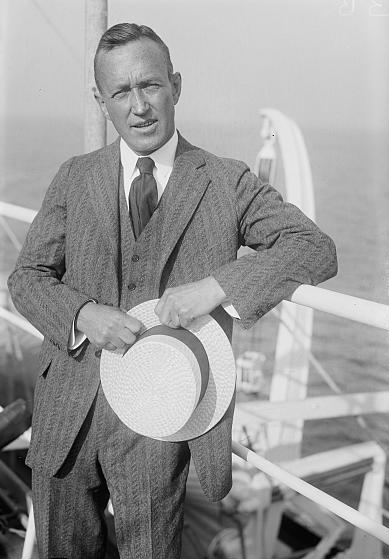
Lincoln Ellsworth
Lincoln Ellsworth (May 12, 1880 – May 26, 1951) was an American polar explorer, engineer, surveyor, and writer. He led the first Arctic and Antarctic air crossings.
Linn Ellsworth was born in Chicago, Illinois on May 12, 1880. His parents were Eva Frances (née Butler) and James Ellsworth, a wealthy coal mine owner and financier. He was named Linn after his uncle William Linn, but changed his name to Lincoln when he was a child.
His mother died in 1888. Ellsworth and his sister moved to Hudson, Ohio, to live with his grandmother. He attended the Western Reserve Academy in Hudson and The Hill School in Pottstown, Pennsylvania. He took two years longer than usual to graduate, before entering the Sheffield Scientific School at Yale University. His academic performance was poor, and he subsequently enrolled at Columbia University School of Mines and studied civil engineering. He joined the fraternity of Delta Psi (St. Anthony Hall) at Yale in 1900 and Columbia in 1901.
After dropping out of college in 1903, Ellsworth climbed the Andes with a fraternity brother.
Ellsworth was a surveyor and engineer with a team conducting the first Canadian Grand Pacific Railroad survey from 1902 to 1907. He worked the winter of 1904 in his father's coal mine. In 1905, he worked as an assistant engineer of a gold mine in Teller Alska. In 1906, he returned to his father's coal mine, working as an engineer. He then worked as an engineer in Alaska and Canada from 1907 to 1924, including spending three years with the United States Biological Survey, gold prospecting along the Peace River, and working on a railroad over the Rocky Mountains in Alaska.
During World War I, he served in the United States Army and trained as an aviator. Elsworth led the trans-Andean topographic survey from the Amazon River basin to the Pacific Ocean in Peru for Johns Hopkins University in 1924.
Ellsworth's father funded US$100,000 ($1.84 million in 2025) to Roald Amundsen's 1925 attempt to fly from Svalbard to the North Pole. Amundsen, accompanied by Lincoln Ellsworth, pilot Hjalmar Riiser-Larsen, flight mechanic Karl Feucht, and two other team members, set out in two Dornier Wal flying boats, the N24 and N25, in an attempted to reach the North Pole on May 21. When one airplane lost power, both made forced landings and, as a result, became separated. It took three days for the crews to regroup and seven takeoff attempts before they could return N25 to the air 28 days later. Ellsworth senior died in Italy on June 2, 1925, while waiting for news of his lost son.
In early March 1926, under the headline "Across the Pole by Dirigible", The New York Times announced the Amundsen-Ellsworth Expedition. A long article in the same edition (by Fitzhugh Green, one of Byrd's navy colleagues) was headed "Massed Attack On Polar Region Begins Soon." Ellsworth accompanied Amundsen on his second effort to fly over the Pole in the airship Norge, designed and piloted by the Italian engineer Umberto Nobile, in a flight from Svalbard to Alaska. On May 12, the Geographic North Pole was sighted.
Hub AI
Lincoln Ellsworth AI simulator
(@Lincoln Ellsworth_simulator)
Lincoln Ellsworth
Lincoln Ellsworth (May 12, 1880 – May 26, 1951) was an American polar explorer, engineer, surveyor, and writer. He led the first Arctic and Antarctic air crossings.
Linn Ellsworth was born in Chicago, Illinois on May 12, 1880. His parents were Eva Frances (née Butler) and James Ellsworth, a wealthy coal mine owner and financier. He was named Linn after his uncle William Linn, but changed his name to Lincoln when he was a child.
His mother died in 1888. Ellsworth and his sister moved to Hudson, Ohio, to live with his grandmother. He attended the Western Reserve Academy in Hudson and The Hill School in Pottstown, Pennsylvania. He took two years longer than usual to graduate, before entering the Sheffield Scientific School at Yale University. His academic performance was poor, and he subsequently enrolled at Columbia University School of Mines and studied civil engineering. He joined the fraternity of Delta Psi (St. Anthony Hall) at Yale in 1900 and Columbia in 1901.
After dropping out of college in 1903, Ellsworth climbed the Andes with a fraternity brother.
Ellsworth was a surveyor and engineer with a team conducting the first Canadian Grand Pacific Railroad survey from 1902 to 1907. He worked the winter of 1904 in his father's coal mine. In 1905, he worked as an assistant engineer of a gold mine in Teller Alska. In 1906, he returned to his father's coal mine, working as an engineer. He then worked as an engineer in Alaska and Canada from 1907 to 1924, including spending three years with the United States Biological Survey, gold prospecting along the Peace River, and working on a railroad over the Rocky Mountains in Alaska.
During World War I, he served in the United States Army and trained as an aviator. Elsworth led the trans-Andean topographic survey from the Amazon River basin to the Pacific Ocean in Peru for Johns Hopkins University in 1924.
Ellsworth's father funded US$100,000 ($1.84 million in 2025) to Roald Amundsen's 1925 attempt to fly from Svalbard to the North Pole. Amundsen, accompanied by Lincoln Ellsworth, pilot Hjalmar Riiser-Larsen, flight mechanic Karl Feucht, and two other team members, set out in two Dornier Wal flying boats, the N24 and N25, in an attempted to reach the North Pole on May 21. When one airplane lost power, both made forced landings and, as a result, became separated. It took three days for the crews to regroup and seven takeoff attempts before they could return N25 to the air 28 days later. Ellsworth senior died in Italy on June 2, 1925, while waiting for news of his lost son.
In early March 1926, under the headline "Across the Pole by Dirigible", The New York Times announced the Amundsen-Ellsworth Expedition. A long article in the same edition (by Fitzhugh Green, one of Byrd's navy colleagues) was headed "Massed Attack On Polar Region Begins Soon." Ellsworth accompanied Amundsen on his second effort to fly over the Pole in the airship Norge, designed and piloted by the Italian engineer Umberto Nobile, in a flight from Svalbard to Alaska. On May 12, the Geographic North Pole was sighted.