
Recent from talks
Umberto Nobile
Knowledge base stats:
Talk channels stats:
Members stats:
Umberto Nobile
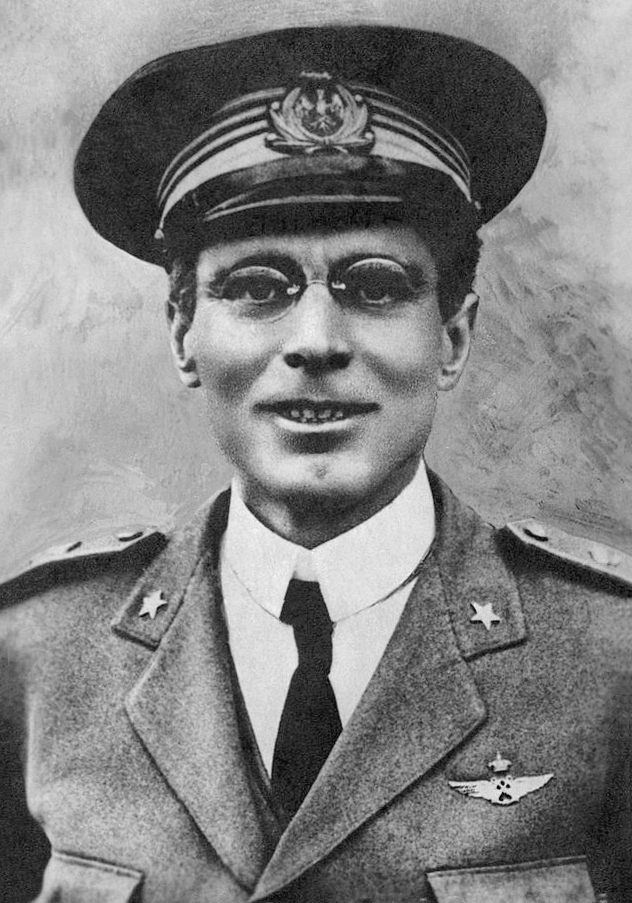
Umberto Nobile (Italian pronunciation: [umˈbɛrto ˈnɔːbile]; 21 January 1885 – 30 July 1978) was an Italian aviator, aeronautical engineer and Arctic explorer.
Nobile was a developer and promoter of semi-rigid airships in the years between the two World Wars. He is primarily remembered for designing and piloting the airship Norge, which may have been the first aircraft to reach the North Pole, and which was indisputably the first to fly across the polar ice cap from Europe to America. Nobile also designed and flew the Italia, a second polar airship; this second expedition ended in a deadly crash and provoked an international rescue effort, some participants of which also lost their lives or went missing and presumed dead.
Umberto Nobile was born in Lauro, in the southern Italian province of Avellino, into a family of small landowners. His father Vincenzo, a civil servant, belonged to the cadet branch of an aristocratic family that had been stripped of its titles after the Italian unification over their continuing loyalty to the deposed Bourbons, and which had adopted the Nobile surname for that reason.
After graduating from the University of Naples in 1908 with a degree in industrial engineering, Nobile was hired by the Italian state railways. In 1911 his interests turned to the field of aeronautical engineering and he enrolled into a course offered by the Italian Army's Engineers Corps. During World War I he served as a military engineer, working at the Military Factory for Aeronautical Construction and Experience (Stabilimento Militare di Costruzioni ed Esperienze Aeronautiche) in Rome. During this time he designed airships designed for anti-submarine reconnaissance, 15 of which would be built after the war, and taught courses for aspiring officers. In 1918 he designed the first Italian-made parachute. He was director of the Factory from 1919 until 1927.
He also lectured at the University of Naples, obtained his test pilot's license and wrote the textbook Elementi di Aerodinamica (Elements of Aerodynamics).[citation needed]
During this time, Nobile focused on designing medium-sized, semi-rigid airships, convinced they were superior to non-rigid and rigid designs. One of the Military Factory's first projects in this direction was the T-34, which was designed for a trans-Atlantic crossing. The United States Army purchased the airship in late 1921 and commissioned it as the Roma. In February, 1922, the hydrogen-inflated Roma crashed and exploded in Norfolk, Virginia, after hitting high-tension power lines, killing 34 in what was the worst aviation disaster in the United States at the time.
That same year, Nobile worked with Gianni Caproni on the design the first Italian all-metal aircraft, the Caproni Ca.73, and traveled to the United States to work as a consultant for Goodyear in Akron, Ohio. In 1923, Nobile began the design of a new airship, the N-1, which was built for the United States, Spain, Argentina and Japan. He would travel himself to Japan in January 1927 to supervise the assembly of the N-3 airship, which had been sold to the Japanese Imperial Navy, and personally took part in several test flights. Nobile later claimed that during this time he faced professional hostility from some high-profile members of the Air Force establishment, including Italo Balbo, who had some of the best workers of the Military Factory dismissed on suspicion of being anti-fascists, obstructed plans for a Rome-Rio de Janeiro flight, and held back support for polar expeditions.
In late 1925, Norwegian explorer Roald Amundsen sought out Nobile to collaborate on a flight to the North Pole – still at that time an unachieved goal for aviators – using an airship. Amundsen had previously in early 1925 flown to within 150 nautical miles (280 km) of the North Pole, in a pair of Italian-built Dornier Wal flying boats along with the American millionaire-adventurer Lincoln Ellsworth and the pilot Hjalmar Riiser-Larsen, but their planes were forced to land near 88 degrees North, and the six men were trapped on the ice for 30 days.
Hub AI
Umberto Nobile AI simulator
(@Umberto Nobile_simulator)
Umberto Nobile
Umberto Nobile (Italian pronunciation: [umˈbɛrto ˈnɔːbile]; 21 January 1885 – 30 July 1978) was an Italian aviator, aeronautical engineer and Arctic explorer.
Nobile was a developer and promoter of semi-rigid airships in the years between the two World Wars. He is primarily remembered for designing and piloting the airship Norge, which may have been the first aircraft to reach the North Pole, and which was indisputably the first to fly across the polar ice cap from Europe to America. Nobile also designed and flew the Italia, a second polar airship; this second expedition ended in a deadly crash and provoked an international rescue effort, some participants of which also lost their lives or went missing and presumed dead.
Umberto Nobile was born in Lauro, in the southern Italian province of Avellino, into a family of small landowners. His father Vincenzo, a civil servant, belonged to the cadet branch of an aristocratic family that had been stripped of its titles after the Italian unification over their continuing loyalty to the deposed Bourbons, and which had adopted the Nobile surname for that reason.
After graduating from the University of Naples in 1908 with a degree in industrial engineering, Nobile was hired by the Italian state railways. In 1911 his interests turned to the field of aeronautical engineering and he enrolled into a course offered by the Italian Army's Engineers Corps. During World War I he served as a military engineer, working at the Military Factory for Aeronautical Construction and Experience (Stabilimento Militare di Costruzioni ed Esperienze Aeronautiche) in Rome. During this time he designed airships designed for anti-submarine reconnaissance, 15 of which would be built after the war, and taught courses for aspiring officers. In 1918 he designed the first Italian-made parachute. He was director of the Factory from 1919 until 1927.
He also lectured at the University of Naples, obtained his test pilot's license and wrote the textbook Elementi di Aerodinamica (Elements of Aerodynamics).[citation needed]
During this time, Nobile focused on designing medium-sized, semi-rigid airships, convinced they were superior to non-rigid and rigid designs. One of the Military Factory's first projects in this direction was the T-34, which was designed for a trans-Atlantic crossing. The United States Army purchased the airship in late 1921 and commissioned it as the Roma. In February, 1922, the hydrogen-inflated Roma crashed and exploded in Norfolk, Virginia, after hitting high-tension power lines, killing 34 in what was the worst aviation disaster in the United States at the time.
That same year, Nobile worked with Gianni Caproni on the design the first Italian all-metal aircraft, the Caproni Ca.73, and traveled to the United States to work as a consultant for Goodyear in Akron, Ohio. In 1923, Nobile began the design of a new airship, the N-1, which was built for the United States, Spain, Argentina and Japan. He would travel himself to Japan in January 1927 to supervise the assembly of the N-3 airship, which had been sold to the Japanese Imperial Navy, and personally took part in several test flights. Nobile later claimed that during this time he faced professional hostility from some high-profile members of the Air Force establishment, including Italo Balbo, who had some of the best workers of the Military Factory dismissed on suspicion of being anti-fascists, obstructed plans for a Rome-Rio de Janeiro flight, and held back support for polar expeditions.
In late 1925, Norwegian explorer Roald Amundsen sought out Nobile to collaborate on a flight to the North Pole – still at that time an unachieved goal for aviators – using an airship. Amundsen had previously in early 1925 flown to within 150 nautical miles (280 km) of the North Pole, in a pair of Italian-built Dornier Wal flying boats along with the American millionaire-adventurer Lincoln Ellsworth and the pilot Hjalmar Riiser-Larsen, but their planes were forced to land near 88 degrees North, and the six men were trapped on the ice for 30 days.
Recent media