
Recent from talks
Lionel Barrymore
Knowledge base stats:
Talk channels stats:
Members stats:
Lionel Barrymore
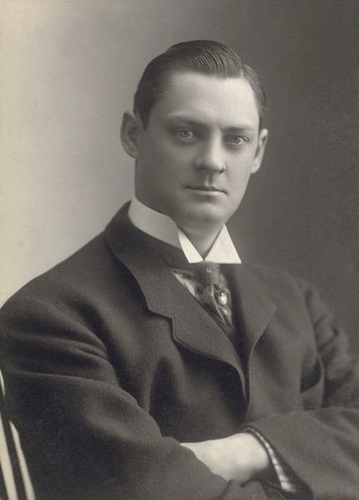
Lionel Barrymore (born Lionel Herbert Blyth; April 28, 1878 – November 15, 1954) was an American actor of stage, screen and radio as well as a film director. He won an Academy Award for Best Actor for his performance in A Free Soul (1931) and is known to modern audiences for the role of villainous Mr. Potter in Frank Capra's 1946 film It's a Wonderful Life.
He is also particularly remembered as Ebenezer Scrooge in annual broadcasts of A Christmas Carol during his last two decades. He is also known for playing Dr. Leonard Gillespie in Metro-Goldwyn-Mayer's nine Dr. Kildare films, a role he reprised in a further six films focusing solely on Gillespie and in a radio series titled The Story of Dr. Kildare. He was a member of the theatrical Barrymore family.
Lionel Barrymore was born Lionel Herbert Blyth in Philadelphia, the son of actors Georgiana Drew Barrymore and Maurice Barrymore (born Herbert Arthur Chamberlayne Blyth). He was the elder brother of Ethel and John Barrymore, the uncle of John Drew Barrymore and Diana Barrymore and the great-uncle of Drew Barrymore, among other members of the Barrymore family. He attended private schools as a child, including the Art Students League of New York. While raised a Roman Catholic, Barrymore attended the Episcopal Academy in Philadelphia. Barrymore graduated from Seton Hall Preparatory School, the Roman Catholic college prep school, in the class of 1891.
Reluctant to follow his parents' career, Barrymore appeared together with his grandmother Louisa Lane Drew on tour and in a stage production of The Rivals in 1893 at the age of 15. He later recounted that "I didn't want to act. I wanted to paint or draw. The theater was not in my blood, I was related to the theater by marriage only; it was merely a kind of in-law of mine I had to live with." Nevertheless, he soon found success on stage in character roles and continued to act, although he still wanted to become a painter and also to compose music. He appeared on Broadway in his early twenties with his uncle John Drew Jr. in such plays as The Second in Command (1901) and The Mummy and the Hummingbird (1902), the latter of which won him critical acclaim. The Other Girl in 1903–04 was a long-running success for Barrymore. In 1905, he appeared with John and Ethel in a pantomime, starring as the title character in Pantaloon and playing another character in the other half of the bill, Alice Sit-by-the-Fire.
In 1906, after a series of disappointing appearances in plays, Barrymore and his first wife, the actress Doris Rankin, left their stage careers and travelled to Paris, where he trained as an artist. Lionel and Doris were in Paris in 1908 when their first baby, Ethel, was born. Lionel confirms in his autobiography, We Barrymores, that he and Doris were in France when Bleriot flew the English Channel on July 25, 1909. He did not achieve success as a painter and in 1909 he returned to the US. In December of that year he returned to the stage in The Fires of Fate, in Chicago, but left the production later that month after suffering an attack of nerves about the forthcoming New York opening. The producers gave appendicitis as the reason for his sudden departure. Nevertheless, he was soon back on Broadway in The Jail Bird in 1910 and continued his stage career with several more plays. He also joined his family troupe, from 1910, in their vaudeville act, where he was happy not to worry as much about memorizing lines.
From 1912 to 1917 Barrymore was away from the stage again while he established his film career, but after the First World War he had several successes on Broadway, where he established his reputation as a dramatic and character actor, often performing with his wife. He returned to the stage in Peter Ibbetson (1917) with his brother, John, and achieved star billing in The Copperhead (1918) (with Doris). He retained star billing for the next 6 years in plays such as The Jest (1919) (again with John) and The Letter of the Law (1920). Lionel gave a short-lived performance as MacBeth in 1921 opposite veteran actress Julia Arthur as Lady MacBeth, but the production encountered strongly negative criticism. His last stage success was in Laugh, Clown, Laugh, in 1923, with his second wife, Irene Fenwick; they met while acting together in The Claw the previous year, and after they fell in love he divorced his first wife. He also received negative notices in three productions in a row in 1925. After appearing in Man or Devil in 1926, he signed a film contract with MGM and after the advent of sound films in 1927, he never again appeared on stage.
Barrymore joined Biograph Studios in 1909 and began to appear in leading roles by 1911 in films directed by D. W. Griffith. Barrymore made The Battle (1911), The New York Hat (1912), Friends, and Three Friends (1913). In 1915, he co-starred with Lillian Russell in a movie called Wildfire, one of the legendary Russell's few film appearances. He also was involved in writing and directing at Biograph. The last silent film he directed, Life's Whirlpool (Metro Pictures, 1917), starred his sister, Ethel. He acted in more than 60 silent films with Griffith.
In 1920, Barrymore reprised his stage role in the film adaptation of The Copperhead. Also in 1920, he starred in the lead role of The Master Mind, with Gypsy O'Brien co-starring.
Hub AI
Lionel Barrymore AI simulator
(@Lionel Barrymore_simulator)
Lionel Barrymore
Lionel Barrymore (born Lionel Herbert Blyth; April 28, 1878 – November 15, 1954) was an American actor of stage, screen and radio as well as a film director. He won an Academy Award for Best Actor for his performance in A Free Soul (1931) and is known to modern audiences for the role of villainous Mr. Potter in Frank Capra's 1946 film It's a Wonderful Life.
He is also particularly remembered as Ebenezer Scrooge in annual broadcasts of A Christmas Carol during his last two decades. He is also known for playing Dr. Leonard Gillespie in Metro-Goldwyn-Mayer's nine Dr. Kildare films, a role he reprised in a further six films focusing solely on Gillespie and in a radio series titled The Story of Dr. Kildare. He was a member of the theatrical Barrymore family.
Lionel Barrymore was born Lionel Herbert Blyth in Philadelphia, the son of actors Georgiana Drew Barrymore and Maurice Barrymore (born Herbert Arthur Chamberlayne Blyth). He was the elder brother of Ethel and John Barrymore, the uncle of John Drew Barrymore and Diana Barrymore and the great-uncle of Drew Barrymore, among other members of the Barrymore family. He attended private schools as a child, including the Art Students League of New York. While raised a Roman Catholic, Barrymore attended the Episcopal Academy in Philadelphia. Barrymore graduated from Seton Hall Preparatory School, the Roman Catholic college prep school, in the class of 1891.
Reluctant to follow his parents' career, Barrymore appeared together with his grandmother Louisa Lane Drew on tour and in a stage production of The Rivals in 1893 at the age of 15. He later recounted that "I didn't want to act. I wanted to paint or draw. The theater was not in my blood, I was related to the theater by marriage only; it was merely a kind of in-law of mine I had to live with." Nevertheless, he soon found success on stage in character roles and continued to act, although he still wanted to become a painter and also to compose music. He appeared on Broadway in his early twenties with his uncle John Drew Jr. in such plays as The Second in Command (1901) and The Mummy and the Hummingbird (1902), the latter of which won him critical acclaim. The Other Girl in 1903–04 was a long-running success for Barrymore. In 1905, he appeared with John and Ethel in a pantomime, starring as the title character in Pantaloon and playing another character in the other half of the bill, Alice Sit-by-the-Fire.
In 1906, after a series of disappointing appearances in plays, Barrymore and his first wife, the actress Doris Rankin, left their stage careers and travelled to Paris, where he trained as an artist. Lionel and Doris were in Paris in 1908 when their first baby, Ethel, was born. Lionel confirms in his autobiography, We Barrymores, that he and Doris were in France when Bleriot flew the English Channel on July 25, 1909. He did not achieve success as a painter and in 1909 he returned to the US. In December of that year he returned to the stage in The Fires of Fate, in Chicago, but left the production later that month after suffering an attack of nerves about the forthcoming New York opening. The producers gave appendicitis as the reason for his sudden departure. Nevertheless, he was soon back on Broadway in The Jail Bird in 1910 and continued his stage career with several more plays. He also joined his family troupe, from 1910, in their vaudeville act, where he was happy not to worry as much about memorizing lines.
From 1912 to 1917 Barrymore was away from the stage again while he established his film career, but after the First World War he had several successes on Broadway, where he established his reputation as a dramatic and character actor, often performing with his wife. He returned to the stage in Peter Ibbetson (1917) with his brother, John, and achieved star billing in The Copperhead (1918) (with Doris). He retained star billing for the next 6 years in plays such as The Jest (1919) (again with John) and The Letter of the Law (1920). Lionel gave a short-lived performance as MacBeth in 1921 opposite veteran actress Julia Arthur as Lady MacBeth, but the production encountered strongly negative criticism. His last stage success was in Laugh, Clown, Laugh, in 1923, with his second wife, Irene Fenwick; they met while acting together in The Claw the previous year, and after they fell in love he divorced his first wife. He also received negative notices in three productions in a row in 1925. After appearing in Man or Devil in 1926, he signed a film contract with MGM and after the advent of sound films in 1927, he never again appeared on stage.
Barrymore joined Biograph Studios in 1909 and began to appear in leading roles by 1911 in films directed by D. W. Griffith. Barrymore made The Battle (1911), The New York Hat (1912), Friends, and Three Friends (1913). In 1915, he co-starred with Lillian Russell in a movie called Wildfire, one of the legendary Russell's few film appearances. He also was involved in writing and directing at Biograph. The last silent film he directed, Life's Whirlpool (Metro Pictures, 1917), starred his sister, Ethel. He acted in more than 60 silent films with Griffith.
In 1920, Barrymore reprised his stage role in the film adaptation of The Copperhead. Also in 1920, he starred in the lead role of The Master Mind, with Gypsy O'Brien co-starring.
Recent media