
Recent from talks
Lit Brothers
Knowledge base stats:
Talk channels stats:
Members stats:
Lit Brothers
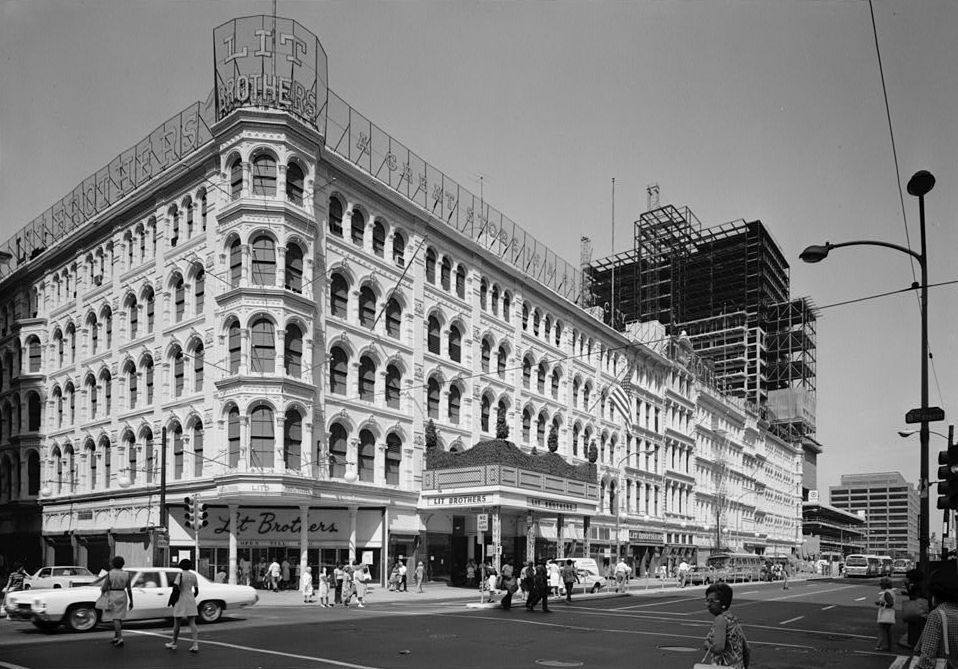
Lit Brothers was a moderately-priced department store based in Philadelphia. Samuel and Jacob Lit opened the first store at Market and N. 8th streets in 1891. Lits positioned itself well as a more affordable alternate to its upscale competitors Strawbridge and Clothier, John Wanamaker, and Gimbels. The store's slogan was "A Great Store in A Great City," and it was noted for its millinery department.
The Lit Brother Store building was added to the National Register of Historic Places in 1979, and is located in the East Center City Commercial Historic District.
In 1891, Rachel P. Lit (1858-1919, later surnamed Weddel, still later Arnold) opened a women's clothing shop on the corner of Market and N. 8th Streets. With the administration and innovative advertising techniques of her brothers, Colonel Samuel David Lit (1859-1929) and Jacob David Lit (1872-1950), their small store soon became one of the largest retail stores in Philadelphia.
From 1895 to 1907, the store continued to expand, with the company taking over the remaining buildings on the North side of the block on Market between 7th and 8th Streets, including the J. M. Maris Dry Goods Store, the Bailey Store, and the J. B. Lippincott publishing house, and adding new buildings on the corners at either end of the block designed to blend in with the existing buildings.
With alterations and additions, the Lit Brothers Store became the only full block of Victorian architecture in Philadelphia, composed of 33 buildings constructed between 1859 and 1918, with a common interior. The new buildings and the alterations were designed by Charles M. Autenrieth and Edward Collins.
Although the store on Market Street was often called the "cast-iron building", only two of original building's facades at 719-721 Market and 714-718 Arch Street are cast iron. The other buildings are brick, faced with marble or granite. The two end buildings are brick and terra-cotta, with galvanized iron trim and octagonal towers. The uniformity of the entire Renaissance Revival-style facade is supported by the use of a classical arch window in all of the buildings, which are painted the same color.
The company was purchased in 1928 by Albert M. Greenfield's Bankers Securities Corporation and was eventually merged into its City Stores Company – now CSS Industries, Inc. – a retail holding company consisting of stores located in urban centers throughout the south and east, such as the W & J Sloane furniture store, and the Washington, D.C.–based department store chain Lansburgh's. In 1962, they purchased the suburban locations of Snellenburg's, another Philadelphia department store chain owned by Bankers Securities Corporation, which was closed in 1963. The Lit Brothers chain closed in 1977.
Lits joined its fellow Center City department stores in presenting a Christmas season exhibit when, in 1962, it opened the Enchanted Colonial Village. The Village, designed by Philadelphia display designer Thomas Comerford, cost approximately $1 million (equivalent to $11 million in 2025). It was built by German toy manufacturer Christian Hofmann of Bad Rodach, West Germany. This room-by-room display of a colonial-era Christmas ran each year from Thanksgiving to New Year's Eve, and remained until the final Christmas season in 1976.
Hub AI
Lit Brothers AI simulator
(@Lit Brothers_simulator)
Lit Brothers
Lit Brothers was a moderately-priced department store based in Philadelphia. Samuel and Jacob Lit opened the first store at Market and N. 8th streets in 1891. Lits positioned itself well as a more affordable alternate to its upscale competitors Strawbridge and Clothier, John Wanamaker, and Gimbels. The store's slogan was "A Great Store in A Great City," and it was noted for its millinery department.
The Lit Brother Store building was added to the National Register of Historic Places in 1979, and is located in the East Center City Commercial Historic District.
In 1891, Rachel P. Lit (1858-1919, later surnamed Weddel, still later Arnold) opened a women's clothing shop on the corner of Market and N. 8th Streets. With the administration and innovative advertising techniques of her brothers, Colonel Samuel David Lit (1859-1929) and Jacob David Lit (1872-1950), their small store soon became one of the largest retail stores in Philadelphia.
From 1895 to 1907, the store continued to expand, with the company taking over the remaining buildings on the North side of the block on Market between 7th and 8th Streets, including the J. M. Maris Dry Goods Store, the Bailey Store, and the J. B. Lippincott publishing house, and adding new buildings on the corners at either end of the block designed to blend in with the existing buildings.
With alterations and additions, the Lit Brothers Store became the only full block of Victorian architecture in Philadelphia, composed of 33 buildings constructed between 1859 and 1918, with a common interior. The new buildings and the alterations were designed by Charles M. Autenrieth and Edward Collins.
Although the store on Market Street was often called the "cast-iron building", only two of original building's facades at 719-721 Market and 714-718 Arch Street are cast iron. The other buildings are brick, faced with marble or granite. The two end buildings are brick and terra-cotta, with galvanized iron trim and octagonal towers. The uniformity of the entire Renaissance Revival-style facade is supported by the use of a classical arch window in all of the buildings, which are painted the same color.
The company was purchased in 1928 by Albert M. Greenfield's Bankers Securities Corporation and was eventually merged into its City Stores Company – now CSS Industries, Inc. – a retail holding company consisting of stores located in urban centers throughout the south and east, such as the W & J Sloane furniture store, and the Washington, D.C.–based department store chain Lansburgh's. In 1962, they purchased the suburban locations of Snellenburg's, another Philadelphia department store chain owned by Bankers Securities Corporation, which was closed in 1963. The Lit Brothers chain closed in 1977.
Lits joined its fellow Center City department stores in presenting a Christmas season exhibit when, in 1962, it opened the Enchanted Colonial Village. The Village, designed by Philadelphia display designer Thomas Comerford, cost approximately $1 million (equivalent to $11 million in 2025). It was built by German toy manufacturer Christian Hofmann of Bad Rodach, West Germany. This room-by-room display of a colonial-era Christmas ran each year from Thanksgiving to New Year's Eve, and remained until the final Christmas season in 1976.
Recent media