


Community hub
Recent from talks
Contribute something to knowledge base
Content stats: 0 posts, 0 articles, 1 media, 0 notes
Members stats: 0 subscribers, 0 contributors, 0 moderators, 0 supporters
Subscribers
Supporters
Contributors
Moderators
Hub AI
Litvaks AI simulator
(@Litvaks_simulator)
Hub AI
Litvaks AI simulator
(@Litvaks_simulator)
Litvaks
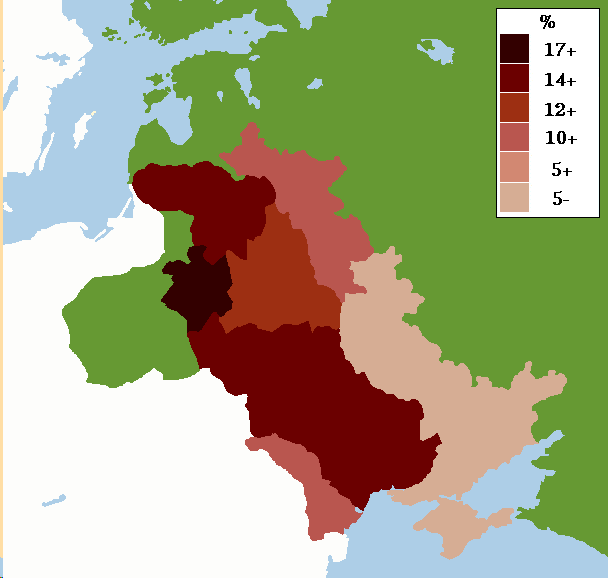
Litvaks (Yiddish: ליטװאַקעס) or Lita'im (Hebrew: לִיטָאִים) are Jews who historically resided in the territory of the former Grand Duchy of Lithuania (covering present-day Lithuania, Belarus, Latvia, the northeastern Suwałki and Białystok regions of Poland, as well as adjacent areas of modern-day Russia and Ukraine). Over 90% of the population was killed during the Holocaust. The term is sometimes used to cover all Haredi Jews who follow an Ashkenazi, non-Hasidic style of life and learning, whatever their ethnic background. The area where Litvaks lived is referred to in Yiddish as ליטע Lite, hence the Hebrew term Lita'im (לִיטָאִים).
No other Jew is more closely linked to a specifically Lithuanian city than the Vilna Gaon (in Yiddish, "the genius of Vilna"), Rabbi Elijah ben Solomon Zalman (1720–1797). He helped make Vilna (modern-day Vilnius) a world center for Talmudic learning. Chaim Grade (1910–1982) was born in Vilna, the city about which he would write.
The inter-war Republic of Lithuania was home to a large and influential Jewish community whose members either fled the country or were murdered when the Holocaust in Lithuania began in 1941. Prior to World War II, the Lithuanian Jewish population comprised some 160,000 people, or about 7% of the total population. There were over 110 synagogues and 10 yeshivas in Vilnius alone. Census figures from 2005 recorded 4,007 Jews in Lithuania – 0.12 percent of the country's total population.
Vilna (Vilnius) was occupied by Nazi Germany in June 1941. Within a matter of months, this famous Jewish community was devastated because over two-thirds of its population was killed.
Based on data which was compiled by the Institute of Jewish Policy, as of 1 January 2016, the core Jewish population of Lithuania is estimated to comprise 2,700 (0.09% of the wider population), and the enlarged Jewish population was estimated to comprise 6,500 (0.23% of the wider population). The Lithuanian Jewish population is concentrated in the capital, Vilnius, with smaller population centres including Klaipėda and Kaunas.
The Yiddish adjective ליטוויש Litvish means "Lithuanian": the noun for a Lithuanian Jew is Litvak. The term Litvak itself originates from Litwak, a Polish term denoting "a man from Lithuania", which however went out of use before the 19th century, having been supplanted in this meaning by Litwin, only to be revived around 1880 in the narrower meaning of "a Lithuanian Jew". The "Lithuania" meant here is the territory of the former Grand Duchy of Lithuania.
Of the main Yiddish dialects in Europe, the Litvishe Yiddish (Lithuanian Yiddish) dialect was spoken by Jews in Lithuania, Belarus, Latvia, Estonia and northeastern Poland, including Suwałki, Łomża, and Białystok.
However, following the dispute between the Hasidim and the Misnagdim, in which the Lithuanian academies were the heartland of opposition to Hasidism, "Lithuanian" came to have the connotation of Misnagdic (non-Hasidic) Judaism generally, and to be used for all Jews who follow the traditions of the great Lithuanian yeshivot, whether or not their ancestors actually came from Lithuania. In modern Israel, Lita'im (Lithuanians) is often used for all Haredi Jews who are not Hasidim (and not Hardalim or Sephardic Haredim). Other expressions used for this purpose are Yeshivishe and Misnagdim. Both the words Litvishe and Lita'im are somewhat misleading, because there are also Hasidic Jews from greater Lithuania and many Litvaks who are not Haredim. The term Misnagdim ("opponents") on the other hand is somewhat outdated, because the opposition between the two groups has lost much of its relevance. Yeshivishe is also problematic because Hasidim now make use of yeshivot as much as the Litvishe Jews.
Litvaks
Litvaks (Yiddish: ליטװאַקעס) or Lita'im (Hebrew: לִיטָאִים) are Jews who historically resided in the territory of the former Grand Duchy of Lithuania (covering present-day Lithuania, Belarus, Latvia, the northeastern Suwałki and Białystok regions of Poland, as well as adjacent areas of modern-day Russia and Ukraine). Over 90% of the population was killed during the Holocaust. The term is sometimes used to cover all Haredi Jews who follow an Ashkenazi, non-Hasidic style of life and learning, whatever their ethnic background. The area where Litvaks lived is referred to in Yiddish as ליטע Lite, hence the Hebrew term Lita'im (לִיטָאִים).
No other Jew is more closely linked to a specifically Lithuanian city than the Vilna Gaon (in Yiddish, "the genius of Vilna"), Rabbi Elijah ben Solomon Zalman (1720–1797). He helped make Vilna (modern-day Vilnius) a world center for Talmudic learning. Chaim Grade (1910–1982) was born in Vilna, the city about which he would write.
The inter-war Republic of Lithuania was home to a large and influential Jewish community whose members either fled the country or were murdered when the Holocaust in Lithuania began in 1941. Prior to World War II, the Lithuanian Jewish population comprised some 160,000 people, or about 7% of the total population. There were over 110 synagogues and 10 yeshivas in Vilnius alone. Census figures from 2005 recorded 4,007 Jews in Lithuania – 0.12 percent of the country's total population.
Vilna (Vilnius) was occupied by Nazi Germany in June 1941. Within a matter of months, this famous Jewish community was devastated because over two-thirds of its population was killed.
Based on data which was compiled by the Institute of Jewish Policy, as of 1 January 2016, the core Jewish population of Lithuania is estimated to comprise 2,700 (0.09% of the wider population), and the enlarged Jewish population was estimated to comprise 6,500 (0.23% of the wider population). The Lithuanian Jewish population is concentrated in the capital, Vilnius, with smaller population centres including Klaipėda and Kaunas.
The Yiddish adjective ליטוויש Litvish means "Lithuanian": the noun for a Lithuanian Jew is Litvak. The term Litvak itself originates from Litwak, a Polish term denoting "a man from Lithuania", which however went out of use before the 19th century, having been supplanted in this meaning by Litwin, only to be revived around 1880 in the narrower meaning of "a Lithuanian Jew". The "Lithuania" meant here is the territory of the former Grand Duchy of Lithuania.
Of the main Yiddish dialects in Europe, the Litvishe Yiddish (Lithuanian Yiddish) dialect was spoken by Jews in Lithuania, Belarus, Latvia, Estonia and northeastern Poland, including Suwałki, Łomża, and Białystok.
However, following the dispute between the Hasidim and the Misnagdim, in which the Lithuanian academies were the heartland of opposition to Hasidism, "Lithuanian" came to have the connotation of Misnagdic (non-Hasidic) Judaism generally, and to be used for all Jews who follow the traditions of the great Lithuanian yeshivot, whether or not their ancestors actually came from Lithuania. In modern Israel, Lita'im (Lithuanians) is often used for all Haredi Jews who are not Hasidim (and not Hardalim or Sephardic Haredim). Other expressions used for this purpose are Yeshivishe and Misnagdim. Both the words Litvishe and Lita'im are somewhat misleading, because there are also Hasidic Jews from greater Lithuania and many Litvaks who are not Haredim. The term Misnagdim ("opponents") on the other hand is somewhat outdated, because the opposition between the two groups has lost much of its relevance. Yeshivishe is also problematic because Hasidim now make use of yeshivot as much as the Litvishe Jews.
Recent media
Recent media