
Recent from talks
Llanos
Knowledge base stats:
Talk channels stats:
Members stats:
Llanos
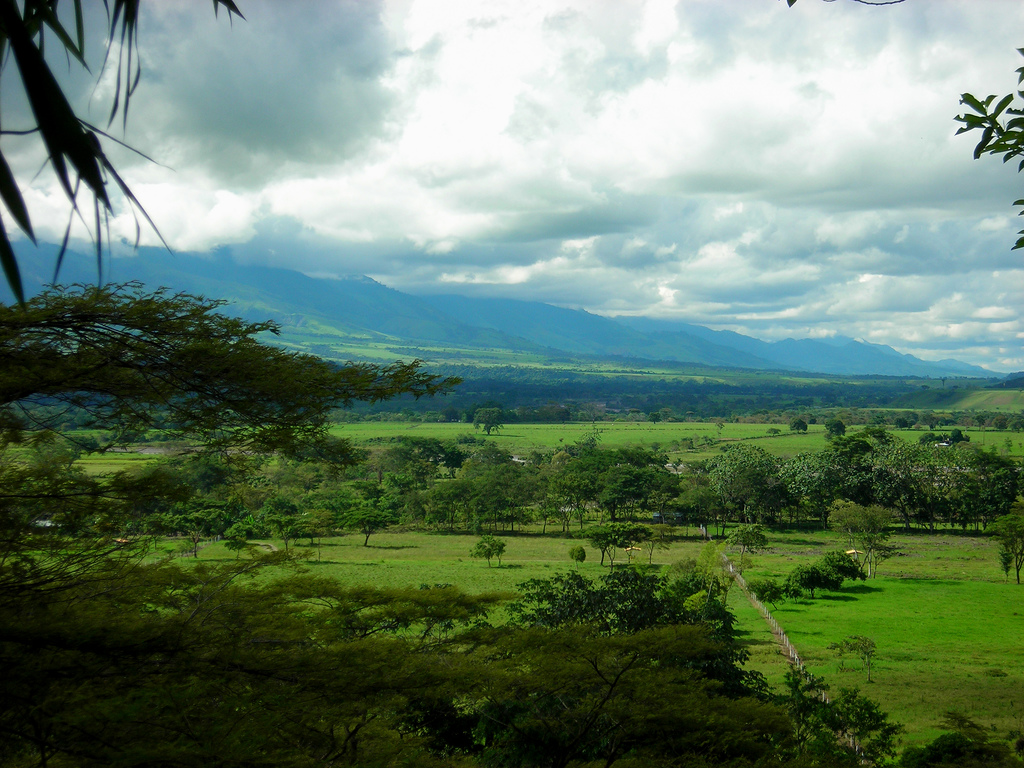
The Llanos (Spanish Los Llanos, "The Plains"; Spanish pronunciation: [los ˈʝanos]) is a vast tropical grassland plain situated to the east of the Andes in Colombia and Venezuela, in northwestern South America. It is an ecoregion of the tropical and subtropical grasslands, savannas, and shrublands biome.
The Llanos occupy a lowland that extends mostly east and west. The Llanos are bounded on the west and northwest by the Andes, and on the north by the Venezuelan Coastal Range. The Guiana Highlands are to the southeast, and the Negro-Branco moist forests are to the southwest. To the east the Orinoco wetlands and Orinoco Delta swamp forests occupy the Orinoco Delta.
The Llanos' main river is the Orinoco, which runs from west to east through the ecoregion and forms part of the border between Colombia and Venezuela. The Orinoco is the major river system of Venezuela.
The ecoregion has a tropical savanna climate that grades into a tropical monsoon climate in the Colombian Llanos. Rainfall is highly seasonal, with a rainy season from April to November, and a dry season between December and March. The wettest months are typically June and July. Rainfall varies across the ecoregion, from up to 3,000 millimetres (120 in) per year in the southwest, 1,200 to 1,600 millimetres (47 to 63 in) in Apure State, and 800 to 1,200 millimetres (31 to 47 in) per year in the Llanos of Monagas State in the northeast. Mean annual temperature is 27 °C or 80.6 °F, and the average monthly temperature varies little throughout the year; the lowest-temperature months (June, July, December, and January) are only 2 °C or 3.6 °F cooler than the hottest months.
The plant communities in the Llanos include open grasslands, savannas with scattered trees or clumps of trees, and small areas of forest, typically gallery forests along rivers and streams. There are seasonally flooded grasslands and savannas (llano bajo) and grasslands and savannas that remain dry throughout the year (llano alto).
The llano alto grasslands and savannas are characterized by grasses and shrubs 30–100 cm high, forming tussocks 10 to 30 cm apart. Soils are typically sandy and nutrient-poor. Llano alto covers approximately two-thirds of the Venezuelan llanos, and is also widespread in the Colombian llanos. Grasses of genus Trachypogon are predominant, and species include Trachypogon plumosus, T. vestitus, Axonopus canescens, A. anceps, Andropogon selloanus, Aristida spp., Leptocoryphium lanatum, Paspalum carinatum, Sporobolus indicus, and S. cubensis, and sedges in the genera Rhynchospora and Bulbostylis. Shrubs and herbs are most commonly legumes in the genera Mimosa, Cassia, Desmodium, Eriosema, Galactia, Indigofera, Phaseolus, Stylosanthes, Tephrosia, and Zornia. The trees manteco (Byrsonima crassifolia), chaparro (Curatella americana), and alcornoque (Bowdichia virgilioides) are the most common, growing either as scattered trees or in woodland patches known as matas which range in area from 12 meters in diameter up to a hectare.
During the rainy season from May to October, parts of the Llanos can flood up to a meter. This turns some savannas and grasslands into temporary wetlands, comparable to the Pantanal of central South America. This flooding also creates habitat for water birds and other wildlife. These seasonally flooded grasslands and savannas, known as llano bajo, typically have richer soils. They are characterized by the grass Paspalum fasciculatum. Trees include the palm Copernicia tectorum and gallery forest species.
Gallery forests include evergreen seasonally flooded forests, and semi-deciduous forests on higher ground. Morichales are seasonally flooded forests characterized by the moriche palm (Mauritia flexuosa). Vegas are seasonally flooded evergreen forests found along the Orinoco and its tributaries. Trees form a canopy 8 to 20 meters high, and include Inga spp., Combretum frangulifolium, Gustavia augusta, Pterocarpus sp., Pterocarpus dubius, Spondias mombin, and Copaifera pubiflora.
Hub AI
Llanos AI simulator
(@Llanos_simulator)
Llanos
The Llanos (Spanish Los Llanos, "The Plains"; Spanish pronunciation: [los ˈʝanos]) is a vast tropical grassland plain situated to the east of the Andes in Colombia and Venezuela, in northwestern South America. It is an ecoregion of the tropical and subtropical grasslands, savannas, and shrublands biome.
The Llanos occupy a lowland that extends mostly east and west. The Llanos are bounded on the west and northwest by the Andes, and on the north by the Venezuelan Coastal Range. The Guiana Highlands are to the southeast, and the Negro-Branco moist forests are to the southwest. To the east the Orinoco wetlands and Orinoco Delta swamp forests occupy the Orinoco Delta.
The Llanos' main river is the Orinoco, which runs from west to east through the ecoregion and forms part of the border between Colombia and Venezuela. The Orinoco is the major river system of Venezuela.
The ecoregion has a tropical savanna climate that grades into a tropical monsoon climate in the Colombian Llanos. Rainfall is highly seasonal, with a rainy season from April to November, and a dry season between December and March. The wettest months are typically June and July. Rainfall varies across the ecoregion, from up to 3,000 millimetres (120 in) per year in the southwest, 1,200 to 1,600 millimetres (47 to 63 in) in Apure State, and 800 to 1,200 millimetres (31 to 47 in) per year in the Llanos of Monagas State in the northeast. Mean annual temperature is 27 °C or 80.6 °F, and the average monthly temperature varies little throughout the year; the lowest-temperature months (June, July, December, and January) are only 2 °C or 3.6 °F cooler than the hottest months.
The plant communities in the Llanos include open grasslands, savannas with scattered trees or clumps of trees, and small areas of forest, typically gallery forests along rivers and streams. There are seasonally flooded grasslands and savannas (llano bajo) and grasslands and savannas that remain dry throughout the year (llano alto).
The llano alto grasslands and savannas are characterized by grasses and shrubs 30–100 cm high, forming tussocks 10 to 30 cm apart. Soils are typically sandy and nutrient-poor. Llano alto covers approximately two-thirds of the Venezuelan llanos, and is also widespread in the Colombian llanos. Grasses of genus Trachypogon are predominant, and species include Trachypogon plumosus, T. vestitus, Axonopus canescens, A. anceps, Andropogon selloanus, Aristida spp., Leptocoryphium lanatum, Paspalum carinatum, Sporobolus indicus, and S. cubensis, and sedges in the genera Rhynchospora and Bulbostylis. Shrubs and herbs are most commonly legumes in the genera Mimosa, Cassia, Desmodium, Eriosema, Galactia, Indigofera, Phaseolus, Stylosanthes, Tephrosia, and Zornia. The trees manteco (Byrsonima crassifolia), chaparro (Curatella americana), and alcornoque (Bowdichia virgilioides) are the most common, growing either as scattered trees or in woodland patches known as matas which range in area from 12 meters in diameter up to a hectare.
During the rainy season from May to October, parts of the Llanos can flood up to a meter. This turns some savannas and grasslands into temporary wetlands, comparable to the Pantanal of central South America. This flooding also creates habitat for water birds and other wildlife. These seasonally flooded grasslands and savannas, known as llano bajo, typically have richer soils. They are characterized by the grass Paspalum fasciculatum. Trees include the palm Copernicia tectorum and gallery forest species.
Gallery forests include evergreen seasonally flooded forests, and semi-deciduous forests on higher ground. Morichales are seasonally flooded forests characterized by the moriche palm (Mauritia flexuosa). Vegas are seasonally flooded evergreen forests found along the Orinoco and its tributaries. Trees form a canopy 8 to 20 meters high, and include Inga spp., Combretum frangulifolium, Gustavia augusta, Pterocarpus sp., Pterocarpus dubius, Spondias mombin, and Copaifera pubiflora.
Recent media