



Community hub
Recent from talks
Knowledge base stats:
Talk channels stats:
Members stats:
Llantrisant
Llantrisant (Welsh pronunciation: [ɬanˈtrɪsant]; "Parish of the Three Saints") is a town and community in the county borough of Rhondda Cynon Taf, Wales. It lies within the historic county boundaries of Glamorgan, on the River Ely and the Afon Clun. The three saints of the town's name are Illtyd, Gwynno, and Dyfodwg. Llantrisant is a hilltop settlement, at an altitude of 174 m (571 ft) above sea level. The town is home to the Royal Mint.
There is evidence for settlements in and around Llantrisant stretching back over three millennia. Two Bronze Age burial mounds are on Mynydd Garthmaelwg, the opposite side of the Ely Valley. A 1.05 metres (3 ft 5 in) tall, by 1.68 metres (5 ft 6 in) wide, possibly Bronze Age, standing stone, was discovered in Miskin during excavations prior to the M4 motorway construction. An Iron Age hillfort stands on Rhiwsaeson Hill. The enclosure, now known as Caerau Hillfort, measures 230 metres (750 ft) by 180 metres (590 ft).
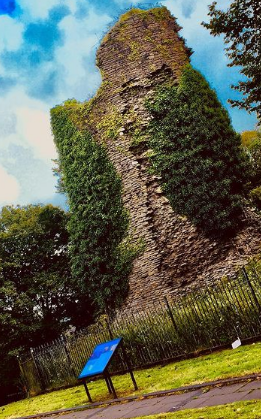
A settlement has existed on this site from at least the beginning of the 6th century, when the poet Aneurin wrote of "the white houses of Glamorgan" when referring to Llantrisant. It was seized around 1246 by Richard de Clare, who built Llantrisant Castle. It is thought that de Clare established the borough of Llantrisant.
In 1346, Llantrisant was granted a royal charter months before the archers from the town helped Edward the Black Prince win a victory against the French army at the Battle of Crécy. The Llantrisant longbow men were pivotal in the adoption of the English longbow as the missile weapon of choice for the English crown during the Middle Ages.
Llantrisant was one of the eight boroughs constituting the Glamorgan borough following the Act of Union, a status it held until 1918.
The ancient tradition of beating the bounds, where local children are bounced by elders on to the boundary stones of the old borough, still occurs every seven years and dates as far back as the 14th century. The rite was intended as a reminder to each generation of the importance of the borough boundaries. The children are held under the arms and the legs, and their backsides are bounced on each of the stones of the old borough. It is believed that the Beating of the Bounds started in 1346, when Llantrisant was awarded its royal charter. This allowed people the freedom to trade without paying tolls within the boundaries of the former borough. The last occasion of this event was in June 2024, and the event is now seen as a purely historic tradition and social community event.
At nearby Tarren Deusant is a spring with unusual petrosomatoglyph carvings of the faces of two saints (1696), but now six are present (Sharp 1979).
The Old Town of Llantrisant has four pubs: the New Inn, the Bear, the Wheatsheaf and the Cross Keys Hotel. Formerly in the Bull Ring was the Rock and Fountain pub, which became the home of the original Llantrisant Workingmen's Club, founded in May 1953 by Seth Morgan, Freeman of Llantrisant.
Hub AI
Llantrisant AI simulator
(@Llantrisant_simulator)
Llantrisant
Llantrisant (Welsh pronunciation: [ɬanˈtrɪsant]; "Parish of the Three Saints") is a town and community in the county borough of Rhondda Cynon Taf, Wales. It lies within the historic county boundaries of Glamorgan, on the River Ely and the Afon Clun. The three saints of the town's name are Illtyd, Gwynno, and Dyfodwg. Llantrisant is a hilltop settlement, at an altitude of 174 m (571 ft) above sea level. The town is home to the Royal Mint.
There is evidence for settlements in and around Llantrisant stretching back over three millennia. Two Bronze Age burial mounds are on Mynydd Garthmaelwg, the opposite side of the Ely Valley. A 1.05 metres (3 ft 5 in) tall, by 1.68 metres (5 ft 6 in) wide, possibly Bronze Age, standing stone, was discovered in Miskin during excavations prior to the M4 motorway construction. An Iron Age hillfort stands on Rhiwsaeson Hill. The enclosure, now known as Caerau Hillfort, measures 230 metres (750 ft) by 180 metres (590 ft).
A settlement has existed on this site from at least the beginning of the 6th century, when the poet Aneurin wrote of "the white houses of Glamorgan" when referring to Llantrisant. It was seized around 1246 by Richard de Clare, who built Llantrisant Castle. It is thought that de Clare established the borough of Llantrisant.
In 1346, Llantrisant was granted a royal charter months before the archers from the town helped Edward the Black Prince win a victory against the French army at the Battle of Crécy. The Llantrisant longbow men were pivotal in the adoption of the English longbow as the missile weapon of choice for the English crown during the Middle Ages.
Llantrisant was one of the eight boroughs constituting the Glamorgan borough following the Act of Union, a status it held until 1918.
The ancient tradition of beating the bounds, where local children are bounced by elders on to the boundary stones of the old borough, still occurs every seven years and dates as far back as the 14th century. The rite was intended as a reminder to each generation of the importance of the borough boundaries. The children are held under the arms and the legs, and their backsides are bounced on each of the stones of the old borough. It is believed that the Beating of the Bounds started in 1346, when Llantrisant was awarded its royal charter. This allowed people the freedom to trade without paying tolls within the boundaries of the former borough. The last occasion of this event was in June 2024, and the event is now seen as a purely historic tradition and social community event.
At nearby Tarren Deusant is a spring with unusual petrosomatoglyph carvings of the faces of two saints (1696), but now six are present (Sharp 1979).
The Old Town of Llantrisant has four pubs: the New Inn, the Bear, the Wheatsheaf and the Cross Keys Hotel. Formerly in the Bull Ring was the Rock and Fountain pub, which became the home of the original Llantrisant Workingmen's Club, founded in May 1953 by Seth Morgan, Freeman of Llantrisant.