
Recent from talks
Lloyd Doggett
Knowledge base stats:
Talk channels stats:
Members stats:
Lloyd Doggett
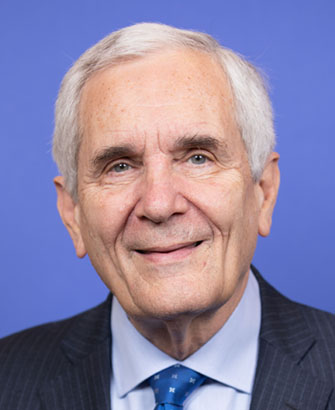
Lloyd Alton Doggett II (born October 6, 1946) is an American lawyer and politician serving in the United States House of Representatives from Texas since 1995. A member of the Democratic Party, Doggett was a member of the Texas Senate from 1973 to 1985 and a justice of the Texas Supreme Court from 1989 to 1994. Doggett represents the same district President Lyndon B. Johnson once represented from 1937 until 1949.
He is the dean of Texas's congressional delegation; he previously shared the deanship with Sheila Jackson Lee until her death in 2024. Doggett was the first sitting Democratic congressperson after the CNN presidential debate to call on Joe Biden to drop out of the 2024 presidential race. On August 21, 2025, he announced that he would not run for re-election in 2026 if Texas's then-planned new congressional map was in effect for the 2026 elections.
Doggett was born in Austin, Texas, the son of Alyce Paulin (Freydenfeldt) and Lloyd Alton Doggett. His maternal grandparents were Swedish. Doggett graduated Omicron Delta Kappa and received both a bachelor's degree in business administration and a Juris Doctor degree from the University of Texas at Austin, where he served as student body president his senior year. While attending the University of Texas at Austin, he also joined Lambda Chi Alpha fraternity.
Doggett served as a member of the Texas Senate from 1973 to 1985. He gained attention in 1979 as a member of the "Killer Bees", a group of 12 Democratic state senators who opposed a plan to move the state's presidential primary to March 11. The intent was to give former Texas Governor John Connally a leg up on the 1980 Republican nomination. The Killer Bees wanted a closed primary. When this proposal was rejected, they walked out of the chamber and left the Senate two members short of a quorum. The bill was withdrawn five days later.
He was the Democratic nominee for the 1984 United States Senate election in Texas, losing to the Republican candidate, then-U.S. Representative Phil Gramm, by a wide margin. Doggett authored the bill creating the Texas Commission on Human Rights, as well as a law outlawing cop killer bullets and a sunset law requiring periodic review of government agencies.
In 1989, Doggett became both an Associate Justice of the Texas Supreme Court and an adjunct professor at the University of Texas School of Law.
Doggett was elected to the House of Representatives in 1994 in what was then the 10th district after 32-year incumbent Jake Pickle retired. He was one of the few Democrats to win an open seat in that year's massive Republican landslide. Running for reelection in 1996, Doggett defeated Republican nominee Teresa Doggett, to whom he is no relation. It marked the second election in a row in which he defeated a black female Republican. In the years following his first reelection, Doggett consistently won around 85% of the vote, facing only Libertarian opponents. The 10th, which had once been represented by Lyndon Johnson, had long been a liberal Democratic bastion in increasingly Republican Texas.
Redistricting by the Texas Legislature in 2003 split Austin, which had been entirely or almost entirely in the 10th district for more than a century, into three districts. Through Republican gerrymandering, Doggett's home wound up in a new, heavily Republican 10th district stretching from north central Austin to the Houston suburbs. Most of his former territory wound up on the 25th district, which consisted of a long tendril stretching from Austin to McAllen on the Mexican border. It was called "the fajita strip" or "the bacon strip" because of its shape. Doggett moved to the newly configured 25th and entered the Democratic primary—the real contest in the heavily Democratic, majority-Hispanic district. He won the primary and the general election.[citation needed]
Hub AI
Lloyd Doggett AI simulator
(@Lloyd Doggett_simulator)
Lloyd Doggett
Lloyd Alton Doggett II (born October 6, 1946) is an American lawyer and politician serving in the United States House of Representatives from Texas since 1995. A member of the Democratic Party, Doggett was a member of the Texas Senate from 1973 to 1985 and a justice of the Texas Supreme Court from 1989 to 1994. Doggett represents the same district President Lyndon B. Johnson once represented from 1937 until 1949.
He is the dean of Texas's congressional delegation; he previously shared the deanship with Sheila Jackson Lee until her death in 2024. Doggett was the first sitting Democratic congressperson after the CNN presidential debate to call on Joe Biden to drop out of the 2024 presidential race. On August 21, 2025, he announced that he would not run for re-election in 2026 if Texas's then-planned new congressional map was in effect for the 2026 elections.
Doggett was born in Austin, Texas, the son of Alyce Paulin (Freydenfeldt) and Lloyd Alton Doggett. His maternal grandparents were Swedish. Doggett graduated Omicron Delta Kappa and received both a bachelor's degree in business administration and a Juris Doctor degree from the University of Texas at Austin, where he served as student body president his senior year. While attending the University of Texas at Austin, he also joined Lambda Chi Alpha fraternity.
Doggett served as a member of the Texas Senate from 1973 to 1985. He gained attention in 1979 as a member of the "Killer Bees", a group of 12 Democratic state senators who opposed a plan to move the state's presidential primary to March 11. The intent was to give former Texas Governor John Connally a leg up on the 1980 Republican nomination. The Killer Bees wanted a closed primary. When this proposal was rejected, they walked out of the chamber and left the Senate two members short of a quorum. The bill was withdrawn five days later.
He was the Democratic nominee for the 1984 United States Senate election in Texas, losing to the Republican candidate, then-U.S. Representative Phil Gramm, by a wide margin. Doggett authored the bill creating the Texas Commission on Human Rights, as well as a law outlawing cop killer bullets and a sunset law requiring periodic review of government agencies.
In 1989, Doggett became both an Associate Justice of the Texas Supreme Court and an adjunct professor at the University of Texas School of Law.
Doggett was elected to the House of Representatives in 1994 in what was then the 10th district after 32-year incumbent Jake Pickle retired. He was one of the few Democrats to win an open seat in that year's massive Republican landslide. Running for reelection in 1996, Doggett defeated Republican nominee Teresa Doggett, to whom he is no relation. It marked the second election in a row in which he defeated a black female Republican. In the years following his first reelection, Doggett consistently won around 85% of the vote, facing only Libertarian opponents. The 10th, which had once been represented by Lyndon Johnson, had long been a liberal Democratic bastion in increasingly Republican Texas.
Redistricting by the Texas Legislature in 2003 split Austin, which had been entirely or almost entirely in the 10th district for more than a century, into three districts. Through Republican gerrymandering, Doggett's home wound up in a new, heavily Republican 10th district stretching from north central Austin to the Houston suburbs. Most of his former territory wound up on the 25th district, which consisted of a long tendril stretching from Austin to McAllen on the Mexican border. It was called "the fajita strip" or "the bacon strip" because of its shape. Doggett moved to the newly configured 25th and entered the Democratic primary—the real contest in the heavily Democratic, majority-Hispanic district. He won the primary and the general election.[citation needed]
Recent media