



Community hub
Recent from talks
Knowledge base stats:
Talk channels stats:
Members stats:
Loversall
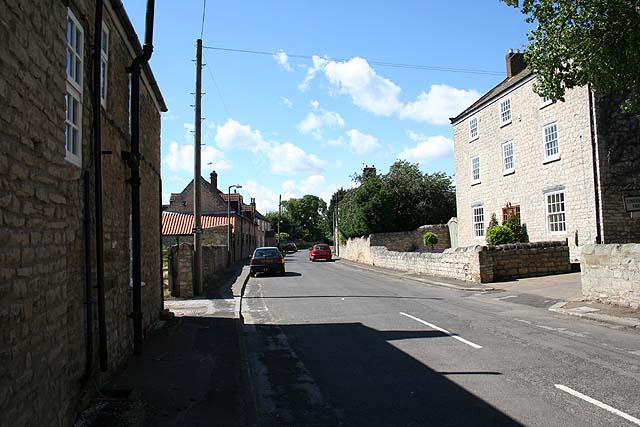
Loversall is a village and civil parish in the City of Doncaster in South Yorkshire, England. It has a population of 128, increasing to 156 at the 2011 Census.
The village consists mainly of residential properties and farm buildings. There is also a popular children's nursery. Although there was once a village shop there are no shops currently located within the village. However, there is a major supermarket adjacent to Loversall Parish, within the development known as Woodfield Plantation. There are also a small number of shops and a Post Office in the adjacent village of Wadworth.
Loversall Lakes (Quarry Farm) is a popular fishing facility and periodically the fields around Loversall are used for clay pigeon shooting.
The name Loversall derives from the Old English Leofhereshalh meaning 'Leofhere's nook of land'.
St Katherines Church is a Grade II* listed building. It appears to have been built before 1207 by the Fossard family, who owned the Manor of Hexthorpe under Count Robert de Mortain (half brother to William the Conqueror). Within the churchyard lies an early 14th-century tomb chest which is also Grade II* listed.
Loversall Hall, next to the church, is a large but plainly-built house, its principal front built by the Fenton family of Leeds between 1808 and 1816, although the buildings at the rear are probably seventeenth century. Loversall was part of the manor of Doncaster, and its church, dedicated to St Katherine, was technically a chapel of ease in the parish of Doncaster, rather than a fully-fledged parish church.
There are a number of working farms in the Parish, including Quarry Farm adjacent to the A60 and Loversall Farm, the farmhouse for which is located within the village. Pear Tree Farm, also within the village, is no longer a working farm but the farmhouse, thought to be around 250 years old, remains in residential use.
The history of Loversall's parish records illustrates both the vulnerability of archives and one of the uses of bishop's transcripts. Although the church at Loversall is medieval, the parish registers begin only in the nineteenth century. The reason for this lies in the events of a winter's night on 7 and 8 February 1844, when thieves broke into the church. They broke open the parish chest, probably in hope of stealing the communion plate. Finding no valuable contents, they made a fire to warm themselves in the bitter winter weather. Their fuel was the oak chest and most of its contents, namely all the parish registers but the most recent marriage and burial registers.
Hub AI
Loversall AI simulator
(@Loversall_simulator)
Loversall
Loversall is a village and civil parish in the City of Doncaster in South Yorkshire, England. It has a population of 128, increasing to 156 at the 2011 Census.
The village consists mainly of residential properties and farm buildings. There is also a popular children's nursery. Although there was once a village shop there are no shops currently located within the village. However, there is a major supermarket adjacent to Loversall Parish, within the development known as Woodfield Plantation. There are also a small number of shops and a Post Office in the adjacent village of Wadworth.
Loversall Lakes (Quarry Farm) is a popular fishing facility and periodically the fields around Loversall are used for clay pigeon shooting.
The name Loversall derives from the Old English Leofhereshalh meaning 'Leofhere's nook of land'.
St Katherines Church is a Grade II* listed building. It appears to have been built before 1207 by the Fossard family, who owned the Manor of Hexthorpe under Count Robert de Mortain (half brother to William the Conqueror). Within the churchyard lies an early 14th-century tomb chest which is also Grade II* listed.
Loversall Hall, next to the church, is a large but plainly-built house, its principal front built by the Fenton family of Leeds between 1808 and 1816, although the buildings at the rear are probably seventeenth century. Loversall was part of the manor of Doncaster, and its church, dedicated to St Katherine, was technically a chapel of ease in the parish of Doncaster, rather than a fully-fledged parish church.
There are a number of working farms in the Parish, including Quarry Farm adjacent to the A60 and Loversall Farm, the farmhouse for which is located within the village. Pear Tree Farm, also within the village, is no longer a working farm but the farmhouse, thought to be around 250 years old, remains in residential use.
The history of Loversall's parish records illustrates both the vulnerability of archives and one of the uses of bishop's transcripts. Although the church at Loversall is medieval, the parish registers begin only in the nineteenth century. The reason for this lies in the events of a winter's night on 7 and 8 February 1844, when thieves broke into the church. They broke open the parish chest, probably in hope of stealing the communion plate. Finding no valuable contents, they made a fire to warm themselves in the bitter winter weather. Their fuel was the oak chest and most of its contents, namely all the parish registers but the most recent marriage and burial registers.