


Community hub
Recent from talks
Contribute something
Nothing was collected or created yet.
Luanping County
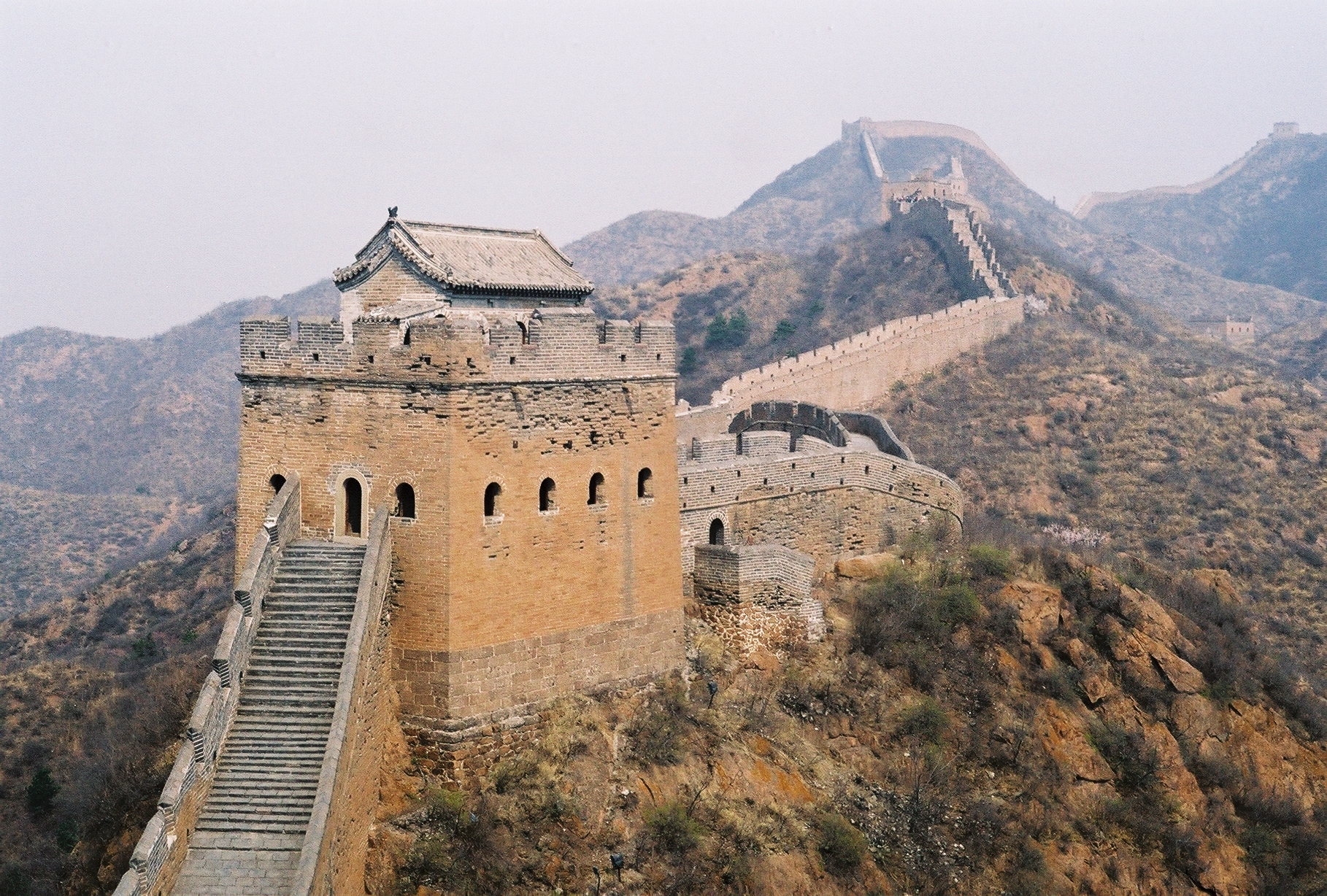
View on WikipediaLuanping County (simplified Chinese: 滦平县; traditional Chinese: 灤平縣; pinyin: Luánpíng Xiàn) is a county of northeastern Hebei Province, with the Great Wall of China demarcating its border with Miyun District, Beijing to the southwest. It is under the administration of Chengde City, and as of 2020, has a population of 268,647[1] residing in an area of 3,195 km2 (1,234 sq mi). The G45 Daqing–Guangzhou Expressway, China National Highways 101 and 112, and the Beijing–Tongliao Railway pass through the county. Other bordering county-level divisions are Fengning County to the northwest, Longhua County to the north, Chengde's core districts of Shuangqiao District and Shuangluan District to the east, and Chengde County to the southeast.
Key Information


Administrative divisions
[edit]
The county administers 1 subdistrict, 10 towns, 2 townships, and 8 ethnic townships.[2]
The county's only subdistrict is Zhongxing Road Subdistrict.[2]
|
Towns:[2] |
Townships:[2] Ethnic Townships:[2] |
Climate
[edit]| Climate data for Luanping, elevation 529 m (1,736 ft), (1991–2020 normals, extremes 1981–present) | |||||||||||||
|---|---|---|---|---|---|---|---|---|---|---|---|---|---|
| Month | Jan | Feb | Mar | Apr | May | Jun | Jul | Aug | Sep | Oct | Nov | Dec | Year |
| Record high °C (°F) | 10.8 (51.4) |
17.6 (63.7) |
25.4 (77.7) |
31.5 (88.7) |
37.2 (99.0) |
37.4 (99.3) |
38.0 (100.4) |
37.2 (99.0) |
35.6 (96.1) |
29.2 (84.6) |
19.9 (67.8) |
14.4 (57.9) |
38.0 (100.4) |
| Mean daily maximum °C (°F) | −1.8 (28.8) |
2.4 (36.3) |
9.5 (49.1) |
17.9 (64.2) |
24.3 (75.7) |
27.9 (82.2) |
29.2 (84.6) |
28.2 (82.8) |
23.6 (74.5) |
16.3 (61.3) |
6.6 (43.9) |
−0.7 (30.7) |
15.3 (59.5) |
| Daily mean °C (°F) | −10.0 (14.0) |
−5.7 (21.7) |
2.1 (35.8) |
10.7 (51.3) |
17.1 (62.8) |
21.1 (70.0) |
23.3 (73.9) |
21.9 (71.4) |
16.1 (61.0) |
8.6 (47.5) |
−0.7 (30.7) |
−8.4 (16.9) |
8.0 (46.4) |
| Mean daily minimum °C (°F) | −16.3 (2.7) |
−12.3 (9.9) |
−4.9 (23.2) |
3.3 (37.9) |
9.4 (48.9) |
14.7 (58.5) |
18.3 (64.9) |
16.8 (62.2) |
10.1 (50.2) |
2.1 (35.8) |
−6.5 (20.3) |
−14.1 (6.6) |
1.7 (35.1) |
| Record low °C (°F) | −28.2 (−18.8) |
−25.3 (−13.5) |
−21.8 (−7.2) |
−9.0 (15.8) |
−1.7 (28.9) |
4.5 (40.1) |
9.4 (48.9) |
7.1 (44.8) |
−1.3 (29.7) |
−11.9 (10.6) |
−22.7 (−8.9) |
−27.9 (−18.2) |
−28.2 (−18.8) |
| Average precipitation mm (inches) | 2.0 (0.08) |
4.2 (0.17) |
11.2 (0.44) |
23.6 (0.93) |
55.3 (2.18) |
80.7 (3.18) |
143.2 (5.64) |
104.0 (4.09) |
52.3 (2.06) |
33.5 (1.32) |
12.8 (0.50) |
3.0 (0.12) |
525.8 (20.71) |
| Average precipitation days (≥ 0.1 mm) | 2.1 | 2.4 | 3.6 | 5.0 | 8.4 | 12.9 | 14.5 | 12.1 | 9.0 | 5.5 | 3.4 | 2.2 | 81.1 |
| Average snowy days | 3.3 | 3.0 | 3.2 | 1.1 | 0.1 | 0 | 0 | 0 | 0 | 0.5 | 3.1 | 3.3 | 17.6 |
| Average relative humidity (%) | 53 | 48 | 43 | 43 | 49 | 63 | 75 | 77 | 72 | 63 | 59 | 56 | 58 |
| Mean monthly sunshine hours | 204.6 | 203.8 | 242.3 | 250.1 | 273.6 | 234.7 | 210.9 | 225.6 | 220.0 | 213.2 | 187.7 | 188.9 | 2,655.4 |
| Percentage possible sunshine | 68 | 67 | 65 | 62 | 61 | 52 | 46 | 53 | 60 | 63 | 64 | 66 | 61 |
| Source: China Meteorological Administration[3][4] | |||||||||||||
History
[edit]In the early 15th century, the Yongle Emperor forced all residents of the Luanping area to move to within the city walls, leaving the countryside uninhabited. In the early Qing dynasty, the Kangxi Emperor ordered the now long uninhabited area to be redeveloped, with the new residents speaking a form of Mandarin Chinese that would become the predecessor of modern Standard Chinese. Simultaneously, Luanping became a stop for officials travelling between Beijing and the Chengde Mountain Resort, which contributed to residents speaking with the accent of government officials.[1]
Standard Chinese is based on the accent of Luanping residents, who speak a variety of Beijing dialect. The accent of Luanping was chosen for its more "straightforward" pronunciation compared to that of urban Beijing; for example, Beijing uses more erhua, syllable coalescence and exhibits significant dialect mixing.[1][5][6]
References
[edit]- ^ a b c Chief, Tan Dawn WeiChina Bureau (2020-11-08). "Little county's claim to fame: Its residents speak perfect Mandarin". The Straits Times. ISSN 0585-3923. Retrieved 2024-06-16.
- ^ a b c d e 2019年统计用区划代码 (in Chinese). National Bureau of Statistics of China. 2019. Archived from the original on 2020-08-19. Retrieved 2020-08-19.
- ^ 中国气象数据网 – WeatherBk Data (in Simplified Chinese). China Meteorological Administration. Retrieved 25 August 2023.
- ^ 中国气象数据网 (in Simplified Chinese). China Meteorological Administration. Retrieved 25 August 2023.
- ^ "Putonghua push puts local dialect in spotlight - China.org.cn". www.china.org.cn. Retrieved 2024-06-16.
- ^ Zhang, Yixin (2021-06-21). Neutral Tone in Mandarin: Representation and Interaction with Utterance-level Prosody (PhD thesis). Cambridge University.
External links
[edit]| International | |
|---|---|
| National | |
| Other | |

 | This Chengde location article is a stub. You can help Wikipedia by expanding it. |