
Recent from talks
Luke Easter (baseball)
Knowledge base stats:
Talk channels stats:
Members stats:
Luke Easter (baseball)
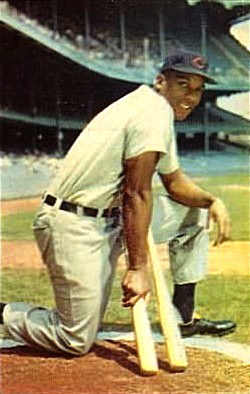
Luscious "Luke" Easter (August 4, 1915 – March 29, 1979) was an American professional baseball player in Major League Baseball and the Negro leagues. He batted left-handed, threw right-handed, was 6 ft 4 in (1.93 m), and weighed 240 lb.
Luke Easter was born in Jonestown, Mississippi to parents James and Maude Easter. His father was a graduate of the Tuskegee Institute. His mother, Maude, died in 1922 and the family moved to St. Louis, Missouri where his father worked in a glass factory. Prior to that time, the Easters had been farmers in the Mississippi Delta. Luke Easter attended the same high school as fellow Negro league star, Quincy Trouppe, before dropping out in the ninth grade. For the next few years, Easter worked a variety of jobs such as shoeshiner, hat making, and for a dry cleaner.
Although Easter was good enough to be a professional player, there was no Negro league franchise in St. Louis. So, in 1937 Easter joined the top team in the area, a semipro outfit called the St. Louis Titanium Giants. The team was made up of African-Americans employed by the National Lead Company. Players would work their factory jobs during the week, often with time off to practice, then play baseball for the company on weekends. Easter earned $20 per week plus another ten to twenty on the weekends playing baseball. Luke Easter was a very large man, standing 6 feet 4 inches (1.93 m) in height and weighing around 240 pounds (110 kg). A left-handed hitting first baseman, he was known for towering home runs. During his five years with the Giants, they fielded a very competitive team. Also featuring Sam Jethroe, they went 6–0 in exhibitions against teams from the Negro American League in 1940.
With World War II raging and America soon to enter the fray, Luke Easter planned to enlist in the United States Army in 1941. However, while returning from a trip to Memphis, Tennessee with Sam Jethroe, Easter was involved in an auto accident that left him with a fractured leg. Luscious "Luke" Easter, serial number 37 368 805, was finally inducted into the Army at Jefferson Barracks in St. Louis on June 22, 1942. Assigned to the Quartermaster Corps after basic training, he was stationed at Fort Leonard Wood in Missouri, about 100 miles (160 km) southwest of St. Louis. Easter was separated from the Army at Fort Leonard Wood on July 3, 1943, and thereafter worked in the defense industry.
Following the war's end in 1945, Luke Easter had tryouts with two Negro National League teams, the Kansas City Monarchs and the Chicago American Giants. Both teams felt he was too big and awkward to be a good ballplayer despite his previous success with the Titanium Giants. Manager "Candy Jim" Taylor of the American Giants elected not to sign Easter, but referred him to promoter Abe Saperstein—famous for being the founder of the Harlem Globetrotters. At that time, Saperstein was founding a new touring baseball team, the Cincinnati Crescents. Saperstein signed Easter, and after a successful 1946 season, sold him to the Homestead Grays.
Easter was a solid contributor to the Grays in 1947, and excelled in 1948. That year, he batted .363, tied for the league lead in home runs, and led the league in runs batted in. He led the Grays to a victory over the Birmingham Black Barons in the 1948 Negro World Series. His success attracted the attention of Bill Veeck, owner of the Cleveland Indians, who purchased his contract from the Grays. A knee injury in spring training in 1949 cost Easter a spot on the major league roster at the start of the season. He started the year in the Pacific Coast League with the San Diego Padres despite a mid-season operation on the knee, and continued to be a star, prompting coach Jimmie Reese to remark, "Easter is the only player I ever saw who can hit a baseball as far as Babe Ruth." He again batted .363, along with 25 home runs and 80 RBIs. This performance impressed the Indians so much that they called Easter up for a brief appearance at the end of the season, and, early in 1950, traded All-Star Mickey Vernon to open up first base for him.
As a 34-year-old rookie, Easter continued his power hitting, ranking among the league leaders in home runs and RBIs, and led the league in times hit by pitch. He continued to produce in 1951 and 1952, finishing 13th in Most Valuable Player voting in the latter year, but ongoing knee and ankle problems, as well as advancing age, brought his major league career to an end. He played in only 68 major league games in 1953, spending part of the year at Triple-A, and finished his major league career with six games in 1954.
Easter continued to play professionally at Triple-A, even though the leg injuries had reduced his running speed to a limp. He played regularly for the Ottawa Athletics, Charleston Senators, Buffalo Bisons, and Rochester Red Wings, and won the International League's MVP award with the Bisons in 1957. He ultimately retired as a player in 1963 at the age of 48 and worked for several years thereafter as a coach. The Rochester Red Wings retired his uniform number used while playing for them (36), as did the Buffalo Bisons (25).
Hub AI
Luke Easter (baseball) AI simulator
(@Luke Easter (baseball)_simulator)
Luke Easter (baseball)
Luscious "Luke" Easter (August 4, 1915 – March 29, 1979) was an American professional baseball player in Major League Baseball and the Negro leagues. He batted left-handed, threw right-handed, was 6 ft 4 in (1.93 m), and weighed 240 lb.
Luke Easter was born in Jonestown, Mississippi to parents James and Maude Easter. His father was a graduate of the Tuskegee Institute. His mother, Maude, died in 1922 and the family moved to St. Louis, Missouri where his father worked in a glass factory. Prior to that time, the Easters had been farmers in the Mississippi Delta. Luke Easter attended the same high school as fellow Negro league star, Quincy Trouppe, before dropping out in the ninth grade. For the next few years, Easter worked a variety of jobs such as shoeshiner, hat making, and for a dry cleaner.
Although Easter was good enough to be a professional player, there was no Negro league franchise in St. Louis. So, in 1937 Easter joined the top team in the area, a semipro outfit called the St. Louis Titanium Giants. The team was made up of African-Americans employed by the National Lead Company. Players would work their factory jobs during the week, often with time off to practice, then play baseball for the company on weekends. Easter earned $20 per week plus another ten to twenty on the weekends playing baseball. Luke Easter was a very large man, standing 6 feet 4 inches (1.93 m) in height and weighing around 240 pounds (110 kg). A left-handed hitting first baseman, he was known for towering home runs. During his five years with the Giants, they fielded a very competitive team. Also featuring Sam Jethroe, they went 6–0 in exhibitions against teams from the Negro American League in 1940.
With World War II raging and America soon to enter the fray, Luke Easter planned to enlist in the United States Army in 1941. However, while returning from a trip to Memphis, Tennessee with Sam Jethroe, Easter was involved in an auto accident that left him with a fractured leg. Luscious "Luke" Easter, serial number 37 368 805, was finally inducted into the Army at Jefferson Barracks in St. Louis on June 22, 1942. Assigned to the Quartermaster Corps after basic training, he was stationed at Fort Leonard Wood in Missouri, about 100 miles (160 km) southwest of St. Louis. Easter was separated from the Army at Fort Leonard Wood on July 3, 1943, and thereafter worked in the defense industry.
Following the war's end in 1945, Luke Easter had tryouts with two Negro National League teams, the Kansas City Monarchs and the Chicago American Giants. Both teams felt he was too big and awkward to be a good ballplayer despite his previous success with the Titanium Giants. Manager "Candy Jim" Taylor of the American Giants elected not to sign Easter, but referred him to promoter Abe Saperstein—famous for being the founder of the Harlem Globetrotters. At that time, Saperstein was founding a new touring baseball team, the Cincinnati Crescents. Saperstein signed Easter, and after a successful 1946 season, sold him to the Homestead Grays.
Easter was a solid contributor to the Grays in 1947, and excelled in 1948. That year, he batted .363, tied for the league lead in home runs, and led the league in runs batted in. He led the Grays to a victory over the Birmingham Black Barons in the 1948 Negro World Series. His success attracted the attention of Bill Veeck, owner of the Cleveland Indians, who purchased his contract from the Grays. A knee injury in spring training in 1949 cost Easter a spot on the major league roster at the start of the season. He started the year in the Pacific Coast League with the San Diego Padres despite a mid-season operation on the knee, and continued to be a star, prompting coach Jimmie Reese to remark, "Easter is the only player I ever saw who can hit a baseball as far as Babe Ruth." He again batted .363, along with 25 home runs and 80 RBIs. This performance impressed the Indians so much that they called Easter up for a brief appearance at the end of the season, and, early in 1950, traded All-Star Mickey Vernon to open up first base for him.
As a 34-year-old rookie, Easter continued his power hitting, ranking among the league leaders in home runs and RBIs, and led the league in times hit by pitch. He continued to produce in 1951 and 1952, finishing 13th in Most Valuable Player voting in the latter year, but ongoing knee and ankle problems, as well as advancing age, brought his major league career to an end. He played in only 68 major league games in 1953, spending part of the year at Triple-A, and finished his major league career with six games in 1954.
Easter continued to play professionally at Triple-A, even though the leg injuries had reduced his running speed to a limp. He played regularly for the Ottawa Athletics, Charleston Senators, Buffalo Bisons, and Rochester Red Wings, and won the International League's MVP award with the Bisons in 1957. He ultimately retired as a player in 1963 at the age of 48 and worked for several years thereafter as a coach. The Rochester Red Wings retired his uniform number used while playing for them (36), as did the Buffalo Bisons (25).
Recent media