Hubbry Logo
Mahesh ManjrekarMahesh ManjrekarMain
Open search
Mahesh Manjrekar
Community hub
Mahesh Manjrekar
logo
8 pages, 0 posts
0 subscribers
Be the first to start a discussion here.
Mahesh Manjrekar
Mahesh Manjrekar
from Wikipedia

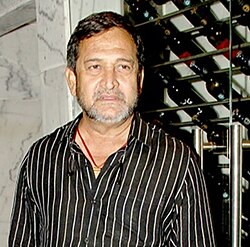
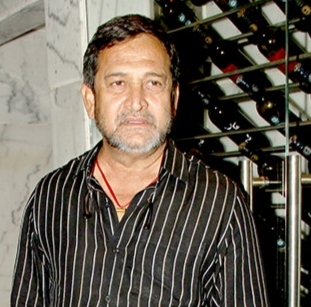
Mahesh Vaman Manjrekar (Marathi pronunciation: [məɦeːʃ maːɲd͡zɾekəɾ]; born 16 August 1958)[1] is an Indian actor, film director, screenwriter and producer who works primarily in Hindi films, alongside Marathi and Telugu films.[4] He is credited with directing the critically acclaimed films Vaastav: The Reality (1999), Astitva (2000) and Viruddh... Family Comes First (2005). He has won a National Film Award for Best Feature Film in Marathi for Astitva and two Star Screen Awards[5]. He is also the host of the reality show, Bigg Boss Marathi since 2018.[6]

Key Information

Early life

[edit]

Mahesh Manjrekar was born on 16 August 1958 in Bombay[7], Bombay state.

Personal life

[edit]
Manjrekar with family

Manjrekar was married to Deepa Mehta, a costume designer, with whom he has two children - Satya and Ashwami.;[8] they were later divorced.[9] Later, he married Medha Manjrekar. They have a daughter, Saiee Manjrekar, who is an actress.[10] He has a stepdaughter from Medha's first husband - Gauri Ingawale who is also an actress.[11]

Career

[edit]

Manjrekar has acted in several films, including some of his own productions. He was first seen in the Doordarshan Marathi series named Kshitij[12], in which he played a leprosy patient. He first gained acclaim as an actor for his performance in the 2002 film Kaante[13], and later played negative roles in the Tamil film Arrambam (2013), Telugu film Okkadunnadu (2007) and as the gangster Javed in the film Slumdog Millionaire (2008). He played Chatrapati Shivaji Maharaj in the Marathi film Me Shivajiraje Bhosale Boltoy. He also played the role of Harpeez Dongara in the Aakhri Chunauti series of episodes in the Indian TV series C.I.D.. Manjrekar was acclaimed for the role as inspector D.R. Talpade in the movie Wanted.

He was a MNS candidate from Mumbai North West in the 2014 Lok Sabha Elections but lost to Gajanan Kirtikar of Shiv Sena.[14][15]

Filmography

[edit]

Actor

[edit]
Year Films Role Language Ref.
1999 Vaastav: The Reality Himself Hindi [citation needed]
2001 Ehsaas: The Feeling Michael [16]
2002 Kaante Raja "Balli" Yadav [17]
2003 Pran Jaye Par Shaan Na Jaye Munna Bhai Hatela [18]
2004 Plan Sultan [19]
Run Ganpat Chowdhury [20]
Musafir Lukka [21]
2005 It Was Raining That Night Brij Bhushan English [22]
Encounter Daya Nayak Yousuf Khaleel Kannada [23]
2006 Zinda Joy Fernandes Hindi [24]
Jawani Diwani: A Youthful Joyride Chappu Bhai [25]
2007 Dus Kahaniyaan Mahesh [26]
Okkadunnadu Sona Bhai Telugu [27]
Padmashree Laloo Prasad Yadav Advocate Prasad Pritam Pradyuman Hindi [28]
Deha Madhav [29]
2008 Meerabai Not Out Manoj Anant Achrekar [30]
Slumdog Millionaire Don Javed English [31]
Homam Daddy Telugu [32]
2009 Me Shivajiraje Bhosale Boltoy Chhatrapati Shivaji Maharaj Marathi [33]
Wanted Senior Inspector Daulat R. Talpade Hindi [34]
99 AGM (Aatmaram Gyanshekhar Machve) [35]
Fruit and Nut Khandar Zala [36]
2010 Adhurs Don Baba Telugu [37]
Teen Patti Dagdu Seth Hindi [38]
Dabangg Hariya Shreshawat [39]
Don Seenu Mukesh Duggal / Duggal Saab Telugu [40]
2011 Ready Ram Kapoor (Prem's father) Hindi [41]
Fakta Ladh Mhana Bababhai Marathi [42]
Bodyguard Ranjan Mhatre Hindi [43]
2012 Tukkaa Fitt [44]
OMG: Oh My God! Lawyer Sardesai [45]
Jai Jai Maharashtra Majha Marathi [46]
2013 Mumbai Mirror ACP Gaitonde Hindi [47]
Himmatwala Sher Singh [48]
Shootout at Wadala Inspector Bhinde [49]
Once Upon a Time In Mumbaai Dobara Local gangster Rawa [50]
Arrambam Mahadev Rane Tamil [51]
Rajjo Begam Hindi [52]
2014 Jai Ho Auto-Rickshaw Driver Hindi [53]
Rege Pradeep Sharma Marathi [54]
Singham Returns Chief Minister Vikram Adhikari Hindi [55]
Ardhangini by Abhishek Mukherjee Bengali [56]
2015 Bajirao Mastani Shahuji Raje Bhosale Hindi [57]
Akhil Divya's father Telugu [58]
2016 Vrundavan Bhanupratap Inamdar Marathi [59]
Guntur Talkies Jakie Telugu [60]
Badsha – The Don Shyam Vhai Bengali Scenes reused from Don Seenu[61]
2017 Thank U Vitthala Vitthala Marathi
Dhyanimani Sadanand Pathak
FU: Friendship Unlimited Chilly's father [62]
Velaikkaran Madhav Kurup Tamil [63]
2018 Sanju Himself Hindi [64]
Take Care Good Night Inspector Pawar Marathi [65]
2019 Mard Ko Dard Nahi Hota Ajoba Hindi [66]
Vinaya Vidheya Rama Chief Minister of Bihar Telugu [67]
Total Dhamaal Chinnappa Swamy Hindi [68]
Saaho Prince Telugu [69]
Mulshi Pattern Shirpya Marathi [70]
Dabangg 3 Hariya Shreshawat Hindi [71]
66 Sadashiv Marathi [72]
2020 Kesari[73] Vastad Mehman Marathi [74]
Taxi No. 24 Hindi [75]
2021 The White Tiger The Stork English

Hindi

[76]
The Power Kaalidas Haridas Thakur Hindi [77]
Boss Baba Khan Bhojpuri
Mumbai Saga Chief Minister Bhau Hindi
Antim: The Final Truth Satyavan "Satya" Vichare Hindi
2022 Katha Kanchiki Manam Intiki Telugu
Sarkaru Vaari Paata Finance minister Telugu [78]
De Dhakka 2 Babbar Lahori Marathi
Mister Mummy Dr. Satsangi Hindi
2023 Butterfly Sahil Marathi [79]
2024 Yatra 2 N. Chandrababu Naidu Telugu
Juna Furniture Govind Shridhar Pathak Marathi
2025 Thug Life Sadanand Yadav Tamil
Coolie Kakkar Tamil
Devmanus Keshav Marathi
Dashavatar Inspector Michael D'cousta
2026 Raja Shivaji TBA Marathi
Hindi

Film credits

[edit]
Year Title Director Producer Writer Ref.
1999 Vaastav: The Reality Yes No Yes [80]
2000 Astitva Yes No Yes [81]
Kurukshetra Yes No Yes [82]
Nidaan Yes No Yes [83]
Jis Desh Mein Ganga Rehta Hai Yes No Yes [84]
2001 Ehsaas: The Feeling Yes No Yes [85]
Tera Mera Saath Rahen Yes No Yes [86]
2002 Hathyar Yes No Yes [87]
Pitaah Yes No Yes [88]
2003 Pyaar Kiya Nahin Jaatha Yes No Yes [89]
Pran Jaye Par Shaan Na Jaye No Yes No [18]
2004 Rakht Yes No Yes [90]
2005 It Was Raining That Night Yes Yes Yes [91]
Viruddh... Family Comes First Yes No Yes [92]
Vaah! Life Ho Toh Aisi! Yes No Yes [93]
2006 Matichya Chuli No No Yes [94]
2009 Me Shivajiraje Bhosale Boltoy No No Yes [95][better source needed]
2010 Shikshanachya Aaicha Gho Yes No Yes [96]
2010 City of Gold Yes No Yes [97]
2011 Ami Shubhash Bolchi Yes No Yes [98]
Fakt Ladh Mhana Yes Yes Yes [99]
2012 Kaksparsh Yes No No [100]
Shala No Yes No [101]
2013 Kokanastha Yes No Yes

[102]

2016 Natsamrat Yes No Yes [103]
2017 FU: Friendship Unlimited Yes Yes Yes [104]
2018 Me Shivaji Park Yes Yes Yes [105]
2018 Shikari No Yes Yes [106]
2019 Bhai: Vyakti Ki Valli Yes Yes No [107]
2021 The Power Yes No No [108]
Antim: The Final Truth Yes No No [109]
2022 Panghrun Yes Yes Yes [110]
Nay Varan Bhat Loncha Kon Nay Koncha Yes No No [111]
2024 Hi Anokhi Gaath Yes Yes Yes [112]
Juna Furniture Yes No Yes [113]
Vedat Marathe Veer Daudle Saat Yes Yes Yes [114]
2025 Ek Radha Ek Meera Yes Yes No [115]
TBA Niravadhi Yes No No [116]

Television

[edit]
Year Show Role Ref.
2006 Jhalak Dikhhla Jaa 1[broken anchor] Contestant [117]
2009 Monica Mogre Criminal in Case File No. 1 [118]
Specials @ 10 Director of Har Kadam Par Shaque [119]
Arre Deewano Mujhe Pehchano Himself (contestant) [120]
2010 Maharashtracha Superstar 1 Himself (Judge) [121]
Forest HD (Harpeez Dongra) [122]
2015 Agent Raghav – Crime Branch Dilip Chauhan [123]
2018 Bigg Boss Marathi 1 Host [124]
Selection Day Sir Tommy [125]
2019 Bigg Boss Marathi 2 Host [126]
TVF Cheesecake Mirza [citation needed]
2020 1962: The War in the Hills Director [127]
2021 Bigg Boss Marathi 3 Host [128]
2022- 2023 Bigg Boss Marathi 4 [129]
2023 Taaza Khabar Kismat Bhai

Web series

[edit]
Year Title Direction Role Language Notes
2019 Kaale Dhande No Anna Bhai Marathi ZEE5 Originals[130]
2020 Forbidden Love Yes Sudha's Husband Hindi ZEE5 Originals[131]

Production

[edit]

In 2011, he launched his own production company with Aniruddha Deshpande called Great Maratha Entertainment LLP Productions.[132]

The first film made under the banner was the Fakta Ladh Mhana which is one of the most expensive Marathi films.[42]

Awards and nominations

[edit]
Mahesh Manjrekar awards and nominations
Manjrekar with Nana Patekar and Malhar Patekar at Zee Cine Awards 2016
Totals[a]
Wins22
Nominations31
Note
  1. ^ Certain award groups do not simply award one winner. They acknowledge several different recipients, have runners-up, and have third place. Since this is a specific recognition and is different from losing an award, runner-up mentions are considered wins in this award tally. For simplification and to avoid errors, each award in this list has been presumed to have had a prior nomination.
National Film Awards
Year Work Category Result Ref.
2000 Astitva Best Feature Film in Marathi Won [133]
Filmfare Awards
Year Work Category Result Ref.
2000 Vaastav: The Reality Best Director Nominated [134]
Best Scene of the Year Won
2003 Kaante Best Comedian Nominated [135]
IIFA Awards
Year Work Category Result Ref.
2000 Vaastav: The Reality Best Director Nominated [136]
2003 Kaante Best Comedian Won [137]
Screen Awards
Year Work Category Result Ref.
2001 Astitva Best Story Won [138]
Best Screenplay Nominated
Special Jury Award Won
Filmfare Awards Marathi
Year Work Category Result Ref.
1994 Aai Best Director Won
2016 Natsamrat Nominated [139]
Best Director (Critics) Won [140]
2024 Juna Furniture Best Director Nominated [141]
Best Actor Won
Zee Cine Awards
Year Work Category Result Ref.
2016 Natsamrat Best Marathi Film Won [142]
Zee Gaurav Puraskar
Year Work Category Result Ref.
2010 Me Shivajiraje Bhosale Boltoy Best Story Won [143]
Best Screenplay Won
2012 Kaksparsh Best Director Nominated [citation needed]
2016 Natsamrat Won [144]
2024 Juna Furniture Best Actor Won [145]
Maharashtra State Film Awards
Year Work Category Result Ref.
2000 Astitva Best Second Film Won
Best Second Director Won
2012 Kaksparsh Best Film Won [146]
Best Director Won
2022 Panghrun Best Film Nominated [citation needed]
Best Director Nominated
2025 V. Shantaram Lifetime Achievement Award Honoured [147]
Pune International Film Festival
Year Work Category Result Ref.
2012 Kaksparsh Best Marathi Feature Film Won [148]
Marathi International Cinema & Theatre Awards
Year Work Category Result Ref.
2012 Kaksparsh Best Director Won [149]
Maharashtracha Favourite Kon?
Year Work Category Result Ref.
2010 Me Shivajiraje Bhosale Boltoy Best Film Won [150]
2011 Lalbaug Parel Best Director Won
2012 Kaksparsh Best Film Won
Best Director Won
2016 Natsamrat Nominated
Sanskruti Kaladarpan
Year Work Category Result Ref.
2012 Kaksparsh Best Director Nominated [citation needed]
2016 Natsamrat Nominated [citation needed]
Colors Marathi Awards
Year Work Category Result Ref.
2019 Bigg Boss Marathi 1 Best Host Won [151]
2021 Bigg Boss Marathi 2 Nominated
2022 Bigg Boss Marathi 3 Won
Sakal Premier Awards
Year Work Category Result Ref.
2019 Panghrun Best Film Won [152]
Best Director Won

References

[edit]
[edit]
Revisions and contributorsEdit on WikipediaRead on Wikipedia
from Grokipedia
Mahesh Manjrekar (born 16 August 1958) is an Indian film director, actor, screenwriter, and producer who predominantly works in Hindi and Marathi cinema. He debuted as a director with Vaastav: The Reality (1999), a crime drama starring Sanjay Dutt that became a major commercial success and won him the Filmfare Award for Best Director. Manjrekar earned the National Film Award for Best Feature Film in Marathi for directing Astitva (2000), which addressed themes of women's identity and marital infidelity. His other notable directorial works include the family drama Viruddh... Family Comes First (2005) and the Marathi adaptation Natsamrat (2016), praised for its theatrical roots and performances. As an actor, he has appeared in over 100 films, often in supporting or antagonistic roles, such as in Bajirao Mastani (2015). Manjrekar's career has also involved controversies, including legal complaints in 2022 under the POCSO Act for the portrayal of minors in his Marathi film Nay Varan Bhat Loncha Kon Koncha, accused of containing sexually explicit content. In 2025, he received the V. Shantaram Lifetime Achievement Award from the Maharashtra government for his contributions to cinema.

Early life

Family background and upbringing

Mahesh Manjrekar was born on 16 August 1958 in , , into a modest middle-class Marathi family. His upbringing in Bombay exposed him to the city's dynamic Marathi cultural milieu, where local theater traditions held significant sway, fostering an early aspiration toward . He received his schooling at Don Bosco High School in before pursuing higher education and graduating from the . During his formative years in the and , underwent rapid , marked by the establishment of in 1966, which mobilized Marathi residents around themes of regional identity and economic against out-migration. This socio-political environment, characterized by tensions over jobs and cultural preservation, contributed to the gritty, realism-oriented perspectives evident in Manjrekar's later creative output, though drawn from direct urban observations rather than formal academic channels.

Entry into theater and initial influences

Manjrekar developed an early interest in during his years, participating in theater activities as an aspiring performer. After a hiatus from the stage spanning several years, he returned in 1984, marking his entry into professional Marathi theater with the musical play Aflatoon, a production written by Vikram Bhagwat and featuring music by . The play's premiere occurred on December 19, 1985, and Manjrekar performed alongside contemporaries like , incorporating singing into his role amid Mumbai's dynamic urban environment of the era, characterized by rapid industrialization and social flux. This debut shifted Manjrekar from an observer of societal undercurrents—such as familial tensions and economic pressures prevalent in —to an active participant in live performance, where direct audience interaction demanded authentic emotional delivery over stylized . Aflatoon's success established his foundation in theater, emphasizing grounded narratives drawn from observable human experiences rather than abstracted ideals. In the early , Manjrekar contributed to productions like Dhyanimani, a play that earned critical and commercial recognition for its unflinching exploration of interpersonal conflicts and domestic realities, further solidifying his reputation for staging raw, causality-driven stories reflective of everyday struggles including family strife and personal accountability. These early works, performed in intimate theater settings, honed his approach to depicting societal dynamics without romanticization, influenced by the Marathi stage's tradition of confronting hierarchies, , and relational breakdowns through empirical observation rather than moralizing overlays.

Personal life

Marriages and family dynamics

Mahesh Manjrekar's first marriage was to costume designer in 1987, with whom he had two children: son Manjrekar, an actor, and daughter Ashwami Manjrekar. The couple divorced in 1995, after which Deepa remained single and raised the children primarily, while maintaining a cordial post-divorce relationship focused on co-parenting. Deepa Mehta passed away on September 27, 2025, at age 60, with her death confirmed by Satya Manjrekar via an emotional tribute expressing profound loss and gratitude for her nurturing role. In 1998, Manjrekar married actress , with whom he has two daughters: , an actress who debuted in the 2019 film Mogul, and Ashna Manjrekar. The second marriage has endured without public reports of separation, and the couple has collaborated on family-oriented ventures, such as promoting Marathi cultural projects. Family dynamics reflect a blended navigating public scrutiny, with Manjrekar actively supporting his children's careers across cinema; Satya and Saiee have pursued under his guidance, while Ashwami maintains a lower public profile. Post-divorce from , interactions remained amicable, evidenced by joint family acknowledgments during milestones, though challenges arose from media attention on age disparities in Saiee's film roles, which Manjrekar defended as professional choices rather than familial favoritism. Satya's following his mother's death highlighted her independent strength amid the family's high-profile environment, underscoring resilience in co-parenting arrangements.

Health struggles and recovery

In August 2021, Mahesh Manjrekar was diagnosed with high-grade , prompting immediate surgical intervention at Mumbai's H. N. Reliance Foundation Hospital. The procedure, which exceeded 11 hours, entailed excision of the tumor along with affected lymph nodes to mitigate spread risks. Manjrekar disclosed the publicly soon after, affirming he was "on the road to recovery" and emphasizing empirical vigilance over fatalistic assumptions about cancer outcomes. Follow-up diagnostics confirmed , with no detected. By October 2021, two months post-surgery, Manjrekar declared himself cancer-free, crediting timely intervention and adherence to medical protocols. Subsequent years show no reported recurrence, underscoring sustained remission through routine monitoring.

Recent personal events

In September 2025, , the first wife of Mahesh Manjrekar and a , passed away on September 27. The couple, who married in 1987 after knowing each other from college days, had divorced prior to Manjrekar's second marriage, yet shared two children: son Satya Manjrekar and daughter Ashwami Manjrekar. Their son, actor Satya Manjrekar, confirmed the news publicly and shared an emotional tribute, stating, "I miss you mumma," highlighting the personal impact of the loss on the family. This event underscored lingering familial connections despite the , as evidenced by the children's expressions of grief amid Manjrekar's established blended family structure from his subsequent marriage to . No further public statements from Manjrekar himself on the matter were reported in immediate aftermath coverage.

Professional career

Directorial beginnings and breakthrough films

Manjrekar transitioned from theater to film direction with his debut Marathi feature Aai in 1995, a centered on familial devotion and economic struggles faced by a mother supporting her disabled husband and sons' aspirations. The film marked his initial foray into adapting stage realism to cinema, emphasizing raw emotional authenticity over melodramatic tropes prevalent in contemporary Marathi productions. While modest in scale, Aai laid groundwork for Manjrekar's preference for grounded narratives rooted in everyday hardships, influencing his subsequent works' focus on regional identity and social pressures. His breakthrough came with the crime drama Vaastav: The Reality in 1999, which chronicled the inexorable descent of a young man into Mumbai's amid poverty and gang violence. Starring in the lead, the film eschewed heroic glorification for a stark examination of crime's corrosive effects on family and morality, drawing from real Mumbai slum dynamics. It achieved commercial viability as a semi-hit, grossing ₹20.5 worldwide against a modest budget, driven by strong urban audience turnout. Critics lauded its unfiltered portrayal of urban brutality, with an IMDb user rating of 8.0 reflecting appreciation for the script's causal progression from circumstance to tragedy. In 2000, Manjrekar directed , a Marathi-Hindi bilingual exploring marital discord and societal double standards through a middle-class woman's extramarital relationship and the ensuing family unraveling. The film critiqued entrenched hypocrisies in traditional norms, prioritizing psychological depth over resolutionist sentiment. It secured the National Film Award for Best Feature Film in Marathi, recognizing its incisive handling of dissolution in domestic and cultural contexts. These early directorial efforts collectively highlighted Manjrekar's commitment to thematic grit—urban , relational fractures, and Maharashtra-rooted identities—substantiated by box-office metrics and awards favoring narrative candor against sanitized alternatives.

Transition to acting and key roles

Manjrekar initially appeared on screen in supporting capacities within his own directorial projects, such as the role of Raghu's father in Vaastav: The Reality (1999), where he depicted a yet vulnerable paternal figure navigating the fallout of his son's descent into crime. This performance, released on October 7, 1999, served as an early indicator of his screen presence, blending authoritative demeanor with understated emotional layers amid the film's gritty narrative. His pivot toward more prominent acting opportunities accelerated with the lead supporting role of Vidhyadhar Patwardhan, the resilient son of a retired , in Viruddh... Family Comes First (2005), a centered on a middle-class family's quest for following a wrongful encounter death. Critics noted Manjrekar's effective portrayal of everyday struggles, including and defiance against systemic , contributing to the film's resonance as an intense, realistic drama with a reported opening weekend gross of approximately ₹4.5 in . In Wanted (2009), Manjrekar essayed the corrupt D.R. Talpade, a lecherous and manipulative police officer whose confrontations with the drove pivotal action sequences, earning specific commendation for sustaining narrative tension and momentum in a commercially successful venture that netted over ₹80 domestically. This role exemplified his adeptness at antagonistic authority figures, balancing menace with comedic undertones in dialogue-heavy scenes. While some observers have pointed to in negative or authoritative archetypes—roles Manjrekar attributed to early successes like Kaante (2002) and Wanted, which led to repeated offers for villainous parts—his performances in character-driven dramas such as demonstrated broader range by capturing the nuances of ordinary individuals confronting personal and societal adversities. In a 2025 interview promoting , Manjrekar himself highlighted this pattern, expressing intent to challenge the perception through positive lead portrayals, underscoring a career arc from peripheral to versatile on-screen contributions without relying on directorial crutches.

Production work and Marathi cinema focus

In 2012, Mahesh Manjrekar established Great Maratha Entertainment LLP with Pune-based realtor Aniruddha Deshpande to produce and market entertainment products, marking his expansion into production amid efforts to bolster 's viability against industry dominance. This venture aligned with his broader push for culturally rooted Marathi content, emphasizing stories of regional identity and family dynamics that could achieve commercial success on modest budgets, as seen in the industry's trend of films grossing multiples of their costs despite limited multiplex access. Manjrekar co-produced the 2009 Marathi film Me Shivajiraje Bhosale Boltoy with Sanjay Chhabria and his wife Ashwami Manjrekar, a vigilante drama invoking Chhatrapati Shivaji Maharaj's legacy to critique perceived erosion of Marathi identity in urban , which became a commercial blockbuster with a production cost of approximately Rs 3 . The film's success highlighted financial potential in historical and socially provocative narratives, though it ignited debates over its portrayal of Marathi versus cosmopolitan integration, underscoring Manjrekar's role in preserving regional themes amid market pressures. Manjrekar has vocally advocated for Marathi cinema's sustainability, arguing in 2025 that it delivers authentic content rivaling but faces scale limitations from audience preferences skewed toward releases, urging investment in original stories over formulaic to maintain cultural relevance. This focus manifested in 2025 developments, including plans for a of his 2024 Marathi directorial Juna Furniture—a family drama on parental neglect—with in the lead, demonstrating cross-lingual adaptation as a strategy for economic expansion while originating from Marathi realism.

Controversies and criticisms

Political statements and cultural advocacy

In April 2009, Mahesh Manjrekar publicly stated that the Maharashtrian middle class was experiencing victimization at the hands of outsiders, particularly intensifying in amid rapid demographic shifts driven by . He articulated this as, "I strongly feel that the Maharashtrian middle-class is being victimised by outsiders. The situation is worse in ," linking it to broader socioeconomic pressures on local residents in and markets. These remarks aligned with contemporaneous debates on urban transformation, where 's grew from approximately 8.2 million in 1991 to over 12 million by 2001, with significant inflows from other states straining infrastructure and local opportunities. Manjrekar's pro-Maharashtrian stance extended to active political involvement, as evidenced by his candidacy in the 2014 Lok Sabha elections from North-West on the (MNS) ticket. The MNS, founded in 2006 by , promotes a "sons-of-the-soil" prioritizing native Maharashtrians for jobs and resources, rebutting critiques of such nativism by emphasizing empirical data on local unemployment rates—hovering around 5-7% in urban during the period—and cultural preservation amid . He described politics as inherent to his worldview, stating it flowed "in my bloodstream." In his cinematic work, Manjrekar has self-described an undercurrent of political reflecting real-world upheavals, such as the surge in Mumbai's underworld activities, where syndicates expanded amid and communal tensions, contributing to over 1,000 gang-related incidents annually by the decade's end. Films like Vaastav: The Reality (1999) channeled this into narratives of rags-to-riches criminal ascent, grounded in documented cases of figures like . He noted, "there is always a very strong undercurrent of political in them," positioning his output as a critique of systemic failures in and identity erosion.

Disputes over film content and collaborations

In January 2022, a complaint was filed in against Mahesh Manjrekar for his directorial work on the Marathi Nay Varan Bhat Loncha Kon Nay Koncha, alleging objectionable portrayals of women and obscene depictions involving minors that disrupted social harmony and sparked protests across . The , released on January 14, 2022, depicts adolescent boys navigating crime, poverty, and early exposure to sex and violence in 's slums, aiming for unfiltered realism in urban underclass life. An followed in February 2022 under sections for and endangering public morals, prompting Manjrekar to argue that such content mirrors societal realities rather than fabricating sensationalism, and that every gritty invites selective objections. The denied immediate arrest protection initially but granted interim relief in March 2022, directing no coercive action while the case proceeded, underscoring legal tensions between artistic depiction of harsh environments and protections for vulnerable representations. In 2023, Manjrekar exited the biopic Swatantrya Veer Savarkar amid creative clashes with , who served as both lead actor and director, citing Hooda's over-involvement in script alterations as undermining collaborative sincerity. Manjrekar, initially attached as a key collaborator, objected to Hooda's insistence on expanding the narrative with extraneous elements like interactions between Savarkar, , Hitler, and the British king, viewing it as obsessive deviation from focused historical portrayal that risked diluting the film's core. He felt progressively sidelined, interpreting Hooda's actions as a deliberate strategy to marginalize his input, which eroded trust in the project's direction and prompted his withdrawal before advanced significantly. This dispute highlighted frictions in historical biopics where lead performers' personal stakes can override balanced creative partnerships, with Manjrekar later stating the obsession "killed the film for me." The 2020 action film , featuring Manjrekar's daughter in her debut as the romantic lead opposite , faced backlash over the content's age dynamics, with critics and audiences decrying the pairing of a 17-year-old actress with the 54-year-old star in intimate scenes as promoting unrealistic and potentially exploitative tropes. Released on December 28, 2020, amid the , the film drew specific ire for normalizing large intergenerational romances in family-endorsed collaborations, though Saiee later dismissed the criticism as inconsequential to her thick-skinned approach and the story's fictional demands. Despite the controversy, grossed around ₹72 nett domestically, reflecting commercial viability for mass-entertainer formulas even when scrutinized for content maturity in casting choices involving industry kin.

Public feuds and media backlash

In May 2014, shortly after his defeat in the Mumbai North-West Lok Sabha election as a candidate, Mahesh Manjrekar engaged in a public spat with fellow Marathi actor . Oak posted a status expressing relief over the electoral losses of several artists, including Manjrekar, suggesting such victories might lead to industry favoritism toward select groups. Manjrekar addressed the remark directly at a Marathi Box League event, retorting that he indeed maintained a "camp" but selected collaborators based solely on merit and performance, underscoring competitive tensions within circles. Oak subsequently deleted the post amid media coverage. Manjrekar has periodically clashed with online critics, escalating to personal threats in response to abusive comments targeting his family. In March 2020, following a social media post featuring his wife and daughters, he warned a posting vulgar remarks to "dread the day you ever meet me," vowing to track them down, which amplified the exchange across platforms and drew further public attention to his defensive stance against personal attacks. Similar confrontations occurred during his hosting of , where he rebuked netizens for offensive commentary, stating he would "find you." In January 2021, Manjrekar faced allegations of physical assault after a minor car collision near Yavat, , where a claimed Manjrekar slapped him during the altercation, leading to a police complaint and under relevant IPC sections for causing hurt. Manjrekar denied the claims, asserting , but the incident fueled media narratives of his temperament in interpersonal disputes. Manjrekar's public commentary on industry matters has occasionally overshadowed events, as seen in April 2024 when his remarks on cricket's societal relevance—comparing coin tosses unfavorably to initiatives—drew criticism for diverting focus from Rajasthan Royals' Women's Premier League victory, with detractors arguing it prioritized provocation over substantive analysis. Such instances reflect a pattern where his offhand observations invite backlash, though he maintains they stem from candid realism rather than intent to disrupt. Media coverage of Manjrekar's association with politically charged films has included warnings of reputational risks, such as being branded a "bigot" by progressive outlets for themes perceived as nationalist, yet he has consistently disavowed active political involvement, emphasizing his focus remains on artistic expression over partisanship.

Awards and recognition

National and Filmfare honors

Manjrekar's film (2000) received the National Film Award for Best Feature Film in Marathi at the 48th National Film Awards in 2001, with the jury commending its unflinching examination of marital hypocrisies, female autonomy, and societal double standards through the story of a woman's extramarital relationship and its consequences. This recognition, administered by India's , prioritized films demonstrating artistic merit and cultural insight over commercial viability, aligning with Astitva's box office performance of approximately ₹5 against a modest , reflecting resonance with its causal portrayal of personal and social conflicts. His directorial debut Vaastav: The Reality (1999) secured the National Film Award for Best Popular Film Providing Wholesome Entertainment, awarded for its gritty, evidence-based depiction of Mumbai's underworld dynamics, family disintegration under criminal influence, and the inescapability of violent cycles, as evidenced by its narrative rooted in real-life gangland trajectories rather than . The film's empirical impact included grossing over ₹33 crore domestically, underscoring jury validation of its blend of entertainment value and realism over formulaic tropes. At the Filmfare Awards, Manjrekar earned nominations for Best Director for Vaastav at the 45th ceremony in 2000, alongside nods for Best Film, reflecting industry acknowledgment of his screenplay's structural integrity and character-driven authenticity in portraying inevitable causal outcomes of ambition and loyalty in organized crime. These honors, determined by a panel of film critics and professionals, distinguished Vaastav's substantive storytelling from popularity-driven entries, further evidenced by supporting wins like Best Actor for Sanjay Dutt's lead performance.
AwardCeremony/YearFilmCategory/Details
National Film Award48th (2001)AstitvaBest Feature Film in Marathi (Silver Lotus); for direction emphasizing empirical social critique.
National Film Award46th (1999)Vaastav: The RealityBest Popular Film Providing Wholesome Entertainment; for narrative realism and audience engagement.
Filmfare Awards45th (2000)Vaastav: The RealityNomination for Best Director; part of six total nominations including Best Film.

Marathi-specific accolades and recent wins

Mahesh Manjrekar won the in a Leading Role (Male) at the 10th on July 11, 2025, for his role as Govind Shridhar Pathak in Juna Furniture (2024), a Marathi drama he directed exploring intergenerational family tensions and the neglect of aging parents in urban settings. This accolade, voted by industry peers, validated his nuanced depiction of paternal vulnerability and cultural resilience, distinct from stylized Bollywood narratives. He also secured the Best Dialogue award at the same ceremony for the film's script, which integrates Maharashtrian vernacular to underscore authentic relational strife. In recognition of his broader impact on regional filmmaking, Manjrekar received the Chitrapati Lifetime Achievement Award at the Film Awards on August 5, 2025, honoring decades of directing and in projects that prioritize unvarnished depictions of Marathi societal norms over . These state-level honors, administered by government bodies, reflect sustained appreciation for works like Juna Furniture that foreground empirical family dissolution without ideological overlays, though some of his earlier culturally specific plays and films have received limited awards attention amid industry preferences for broader commercial appeal.
YearAwardCategoryWork
2025Best Actor (Male)Juna Furniture
2025Best DialogueJuna Furniture
2025Maharashtra Film AwardsChitrapati Lifetime AchievementCareer contributions to

Legacy and influence

Impact on Indian cinema

Manjrekar's directorial debut Vaastav: The Reality (1999), starring , played a role in reviving the Bollywood gangster genre through its gritty, noir-inflected portrayal of Mumbai's , emphasizing raw realism over melodramatic tropes. The film depicted the causal descent of an ordinary man into crime, driven by socio-economic pressures, which resonated with audiences seeking authentic narratives amid a lull in such productions following earlier hits like Deewaar (1975). Its commercial success, grossing over ₹25 crore against a modest budget, helped shift audience preferences toward unvarnished depictions of criminal life, influencing subsequent films' stylistic focus on street-level violence and moral ambiguity. In Marathi cinema, Manjrekar's adaptation Natsamrat (2016), based on V.V. Shirwadkar's play and starring Nana Patekar, marked a commercial milestone by grossing ₹48 crore worldwide on a ₹7 crore budget, elevating the genre's prestige and box-office viability. This success, including ₹10 crore in its opening weekend, demonstrated potential for literary adaptations to draw urban audiences, contributing to a broader uptick in regional films' market share by prioritizing character-driven realism over formulaic entertainment. The film's emphasis on an aging actor's existential decline fostered critical acclaim and repeat viewings, signaling a shift toward content that values thematic depth. Manjrekar's ventures into , including acting roles in films like Multi Starrer (2012) alongside , extended his influence across linguistic boundaries, facilitating cross-pollination of narrative styles between , Marathi, and South Indian industries. These multilingual engagements, spanning over a dozen projects, broadened audience exposure to his realist approach, though quantifiable shifts in Telugu box-office trends attributable to his work remain limited compared to his and Marathi outputs. Manjrekar has long championed realism in , prioritizing depictions grounded in everyday struggles over escapist fantasies. In 2000, he observed that audiences were increasingly rejecting "larger-than-life fantasy level" narratives, favoring instead the blend of parallel cinema's authenticity with commercial appeal. This stance reflects his directorial approach in films like Vaastav (1999), where gritty underworld portrayals eschewed romanticization for raw causality of and . By 2010, he reiterated this preference, stating, "I always prefer the reel to be real and have managed to achieve it so far," as evidenced in recreations like the of the 1980s in City of Gold. His critiques extend to Bollywood's commercial pressures, which he argues dilute narrative integrity. Manjrekar favors for its relative freedom from box-office mandates, noting in 2019 that he enjoys directing there more because "there is no restriction of commerce," enabling deeper satisfaction in authentic expression. He has warned against Bollywood stars encroaching on Marathi projects, hoping in 2017 that they "don't spoil" the industry's focus on rooted stories. In 2025, he singled out and Marathi as the only sectors delivering "true content" amid broader Indian cinema's pivot to formulaic trends, attributing Marathi's challenges to audience biases and limited scale despite abundant story material. Manjrekar views digital platforms as disrupting traditional trends, declaring in that "Bollywood is dying" while online content represents the future, though he insists story quality trumps viral metrics for . " is king, online hits can't make a ," he emphasized in , underscoring that promotion cannot compensate for weak scripts. This empirical focus on causal narrative strength over hype aligns with his broader push against sanitized dilutions, favoring unvarnished depictions of social realities—such as migration's strains on in Marathi contexts—without ideological softening, as explored in his works addressing displacement and erosion.

References

Add your contribution
Related Hubs
User Avatar
No comments yet.