
Recent from talks
Mabel Freer
Knowledge base stats:
Talk channels stats:
Members stats:
Mabel Freer
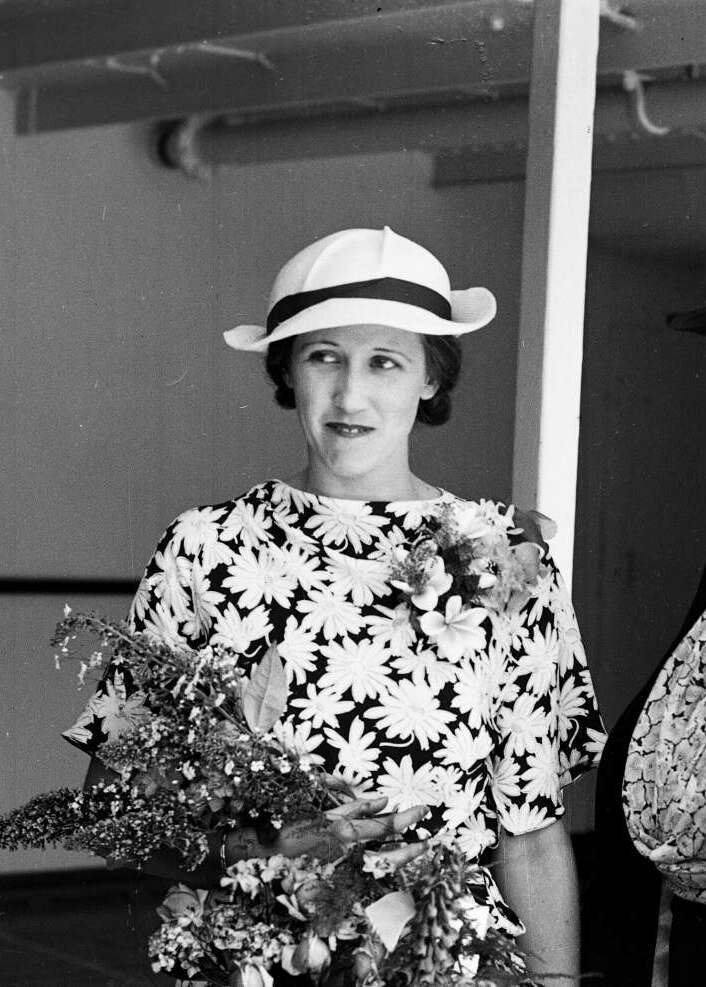
Mabel Magdalene Freer (née Ward, later Cusack) was a British woman whose exclusion from Australia on morality grounds in 1936 became a cause célèbre and led to a political controversy.
Freer was born in British India. After separating from her first husband, she began an affair with Edward Dewar, a married Australian Army officer stationed in Lahore. When Freer and Dewar sought to return to Australia together in 1936, Dewar's family and military authorities lobbied immigration officials to prevent her entry on morality grounds. On arrival in Fremantle, Freer was administered and failed a dictation test in Italian (deliberately chosen as a language she could not speak) which allowed her to be declared a prohibited immigrant under the Immigration Restriction Act 1901. She was accepted into New Zealand where she sought legal redress, making a second unsuccessful attempt to land in Sydney a month later.
The "Mrs Freer case" proved politically damaging for the Lyons government. The decision to exclude Freer was criticised on a number of grounds, including that it was arbitrary, infringed on personal liberty and was motivated by sexism. Interior minister Thomas Paterson was widely perceived as having mishandled the case. He publicly attacked Freer's character and used dubious or fabricated evidence to defend his actions. The federal cabinet eventually allowed Freer to enter Australia in July 1937, although her relationship with Dewar did not continue. The controversy contributed to the end of Paterson's ministerial career but had no lasting legal implications or impact on migration policy.
Freer was born in 1911 in present-day Pakistan, with different sources giving either Lahore or Rawalpindi as her place of birth. According to her own account, she was one of five children born to William A. Ward, a retired British Army officer who ran a hostel in Lahore. She visited England as a child before returning to live in India. In 1929 she married Ronald Freer, whose mother Edith was the sister of British government minister George Cave, 1st Viscount Cave. She left for England in 1933 with the couple's two children, returning to India in 1935 where she filed for divorce.
In 1936, Freer began a relationship with Edward Dewar, a lieutenant in the Australian Staff Corps who had been seconded to the British Indian Army in Lahore for a year of training. Dewar's wife Alice (née Howells) and infant daughter remained in Australia. In August 1936, Dewar wrote a letter to his wife stating that he would be returning to Australia with Freer and asked that she "release him to enable him to marry". Ronald Freer named Dewar as a co-respondent in their divorce proceedings, which under the Indian Penal Code made Dewar liable to up to five years' imprisonment for immoral conduct.
Dewar's father Robert Dewar and father-in-law Frank Howells were appalled by his intention to abandon the marriage and sought to break up his relationship with Freer. His father sought the assistance of military authorities in Lahore, who also disapproved of the relationship. Dewar's commanding officer Philip Myburgh disparaged Freer's moral character and suggested that attempts be made to prevent her entry into Australia. Howells subsequently contacted military authorities in Australia, who believed that Dewar's career would be at risk if the relationship continued. As the couple were due to arrive in Australia imminently, the matter was quickly escalated to the top levels of the Department of the Interior, which had responsibility for immigration. Interior minister Thomas Paterson accepted his department's recommendation that Freer be excluded from Australia as an "undesirable person", with Myburgh's correspondence as the primary evidence.
On 20 October 1936, Freer and Dewar arrived in Fremantle, Western Australia, aboard RMS Maloja. Although Freer held a British passport, upon arrival customs officials boarded the vessel and administered her a dictation test in Italian. She failed the test and was informed that she was considered a "prohibited immigrant" under the Immigration Restriction Act 1901.
The dictation test used to exclude Freer was developed to enforce the White Australia policy, allowing customs officials to deny non-white visitors entry without engaging in explicit racial discrimination that could have implications for international relations. The Act as amended in 1905 provided that "any person who (...) when an officer dictates to him not less than fifty words in any prescribed language, fails to write them out in that language in the presence of the officer" would not be admitted. In the absence of other legislation, it was also used to exclude foreigners on political grounds, notably in the attempted exclusion of Egon Kisch in 1935 when the test was administered in Scottish Gaelic. The application of dictation tests to exclude foreigners suspected of "immoral activities" was not unprecedented, but had typically been reserved for sex workers.
Hub AI
Mabel Freer AI simulator
(@Mabel Freer_simulator)
Mabel Freer
Mabel Magdalene Freer (née Ward, later Cusack) was a British woman whose exclusion from Australia on morality grounds in 1936 became a cause célèbre and led to a political controversy.
Freer was born in British India. After separating from her first husband, she began an affair with Edward Dewar, a married Australian Army officer stationed in Lahore. When Freer and Dewar sought to return to Australia together in 1936, Dewar's family and military authorities lobbied immigration officials to prevent her entry on morality grounds. On arrival in Fremantle, Freer was administered and failed a dictation test in Italian (deliberately chosen as a language she could not speak) which allowed her to be declared a prohibited immigrant under the Immigration Restriction Act 1901. She was accepted into New Zealand where she sought legal redress, making a second unsuccessful attempt to land in Sydney a month later.
The "Mrs Freer case" proved politically damaging for the Lyons government. The decision to exclude Freer was criticised on a number of grounds, including that it was arbitrary, infringed on personal liberty and was motivated by sexism. Interior minister Thomas Paterson was widely perceived as having mishandled the case. He publicly attacked Freer's character and used dubious or fabricated evidence to defend his actions. The federal cabinet eventually allowed Freer to enter Australia in July 1937, although her relationship with Dewar did not continue. The controversy contributed to the end of Paterson's ministerial career but had no lasting legal implications or impact on migration policy.
Freer was born in 1911 in present-day Pakistan, with different sources giving either Lahore or Rawalpindi as her place of birth. According to her own account, she was one of five children born to William A. Ward, a retired British Army officer who ran a hostel in Lahore. She visited England as a child before returning to live in India. In 1929 she married Ronald Freer, whose mother Edith was the sister of British government minister George Cave, 1st Viscount Cave. She left for England in 1933 with the couple's two children, returning to India in 1935 where she filed for divorce.
In 1936, Freer began a relationship with Edward Dewar, a lieutenant in the Australian Staff Corps who had been seconded to the British Indian Army in Lahore for a year of training. Dewar's wife Alice (née Howells) and infant daughter remained in Australia. In August 1936, Dewar wrote a letter to his wife stating that he would be returning to Australia with Freer and asked that she "release him to enable him to marry". Ronald Freer named Dewar as a co-respondent in their divorce proceedings, which under the Indian Penal Code made Dewar liable to up to five years' imprisonment for immoral conduct.
Dewar's father Robert Dewar and father-in-law Frank Howells were appalled by his intention to abandon the marriage and sought to break up his relationship with Freer. His father sought the assistance of military authorities in Lahore, who also disapproved of the relationship. Dewar's commanding officer Philip Myburgh disparaged Freer's moral character and suggested that attempts be made to prevent her entry into Australia. Howells subsequently contacted military authorities in Australia, who believed that Dewar's career would be at risk if the relationship continued. As the couple were due to arrive in Australia imminently, the matter was quickly escalated to the top levels of the Department of the Interior, which had responsibility for immigration. Interior minister Thomas Paterson accepted his department's recommendation that Freer be excluded from Australia as an "undesirable person", with Myburgh's correspondence as the primary evidence.
On 20 October 1936, Freer and Dewar arrived in Fremantle, Western Australia, aboard RMS Maloja. Although Freer held a British passport, upon arrival customs officials boarded the vessel and administered her a dictation test in Italian. She failed the test and was informed that she was considered a "prohibited immigrant" under the Immigration Restriction Act 1901.
The dictation test used to exclude Freer was developed to enforce the White Australia policy, allowing customs officials to deny non-white visitors entry without engaging in explicit racial discrimination that could have implications for international relations. The Act as amended in 1905 provided that "any person who (...) when an officer dictates to him not less than fifty words in any prescribed language, fails to write them out in that language in the presence of the officer" would not be admitted. In the absence of other legislation, it was also used to exclude foreigners on political grounds, notably in the attempted exclusion of Egon Kisch in 1935 when the test was administered in Scottish Gaelic. The application of dictation tests to exclude foreigners suspected of "immoral activities" was not unprecedented, but had typically been reserved for sex workers.
Recent media