Hubbry Logo
MadonaMadonaMain
Open search
Madona
Community hub
Madona
logo
8 pages, 0 posts
0 subscribers
Be the first to start a discussion here.
Madona
Madona
from Wikipedia

Madona (pronunciation; German: Modohn) is a town with town rights in the Vidzeme region of Latvia and is the center of the Madona municipality.

Key Information

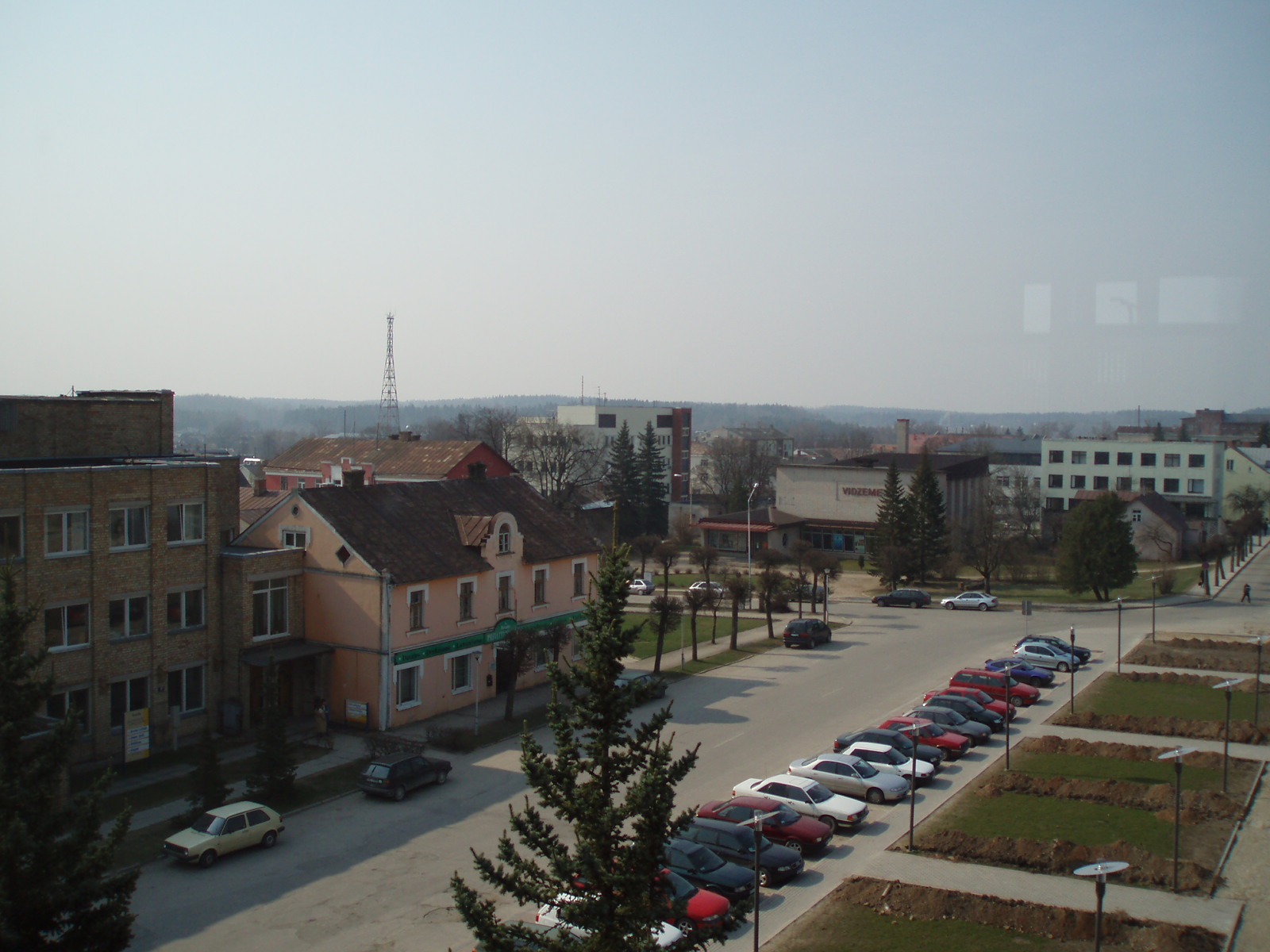
Skola street, Madona
Main street, Madona, in 1918

History

[edit]

The surrounding area of Madona had been populated in earlier times, which is confirmed by discoveries of old burial grounds in the city's vicinity. Madona is first mentioned in writing in 1461, when Archbishop Sylvester began renting the lands of Birži Manor. However, the Swedish government placed the land under state control. After the Great Northern War, Madona became property of the Russian Empire. Empress Elizabeth presented Birži Manor along with other of Vidzeme's manors to Count Alexander Buturlin.

Empress Catherine II bought the lands back as a present to the Serbian-born General Maxim Zorić. From the 19th to the beginning of the 20th century, the location of Madona was the fields of Birži Manor.

According to one version, the name of Madona stems from the adjacent Madona Lake. According to another version, Madona got its name from Birži Manor, which German exonym is Madohn or Modohn. For this reason, the railway station situated at the Pļaviņas - Valka narrow gauge railway line was named Madona as well. The populated place that slowly emerged around the station also got this name after the erection of the Madona railway station in 1903.[3]

Village privileges was given to Madona 1 July 1921, and town privileges 7 June 1926. Since 1 April 1925 Madona was the center of the newly founded County of Madona (Madonas apriņķis). Madona had 1,357 inhabitants at the time.

During World War II, Madona was under German occupation from 2 July 1941 until 13 August 1944.[4] It was administered as a part of the Generalbezirk Lettland of Reichskommissariat Ostland.

Population

[edit]

The Latvian Central Statistics Department reported 9,242 citizens as of 1 January 2007, with 888 people per square kilometre (2,300 people/sq mi)s).[citation needed]

Demographic situation in Madona
Latvians
79%
Russians
16%
Belarusians
1.79%
Ukrainians
1%
Poles
0.89%
Others
1.32%

When it comes to age distribution of the Madona inhabitants, the majority group consisting of 5,925 people are registered as "labour-capable" (Latvian: darbaspējīgie); 1,339 are under the age of "labour-capability" and 1867 are over. As of 21 December 2003, there were 211 (3.5%) unemployed citizens of the labour force.[5]

Geography

[edit]

The town of Madona lies in Vidzeme Upland. The hilly surroundings descend in a northwestern-southeastern direction. Several minor rivers and streams flows through the town, such as: Lisa River, Leivārīte, Ridzīte, Mucenieki River, Rieba River and Madona River — which flows can be seen in beautiful glens, like: The Love Glen, The Wedding Glen and The Divorce Glen. In The Love Glen is a park, in which the manmade water reservoir has one of the highest fountains in Latvia.

Climate

[edit]

Madona has a humid continental climate (Köppen Dfb).

Climate data for Madona (1991-2020 normals, extremes 1971-present)
Month Jan Feb Mar Apr May Jun Jul Aug Sep Oct Nov Dec Year
Record high °C (°F) 9.5
(49.1)
11.0
(51.8)
17.5
(63.5)
28.0
(82.4)
29.8
(85.6)
33.2
(91.8)
34.0
(93.2)
33.2
(91.8)
30.0
(86.0)
21.4
(70.5)
14.0
(57.2)
11.0
(51.8)
34.0
(93.2)
Mean daily maximum °C (°F) −1.9
(28.6)
−1.3
(29.7)
3.6
(38.5)
11.5
(52.7)
17.6
(63.7)
21.1
(70.0)
23.4
(74.1)
22.1
(71.8)
16.4
(61.5)
9.3
(48.7)
3.2
(37.8)
−0.3
(31.5)
10.4
(50.7)
Daily mean °C (°F) −4.5
(23.9)
−4.5
(23.9)
−0.5
(31.1)
6.0
(42.8)
11.5
(52.7)
15.3
(59.5)
17.6
(63.7)
16.2
(61.2)
11.3
(52.3)
5.6
(42.1)
0.9
(33.6)
−2.5
(27.5)
6.0
(42.9)
Mean daily minimum °C (°F) −7.4
(18.7)
−8.1
(17.4)
−4.8
(23.4)
0.3
(32.5)
4.9
(40.8)
9.2
(48.6)
12.0
(53.6)
10.4
(50.7)
6.3
(43.3)
1.9
(35.4)
−1.5
(29.3)
−4.9
(23.2)
1.5
(34.7)
Record low °C (°F) −33.1
(−27.6)
−33.0
(−27.4)
−25.4
(−13.7)
−12.4
(9.7)
−6.0
(21.2)
−0.3
(31.5)
1.5
(34.7)
2.3
(36.1)
−4.6
(23.7)
−12.5
(9.5)
−23.0
(−9.4)
−35.7
(−32.3)
−35.7
(−32.3)
Average precipitation mm (inches) 58.3
(2.30)
46.1
(1.81)
42.1
(1.66)
37.8
(1.49)
57.1
(2.25)
73.4
(2.89)
67.4
(2.65)
68.4
(2.69)
55.7
(2.19)
72.7
(2.86)
62.1
(2.44)
57.0
(2.24)
698.1
(27.47)
Average precipitation days (≥ 1 mm) 13 10 9 8 9 10 10 10 9 12 11 12 123
Source 1: LVĢMC[6][7]
Source 2: NOAA (precipitation days 1991-2020)[8]

Notable locations and objects

[edit]
  • Madona City Museum — founded in 1944, the museum owns more than 107,000 historical items, it is located in historical Birži Manor.
  • The Love Glen (Latvian: Mīlestības grava). Through The Love Glen flows the Madona River, along which shores slings park footpaths. At the entrance a pond with a fountain can be found.
  • Madona Second High School — first three-storey building in Madona, built 1924–26.
  • Former hotel building — among the oldest buildings in town, built 1901 of boulders and bricks.
  • Lazdona Lutheran Church — built 1802–05, inaugurated 1806.
  • Lazdona Holy Trinity Orthodox Church — built 1863–66.
  • Madona Catholic Church — built 1931–34.

Tourism

[edit]

Madona is 170 km east from Latvian capital Riga. Most popular tourism objects in Madona and surrounding are:

  • Gaizinkalns hill. Gaizinkalns is the highest point of Latvia. It is 311.94 m above sea level.[9] Visitors can take a walk for the 2 km long walking trail with beautiful views. Hill surrounding has evolved winter sports offer - comfortable skiing centers and accommodation.
  • Teiči and Krustkalni nature reserves.[10] The aim of these reserves is to provide ecosystems protection and natural development. There is an opportunity for tourists with a guide to see these protected nature territories and use birds watchtower. The total area of the Teiči reserve is 19,779 ha.[11]
  • Kalsnava Arboretum - largest collection of decorative trees and bushes in eastern part of Latvia, with total area of 130,37 ha.[12]
  • Lake Lubāns - the part of largest lake in Latvia is in Madona district.[13] Allowed activities next to the lake are fishing, swimming, using bird-watching tower, renting a telescope and a bike.
  • Interesting farms for tourists - 13 farms are open: rabbits and goats farm "Sveki", goat farm "Līvi", "Kucuru mill", farm "Ataugas".
  • Winter sports and recreation centers: sport center "Smeceres sils",[14] located next to Madona. There were organized some international biathlon and cross-country skiing competitions (Scandinavian Cup 2013 and World-cup Ski-Orienteering Competition 2013). Also, there are: recreation center "Gaizins",[15] skiing center "Viešūra kalns",[16] and recreation complex "Rēķu kalns"[17] - alpine skiing, snowboarding, cross-country skiing, the tube-slope.
  • Madona local history and art museum,[18] with more than 20 artistic and thematic exhibitions every year.
  • Different workshops (arts and crafts) and cultural events.
  • Much accommodation.

Notable people

[edit]

Twin towns — sister cities

[edit]

Madona is twinned with:[19]

References

[edit]
[edit]
Revisions and contributorsEdit on WikipediaRead on Wikipedia
from Grokipedia
Madona is a town and the administrative center of Madona Municipality in the region of eastern , situated approximately 145 kilometers east of the capital, . With a of approximately 6,600 residents (2025 estimate), it spans about 10.5 square kilometers and features a depicting a golden rooster's head, symbolizing vigilance and local heritage. Renowned for its rolling hills, dense forests, and role as a hub for and , Madona attracts visitors to nearby attractions like the vast Lake Lubāns—the largest in at 15.7 kilometers long—and the Smeceres sils or Ozolkalns ski resorts, while its economy emphasizes , , small-scale , and burgeoning . Established as a settlement in the late on the site of a former estate known locally as Bizi, Madona received village privileges in and full town rights in 1926, marking its growth amid Latvia's interwar independence period. The town expanded as an agricultural and administrative hub in the newly formed county system, enduring occupations during and the Soviet era before regaining prominence post-1991 independence. Today, it reflects a resilient focused on preserving regional history through institutions like the Madona Local History and Art Museum, founded in 1944 to document Vidzeme's cultural and natural legacy. Geographically, Madona lies in a scenic highland area of , encompassing the expansive Madona of 2,153 square kilometers—the third-largest by area in —and bordering natural reserves that support , including over 225 bird species around Lake Lubāns. The local thrives on sustainable practices, with and farming as mainstays, supplemented by a supportive environment that earned the municipality second place as 's most business-friendly locale in 2025. bolsters growth through year-round activities, from biathlon at dedicated centers to along historic oak-lined paths like the 10-kilometer Lubāna-Meirāni alley, while cultural sites such as Cesvaine Castle and artisan crafts highlight Madona's blend of tradition and modern appeal.

History

Early history

The region surrounding Madona, located in the upland of , bears traces of ancient settlement by Baltic tribes, particularly the , with archaeological evidence including graveyards and artifacts uncovered in areas like and Madona districts. These findings, documented through excavations, highlight the area's role in prehistoric Baltic cultures from the first centuries AD, featuring burial sites and material remains indicative of tribal communities engaged in agriculture and trade. Madona's earliest recorded mention dates to 1461, when the lands of Birži Manor were leased by Archbishop Sylvester of during the era of the , under the German exonym Modohn or Madohn. This manor, initially a modest rural estate, formed the nucleus of the future settlement, serving as an administrative and agricultural center amid the forested and hilly landscape. Over the 16th century, following the dissolution of the in 1561, the area came under the influence of the Polish-Lithuanian Commonwealth, which fostered manorial expansion through feudal land management and integration into broader Polish administrative structures. By the early 17th century, Birži Manor had solidified as a key rural holding, transitioning to Swedish control after the Polish-Swedish War (1621–1629), during which the estate endured conflicts but maintained its agrarian focus on grain production and forestry. Swedish rule emphasized estate efficiency, but the (1700–1721) shifted the region to dominance, incorporating into the . In the , Russian Empress Elizabeth granted Birži Manor to Count Alexander Buturlin, and later Catherine II reassigned it to General Maxim Zorić, promoting aristocratic oversight and modest infrastructural improvements like barn constructions that persist today. The 19th century marked significant transformation through the Russian Empire's early abolition of in the Baltic provinces (1816–1819), which freed peasants from obligatory labor on manors like Birži and enabled more independent farming. This reform spurred agricultural shifts toward diversified crops and , reducing reliance on large-scale serf-based estates and encouraging smallholder cultivation, which in turn drove gradual population growth in rural settlements, including the Madona area. By the late 1800s, these changes had elevated the modest estate into a burgeoning rural hub, setting the stage for its formal recognition as a in 1926.

Modern era

The modern settlement of Madona developed in the late on the site of the former Bizi estate, growing significantly with the arrival of the narrow-gauge railway station in 1903, which adopted the name Madona. In 1926, Madona was granted town rights by the Latvian on June 7, establishing it as an independent urban center with a population exceeding 1,000 inhabitants at the time. This status solidified its role as the administrative hub of the newly formed Madona County, which began operations on April 1, 1925, fostering local governance and economic growth spurred by the earlier arrival of the narrow-gauge railway in 1903. During , Madona experienced significant upheaval under German occupation from July 1941 to August 1944, marked by the persecution and execution of the local Jewish population in August 1941, alongside arrests and deportations that began under Soviet rule in 1940. Although the town avoided major battles and sustained minimal structural damage, demographic shifts were profound, with around 300 residents deported in June 1941 and further losses from and flight as Soviet forces returned in 1944; local resistance efforts were limited but included underground activities against both occupations. Following the war, Madona was integrated into the , where industrialization initiatives expanded industrial zones, housing developments, and infrastructure, including a 1951 general plan, a new in the , and schools in the . The Soviet period also saw harsh repressions, such as the of over 2,100 people from the region in March 1949, alongside collectivization of agriculture and forestry advancements like the Kalsnava . After regained independence in 1991, Madona faced challenges typical of post-Soviet transition, including a steady —from approximately 10,000 in the town around 1989 to approximately 6,649 as of 2025—driven by , aging demographics, and economic restructuring. Recent developments include the 2021 administrative-territorial reform, which merged Madona with the municipalities of Cesvaine, Ērgļi, and Lubāna to form the enlarged Madona Municipality effective July 1, 2021, enhancing administrative efficiency and regional cohesion. In June 2024, the approved the merger of Varakļāni Municipality into Madona Municipality, effective immediately after the 2025 local elections. As part of Latvia's membership since 2004, the municipality has benefited from European funds supporting upgrades, such as reconstructions allocated 2.2 million euros in 2022, contributing to improved living standards and economic revival as of 2025.

Geography

Location and environment

Madona is situated in the region of eastern , at coordinates 56°51′15″N 26°13′14″E, within the Vidzeme Upland, a hilly landscape characterized by elevations averaging 200-300 meters above . The town itself lies at an of approximately 140 meters, nestled among rolling hills and forested terrain that define the area's . This upland setting contributes to Madona's scenic environment, with the town serving as a central point in a region marked by glacial formations and varied relief. The town area of Madona encompasses 10.41 km², of which about 9.99 km² is land and 0.42 km² is water bodies, including streams and small ponds integrated into the urban fabric. Key natural features include the Madona River, a modest waterway that flows through the town and shapes local green spaces, alongside extensive surrounding forests that cover roughly 40% of the broader Madona district territory. These forests, primarily coniferous and mixed stands, support diverse ecosystems and are interspersed with hills such as Gaizinkalns, Latvia's at 311.94 meters, located approximately 20 km west of the town center in the Upland. Proximate to Madona is the , spanning 19,779 hectares across Madona and adjacent municipalities, which plays a vital role in regional through its vast systems and wetlands that regulate water flow into nearby rivers. This reserve enhances in the area, hosting rare habitats and serving as a buffer against . Conservation efforts in the region focus on sustainable forest management, addressing challenges like natural forest loss—Madona recorded a decline of 2.48 thousand hectares of natural forest between 2001 and 2023—through protected areas and regulated harvesting practices to maintain ecological balance. The subtly influences these landscapes by supporting seasonal vegetation cycles, though detailed meteorological patterns are analyzed separately.

Climate

Madona features a classified as Dfb under the Köppen-Geiger system, marked by distinct seasons with cold, snowy winters and mild, relatively short summers, without a pronounced dry period. The proximity to the moderates temperature extremes somewhat, contributing to increased humidity and more variable weather patterns compared to more continental interiors. The annual average stands at approximately 6.4°C, with total averaging around 700 mm distributed fairly evenly throughout the year. Winters are particularly harsh, with recording an average low of -7.6°C, while summers peak in with an average high of 22.7°C. Seasonal variations include about 140 frost days per year (days with minimum below 0°C), concentrated from late to early May, and occasional extreme events such as winter lows reaching -30°C or summer highs exceeding 30°C in rare heatwaves. cover typically persists for 70-80 days annually, enhancing the season's severity. Recent trends, observed through 2024 data, indicate ongoing warming in the , with 's annual mean reaching +8.7°C in both 2020 and 2024—the highest on record—driven by increases of up to 2°C in winter temperatures since the late . patterns have shown variability, with some years experiencing intensified rainfall events, though long-term annual totals remain stable; these shifts are linked to broader European warming at a rate of 0.4°C per decade in , faster than the continental average.

Demographics

Madona's population has experienced a steady decline over recent decades, reflecting broader demographic challenges in rural . As of 2025, the town's is estimated at 6,649 residents, down from a historical peak of 9,242 in 2007. This represents a contraction of approximately 29% since the early post-Soviet period, driven primarily by , which draws younger residents to larger cities like , and emigration to other European countries seeking better economic opportunities. in Madona has also decreased accordingly, from 888 inhabitants per square kilometer in 2007 to an estimated 639 per square kilometer in 2025, based on the town's area of about 10.4 square kilometers. Projections from the Central Statistical Bureau of indicate continued gradual decline aligned with national patterns of negative natural increase and net out-migration. Within the broader , which encompasses the town and surrounding parishes, the total is approximately 27,102 as of the beginning of 2025, highlighting significant urban-rural dynamics where the town accounts for roughly 24% of the municipal total, while rural areas face even steeper depopulation due to limited services and employment. The age structure in Madona underscores an aging , with over 23% of residents aged 65 and above in 2025 estimates, compared to about 16% under 15 years and 60% in the working-age group of 15-64. This imbalance is exacerbated by low birth rates, estimated at around 1.2 children per woman locally, below the national average of 1.36 and far from the replacement level of 2.1, contributing to negative natural change.

Ethnic and social composition

Madona's population is predominantly ethnic Latvian, accounting for 79% of residents, with Russians comprising 16% and smaller groups such as Belarusians and Ukrainians making up less than 5%, based on data from the 2021 census conducted by the Central Statistical Bureau of Latvia. The Ukrainian share has increased since 2022 due to refugees from the Russian invasion of Ukraine. This ethnic distribution reflects the broader trends in Vidzeme region, where Latvians form the majority but Russian-speaking communities remain significant due to historical Soviet-era migration. Latvian serves as the predominant and in Madona, used in administration, , and public life, while Russian is widely spoken, particularly among the ethnic Russian population. Bilingualism rates exceed 90% in the municipality, with most residents proficient in both Latvian and Russian, facilitating daily interactions and social cohesion. Social indicators in Madona highlight a well-educated populace, with high school completion rates approaching 95% among working-age adults, supported by local secondary and vocational programs. As a regional center, the municipality offers robust healthcare access through facilities like Madona Hospital, which provides , outpatient, and specialized services to residents and surrounding areas. Family structures are typical of , with an average household size of 2.3 persons, reflecting a mix of nuclear families and single-person households amid ongoing . Post-1991 independence, integration of minority communities in Madona has focused on acquisition, requirements, and participation in local , enabling ethnic and others to engage actively in community roles while preserving cultural identities. programs have promoted societal cohesion, reducing tensions through reforms and efforts, though challenges persist in ensuring equal opportunities for non-Latvian speakers.

Economy

Primary sectors

Madona's primary economic sectors are anchored in , , and related industrial activities, which leverage the municipality's rural landscape and natural resources to form the backbone of local production. plays a central role, with and crop production focusing on and as staple outputs. These activities are supported by key cooperatives that facilitate collective processing and marketing, enhancing efficiency in a region where farming covers nearly all non-urban areas. According to the Madona Municipality Development Programme 2022–2028, promoting growth in , , and sectors through cooperatives is a strategic priority to ensure agricultural self-sufficiency and competitiveness. Forestry constitutes another foundational sector, utilizing approximately 50% of the municipality's area, which includes about 40% natural forests and 9.3% non-natural tree cover as of 2020. Timber harvesting and processing are key activities, emphasizing sustainable practices aligned with EU regulations to maintain ecological balance and support economic utilization of forest resources. The sector benefits from initiatives like selective harvesting and wood waste valorization, as outlined in regional development strategies that integrate forestry with environmental protection. Industrial activities in Madona center on plants and small-scale , particularly wood products derived from local timber. These operations employ a significant portion of , contributing to value-added that transforms raw agricultural and outputs into marketable goods. includes dairy and crop-based products, while wood supports regional exports; both sectors align with efforts to increase high-value production under EU-funded modernization programs. In , including Madona, and remain important for , though national figures indicate a decline to about 8% as of 2025. Challenges persist in these sectors, including seasonal labor shortages exacerbated by and an aging workforce, alongside the need for ongoing modernization to adopt innovative technologies and improve infrastructure. As of 2025, efforts focus on training programs and EU-supported investments, including those from the Recovery and Resilience Facility, to address these issues and ensure the sustainability of amid broader .

Services and development

Madona serves as a regional hub for retail and commerce in eastern , with active enterprises in sectors such as retail trade of (17 firms), repair and maintenance of motor (25 firms), and operations (18 firms), supporting local economic activity. The municipality hosts over 500 registered firms across various service-oriented activities, fostering commerce that caters to the surrounding rural areas. Healthcare facilities in Madona primarily revolve around Madona Hospital, a level II institution providing acute and specialized care including , , gynecology, , orthopedics, and pediatric services to approximately 25,000 residents in the municipality. Recent renovations to the hospital's outpatient and children's wards, funded by the (EUR 935,000 of a EUR 1.1 million project), have introduced modern equipment such as digital machines, devices, and laparoscopes to enhance service delivery. Tourism contributes to Madona's local , driven by facilities like the and natural attractions in the hilly landscape, attracting visitors for outdoor activities year-round. These sectors promote economic diversification beyond , with investments in supporting seasonal influxes of domestic and regional tourists. Development initiatives in Madona emphasize EU-funded projects to bolster the and , including support for IT opportunities and incubation aligned with national Recovery and Resilience Facility programs allocating EUR 18.5 million for digitalization grants. The municipality's -friendly environment earned it second place in Latvia's 2025 ranking by the Latvian and Industry, highlighting efficient local governance and investment incentives that encourage growth. The unemployment rate in Madona aligns with national trends at approximately 6% in 2025, reflecting steady expansion amid Latvia's overall economic recovery.

Administration and infrastructure

Local government

Madona serves as the administrative center of Madona Municipality, which was formed on July 1, 2021, through the merger of the former Madona, Cesvaine, Ērgļi, and Lubāna municipalities under Latvia's administrative territorial reform aimed at creating more sustainable local governments, and further expanded on July 1, 2025, by merging with Varakļāni Municipality. The town received its town rights on June 7, 1926, establishing it as a key urban hub in the region. Governance of the municipality is led by an elected municipal council of 19 members, determined by the population size of approximately 29,900 residents as of 2025, with elections held every five years. The council, chaired by Mayor Agris Lungevičs, appoints executive committees and oversees specialized departments, including those for and , social assistance and welfare services, , and economic affairs. These departments manage daily operations, such as community support programs, infrastructure coordination, and resident services, ensuring alignment with national regulations on local self-government. The municipality is divided into 21 parishes—including Arona, Barkava, Bērzaune, Cesvaine, Dzelzava, Ērgļu, Indrāni, Jumurdas, Kalsnava, Lazdona, Liezēre, Lubānas, Mārciena, Mētriena, Murmastienes, Ošupe, Prauliena, Sarkaņi, Saubes, Varakļāni, and Vestiena—alongside the towns of Cesvaine, Ērgļi, Lubāna, Varakļāni, and Madona as administrative units. The 2025 municipal budget totals approximately €52 million in revenues, drawn from local property taxes, personal income tax allocations from the state, and grants from the for regional projects. Key municipal policies prioritize through economic diversification, environmental via resource-efficient initiatives, and community welfare by enhancing and quality-of-life programs. These align with the Planning Region's Sustainable Development Strategy to 2030, focusing on innovation in services, support for small businesses, and welfare measures like family assistance and to foster balanced growth across the municipality.

Transportation and utilities

Madona's transportation infrastructure centers on road and rail connections, facilitating access to the capital Riga and surrounding regions. The town's bus terminal, located at Rīgas iela 6, serves as a primary hub for intercity travel, with Ecolines operating daily services to Riga's central station taking approximately 3 hours and costing €8–18 per ticket. Complementing this, the Madona railway station at Saules iela 2 provides passenger train services operated by Vivi, connecting to Riga in about 2 hours and 23 minutes with one daily departure. Local and regional mobility relies on a network of state regional roads, including P34 toward Sigulda and P58 toward Lubāna, which intersect in the town center and link to the A2 highway for broader connectivity; these roads support commerce and daily commutes but feature narrower sections in rural stretches. Taxis are commonly used for short trips within Madona and to nearby areas, given the absence of extensive local public transit. Access to international travel is supported by proximity to , approximately 160 km away via the A2 and regional roads, with combined bus or train journeys taking 3–4 hours. For non-motorized options, Madona features designated paths integrated into three municipal bike routes that highlight local landscapes, promoting recreational and commuter use in the warmer months. Winter road maintenance is managed by Latvian State Roads (LVC), deploying over 100 units nationwide—including in the Madona area—to clear snow and ice, ensuring passable conditions on main routes despite occasional rural delays. Utilities in Madona emphasize sustainable and reliable provision, aligned with regional standards in . is supplied through a biomass-fueled system, utilizing local wood waste to generate heat for residential and public buildings, reducing reliance on fossil fuels as part of Latvia's broader shift toward renewables. achieves near-universal coverage, with Latvia's national rate at 97% for clean access, supported in Madona by municipal treatment facilities that process and distribute resources effectively. The electricity grid connects via the 110 kV Madona substation, integrated into Augstsprieguma tīkls (AST)'s national network, with ongoing relay and protection upgrades to enhance reliability. Renewable energy initiatives include pilot solar photovoltaic projects, such as Sunly's planned 225 MW hybrid parks in the Madona region, combining solar with future and battery storage to supply local grids and support up to 180,000 households by 2027. These efforts address rural connectivity challenges, where EV charging lags due to sparse and installation barriers, though 2025 developments aim to expand stations along key roads in line with national goals.

Education and culture

Education system

The education system in Madona primarily consists of two secondary schools serving the municipality's youth: the Madona City Secondary School and the Madona State Gymnasium. The Madona City Secondary School, originally founded in 1908 as the first secondary-level institution outside urban areas in Latvia and renamed in 1924, resulted from the 2017 merger with the former Madona 2nd Secondary School and provides comprehensive general secondary education programs from grades 1 to 12. The Madona State Gymnasium, established as a state institution, complements this by offering advanced academic curricula with a focus on humanities, sciences, and preparation for higher education, with both institutions emphasizing core subjects and supporting local enrollment of approximately 1,300 students across primary and secondary levels. Under Latvia's national policy, free meals are provided to primary students in grades 1-4, while municipalities like Madona extend support for grades 1-12 through local funding, as implemented in the region as of 2025, though availability can vary due to economic pressures. Special programs in Madona's schools emphasize extracurricular development, including after-school activities and a focus on STEM subjects through . The Madona City participates in international exchanges via programs like Nordplus, fostering global collaboration among students. Complementing formal , the Jānis Simsons Madona , founded in 1975 as Latvia's first children's art school and named after its founder in 2014, offers specialized programs in , , and for children aged 7-15, enrolling around 200 students to promote creative skills alongside academic growth. Madona's education system maintains high quality, with secondary graduation rates aligning closely with Latvia's national average of over 90%, supported by structured curricula and community involvement. International opportunities through school partnerships enhance student outcomes, though the system faces challenges such as teacher shortages—particularly in rural areas like Madona—and limited access for remote students as of 2025. These issues are exacerbated by an aging workforce and regional disparities, prompting ongoing national reforms for recruitment and infrastructure.

Cultural institutions and events

Madona's is anchored by key institutions that preserve and promote local heritage. The Madona Local History and Art Museum, established in 1944, serves as a primary repository for the region's , , and , housing over 134,000 items including artifacts, documents, and artworks that document the area's development from ancient times to the present. The museum features a permanent exhibition on regional , showcasing finds from the Middle and , such as tools and settlement remnants, to highlight prehistoric human activity in . Complementing the museum, the Madona House of Culture acts as a vibrant hub for community arts, hosting approximately 20 amateur collectives that engage in theater, dance, music, and visual arts, alongside regular concerts and performances open to the public. These groups foster creative expression through rehearsals and events that draw local participants and audiences, emphasizing collaborative cultural production. The House of Culture also supports workshops on traditional crafts and performing arts, providing accessible spaces for skill-building and social interaction. Annual events enrich Madona's cultural calendar, blending contemporary and traditional elements. The MABOCA (Madona Bunch Of Cool Art) , in its 2025 edition held from May 24 to July 15, featured over 20 internationally recognized artists from , , , and , presenting exhibitions, performances, concerts, and installations across public spaces like the bus park and cinema. Seasonal folk festivals, such as those celebrating Latvian traditions with and , further animate the town, often organized in collaboration with local ensembles to revive rural customs. Exhibitions at the periodically focus on regional , offering guided tours that connect visitors to ancient heritage through artifacts and narratives. These institutions play a crucial role in preserving Latvian traditions, including and craftsmanship, by integrating them into programs that promote cultural continuity amid modern influences. While formal bilingual initiatives for minorities like Russian-speakers are more prevalent in educational settings, cultural events occasionally incorporate multilingual elements to broaden . is strong, with workshops and public programs encouraging participation from diverse groups, though specific attendance figures vary by event.

Landmarks

Historical sites

Madona's historical sites reflect the town's evolution from a medieval manor estate to a regional center in Latvia's Vidzeme region, featuring preserved remnants of 19th-century architecture and interwar developments. The Birži Manor, first documented in 1461 when Archbishop Sylvester rented its lands, represents one of the area's earliest man-made landmarks. Originally constructed in the 19th century, the manor complex suffered a devastating fire in 1905 but was subsequently restored, with key surviving elements including a servants' residence and an old magazine barn built of fieldstone. These remnants highlight the manor's role as an administrative and residential hub during the Russian Empire era, when Empress Elizabeth gifted it to Count Alexander Buturlin in the 18th century, and later Empress Catherine II transferred it to General Maxim Zorić. The former Birži Manor barn now serves as the home of the Madona Local History and , established in 1944 to collect, preserve, and exhibit materials on the region's history, culture, and art. The barn underwent significant restoration in 1984, including the addition of a spacious extension for art exhibitions, with the halls re-opened after further renovation on May 12, 2023, ensuring its adaptation for modern cultural use while retaining its historical fieldstone structure. As of 2024, the museum houses over 137,000 items, with permanent exhibits focusing on —such as settlements and graveyards near Lake Lubāns—and ethnographic household articles that illustrate rural life in . These displays provide insight into Madona's pre-industrial heritage, emphasizing the area's ancient settlements and traditional crafts. Another notable man-made landmark is Love Glen (Mīlestības grava), a landscaped park featuring a constructed water reservoir with one of Latvia's highest fountains, symbolizing the town's blend of natural and engineered elements. Developed as a recreational space, the glen includes pathways and benches amid the ravine's terrain, contributing to Madona's historical from the early . Madona's overall showcases a mix of wooden rural structures, typical of Latvian countryside , alongside interwar modern buildings that emerged during the first Latvian Republic (1918–1940), when the town expanded with functional designs for public institutions. Preservation efforts, such as the 1984 barn renovation and 2023 hall re-opening, underscore ongoing commitments to maintaining these sites amid Latvia's broader initiatives.

Natural features

Madona's natural landscape is dominated by the Uplands, shaped by glacial processes from the last Ice Age, which deposited moraines and formed rolling hills and valleys. The Madona-Trepe ice-marginal ridge, located near Smeceres sils, exemplifies these geological features, marking the maximum extent of the Lubāns ice lobe and creating the undulating terrain characteristic of the East Latvian Lowland. These moraines contribute to the region's by influencing soil composition and water drainage, supporting diverse ecosystems in forests and wetlands. Prominent among Madona's elevations is Gaiziņkalns, Latvia's highest hill at 311.94 meters above sea level, situated within the . This hill features a 2-kilometer that winds through forests, offering views of the surrounding uplands and small lakes like Talejas and Viešūrs. Nearby, the calm waters of Kālezers (also known as Kala Lake) provide a serene aquatic feature, emphasizing the area's tranquil natural beauty and proximity to the highest point in the country. The Madona River valley adds to the region's hydrological diversity, carving through scenic glens such as the Love Glen (Mīlestības grava), where park footpaths follow the river's shores amid lush vegetation. This valley supports local and serves as a corridor for , integrating seamlessly with the broader upland landscape. A key is the Teiči Nature Reserve, established in 1982 and spanning 19,779 hectares, the largest such reserve in , encompassing vast , forests, and marshes in eastern Latvia's Madona region. It hosts rare and , including 38 protected of flowering plants and ferns, 24 protected , and over 190 breeding bird such as the , whimbrel, golden plover, and . Hiking trails within the reserve allow access to these bog ecosystems, highlighting their role in preserving Eastern Latvia's unique mire habitats. Conservation efforts in Madona emphasize protected status for these features, with ongoing monitoring addressing impacts. A recent analysis of and cover changes in from 1982 to 2023, including projections to 2064, underscores the need for adaptive zoning to mitigate effects like bog degradation from warming temperatures and altered .

Tourism

Attractions and activities

Madona offers a variety of cultural and natural attractions that draw visitors to its scenic landscapes and historical sites. The Madona Local History and Art Museum, founded in 1944, serves as a primary draw, housing over 134,000 items that document the region's history, culture, and art through exhibits on local crafts, , and natural heritage. Visitors can explore collections featuring tools from traditional trades like blacksmithing and , providing insight into Vidzeme's . Nearby, Lazdona Manor, first documented in the and situated by Lazdona Lake, invites exploration of its and surrounding grounds, offering a glimpse into Latvia's aristocratic past amid a picturesque lakeside setting. The Love Glen (Mīlestības grava), a charming along the Madona , provides leisurely walks through manicured paths, past a manmade and one of 's tallest fountains, which is illuminated during evening hours. Seasonal events enhance these visits, particularly in summer when festivals like the Golden Schlager music event in July and the MABOCA art festival showcase local traditions, performances, and contemporary exhibits. Outdoor activities in the Madona region emphasize nature immersion, including in the Teiči Nature Reserve, covering 19,779 hectares and featuring one of the largest complexes in the , known for its vast bogs and rare bird species such as the and golden plover. River kayaking on the Ogre River, particularly at Brāžu Rapids, offers an adventurous route through valuable biotopes with gentle rapids suitable for beginners, highlighting the area's diverse waterways. Accessibility is facilitated by the Madona Tourist Information Center, located at the on Skolas iela 12, which provides guided tours, maps, and event details in Latvian, Russian, and English. Accommodations like Madona, a centrally located 3-star option with 27 rooms, free , and parking, cater to tourists seeking convenience near key sites. Summer appeals to nature enthusiasts with blooming peonies in June and extended daylight for outdoor pursuits, while off-season visits focus on cultural immersion through indoor exhibits and illuminated fountains.

Sports and recreation

Madona's sports infrastructure centers on winter disciplines, with the Smeceres Sils Sports and Recreation Centre serving as a primary venue for biathlon and cross-country skiing. This facility, situated adjacent to the town, includes a 30-target shooting range equipped for illuminated night sessions and instructor-led training, alongside groomed trails that support both professional and recreational use. It has undergone significant development, including infrastructure upgrades discussed with national authorities to enhance its role in Nordic sports. Complementing Smeceres Sils is the Gaizinkalns ski area, Latvia's highest elevation point at 311.94 meters, which features 0.6 km of slopes for downhill skiing and , serviced by two lifts operating during the winter season. These centers collectively host national competitions, such as Latvian biathlon championships, and international gatherings like the IBU Regional Summer Biathlon Event combined with the Baltic Biathlon Cup in September 2025, which incorporates youth categories and open championships. Recreational activities emphasize outdoor fitness, including along the 2 km circular nature trail at Gaizinkalns, which ascends the hilltop and offers panoramic views of the surrounding Vidzeme uplands. draws enthusiasts to Smeceres Sils' network of marked paths, totaling 4 to 10 km and maintained for classic and skate techniques during winter months. In summer, the area shifts to on a dedicated 12 km bike trail and along a 2.5 km paved track, with equipment rentals available on-site to encourage broad access. These venues foster community involvement in physical activities, integrating with local initiatives to promote sports as a core aspect of Madona's lifestyle and supporting events that engage residents year-round.

International relations

Twin towns

Madona has established formal twin town partnerships with five municipalities as of 2025, promoting cultural exchanges, tourism development, and youth programs amid ongoing geopolitical tensions in the region. These bilateral agreements emphasize mutual visits, joint events, and economic collaboration, remaining active despite challenges related to the Russian invasion of Ukraine and regional instability. The partnership with Coulaines, France, dates to 1991 and was facilitated initially through the twin town committee of Weyhe, Germany, focusing on cultural and educational exchanges. Annual delegations and shared events strengthen ties, such as the September 2025 visit by ten representatives from Madona, who engaged in discussions on support for and local community activities. This collaboration has fostered ongoing youth programs and trade links in agriculture and crafts. The twin town relationship with , Georgia, centers on tourism promotion and cultural understanding, leveraging both locations' natural attractions to encourage visitor exchanges and joint marketing initiatives. Madona's agreement with Anykščiai, , supports cross-border cooperation in and , highlighted by the October 2024 visit from a Latvian delegation led by Agris Lungevičs to discuss shared regional priorities. The partnership with Tranås, Sweden, established to foster cultural and educational ties, includes exchanges in arts, sports, and municipal governance, contributing to broader Nordic-Baltic cooperation. Madona's twinning with Weyhe, , since the early , emphasizes economic development, environmental projects, and youth mobility, with Weyhe playing a key role in initiating other partnerships like that with Coulaines. These partnerships provide economic benefits through targeted trade opportunities and enrich local culture via reciprocal events, while briefly complementing Madona's wider involvement in Latvian and EU regional initiatives.

Regional partnerships

Madona Municipality, as one of the ten municipalities comprising the Planning Region, actively participates in regional collaborations coordinated by the Vidzeme Planning Region (VPR), which serves as the administrative authority for balanced social, economic, and territorial development across the area. The VPR facilitates cooperation among its member municipalities, including Madona, through initiatives like the Development Council, where local deputies contribute to and policy implementation. As the administrative center of its municipality, Madona leads local efforts that align with and support the VPR's broader development strategies, such as the Vidzeme Planning Region Development Programme 2022-2027, emphasizing sustainable growth and inter-municipal coordination. In terms of EU programs, Madona engages in Europe activities via the VPR framework, exemplified by the participation of Madona municipality representatives in a regional stakeholder meeting on October 23, 2025, at the Lake Lubāns Information Centre. This event, organized by the VPR, focused on sharing innovative solutions for and , involving stakeholders from multiple and municipalities to address common challenges like and sustainable practices. Such engagements highlight Madona's role in multilateral environmental pacts within Latvia's eastern regions, promoting cross-municipal knowledge exchange under Europe's interregional cooperation pillar. Historically, Madona has contributed to cross-border projects under frameworks, including the "Fostering in Areas through Cross- " initiative, where the Madona District Council served as lead partner for the Tacis component, collaborating with the Development Agency and partners from and to enhance economic ties and promotion in areas. More recently, outcomes of these regional networks include -funded infrastructure improvements, such as the opening of a Center in Madona on June 19, 2025, supported by the Recovery and Resilience Facility to bolster local resilience and emergency response capabilities. Madona also supports broader Baltic tourism alliances through VPR-led efforts, such as the VI-A Estonia-Latvia programme's water tourism initiatives, which enhance cross-border recreational routes and accessibility in the shared border region, indirectly benefiting Madona's natural attractions via regional promotion. These partnerships underscore Madona's position as a key contributor to Vidzeme's international outreach, fostering environmental and economic synergies with neighboring areas.

Notable people

Political and military figures

, who grew up in Madona after moving there as a child, graduated from Madona Secondary School No. 1 in 1984 and began his political career as a member of the Madona City Council from 1990 to 1993. From 1989 to 1996, he served as deputy director and later director of the Madona Regional Environmental Board, establishing himself as an advocate for environmental policy. Vējonis held the position of Minister for the Environment from 2002 to 2004, a period during which prepared for and achieved accession to the and in 2004, contributing to the alignment of national environmental standards with EU requirements. He later served as Minister of Defence from 2014 to 2015 before becoming from 2015 to 2019, where he emphasized strengthening 's presence in the amid regional security challenges. Ernst Gideon von Laudon, born on February 13, 1717, in Tootzen (present-day Toce) near Ļaudona in what is now Madona Municipality, rose to become one of the most distinguished Austrian field marshals of the 18th century. Of Baltic German descent, his family held estates in the Livonian region, providing early ties to local landownership during a time of shifting imperial control under Swedish and later Russian influence. Laudon entered Austrian military service in 1741 and gained prominence through campaigns in the War of the Austrian Succession and the Seven Years' War, including decisive actions against Prussian forces in Silesia and Bohemia that indirectly secured Habsburg interests in the broader Baltic and Eastern European theaters, where Livonia's strategic position was relevant. His later victories in the Austro-Turkish War (1788–1791), such as the capture of Belgrade, underscored his tactical expertise, though his connections to Madona remained rooted in his birthplace and familial heritage rather than direct command in the area. Among post-independence contributors, Dainis Turlais, born in Madona on November 24, 1950, played a key role in rebuilding Latvia's military after 1991. As a former Soviet officer, he became the first Commander of the from October 1992 to 1994, overseeing the formation of the unified defense structure from disparate units inherited from the Soviet era. Turlais later served as Minister of the Interior from 1995 to 1997, contributing to internal security reforms during Latvia's transition to democracy and integration into Western institutions.

Artists and intellectuals

Juris Alunāns (1832–1864), a pioneering Latvian poet, philologist, and ethnographer, was born in Jaunkalsnava manor in the region, now part of Madona Municipality. His work laid foundational stones for the Latvian literary revival in the , particularly through his innovative translations of world poetry into , as seen in his seminal collection Dziesmiņas, latviešu valodai pārtulkotas (1856), which introduced poetic forms from , Goethe, Schiller, and Pushkin while adapting them to Latvian sensibilities. Alunāns also coined approximately 500 neologisms, modernizing the and fostering a sense of national linguistic identity during a period of cultural suppression under Russian imperial rule. As an ethnographer, Alunāns contributed to the preservation of Latvian through his involvement in publications like Mājas Viesis (1856–1860), where he promoted folk traditions and critiqued social inequalities, helping to elevate oral heritage into written literature that reinforced emerging national consciousness. His folklore efforts, aligned with the Young Latvians movement, influenced subsequent collections and shaped Latvian cultural identity by bridging rural traditions with intellectual discourse. Valdemārs Ozoliņš (1896–1973), a noted Latvian and conductor born in Vestiena parish within Madona Municipality, composed around 500 songs and several cantatas, blending folk elements with classical influences. His piece Papardes zieds gained prominence at the VI All-Latvian Song Festival in , exemplifying his role in advancing Latvian choral music and national cultural expression during the interwar independence period. Ozoliņš served as chief conductor at multiple Latvian Song Festivals, further embedding Madona's regional musical heritage into the broader national tradition. Dace Reinika (born 1958 in Madona), a contemporary Latvian music educator, choir conductor, and cultural figure, has contributed to the local arts scene through her leadership of ensembles like the Tērvete Choir, promoting Latvian vocal traditions and community performances. Her work as a music teacher in the region underscores ongoing intellectual engagement with Latvian heritage, including participation in national events that sustain cultural continuity. The enduring impact of Madona's artists and intellectuals is evident in initiatives like the MABOCA (Madona Bunch of Cool Art) , an annual since 2022 that showcases contemporary creators from the municipality through exhibitions, performances, and music events, fostering modern interpretations of local and identity. For instance, the 2025 edition featured multidisciplinary works by regional artists such as Dāvis Ozols, highlighting Madona's role in contemporary Latvian cultural innovation.

References

  1. https://en.wikivoyage.org/wiki/Madona
Add your contribution
Related Hubs
User Avatar
No comments yet.