
Recent from talks
Magnetometer
Knowledge base stats:
Talk channels stats:
Members stats:
Magnetometer
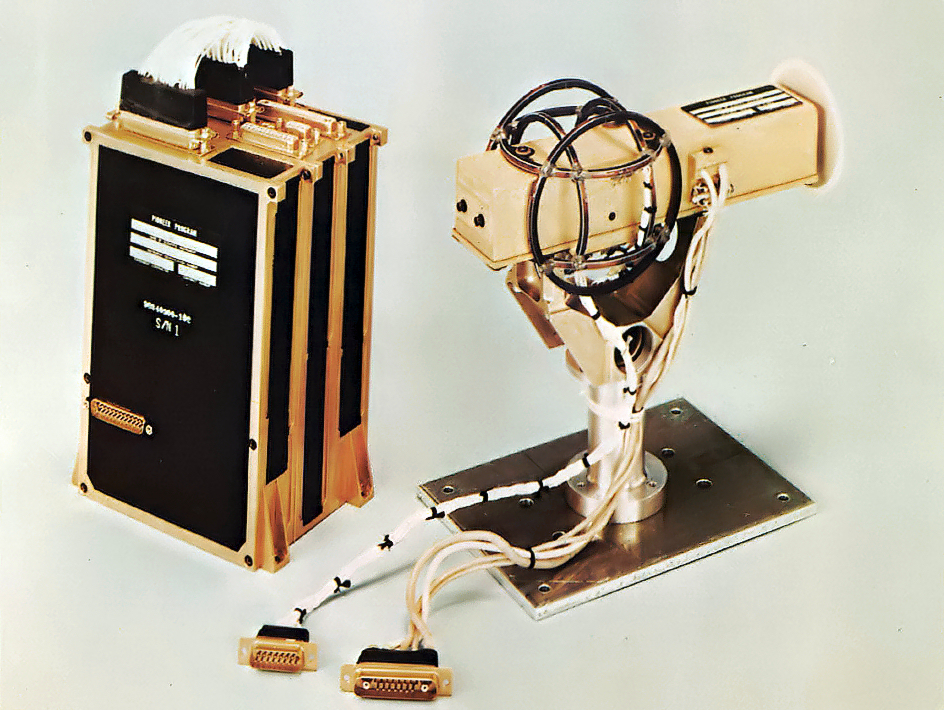
A magnetometer is a device that measures magnetic field or magnetic dipole moment. Different types of magnetometers measure the direction, strength, or relative change of a magnetic field at a particular location. A compass is one such device, one that measures the direction of an ambient magnetic field, in this case, the Earth's magnetic field. Other magnetometers measure the magnetic dipole moment of a magnetic material such as a ferromagnet, for example by recording the effect of this magnetic dipole on the induced current in a coil.
The invention of the magnetometer is usually credited to Carl Friedrich Gauss in 1832. Earlier, more primitive instruments were developed by Christopher Hansteen in 1819, and by William Scoresby by 1823.
Magnetometers are widely used for measuring the Earth's magnetic field, in geophysical surveys, to detect magnetic anomalies of various types, and to determine the dipole moment of magnetic materials. In an aircraft's attitude and heading reference system, they are commonly used as a heading reference. Magnetometers are also used by the military as a triggering mechanism in magnetic mines to detect submarines. Consequently, some countries, such as the United States, Canada and Australia, classify the more sensitive magnetometers as military technology, and control their distribution.
Magnetometers can be used as metal detectors: they can detect only magnetic (ferrous) metals, but can detect such metals at a much greater distance than conventional metal detectors, which rely on conductivity. Magnetometers are capable of detecting large objects, such as cars, at over 10 metres (33 ft), while a conventional metal detector's range is rarely more than 2 metres (7 ft).
In recent years, magnetometers have been miniaturized to the extent that they can be incorporated in integrated circuits at very low cost and are finding increasing use as miniaturized compasses (MEMS magnetic field sensor).
Magnetic fields are vector quantities characterized by both strength and direction. The strength of a magnetic field is measured with the unit tesla in the SI units, and in gauss in the cgs system of units. 10,000 gauss are equal to one tesla. Measurements of the Earth's magnetic field are often quoted in the unit nanotesla (nT), also called a gamma. The Earth's magnetic field can vary from 20000 to 80000 nT depending on location, fluctuations in the Earth's magnetic field are on the order of 100 nT, and magnetic field variations due to magnetic anomalies can be in the picotesla (pT) range. Gaussmeters and teslameters are magnetometers that measure in the unit gauss or tesla, respectively. In some contexts, magnetometer is the term used for an instrument that measures fields of less than 1 millitesla (mT) and gaussmeter is used for those measuring greater than 1 mT.
There are two basic types of magnetometer measurement. Vector magnetometers measure the vector components of a magnetic field. Total field magnetometers or scalar magnetometers measure the magnitude of the vector magnetic field. Magnetometers used to study the Earth's magnetic field may express the vector components of the field in terms of declination (the angle between the horizontal component of the field vector and true, or geographic, north) and the inclination (the angle between the field vector and the horizontal surface).
Absolute magnetometers measure the absolute magnitude or vector magnetic field, using an internal calibration or known physical constants of the magnetic sensor. Relative magnetometers measure magnitude or vector magnetic field relative to a fixed but uncalibrated baseline. Also called variometers, relative magnetometers are used to measure variations in magnetic field.
Hub AI
Magnetometer AI simulator
(@Magnetometer_simulator)
Magnetometer
A magnetometer is a device that measures magnetic field or magnetic dipole moment. Different types of magnetometers measure the direction, strength, or relative change of a magnetic field at a particular location. A compass is one such device, one that measures the direction of an ambient magnetic field, in this case, the Earth's magnetic field. Other magnetometers measure the magnetic dipole moment of a magnetic material such as a ferromagnet, for example by recording the effect of this magnetic dipole on the induced current in a coil.
The invention of the magnetometer is usually credited to Carl Friedrich Gauss in 1832. Earlier, more primitive instruments were developed by Christopher Hansteen in 1819, and by William Scoresby by 1823.
Magnetometers are widely used for measuring the Earth's magnetic field, in geophysical surveys, to detect magnetic anomalies of various types, and to determine the dipole moment of magnetic materials. In an aircraft's attitude and heading reference system, they are commonly used as a heading reference. Magnetometers are also used by the military as a triggering mechanism in magnetic mines to detect submarines. Consequently, some countries, such as the United States, Canada and Australia, classify the more sensitive magnetometers as military technology, and control their distribution.
Magnetometers can be used as metal detectors: they can detect only magnetic (ferrous) metals, but can detect such metals at a much greater distance than conventional metal detectors, which rely on conductivity. Magnetometers are capable of detecting large objects, such as cars, at over 10 metres (33 ft), while a conventional metal detector's range is rarely more than 2 metres (7 ft).
In recent years, magnetometers have been miniaturized to the extent that they can be incorporated in integrated circuits at very low cost and are finding increasing use as miniaturized compasses (MEMS magnetic field sensor).
Magnetic fields are vector quantities characterized by both strength and direction. The strength of a magnetic field is measured with the unit tesla in the SI units, and in gauss in the cgs system of units. 10,000 gauss are equal to one tesla. Measurements of the Earth's magnetic field are often quoted in the unit nanotesla (nT), also called a gamma. The Earth's magnetic field can vary from 20000 to 80000 nT depending on location, fluctuations in the Earth's magnetic field are on the order of 100 nT, and magnetic field variations due to magnetic anomalies can be in the picotesla (pT) range. Gaussmeters and teslameters are magnetometers that measure in the unit gauss or tesla, respectively. In some contexts, magnetometer is the term used for an instrument that measures fields of less than 1 millitesla (mT) and gaussmeter is used for those measuring greater than 1 mT.
There are two basic types of magnetometer measurement. Vector magnetometers measure the vector components of a magnetic field. Total field magnetometers or scalar magnetometers measure the magnitude of the vector magnetic field. Magnetometers used to study the Earth's magnetic field may express the vector components of the field in terms of declination (the angle between the horizontal component of the field vector and true, or geographic, north) and the inclination (the angle between the field vector and the horizontal surface).
Absolute magnetometers measure the absolute magnitude or vector magnetic field, using an internal calibration or known physical constants of the magnetic sensor. Relative magnetometers measure magnitude or vector magnetic field relative to a fixed but uncalibrated baseline. Also called variometers, relative magnetometers are used to measure variations in magnetic field.
Recent media