



Community hub
Recent from talks
Knowledge base stats:
Talk channels stats:
Members stats:
Major Pillar Edicts
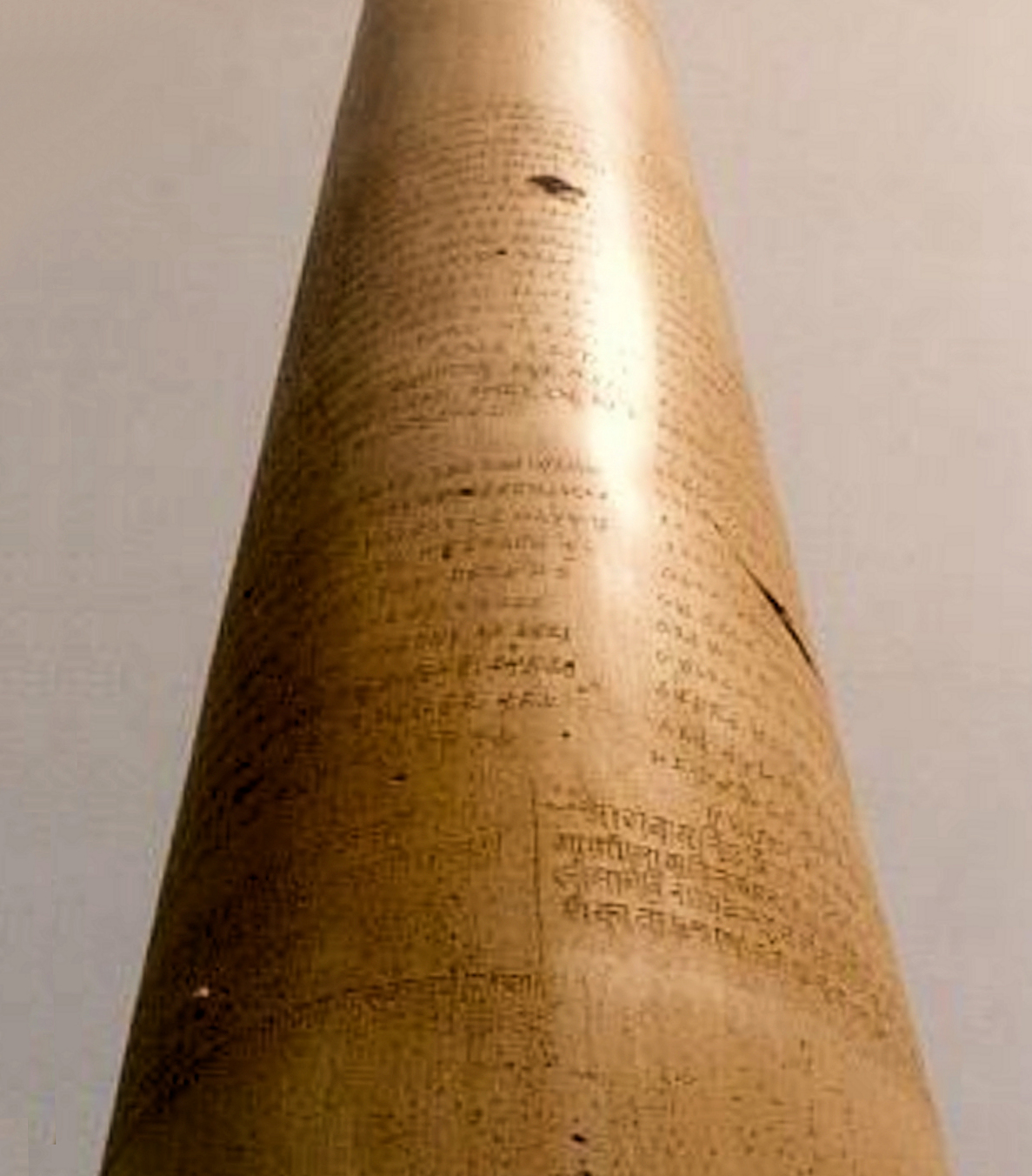
The Major Pillar Edicts of Indian Emperor Ashoka refer to 7 separate major Edicts of Ashoka inscribed on columns (the Pillars of Ashoka), which are significantly detailed and are among the earliest dated inscriptions of any Indian monarch. An English translation of the Edicts was published by Romila Thapar.
These edicts are preceded chronologically by the Minor Rock Edicts (11th year of his reign), Major Rock Edicts (12th year of his reign), and Minor pillar edicts (12th year of his reign) and constitute the most technically elegant of the inscriptions made by Ashoka. They were made at the end of the reign of Ashoka (during the 26th and 27th years of his reign), that is, from 237 to 236 BCE. Chronologically they follow the fall of Seleucid power in Central Asia and the related rise of the Parthian Empire and the independent Greco-Bactrian Kingdom c. 250 BCE, and Hellenistic rulers are not mentioned anymore in these last edicts.
Edict No.7, the last Major Pillar Edict, appears exclusively on the Delhi-Topra pillar, and is testamental in nature, making a summary of the accomplishments of Ashoka during his life.
Ashoka was the third monarch of the Maurya Empire in the Indian subcontinent, reigning from around 269 BCE. Ashoka famously converted to Buddhism and renounced violence soon after being victorious in a gruesome Kalinga War, yet filled with deep remorse for the bloodshed of the war. Although he was a major historical figure, little definitive information was known as there were few records of his reign until the 19th century when a large number of his edicts, inscribed on rocks and pillars, were found in modern-day India, Nepal, Pakistan and Afghanistan. These many edicts were concerned with practical instructions in running a kingdom such as the design of irrigation systems and descriptions of Ashoka's beliefs in peaceful moral behavior. They contain little personal detail about his life.
The Major Pillar Edicts of Ashoka were exclusively inscribed on the Pillars of Ashoka or fragments thereof, at Kausambi (now Allahabad pillar), Topra Kalan, Meerut, Lauriya-Araraj, Lauria Nandangarh, Rampurva (Champaran), and fragments of these in Aramaic (Kandahar, Edict No.7 and Pul-i-Darunteh, Edict No.5 or No.7 in Afghanistan) However many pillars, such as the bull pillar of Rampurva, or the pillar of Vaishali do not have inscriptions.
These pillar edicts include:
Major Pillar Edict I
Asoka's principle of protection of the people
Major Pillar Edict II
Defines dhamma as a minimum of sins, many virtues, compassion, liberality, truthfulness and purity
Hub AI
Major Pillar Edicts AI simulator
(@Major Pillar Edicts_simulator)
Major Pillar Edicts
The Major Pillar Edicts of Indian Emperor Ashoka refer to 7 separate major Edicts of Ashoka inscribed on columns (the Pillars of Ashoka), which are significantly detailed and are among the earliest dated inscriptions of any Indian monarch. An English translation of the Edicts was published by Romila Thapar.
These edicts are preceded chronologically by the Minor Rock Edicts (11th year of his reign), Major Rock Edicts (12th year of his reign), and Minor pillar edicts (12th year of his reign) and constitute the most technically elegant of the inscriptions made by Ashoka. They were made at the end of the reign of Ashoka (during the 26th and 27th years of his reign), that is, from 237 to 236 BCE. Chronologically they follow the fall of Seleucid power in Central Asia and the related rise of the Parthian Empire and the independent Greco-Bactrian Kingdom c. 250 BCE, and Hellenistic rulers are not mentioned anymore in these last edicts.
Edict No.7, the last Major Pillar Edict, appears exclusively on the Delhi-Topra pillar, and is testamental in nature, making a summary of the accomplishments of Ashoka during his life.
Ashoka was the third monarch of the Maurya Empire in the Indian subcontinent, reigning from around 269 BCE. Ashoka famously converted to Buddhism and renounced violence soon after being victorious in a gruesome Kalinga War, yet filled with deep remorse for the bloodshed of the war. Although he was a major historical figure, little definitive information was known as there were few records of his reign until the 19th century when a large number of his edicts, inscribed on rocks and pillars, were found in modern-day India, Nepal, Pakistan and Afghanistan. These many edicts were concerned with practical instructions in running a kingdom such as the design of irrigation systems and descriptions of Ashoka's beliefs in peaceful moral behavior. They contain little personal detail about his life.
The Major Pillar Edicts of Ashoka were exclusively inscribed on the Pillars of Ashoka or fragments thereof, at Kausambi (now Allahabad pillar), Topra Kalan, Meerut, Lauriya-Araraj, Lauria Nandangarh, Rampurva (Champaran), and fragments of these in Aramaic (Kandahar, Edict No.7 and Pul-i-Darunteh, Edict No.5 or No.7 in Afghanistan) However many pillars, such as the bull pillar of Rampurva, or the pillar of Vaishali do not have inscriptions.
These pillar edicts include:
Major Pillar Edict I
Asoka's principle of protection of the people
Major Pillar Edict II
Defines dhamma as a minimum of sins, many virtues, compassion, liberality, truthfulness and purity