
_-_Edwards_vol_15_pl_1290_(1829).jpg/250px-Malaxis_unifolia_(as_Microstylis_ophioglossoides)_-_Edwards_vol_15_pl_1290_(1829).jpg)


_-_Edwards_vol_15_pl_1290_(1829).jpg/1229px-Malaxis_unifolia_(as_Microstylis_ophioglossoides)_-_Edwards_vol_15_pl_1290_(1829).jpg)
Community hub
Recent from talks
Contribute something
Nothing was collected or created yet.
Malaxis unifolia
View on Wikipedia
| Malaxis unifolia | |
|---|---|
_-_Edwards_vol_15_pl_1290_(1829).jpg)
| |
| 1829 illustration[1] | |
Scientific classification 
| |
| Kingdom: | Plantae |
| Clade: | Tracheophytes |
| Clade: | Angiosperms |
| Clade: | Monocots |
| Order: | Asparagales |
| Family: | Orchidaceae |
| Subfamily: | Epidendroideae |
| Genus: | Malaxis |
| Species: | M. unifolia
|
| Binomial name | |
| Malaxis unifolia Michx. 1803
| |
| Synonyms | |
| |


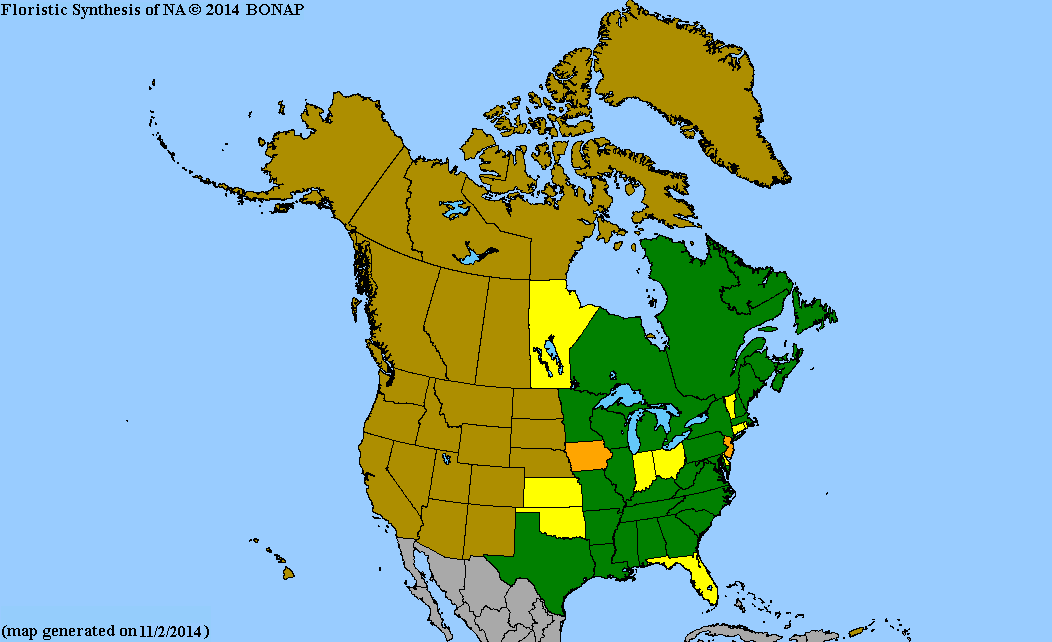
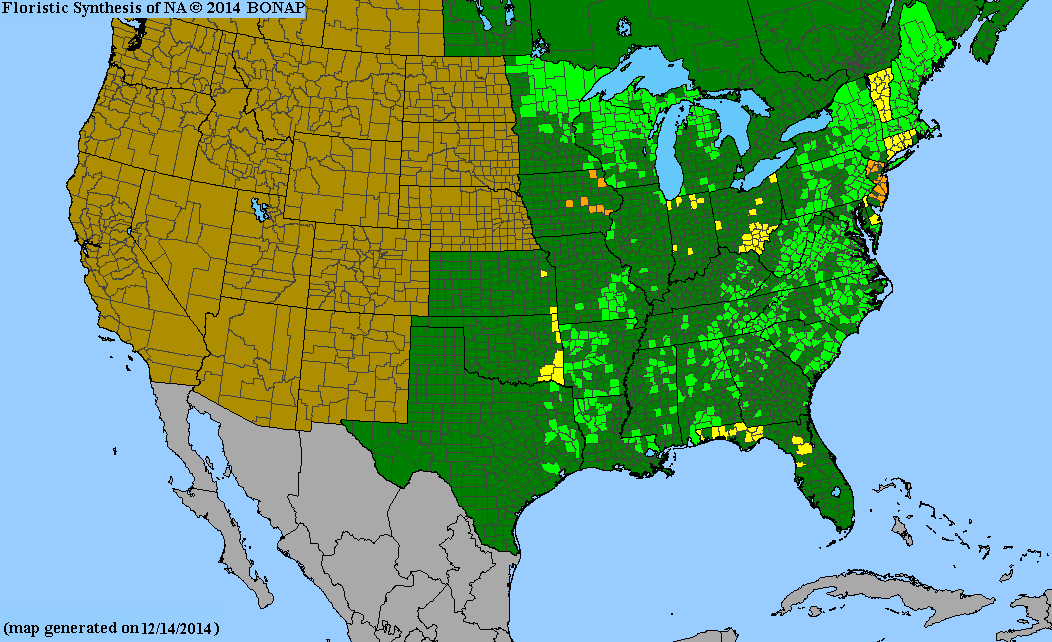
Malaxis unifolia, or the green adder's-mouth orchid,[2] is a species of orchid occurring from eastern and central Canada (Newfoundland to Manitoba),[3] the central and eastern United States (Maine to Florida, west as far as Minnesota, eastern Kansas, and eastern Texas),[4] Mexico,[5] Central America and the Greater Antilles (Cuba, Jamaica, Dominican Republic).[6][7][8]
Malaxis unifolia generally has only one leaf and rarely two. Flowers have a green colour, in a raceme. It often resemble an umbel at first before it elongates.[7]
Malaxis unifolia is a small orchid, no more than 50 cm tall. It produces up to 160 small green flowers, with a three-lobed labellum and strongly recurved lateral petals. It flowers in spring and early summer in the northern part of its range, while in the south it blooms later into the fall[9].
References
[edit]- ^ M. Hart del., J. Watts sc. - Edwards's Botanical Register, volume 15 plate 1290
- ^ NRCS. "Malaxis unifolia". PLANTS Database. United States Department of Agriculture (USDA). Retrieved 28 June 2015.
- ^ Biota of North America Program, 2014 state-level distribution map
- ^ Biota of North America Program, 2014 county distribution map
- ^ SEINet, Southwestern biodiversity, Arizona chapter
- ^ Kew World Checklist of Selected Plant Families
- ^ a b Flora of North America, Malaxis unifolia
- ^ Ames, O. & D. S. Correll. 1952. Orchids of Guatemala. Fieldiana, Botany 26(1): i–xiii, 1–395
- ^ "Malaxis unifolia (Green Adder's Mouth): Go Orchids". goorchids.northamericanorchidcenter.org. Retrieved 2025-08-24.
 Media related to Malaxis unifolia at Wikimedia Commons

 | This Epidendroideae-related article is a stub. You can help Wikipedia by expanding it. |