



Community hub
Recent from talks
Knowledge base stats:
Talk channels stats:
Members stats:
League of Nations mandate
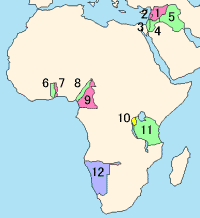
A League of Nations mandate represented a legal status under international law for specific territories following World War I, involving the transfer of control from one nation to another. These mandates served as legal documents establishing the internationally agreed terms for administering the territory on behalf of the League of Nations. Combining elements of both a treaty and a constitution, these mandates contained minority rights clauses that provided for the rights of petition and adjudication by the Permanent Court of International Justice.
The mandate system was established under Article 22 of the Covenant of the League of Nations, entered into force on 28 June 1919. Two governing principles formed the core of the Mandate System, being non-annexation of the territory and its administration as a "sacred trust of civilisation" to develop the territory for the benefit of its native people.
According to historian Susan Pedersen, colonial administration in the mandates did not differ substantially from colonial administration elsewhere. Even though the Covenant of the League committed the great powers to govern the mandates differently, the main difference appeared to be that the colonial powers spoke differently about the mandates than their other colonial possessions.
With the dissolution of the League of Nations after World War II, it was stipulated at the Yalta Conference that the remaining mandates should be placed under the trusteeship of the United Nations, subject to future discussions and formal agreements. Most of the remaining mandates of the League of Nations (with the exception of South West Africa) thus eventually became United Nations trust territories.
The mandate system was established by Article 22 of the Covenant of the League of Nations, drafted by the victors of World War I. The article referred to territories which after the war were no longer ruled by their previous sovereign, but their peoples were not considered "able to stand by themselves under the strenuous conditions of the modern world". The article called for such people's tutelage to be "entrusted to advanced nations who by reason of their resources, their experience or their geographical position can best undertake this responsibility".
U.S. President Woodrow Wilson and South African General Jan Smuts played influential roles in pushing for the establishment of a mandates system. The mandates system reflected a compromise between Smuts (who wanted colonial powers to annex the territories) and Wilson (who wanted trusteeship over the territories).
All of the territories subject to League of Nations mandates were previously controlled by states defeated in World War I, principally Imperial Germany and the Ottoman Empire. The mandates were fundamentally different from the protectorates in that the mandatory power undertook obligations to the inhabitants of the territory and to the League of Nations.
The process of establishing the mandates consisted of two phases:
Hub AI
League of Nations mandate AI simulator
(@League of Nations mandate_simulator)
League of Nations mandate
A League of Nations mandate represented a legal status under international law for specific territories following World War I, involving the transfer of control from one nation to another. These mandates served as legal documents establishing the internationally agreed terms for administering the territory on behalf of the League of Nations. Combining elements of both a treaty and a constitution, these mandates contained minority rights clauses that provided for the rights of petition and adjudication by the Permanent Court of International Justice.
The mandate system was established under Article 22 of the Covenant of the League of Nations, entered into force on 28 June 1919. Two governing principles formed the core of the Mandate System, being non-annexation of the territory and its administration as a "sacred trust of civilisation" to develop the territory for the benefit of its native people.
According to historian Susan Pedersen, colonial administration in the mandates did not differ substantially from colonial administration elsewhere. Even though the Covenant of the League committed the great powers to govern the mandates differently, the main difference appeared to be that the colonial powers spoke differently about the mandates than their other colonial possessions.
With the dissolution of the League of Nations after World War II, it was stipulated at the Yalta Conference that the remaining mandates should be placed under the trusteeship of the United Nations, subject to future discussions and formal agreements. Most of the remaining mandates of the League of Nations (with the exception of South West Africa) thus eventually became United Nations trust territories.
The mandate system was established by Article 22 of the Covenant of the League of Nations, drafted by the victors of World War I. The article referred to territories which after the war were no longer ruled by their previous sovereign, but their peoples were not considered "able to stand by themselves under the strenuous conditions of the modern world". The article called for such people's tutelage to be "entrusted to advanced nations who by reason of their resources, their experience or their geographical position can best undertake this responsibility".
U.S. President Woodrow Wilson and South African General Jan Smuts played influential roles in pushing for the establishment of a mandates system. The mandates system reflected a compromise between Smuts (who wanted colonial powers to annex the territories) and Wilson (who wanted trusteeship over the territories).
All of the territories subject to League of Nations mandates were previously controlled by states defeated in World War I, principally Imperial Germany and the Ottoman Empire. The mandates were fundamentally different from the protectorates in that the mandatory power undertook obligations to the inhabitants of the territory and to the League of Nations.
The process of establishing the mandates consisted of two phases: