
Recent from talks
Manic Pixie Dream Girl
Knowledge base stats:
Talk channels stats:
Members stats:
Manic Pixie Dream Girl
A Manic Pixie Dream Girl (MPDG) is a stock character type in fiction, usually depicted as a young woman with eccentric personality quirks who serves as the romantic interest for a male protagonist. The term was coined in 2007 by the American film critic Nathan Rabin after observing Kirsten Dunst's character in Elizabethtown (2005). Rabin criticized the type as one-dimensional, existing only to provide emotional support to the protagonist, or to teach him important life lessons, while receiving nothing in return. The term has since entered the general vernacular.
The American film critic Nathan Rabin coined the term in 2007 in his review of the 2005 film Elizabethtown for The A.V. Club. In discussing Kirsten Dunst's character, he said "Dunst embodies a character type I like to call The Manic Pixie Dream Girl", a character who "exists solely in the fevered imaginations of sensitive writer-directors to teach broodingly soulful young men to embrace life and its infinite mysteries and adventures." Rabin also names Natalie Portman's character in Garden State as another prime example of the MPDG.
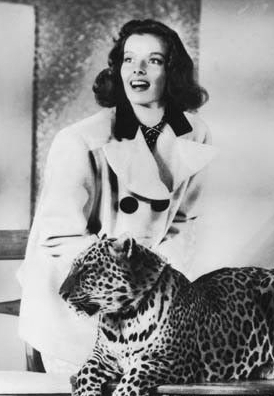
In 2008, a year after Rabin coined the term, The A.V. Club ran a piece listing 16 characters they deemed MPDGs, which included Katharine Hepburn's character in Bringing Up Baby (1938) as one of the earliest examples of the archetype. Others in the list included Goldie Hawn's character, Jill, in Butterflies Are Free; and Winona Ryder's character in Autumn in New York. The new term was used by media outlets such as National Public Radio and Jezebel.
Critic Jimmy Maher of The Digital Antiquarian wrote about the character Clarisse in the 1953 Ray Bradbury novel Fahrenheit 451: "Bradbury has been credited, with some truth, with foreshadowing or even inspiring everything from 24-hour news as entertainment to the Sony Walkman in Fahrenheit 451. I've never, however, seen him properly credited for his most insidious creation: the Manic Pixie Dream Girl." Holly Golightly in Breakfast at Tiffany's, played by Audrey Hepburn in the 1961 film, is an example of a vintage Manic Pixie Dream Girl, according to Grace Smith, writing for The Hollywood Insider: "The effortlessly eccentric Holly Golightly balances out the brooding writer Paul Varjack." Penélope Cruz's character in the movie Vanilla Sky (2001) is included on Jamie Loftus' list of MPDGs, published by BDCWire. Margot Robbie's character in Amsterdam (2022) is characterized by Christy Lemire writing for RogerEbert.com as a Manic Pixie Dream Girl. Riley Keough's titular character in Daisy Jones & The Six (2023) has been described by Caroline Kraft of The New Yorker as akin to the MPDG: "A sexually liberated woman, she exists as a foil to male responsibility: she'll teach Billy the value of an unfettered approach while also instructing him in the risks of his own desires. He is drawn to her because she helps him understand himself. She is the caretaker of his catharsis and little else".
The trope inspired the name of Manic Dream Pixie, the 2023 debut EP by Australian singer-songwriter Peach PRC.
In an interview in New York about her 2012 film Ruby Sparks, actress and screenwriter Zoe Kazan expressed skepticism over the use of the term, noting that its use could be reductive, diminutive, and misogynistic. She disagreed that Hepburn's character in Bringing Up Baby is a MPDG: "I think that to lump together all individual, original quirky women under that rubric is to erase all difference."
In a December 2012 video, AllMovie critic Cammila Collar embraced the term, noting that its pejorative use is mainly directed at writers who do not give these female characters more to do.
In December 2012, Slate's Aisha Harris posited that "critiques of the MPDG may have become more common than the archetype itself", suggesting that filmmakers had been forced to become "self-aware about such characters" and that the trope had largely disappeared from film.
Hub AI
Manic Pixie Dream Girl AI simulator
(@Manic Pixie Dream Girl_simulator)
Manic Pixie Dream Girl
A Manic Pixie Dream Girl (MPDG) is a stock character type in fiction, usually depicted as a young woman with eccentric personality quirks who serves as the romantic interest for a male protagonist. The term was coined in 2007 by the American film critic Nathan Rabin after observing Kirsten Dunst's character in Elizabethtown (2005). Rabin criticized the type as one-dimensional, existing only to provide emotional support to the protagonist, or to teach him important life lessons, while receiving nothing in return. The term has since entered the general vernacular.
The American film critic Nathan Rabin coined the term in 2007 in his review of the 2005 film Elizabethtown for The A.V. Club. In discussing Kirsten Dunst's character, he said "Dunst embodies a character type I like to call The Manic Pixie Dream Girl", a character who "exists solely in the fevered imaginations of sensitive writer-directors to teach broodingly soulful young men to embrace life and its infinite mysteries and adventures." Rabin also names Natalie Portman's character in Garden State as another prime example of the MPDG.
In 2008, a year after Rabin coined the term, The A.V. Club ran a piece listing 16 characters they deemed MPDGs, which included Katharine Hepburn's character in Bringing Up Baby (1938) as one of the earliest examples of the archetype. Others in the list included Goldie Hawn's character, Jill, in Butterflies Are Free; and Winona Ryder's character in Autumn in New York. The new term was used by media outlets such as National Public Radio and Jezebel.
Critic Jimmy Maher of The Digital Antiquarian wrote about the character Clarisse in the 1953 Ray Bradbury novel Fahrenheit 451: "Bradbury has been credited, with some truth, with foreshadowing or even inspiring everything from 24-hour news as entertainment to the Sony Walkman in Fahrenheit 451. I've never, however, seen him properly credited for his most insidious creation: the Manic Pixie Dream Girl." Holly Golightly in Breakfast at Tiffany's, played by Audrey Hepburn in the 1961 film, is an example of a vintage Manic Pixie Dream Girl, according to Grace Smith, writing for The Hollywood Insider: "The effortlessly eccentric Holly Golightly balances out the brooding writer Paul Varjack." Penélope Cruz's character in the movie Vanilla Sky (2001) is included on Jamie Loftus' list of MPDGs, published by BDCWire. Margot Robbie's character in Amsterdam (2022) is characterized by Christy Lemire writing for RogerEbert.com as a Manic Pixie Dream Girl. Riley Keough's titular character in Daisy Jones & The Six (2023) has been described by Caroline Kraft of The New Yorker as akin to the MPDG: "A sexually liberated woman, she exists as a foil to male responsibility: she'll teach Billy the value of an unfettered approach while also instructing him in the risks of his own desires. He is drawn to her because she helps him understand himself. She is the caretaker of his catharsis and little else".
The trope inspired the name of Manic Dream Pixie, the 2023 debut EP by Australian singer-songwriter Peach PRC.
In an interview in New York about her 2012 film Ruby Sparks, actress and screenwriter Zoe Kazan expressed skepticism over the use of the term, noting that its use could be reductive, diminutive, and misogynistic. She disagreed that Hepburn's character in Bringing Up Baby is a MPDG: "I think that to lump together all individual, original quirky women under that rubric is to erase all difference."
In a December 2012 video, AllMovie critic Cammila Collar embraced the term, noting that its pejorative use is mainly directed at writers who do not give these female characters more to do.
In December 2012, Slate's Aisha Harris posited that "critiques of the MPDG may have become more common than the archetype itself", suggesting that filmmakers had been forced to become "self-aware about such characters" and that the trope had largely disappeared from film.
Recent media