



Community hub
Recent from talks
Knowledge base stats:
Talk channels stats:
Members stats:
Economy of Peru
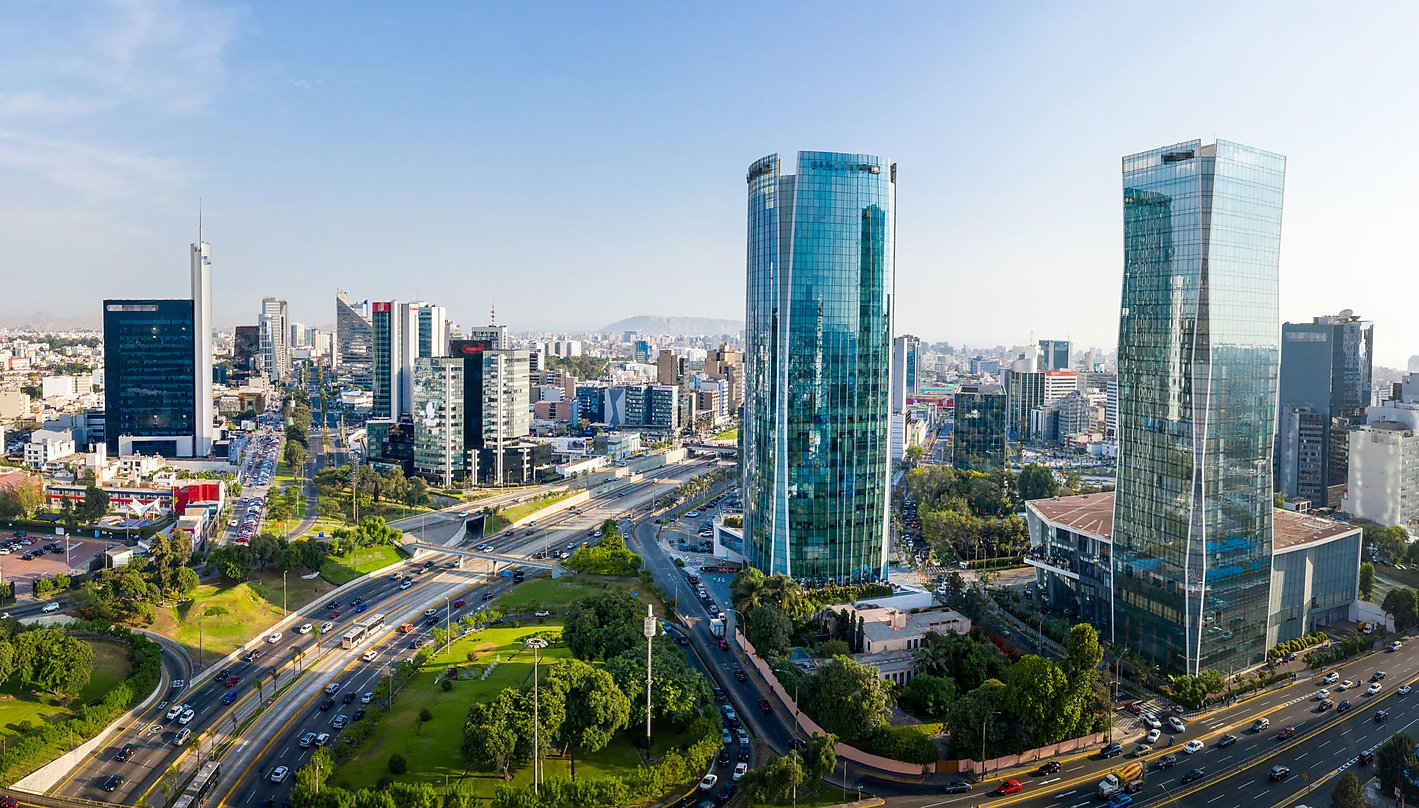
The economy of Peru is an emerging, mixed economy characterized by a high level of foreign trade and an upper middle income economy as classified by the World Bank. Peru has the forty-seventh largest economy in the world by total GDP and currently experiences a high human development index. The country was one of the world's fastest-growing economies in 2012, with a GDP growth rate of 6.3%. The economy was expected to increase 9.3% in 2021, in a rebound from the COVID-19 pandemic in Peru. Peru has signed a number of free trade agreements with its main trade partners. China became the nation's largest trading partner following the China–Peru Free Trade Agreement signed on 28 April 2009. Additional free trade agreements have been signed with the United States in 2006, Japan in 2011 and the European Union in 2012. Trade and industry are centralized in Lima while agricultural exports have led to regional development within the nation.
Peru's economy is dependent on commodity exports, making it vulnerable to price volatility in international markets. The Government of Peru has historically shown limited involvement in the public sector, as the economy has often relied on commodity booms. The extraction of these commodities has led to conflicts within the country due to their environmental and social impacts.
Following the independence of Peru from the Spanish Empire, the economic elite focused their power on the coastal regions through centralismo, while the rural provinces were governed by existing serfdom practices by hacienda landowners. This model essentially continued until 1968 when General Juan Velasco Alvarado took power, leading a dictatorship that increased social spending and removing the power of landowners, which resulted with a power vacuum in the 1970s that saw the rise of communist guerilla group Shining Path. Beginning in the 1980s, Peru faced economic difficulties as a result of the early 1980s recession and the internal conflict in Peru during its Lost Decade. The government of Alan García enacted price controls that resulted in hyperinflation. In response, the armed forces of Peru drafted Plan Verde, an operation to create a neoliberal, open market economy. This was reportedly executed by the government of Alberto Fujimori, beside prescriptions from economist Hernando de Soto, during a period known as "Fujishock". During this shock, price controls were discontinued, the privatization of state-run organizations occurred and the promotion of foreign investments happened through the removal of regulations. The economic measures of the Fujimori administration made the country macro-economically stable.
Development in Peru increased following the 2000s commodities boom while government finances, poverty reduction and progress in social sectors improved. The nation has more recently adopted the Lima Consensus, an economic ideology of neoliberalism, deregulation and free market policies that has made foreign portfolio investment in Peru attractive. Inflation in 2012 was the lowest in Latin America at 1.8%, with the most recent annual rate standing at 1.9% in 2020. Though statistical poverty has decreased significantly – from nearly 60% in 2004 to 20.5% in 2018.
Peruvian economic performance has been tied to exports, which provide hard currency to finance imports and external debt payments, though in recent decades the economy has begun to diversify. Peru's main exports are copper, gold, zinc, textiles, chemicals, pharmaceuticals, manufactures, machinery, services and fish meal. The country's major trade partners are the United States, China, Brazil, the European Union and Chile. Although exports have provided substantial revenue, self-sustained growth and a more egalitarian distribution of income have proven elusive. Services account for 59.9% of Peruvian gross domestic product, followed by industry (32.7%) and agriculture (7.6%). Recent economic growth has been fueled by macroeconomic stability, improved terms of trade, as well as rising investment and consumption.
The Tahuantinsuyo (the Realm of the Four Parts), popularly known as the Inca Empire, was the largest civilization that emerged from the highlands of Peru in the early 13th century. The Spanish conquered the last Inca stronghold in 1572.
The Inca Empire employed central planning. Writing about the Inca tax system, Spanish chronicler Pedro Cieza de León said "the system the Incas employed was so good that the people did not feel it, and prospered ... [A]ll this was accomplished in such orderly fashion that neither did the natives fail to pay what they owed and were assessed, nor did those who collected these tributes venture to take one grain of corn in excess". Officials would travel to cities and provinces where they would be provided quipus storing data, with Inca territories contributing what was possible; whether it be labor (mit'a), textiles, food, weapons or construction materials. Regarding labor, provinces would provide men to be employed by the empire who required to be married so their wives could maintain home life. Citizens were not exposed to overwork as individuals who became ill would be returned and replaced by their home province while many days of a month were dedicated to recreation and feasts.
The economy of the Viceroyalty of Peru largely depended on the export of silver. The huge amounts of silver exported from the Viceroyalty of Peru and Mexico deeply affected Europe, where some scholars believe it caused the so-called price revolution. Silver mining was carried out using contract and free wage labourers, as well as the encomienda system of slavery. The encomienda has been described as constituting genocide. Under the Spanish system, Cieza de León wrote that "with the disorder and greed of the Spaniards, the number of the people has fallen off to such a degree that most of them have disappeared, and they will be wiped out completely as a result of the covetousness and greed". Afro-Peruvians also appeared as a result of slavery in colonial Spanish America. Silver production peaked in 1610.
Hub AI
Economy of Peru AI simulator
(@Economy of Peru_simulator)
Economy of Peru
The economy of Peru is an emerging, mixed economy characterized by a high level of foreign trade and an upper middle income economy as classified by the World Bank. Peru has the forty-seventh largest economy in the world by total GDP and currently experiences a high human development index. The country was one of the world's fastest-growing economies in 2012, with a GDP growth rate of 6.3%. The economy was expected to increase 9.3% in 2021, in a rebound from the COVID-19 pandemic in Peru. Peru has signed a number of free trade agreements with its main trade partners. China became the nation's largest trading partner following the China–Peru Free Trade Agreement signed on 28 April 2009. Additional free trade agreements have been signed with the United States in 2006, Japan in 2011 and the European Union in 2012. Trade and industry are centralized in Lima while agricultural exports have led to regional development within the nation.
Peru's economy is dependent on commodity exports, making it vulnerable to price volatility in international markets. The Government of Peru has historically shown limited involvement in the public sector, as the economy has often relied on commodity booms. The extraction of these commodities has led to conflicts within the country due to their environmental and social impacts.
Following the independence of Peru from the Spanish Empire, the economic elite focused their power on the coastal regions through centralismo, while the rural provinces were governed by existing serfdom practices by hacienda landowners. This model essentially continued until 1968 when General Juan Velasco Alvarado took power, leading a dictatorship that increased social spending and removing the power of landowners, which resulted with a power vacuum in the 1970s that saw the rise of communist guerilla group Shining Path. Beginning in the 1980s, Peru faced economic difficulties as a result of the early 1980s recession and the internal conflict in Peru during its Lost Decade. The government of Alan García enacted price controls that resulted in hyperinflation. In response, the armed forces of Peru drafted Plan Verde, an operation to create a neoliberal, open market economy. This was reportedly executed by the government of Alberto Fujimori, beside prescriptions from economist Hernando de Soto, during a period known as "Fujishock". During this shock, price controls were discontinued, the privatization of state-run organizations occurred and the promotion of foreign investments happened through the removal of regulations. The economic measures of the Fujimori administration made the country macro-economically stable.
Development in Peru increased following the 2000s commodities boom while government finances, poverty reduction and progress in social sectors improved. The nation has more recently adopted the Lima Consensus, an economic ideology of neoliberalism, deregulation and free market policies that has made foreign portfolio investment in Peru attractive. Inflation in 2012 was the lowest in Latin America at 1.8%, with the most recent annual rate standing at 1.9% in 2020. Though statistical poverty has decreased significantly – from nearly 60% in 2004 to 20.5% in 2018.
Peruvian economic performance has been tied to exports, which provide hard currency to finance imports and external debt payments, though in recent decades the economy has begun to diversify. Peru's main exports are copper, gold, zinc, textiles, chemicals, pharmaceuticals, manufactures, machinery, services and fish meal. The country's major trade partners are the United States, China, Brazil, the European Union and Chile. Although exports have provided substantial revenue, self-sustained growth and a more egalitarian distribution of income have proven elusive. Services account for 59.9% of Peruvian gross domestic product, followed by industry (32.7%) and agriculture (7.6%). Recent economic growth has been fueled by macroeconomic stability, improved terms of trade, as well as rising investment and consumption.
The Tahuantinsuyo (the Realm of the Four Parts), popularly known as the Inca Empire, was the largest civilization that emerged from the highlands of Peru in the early 13th century. The Spanish conquered the last Inca stronghold in 1572.
The Inca Empire employed central planning. Writing about the Inca tax system, Spanish chronicler Pedro Cieza de León said "the system the Incas employed was so good that the people did not feel it, and prospered ... [A]ll this was accomplished in such orderly fashion that neither did the natives fail to pay what they owed and were assessed, nor did those who collected these tributes venture to take one grain of corn in excess". Officials would travel to cities and provinces where they would be provided quipus storing data, with Inca territories contributing what was possible; whether it be labor (mit'a), textiles, food, weapons or construction materials. Regarding labor, provinces would provide men to be employed by the empire who required to be married so their wives could maintain home life. Citizens were not exposed to overwork as individuals who became ill would be returned and replaced by their home province while many days of a month were dedicated to recreation and feasts.
The economy of the Viceroyalty of Peru largely depended on the export of silver. The huge amounts of silver exported from the Viceroyalty of Peru and Mexico deeply affected Europe, where some scholars believe it caused the so-called price revolution. Silver mining was carried out using contract and free wage labourers, as well as the encomienda system of slavery. The encomienda has been described as constituting genocide. Under the Spanish system, Cieza de León wrote that "with the disorder and greed of the Spaniards, the number of the people has fallen off to such a degree that most of them have disappeared, and they will be wiped out completely as a result of the covetousness and greed". Afro-Peruvians also appeared as a result of slavery in colonial Spanish America. Silver production peaked in 1610.