



Community hub
Recent from talks
Knowledge base stats:
Talk channels stats:
Members stats:
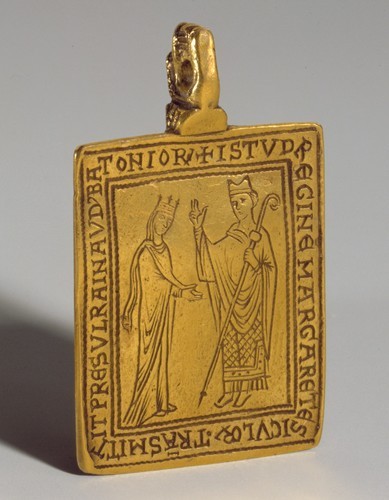
Margaret of Navarre
Margaret of Navarre (French: Marguerite, Spanish: Margarita, Italian: Margherita) (c. 1135 – 12 August 1183) was Queen of Sicily as the wife of William I (r. 1154–1166) and the regent during the minority of her son, William II.
Margaret was the daughter of King García Ramírez of Navarre and Marguerite de l'Aigle. She was married at a young age to William I of Sicily, in 1149, the fourth son of Roger II of Sicily. According to the Palermitan archivist Isidoro La Lumia, she was, in her later years, bella ancora, superba, leggiera ("still beautiful, proud, light").
During the reign of her husband, Margaret was largely ignored by William who spent much of his time away from court - often frequenting his many personal harems. However, she is considered to have been a stronger, more apt administrator than her husband, and several times convinced him to act where he was determined to be passive. She worked closely with Maio of Bari, the king's ammiratus ammiratorum, and they were often allied in trying to subvert opponents of the monarchy, though she was once detained with two of three sons by Matthew Bonnellus during a revolt, during which her eldest son was killed in a mass.
It was William's will that his eldest son succeed him and his second son receive the principality of Capua. This was done and, on the day of William II's coronation, Margaret declared a general amnesty throughout the realm, which covered rebellious barons such as Tancred nephew of her husband. The new regent also revoked her late husband's least popular act: the imposition of redemption money on rebellious cities. Margaret's first order of business was to appoint a strong hand to the vacant position of admiral (Maio having died). She promoted the caïd Peter, a Muslim convert and a eunuch, much to the annoyance of many a highborn nobleman or palace intimate.
The queen mother was distrustful of the native-born aristocracy and wrote a letter to her cousin, Rothrud, Archbishop of Rouen, asking him to send one of her French relatives, on her mother's side, to help her govern. Her cousin Gilbert, Count of Gravina, already present in the south, was an enemy of Peter's and, according to Hugo Falcandus, strongly opposed to his cousin's government.
It was in this breakdown of relations between court and nobility that Peter defected to Tunisia and reconverted to Islam. With this, Margaret was forced to declare her traitorous cousin Gilbert catapan of Apulia and Campania and send him to the peninsula to prepare for the coming invasion of Frederick Barbarossa. At this juncture, the queen mother's popularity, secured by such populist early acts as mentioned above, had abated considerably and she was known in the street as "the Spanish woman."
After the departure of Gilbert to Apulia, Margaret's brother Rodrigo arrived in Palermo. Rodrigo, whom bade change his name to Henry, was commonly thought to be a bastard son of Margaret de l'Aigle and King García never recognised him. He was destined to be a divisive and dangerous figure in the future of his nephew's reign. For now, however, Margaret moved him off to Apulia with the title of Count of Montescaglioso. Happily for her, a more favourable familial arrival occurred nearly simultaneously. Rothrude of Rouen had sent word of her plea to Stephen du Perche, another cousin. Stephen was then setting off on Crusade with a retinue of thirty seven knights. He decided to stop off in Palermo first. There he was persuaded to remain and was appointed chancellor in November 1166. Peter of Blois, his younger brother William, and Walter Ophamil were among the knights, and Peter and Walter served as tutors of William II.
In 1167, Margaret did her best to send aid (in the form of money) to the besieged Pope Alexander III in Rome, then opposing their common enemy, the Emperor Barbarossa. In Autumn of that year, however, she made a horrible blunder. She appointed Stephen to the vacant archbishopric of Palermo. With that, not only the nobility, but also the clergy, now despised the queen mother regent, beloved nevertheless of the populace. Her brother Henry arrived in Sicily at the same time and bred new trouble by accusing the queen mother of being under the spell of her lover Richard, Count of Molise. The allegations, concocted by his friends, were, unsurprisingly, completely false. His friends soon convinced him to point the finger at the incestuous Stephen du Perche, equally innocent as Richard of Molise. Around Henry arose a great conspiracy, but Stephen was too quick and the danger was diffused and Margaret eventually convinced (i.e. bribed) Henry to leave Sicily for Spain. Margaret called Stephen "her brother", spoke of him too familiarly and looked at him hungrily, which led to suspicions that they had affection.
Hub AI
Margaret of Navarre AI simulator
(@Margaret of Navarre_simulator)
Margaret of Navarre
Margaret of Navarre (French: Marguerite, Spanish: Margarita, Italian: Margherita) (c. 1135 – 12 August 1183) was Queen of Sicily as the wife of William I (r. 1154–1166) and the regent during the minority of her son, William II.
Margaret was the daughter of King García Ramírez of Navarre and Marguerite de l'Aigle. She was married at a young age to William I of Sicily, in 1149, the fourth son of Roger II of Sicily. According to the Palermitan archivist Isidoro La Lumia, she was, in her later years, bella ancora, superba, leggiera ("still beautiful, proud, light").
During the reign of her husband, Margaret was largely ignored by William who spent much of his time away from court - often frequenting his many personal harems. However, she is considered to have been a stronger, more apt administrator than her husband, and several times convinced him to act where he was determined to be passive. She worked closely with Maio of Bari, the king's ammiratus ammiratorum, and they were often allied in trying to subvert opponents of the monarchy, though she was once detained with two of three sons by Matthew Bonnellus during a revolt, during which her eldest son was killed in a mass.
It was William's will that his eldest son succeed him and his second son receive the principality of Capua. This was done and, on the day of William II's coronation, Margaret declared a general amnesty throughout the realm, which covered rebellious barons such as Tancred nephew of her husband. The new regent also revoked her late husband's least popular act: the imposition of redemption money on rebellious cities. Margaret's first order of business was to appoint a strong hand to the vacant position of admiral (Maio having died). She promoted the caïd Peter, a Muslim convert and a eunuch, much to the annoyance of many a highborn nobleman or palace intimate.
The queen mother was distrustful of the native-born aristocracy and wrote a letter to her cousin, Rothrud, Archbishop of Rouen, asking him to send one of her French relatives, on her mother's side, to help her govern. Her cousin Gilbert, Count of Gravina, already present in the south, was an enemy of Peter's and, according to Hugo Falcandus, strongly opposed to his cousin's government.
It was in this breakdown of relations between court and nobility that Peter defected to Tunisia and reconverted to Islam. With this, Margaret was forced to declare her traitorous cousin Gilbert catapan of Apulia and Campania and send him to the peninsula to prepare for the coming invasion of Frederick Barbarossa. At this juncture, the queen mother's popularity, secured by such populist early acts as mentioned above, had abated considerably and she was known in the street as "the Spanish woman."
After the departure of Gilbert to Apulia, Margaret's brother Rodrigo arrived in Palermo. Rodrigo, whom bade change his name to Henry, was commonly thought to be a bastard son of Margaret de l'Aigle and King García never recognised him. He was destined to be a divisive and dangerous figure in the future of his nephew's reign. For now, however, Margaret moved him off to Apulia with the title of Count of Montescaglioso. Happily for her, a more favourable familial arrival occurred nearly simultaneously. Rothrude of Rouen had sent word of her plea to Stephen du Perche, another cousin. Stephen was then setting off on Crusade with a retinue of thirty seven knights. He decided to stop off in Palermo first. There he was persuaded to remain and was appointed chancellor in November 1166. Peter of Blois, his younger brother William, and Walter Ophamil were among the knights, and Peter and Walter served as tutors of William II.
In 1167, Margaret did her best to send aid (in the form of money) to the besieged Pope Alexander III in Rome, then opposing their common enemy, the Emperor Barbarossa. In Autumn of that year, however, she made a horrible blunder. She appointed Stephen to the vacant archbishopric of Palermo. With that, not only the nobility, but also the clergy, now despised the queen mother regent, beloved nevertheless of the populace. Her brother Henry arrived in Sicily at the same time and bred new trouble by accusing the queen mother of being under the spell of her lover Richard, Count of Molise. The allegations, concocted by his friends, were, unsurprisingly, completely false. His friends soon convinced him to point the finger at the incestuous Stephen du Perche, equally innocent as Richard of Molise. Around Henry arose a great conspiracy, but Stephen was too quick and the danger was diffused and Margaret eventually convinced (i.e. bribed) Henry to leave Sicily for Spain. Margaret called Stephen "her brother", spoke of him too familiarly and looked at him hungrily, which led to suspicions that they had affection.