Hubbry Logo
Mari GormanMari GormanMain
Open search
Mari Gorman
Community hub
Mari Gorman
logo
8 pages, 0 posts
0 subscribers
Be the first to start a discussion here.
Mari Gorman
Mari Gorman
from Wikipedia

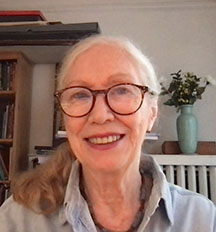
Mari Gorman (September 1, 1944) is an American actress perhaps best known for her work in television, particularly as a frequent guest star on the 1970s and 1980s sitcom Barney Miller, but she is also known for her theater acting. She has won several acting awards, including two Obie Awards. She is the author of Strokes of Existence: The Connection of All Things, which is about a long-term, formal investigation of acting that realizes Shakespeare's words, "All the world's a stage, and all the men and women merely players." (As You Like It, Act II, Sc 7.)

Key Information

Biography

[edit]

Gorman had her first professional role in Arnold Wesker's The Kitchen, directed by Jack Gelber, with Rip Torn. She has won Obie Awards for three acting performances: in Walking to Waldheim, by Mayo Simon, directed by George L. Sherman at Lincoln Center; The Memorandum, by Vaclev Havel, directed by Joseph Papp at The Public Theatre; and The Hot L Baltimore, by Lanford Wilson, directed by Marshall W. Mason at The Circle In-the-Square (with Circle Repertory Company), for which she also received the Theatre World Award, Drama Desk Award and Clarence Derwent Award. Other highlights include the lead role of The Girl in The Red Convertible, by Enrique Buenaventura, in the premiere production of The Third Stage (Tom Patterson Theatre) at Stratford Shakespeare Festival, Ontario; the role of Pam in the American premiere of Saved by Edward Bond, with the Yale Repertory Theatre; and the role of Kathy in the world premiere of Moonchildren (originally titled Cancer) by Michael Weller at The Royal Court Theatre in London.

Her first major TV role was as murder victim and mob pawn Taffy Simms on the television soap opera The Edge of Night in the 1970s. She also had a regular role in the Barbara Eden sitcom Harper Valley PTA, playing PTA member, Vivian Washburn, and was a frequent guest star on the 1970s and 1980s sitcom Barney Miller, including as an amateur prostitute housewife (in Season 4, Episode 3, "Bugs") and as a police detective with a jealous husband (in Season 4, Episode 18, "Wojo's Problem," and other episodes). She has had numerous recurring or guest starring roles in many other television shows, and her film career has included roles in Goodbye, Columbus (1969), The Taking of Pelham One Two Three (1974), Family (1977), 10 (1979), Oh, God! Book II (1980),[1] and such made-for-television movies as Curse of the Black Widow (1977), Choices of the Heart (1983) and Kids Don't Tell (1985).

She has produced and directed theatre in New York and Los Angeles as well as teaching acting. In 1981 (in Los Angeles) and 2003 (in New York), she produced and directed Cries for Peace, composed of firsthand accounts of Hiroshima and Nagasaki atomic bomb survivors performed by multi-ethnic casts. In 2010 she founded the New York City theater company, Glass Beads Theatre Ensemble, and produced and directed playwright Michael Locascio's Lily of the Conservative Ladies,[2] at the June Havoc Theatre. She produced, directed, and, with Danna Call and Craig Pospisil, co-wrote Browsing, performed as part of the 2011 New York International Fringe Festival.[3]

Awards

[edit]

Notes

[edit]

References

[edit]
[edit]
Revisions and contributorsEdit on WikipediaRead on Wikipedia
from Grokipedia
Mari Gorman (born September 1, 1944) is an American actress renowned for her prolific guest appearances on and 1980s television series, including multiple roles on the sitcom , and for her distinguished theater performances that earned her multiple . Her film credits include supporting roles in The Taking of Pelham One Two Three (1974), 10 (1979), and (1983). Gorman received for distinguished performances in The Memorandum and Walking to Waldheim (1968) and in The Hot L Baltimore (1973), as well as a Drama Desk Award for Outstanding Performance in the latter production. Beyond acting, she has worked as a theatrical director and authored Strokes of Existence: The Connection of All Things, a book reflecting on interpersonal connections amid adversity.

Early Life and Education

Birth and Family Background

Mari Gorman was born on September 1, 1944, in , New York. She was raised in . Gorman's parents divorced during her childhood. As of 1973, her father lived in on a wild-flower preserve, having previously worked in advertising for brands including Schlitz beer and Kentucky Fried Chicken. Her mother resided in , where she operated an antique shop on Ebury Street. Gorman has two sisters and one brother, maintaining close family ties.

Acting Training and Early Influences

Mari Gorman's entry into professional acting occurred through New York's theater scene in the early 1960s, where she gained practical experience without documented formal training at a specific . Her debut role came in a 1961 production of Arnold Wesker's The Kitchen at Joseph Papp's New York Shakespeare Festival Public Theater, directed by Jack Gelber and featuring . This staging of the chaotic, ensemble-driven play introduced her to the demands of rapid-fire dialogue and physicality in a kitchen-set environment, reflecting the Living Theatre's influence on Gelber's experimental style. Subsequent early appearances, including Walking to Waldheim and , immersed Gorman in the off-off-Broadway milieu, emphasizing character authenticity over polished technique. These works, often produced by innovative companies like , fostered her development amid the countercultural push against mainstream Broadway conventions, prioritizing raw emotional realism. By the early 1970s, Gorman's foundational experiences culminated in her acclaimed performance in Lanford Wilson's (1973), produced by the Circle Repertory Company under Marshall W. Mason, earning her an for Distinguished Performance. This role in the gritty, ensemble depiction of urban transients underscored the lasting impact of her roots, where collaborative, site-specific theater honed her versatility for later television transitions.

Professional Career

Theater Involvement

Gorman began her professional theater career Off-Broadway in Arnold Wesker's The Kitchen, directed by Jack Gelber and featuring , where she portrayed the role of Hettie. In 1968, she earned an for Distinguished Performance for her portrayals in Václav Havel's The Memorandum, directed by at , and Mayo Simon's Walking to Waldheim, directed by George L. Sherman. Her breakthrough role came in 1973 as Jackie in Lanford Wilson's at the Circle Repertory Theatre, a production that highlighted her ability to embody complex, eccentric characters in ensemble settings. For this performance, Gorman received the for Distinguished Performance, the Drama Desk Award for Outstanding Performance, the Theatre World Award, and the Clarence Derwent Award. Beyond acting, Gorman extended her theater involvement into directing and producing, founding the Glass Beads Theatre Ensemble. In 2011, she directed the world premiere of Michael Locascio's newly discovered play Lily of the Conservative Ladies at the June Havoc Theatre. She also established the Mari Gorman School of Acting, which staged productions such as People's Lives in 1974. These efforts reflect her commitment to nurturing new works and talent in experimental Off-Broadway circles.

Television Work

Gorman made her television debut in the daytime The Edge of Night, portraying Taffy Simms from 1973 to 1974. Her breakthrough in primetime came through guest roles on sitcoms in the mid-1970s, including an appearance as Miss Mildred in in 1976. She became a frequent guest on , first appearing as the sexually frustrated housewife Roberta Kerlin in the season 4 premiere "Bugs," which aired on September 29, 1977. Gorman returned to the series as the newly assigned Rosslyn Licori, debuting in the episode "Wojo's Problem" on January 12, 1978, and appearing in a total of three episodes in that capacity during season 4. In 1981, she secured a regular role as the PTA member Vivian Washburn on the Harper Valley P.T.A., starring , and appeared in all 13 episodes of the single-season series. Later television work included guest spots as Evelyn Morgan on in 1979 and as Doris/Mrs. Bilinski on in two episodes during 1985 and 1987. She continued with episodic roles into the 1990s, such as Karlson on ER and Hillary on .

Film Roles

Mari Gorman's appearances in feature films were limited to supporting or minor roles, primarily in the 1970s and early 1980s. Her screen debut came in the comedy-drama (1969), directed by , where she portrayed Laura Simpson Sockaloe, a character in the social circle of the protagonist's love interest. The film, adapted from Philip Roth's novella, explored class and cultural tensions among Jewish Americans. In The Taking of Pelham One Two Three (1974), a thriller directed by about a subway hijacking in , Gorman had a minor credited role amid the ensemble cast. She next appeared in ' romantic comedy 10 (1979) as the Coffee Shop Waitress, a brief but memorable in the story of a composer's . Gorman played , Tracy's teacher, in Oh, God! Book II (1980), the sequel to the 1977 hit, where a young girl spreads divine messages; her performance drew specific praise from critic for stealing scenes through comedic timing. Her final credit was in Max Dugan Returns (1983), directed by , as Pat, a supporting figure in the tale of a single mother reuniting with her long-lost father. These roles highlighted Gorman's versatility in both dramatic and comedic contexts, though her film work remained secondary to her theater and television output.

Directing, Producing, and Writing

Gorman has directed and produced works in theater, including Cries for Peace, a production developed from firsthand survivor accounts of the 1945 atomic bombings of and , which she staged in in 1981 and in New York in 2003. This effort reflects her involvement in thematic theater addressing . In writing, Gorman authored Strokes of Existence: The Connection of All Things, a 2007 work examining as a lens for understanding human subjectivity and interconnectedness, drawing on long-term analysis of performance techniques and philosophical underpinnings. The book, self-published via Independent Publishing Platform, spans 101 pages and posits 's realization of broader existential patterns. No screenwriting or credits are documented in major databases.

Recognition and Reception

Awards and Nominations

Mari Gorman earned recognition primarily through theater accolades for her early performances. In the 1967–68 season, she received the for Distinguished Performance for her roles as Maria in The Memorandum by and Zelda Sher in Walking to Waldheim by Mayo Simon, both produced at Repertory Theatre. Her portrayal of Millie in Lanford Wilson's The Hot l Baltimore (1973) garnered multiple honors, including the for Distinguished Performance, shared among the ensemble cast. She also won the Drama Desk Award for Outstanding Performance, the Theatre World Award recognizing promising Broadway and off-Broadway talents, and the Clarence Derwent Award for her work in the production at Circle Repertory Company. No major film or television awards or nominations for Gorman have been documented in primary records from the era.

Critical and Public Response

Mari Gorman's theater work garnered significant critical praise in the late 1960s and early 1970s, particularly for her portrayals of complex, working-class characters. She received for distinguished performances in The Memorandum (1968) and Walking to Sunshine (1968), recognizing her contributions to innovative productions at venues like . Her role in Lanford Wilson's The Hot L Baltimore (1973) further solidified this acclaim, earning her an for distinguished performance alongside a Drama Desk Award for outstanding performance and a Theatre World Award. Critics lauded the dynamics in The Hot L Baltimore, with describing Wilson's script as depicting "unwanted people" with "understanding and sensitivity," highlighting the cast's ability to humanize residents of a decaying . The production itself won the Award for Best American Play of 1972–73 and an Obie for best play, reflecting broad approval for its naturalistic approach amid the era's experimental theater scene. In television, Gorman's recurring guest roles on satirical series like (1976–1977) aligned with the shows' boundary-pushing reception, though specific critiques of her contributions were sparse amid focus on the program's overall controversy over domestic dysfunction and . Her film appearances, such as the minor role of a in The Taking of Pelham One Two Three (1974), occurred in critically acclaimed thrillers praised for taut pacing and urban grit, but lacked individualized commentary on her performance. Public response to Gorman's career emphasized her versatility in ensemble settings over stardom, with limited mainstream visibility but enduring respect in theater communities evidenced by award recognitions and production longevity. No major public controversies or backlash emerged in contemporary accounts.

Later Years and Legacy

Post-1980s Activities

Following her prominent acting roles in the and , Gorman transitioned toward theater production, directing, and . She has produced and directed plays in New York and , emphasizing ensemble work and classical adaptations. Additionally, she established private acting studios and instructed at institutions including in , focusing on technique and interpretive depth. In 2007, Gorman published Strokes of Existence: The Connection of All Things, a examination of derived from her master's at the . The book posits Shakespeare's asides as a framework for understanding interconnected human experiences, integrating , , and through original "strokes" diagrams developed since 1981. Gorman founded the Glass Beads Theatre Ensemble in in 2010, serving as its director and . The company specializes in rediscovering lesser-known works, such as a 1950s noir play uncovered during her script searches, with productions emphasizing innovative staging and actor collaboration.

Cultural Impact and Assessments

Gorman's theater performances, notably her role in Lanford Wilson's The Hot l Baltimore (1973), earned critical acclaim and multiple awards, including an Obie for Distinguished Performance, a Theatre World Award, a Drama Desk Award for Outstanding Performance, and a Clarence Derwent Award. These honors underscored her ability to deliver nuanced portrayals in ensemble-driven productions, contributing to the play's extended run of over 1,800 performances and its status as a landmark in American realistic drama depicting and marginal lives. In film, her supporting role as Tracy Richards in Oh, God! Book II (1980) drew specific praise from critic , who described her as stealing scenes through a compelling portrayal of a skeptical confronting childlike , highlighting her comedic timing amid the film's lighter moments. Such assessments positioned Gorman as a reliable character actress capable of elevating ensemble dynamics, though broader critical aggregation for her screen work remains sparse, with noting two positive and one negative review across her credited projects. Her recurring television appearances, including multiple guest roles on (1975–1981) such as Officer Rosslyn Licori and Naomi Bender, integrated her into the sitcom's depiction of precinct diversity and procedural humor, but elicited limited standalone commentary beyond the series' general acclaim for witty, character-focused storytelling. Public reception appears niche, centered on theater enthusiasts and fans of ensemble television, with no evidence of widespread cultural phenomena or memes tied to her performances. Gorman's founding of the Glass Beads Theatre Ensemble in 2010 reflects a shift toward producing and directing, fostering new works like Michael Locascio's and emphasizing experimental ensemble theater in New York, though its influence remains confined to independent stages without documented ripple effects on mainstream trends. Overall assessments portray her as a versatile supporting talent whose contributions enriched specific productions rather than reshaping cultural narratives, with lasting recognition primarily in theater circuits.

References

Add your contribution
Related Hubs
User Avatar
No comments yet.