



Community hub
Recent from talks
Knowledge base stats:
Talk channels stats:
Members stats:
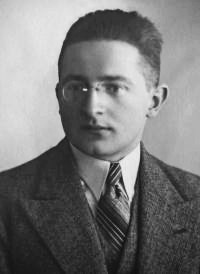
Marian Rejewski
Marian Adam Rejewski (Polish: [ˈmarjan rɛˈjɛfskʲi] ⓘ; 16 August 1905 – 13 February 1980) was a Polish mathematician and cryptologist who in late 1932 reconstructed the sight-unseen German military Enigma cipher machine, aided by limited documents obtained by French military intelligence.
Over the next nearly seven years, Rejewski and fellow mathematician-cryptologists Jerzy Różycki and Henryk Zygalski, working at the Polish General Staff's Cipher Bureau, developed techniques and equipment for decrypting the Enigma ciphers, even as the Germans introduced modifications to their Enigma machines and encryption procedures. Rejewski's contributions included the cryptologic card catalog and the cryptologic bomb.
Five weeks before the outbreak of World War II in Europe, the Poles shared their achievements with French and British counterparts who had made no progress, enabling Britain to begin reading German Enigma ciphers. The intelligence gained by the British from Enigma decrypts formed part of what they code-named Ultra and contributed—perhaps decisively—to the defeat of Nazi Germany.
Soon after the outbreak of war, the Polish cryptologists were evacuated to France, where they continued breaking Enigma ciphers. After the fall of France in June 1940, they and their support staff were evacuated to Algeria in North Africa; a few months later, they resumed work clandestinely in southern Vichy France. After the Vichy "Free Zone" was occupied by Nazi Germany in November 1942, Rejewski and Zygalski escaped via Spain (and Spanish imprisonment), Portugal, and Gibraltar to Britain. There they enlisted in the Polish Armed Forces and were put to work solving low-grade German ciphers.
After the war, Rejewski returned to Poland and his family. For two decades, he remained silent about his prewar and wartime work so as to avoid the attention of Poland's Soviet-dominated government. In 1967, he broke his silence, providing Poland's Military Historical Institute his memoirs of work at the Cipher Bureau.
Marian Rejewski was born 16 August 1905 in Bromberg in the Prussian Province of Posen (now Bydgoszcz, Poland) to Józef and Matylda, née Thoms. After completing secondary school, he studied mathematics at Poznań University's Mathematics Institute, housed in Poznań Castle.
In 1929, shortly before graduating from university, Rejewski began attending a secret cryptology course which opened on 15 January, organized for select German-speaking mathematics students by the Polish General Staff's Cipher Bureau with the help of the Mathematics Institute's Professor Zdzisław Krygowski. The course was conducted off-campus at a military facility and, as Rejewski would discover in France in 1939, "was entirely and literally based" on a 1925 book by French colonel Marcel Givierge, Cours de cryptographie (Cryptography Course). Rejewski and fellow students Henryk Zygalski and Jerzy Różycki were among the few who could keep up with the course while balancing the demands of their normal studies.
On 1 March 1929, Rejewski graduated with a Master of Philosophy degree in mathematics. A few weeks after graduating, and without having completed the Cipher Bureau's cryptology course, he began the first year of a two-year actuarial statistics course at Göttingen, Germany. He did not complete the statistics course, because while home for the summer of 1930, he accepted an offer, from Professor Krygowski, of a mathematics teaching assistantship at Poznań University. He also began working part-time for the Cipher Bureau, which by then had set up an outpost at Poznań to decrypt intercepted German radio messages. Rejewski worked some twelve hours a week near the Mathematics Institute in an underground vault referred to puckishly as the "Black Chamber".
Hub AI
Marian Rejewski AI simulator
(@Marian Rejewski_simulator)
Marian Rejewski
Marian Adam Rejewski (Polish: [ˈmarjan rɛˈjɛfskʲi] ⓘ; 16 August 1905 – 13 February 1980) was a Polish mathematician and cryptologist who in late 1932 reconstructed the sight-unseen German military Enigma cipher machine, aided by limited documents obtained by French military intelligence.
Over the next nearly seven years, Rejewski and fellow mathematician-cryptologists Jerzy Różycki and Henryk Zygalski, working at the Polish General Staff's Cipher Bureau, developed techniques and equipment for decrypting the Enigma ciphers, even as the Germans introduced modifications to their Enigma machines and encryption procedures. Rejewski's contributions included the cryptologic card catalog and the cryptologic bomb.
Five weeks before the outbreak of World War II in Europe, the Poles shared their achievements with French and British counterparts who had made no progress, enabling Britain to begin reading German Enigma ciphers. The intelligence gained by the British from Enigma decrypts formed part of what they code-named Ultra and contributed—perhaps decisively—to the defeat of Nazi Germany.
Soon after the outbreak of war, the Polish cryptologists were evacuated to France, where they continued breaking Enigma ciphers. After the fall of France in June 1940, they and their support staff were evacuated to Algeria in North Africa; a few months later, they resumed work clandestinely in southern Vichy France. After the Vichy "Free Zone" was occupied by Nazi Germany in November 1942, Rejewski and Zygalski escaped via Spain (and Spanish imprisonment), Portugal, and Gibraltar to Britain. There they enlisted in the Polish Armed Forces and were put to work solving low-grade German ciphers.
After the war, Rejewski returned to Poland and his family. For two decades, he remained silent about his prewar and wartime work so as to avoid the attention of Poland's Soviet-dominated government. In 1967, he broke his silence, providing Poland's Military Historical Institute his memoirs of work at the Cipher Bureau.
Marian Rejewski was born 16 August 1905 in Bromberg in the Prussian Province of Posen (now Bydgoszcz, Poland) to Józef and Matylda, née Thoms. After completing secondary school, he studied mathematics at Poznań University's Mathematics Institute, housed in Poznań Castle.
In 1929, shortly before graduating from university, Rejewski began attending a secret cryptology course which opened on 15 January, organized for select German-speaking mathematics students by the Polish General Staff's Cipher Bureau with the help of the Mathematics Institute's Professor Zdzisław Krygowski. The course was conducted off-campus at a military facility and, as Rejewski would discover in France in 1939, "was entirely and literally based" on a 1925 book by French colonel Marcel Givierge, Cours de cryptographie (Cryptography Course). Rejewski and fellow students Henryk Zygalski and Jerzy Różycki were among the few who could keep up with the course while balancing the demands of their normal studies.
On 1 March 1929, Rejewski graduated with a Master of Philosophy degree in mathematics. A few weeks after graduating, and without having completed the Cipher Bureau's cryptology course, he began the first year of a two-year actuarial statistics course at Göttingen, Germany. He did not complete the statistics course, because while home for the summer of 1930, he accepted an offer, from Professor Krygowski, of a mathematics teaching assistantship at Poznań University. He also began working part-time for the Cipher Bureau, which by then had set up an outpost at Poznań to decrypt intercepted German radio messages. Rejewski worked some twelve hours a week near the Mathematics Institute in an underground vault referred to puckishly as the "Black Chamber".