
Recent from talks
Marine mammals and sonar
Knowledge base stats:
Talk channels stats:
Members stats:
Marine mammals and sonar
The interactions between marine mammals and sonar have been a subject of debate since the invention of the technology.
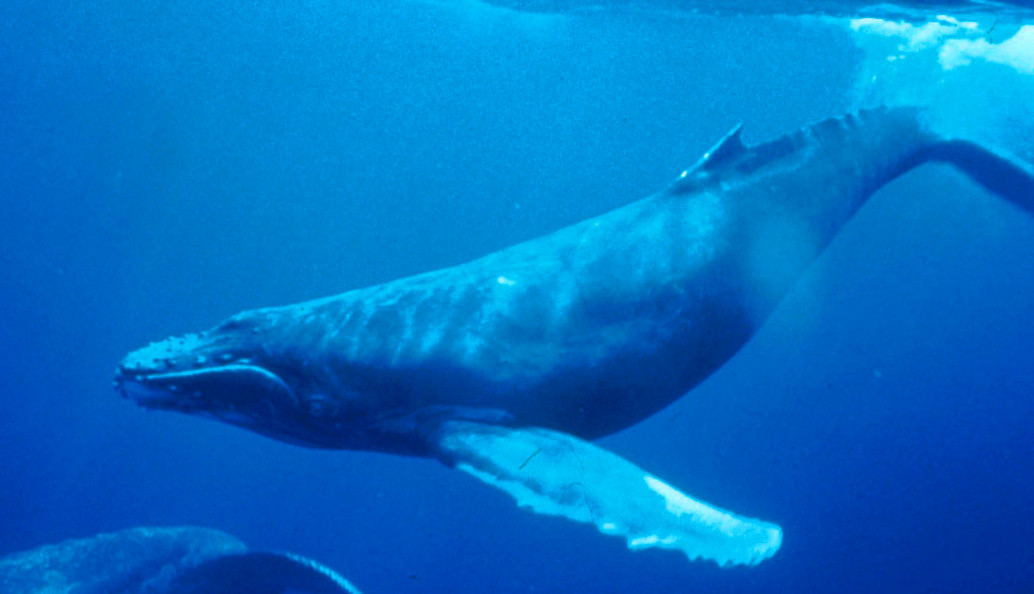
Active sonar, the transmission equipment used on some ships to assist with submarine detection, is detrimental to the health and livelihood of some marine animals. Research has recently shown that beaked and blue whales are sensitive to mid-frequency active sonar and move rapidly away from the source of the sonar, a response that disrupts their feeding and can cause mass strandings. Some marine animals, such as whales and dolphins, use echolocation or "biosonar" systems to locate predators and prey. It is conjectured that active sonar transmitters could confuse these animals and interfere with basic biological functions such as feeding and mating. The study has shown whales experience decompression sickness, a disease that forces nitrogen into gas bubbles in the tissues and is caused by rapid and prolonged surfacing. Although whales were originally thought to be immune to this disease, sonar has been implicated in causing behavioral changes that can lead to decompression sickness.
The SOFAR channel (short for "sound fixing and ranging channel"), or deep sound channel (DSC), is a horizontal layer of water in the ocean centered around the depth at which the speed of sound is at a minimum. The SOFAR channel acts as a waveguide for sound, and low frequency sound waves within the channel may travel thousands of miles before dissipating. This phenomenon is an important factor in submarine warfare. The deep sound channel was discovered and described independently by Dr. Maurice Ewing, and Leonid Brekhovskikh in the 1940s.
Despite the use of the SOFAR channel in naval applications, the idea that animals might make use of this channel was not proposed until 1971. Roger Payne and Douglas Webb calculated that before ship traffic noise permeated the oceans, tones emitted by fin whales could have traveled as far as four thousand miles and still be heard against the normal background noise of the sea. Payne and Webb further determined that, on a quiet day in the pre–ship-propeller oceans, fin whale tones would only have fallen to the level of background noise after traveling thirteen thousand miles, that is, more than the diameter of the Earth.
Before extensive research on whale vocalizations was completed, the low-frequency pulses emitted by some species of whales were often not correctly attributed to them. Dr Payne wrote: "Before it was shown that fin whales were the cause [of powerful sounds], no one could take seriously the idea that such regular, loud, low, and relatively pure frequency tones were coming from within the ocean, let alone from whales." This unknown sound was popularly known by navy acousticians as the Jezebel Monster.[citation needed] (Jezebel was narrow-band passive long-range sonar.) Some researchers[who?] believed that these sounds could be attributed to geophysical vibrations or an unknown Russian military program, and it wasn't until biologists William Schevill and William A. Watkins proved that whales possessed the biological capacity to emit sounds that the unknown sounds were correctly attributed.[citation needed]
The electromagnetic spectrum has rigid definitions for "super low frequency", "extremely low frequency", "low frequency" and "medium frequency". Acoustics does not have a similar standard. The terms "low" and "mid" have roughly defined historical meanings in sonar, because not many frequencies have been used over the decades. However, as more experimental sonars have been introduced, the terms have become muddled.
American low frequency sonar was originally introduced to the general public in a June 1961 Time magazine article, New A.S.W. Project Artemis, the low-frequency sonar used at the time, could fill a whole ocean with searching sound and spot anything sizable that was moving in the water. Artemis grew out of a 1951 suggestion by Harvard physicist Frederick V. Hunt (Artemis is the Ancient Greek goddess of the hunt), who convinced Navy anti-submarine experts that submarines could be detected at great distances only by unheard-of volumes of low-pitched sound. At the time, an entire Artemis system was envisioned to form a sort of underwater DEW (Distant Early Warning) line to warn the U.S. of hostile submarines. Giant, unattended transducers, powered by cables from land, would be lowered to considerable depths where sound travels best. The Time magazine article was published during the maiden voyage of the Soviet submarine K-19, which was the first Soviet submarine equipped with ballistic missiles. Four days later the submarine would have the accident that gave it its nickname. The impact on marine mammals by this system was certainly not a consideration. Artemis never became an operational system.
Low-frequency sonar was revived in the early 1980s for military and research applications. The idea that the sound could interfere with whale biologics became widely discussed outside of research circles when Scripps Institute of Oceanography borrowed and modified a military sonar for the Heard Island Feasibility Test conducted in January and February 1991. The sonar modified for the test was an early version of SURTASS deployed in the MV Cory Chouest. As a result of this test a "Committee on Low-Frequency Sound and Marine Mammals" was organized by the National Research Council. Their findings were published in 1994, in Low-Frequency Sound and Marine Mammals: Current Knowledge and Research Needs.
Hub AI
Marine mammals and sonar AI simulator
(@Marine mammals and sonar_simulator)
Marine mammals and sonar
The interactions between marine mammals and sonar have been a subject of debate since the invention of the technology.
Active sonar, the transmission equipment used on some ships to assist with submarine detection, is detrimental to the health and livelihood of some marine animals. Research has recently shown that beaked and blue whales are sensitive to mid-frequency active sonar and move rapidly away from the source of the sonar, a response that disrupts their feeding and can cause mass strandings. Some marine animals, such as whales and dolphins, use echolocation or "biosonar" systems to locate predators and prey. It is conjectured that active sonar transmitters could confuse these animals and interfere with basic biological functions such as feeding and mating. The study has shown whales experience decompression sickness, a disease that forces nitrogen into gas bubbles in the tissues and is caused by rapid and prolonged surfacing. Although whales were originally thought to be immune to this disease, sonar has been implicated in causing behavioral changes that can lead to decompression sickness.
The SOFAR channel (short for "sound fixing and ranging channel"), or deep sound channel (DSC), is a horizontal layer of water in the ocean centered around the depth at which the speed of sound is at a minimum. The SOFAR channel acts as a waveguide for sound, and low frequency sound waves within the channel may travel thousands of miles before dissipating. This phenomenon is an important factor in submarine warfare. The deep sound channel was discovered and described independently by Dr. Maurice Ewing, and Leonid Brekhovskikh in the 1940s.
Despite the use of the SOFAR channel in naval applications, the idea that animals might make use of this channel was not proposed until 1971. Roger Payne and Douglas Webb calculated that before ship traffic noise permeated the oceans, tones emitted by fin whales could have traveled as far as four thousand miles and still be heard against the normal background noise of the sea. Payne and Webb further determined that, on a quiet day in the pre–ship-propeller oceans, fin whale tones would only have fallen to the level of background noise after traveling thirteen thousand miles, that is, more than the diameter of the Earth.
Before extensive research on whale vocalizations was completed, the low-frequency pulses emitted by some species of whales were often not correctly attributed to them. Dr Payne wrote: "Before it was shown that fin whales were the cause [of powerful sounds], no one could take seriously the idea that such regular, loud, low, and relatively pure frequency tones were coming from within the ocean, let alone from whales." This unknown sound was popularly known by navy acousticians as the Jezebel Monster.[citation needed] (Jezebel was narrow-band passive long-range sonar.) Some researchers[who?] believed that these sounds could be attributed to geophysical vibrations or an unknown Russian military program, and it wasn't until biologists William Schevill and William A. Watkins proved that whales possessed the biological capacity to emit sounds that the unknown sounds were correctly attributed.[citation needed]
The electromagnetic spectrum has rigid definitions for "super low frequency", "extremely low frequency", "low frequency" and "medium frequency". Acoustics does not have a similar standard. The terms "low" and "mid" have roughly defined historical meanings in sonar, because not many frequencies have been used over the decades. However, as more experimental sonars have been introduced, the terms have become muddled.
American low frequency sonar was originally introduced to the general public in a June 1961 Time magazine article, New A.S.W. Project Artemis, the low-frequency sonar used at the time, could fill a whole ocean with searching sound and spot anything sizable that was moving in the water. Artemis grew out of a 1951 suggestion by Harvard physicist Frederick V. Hunt (Artemis is the Ancient Greek goddess of the hunt), who convinced Navy anti-submarine experts that submarines could be detected at great distances only by unheard-of volumes of low-pitched sound. At the time, an entire Artemis system was envisioned to form a sort of underwater DEW (Distant Early Warning) line to warn the U.S. of hostile submarines. Giant, unattended transducers, powered by cables from land, would be lowered to considerable depths where sound travels best. The Time magazine article was published during the maiden voyage of the Soviet submarine K-19, which was the first Soviet submarine equipped with ballistic missiles. Four days later the submarine would have the accident that gave it its nickname. The impact on marine mammals by this system was certainly not a consideration. Artemis never became an operational system.
Low-frequency sonar was revived in the early 1980s for military and research applications. The idea that the sound could interfere with whale biologics became widely discussed outside of research circles when Scripps Institute of Oceanography borrowed and modified a military sonar for the Heard Island Feasibility Test conducted in January and February 1991. The sonar modified for the test was an early version of SURTASS deployed in the MV Cory Chouest. As a result of this test a "Committee on Low-Frequency Sound and Marine Mammals" was organized by the National Research Council. Their findings were published in 1994, in Low-Frequency Sound and Marine Mammals: Current Knowledge and Research Needs.
Recent media