


Community hub
Recent from talks
Contribute something
Nothing was collected or created yet.
Mario Moretti
View on Wikipedia

 | This article needs additional citations for verification. (February 2025) |
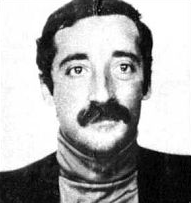
Mario Moretti (born 16 January 1946) is an Italian terrorist and convicted murderer.[1] A leading member of the Red Brigades in the late 1970s, he was one of the kidnappers of Aldo Moro, former prime minister and president of Italy's largest political party Democrazia Cristiana (Christian Democracy). In 1978, Moretti confessed to killing Moro.
Biography
[edit]Moretti was born in Porto San Giorgio, Marche region of Italy, into a middle-class, right-wing, family. Later Moretti tried to fabricate for himself a leftist and proletarian family environment, but the documents collected by the Italian Parliament's commission into the assassination of Aldo Moro later denied this reconstruction.[2][page needed][need quotation to verify]
Recommended by an Italian noblewoman, Anna Casati Stampa,[3] he moved to Milan in 1968 to work and to study at the Università Cattolica del Sacro Cuore. Moretti did not take part in the upheaval of 1968.[4] In Milan, Moretti worked at Sit-Siemens, where he met Corrado Alunni, Giorgio Semeria and Paola Besuschio, future members of the Red Brigades (BR). He also became a member of CISL, the largest Catholic-oriented trade union in Italy. Together with others, he adhered to the Collettivo Politico Metropolitano founded by Renato Curcio and Margherita Cagol, which formed the historical nucleus of the Red Brigades at their constitution (August 1970). Moretti became a member of BR in the Spring of 1971. His first action was a mugging in June 1971, together with Renato Curcio.[5]
In 1974, when Curcio and Alberto Franceschini were arrested, he became the organization's only leading member still at large, together with Cagol and Semeria, who were, however, respectively killed and arrested in the following year. One source suggests that Moretti, despite being informed by an anonymous phone call of the imminent arrest of Curcio and Franceschini, did nothing to warn them.[5][better source needed] Moretti pushed BR towards a more military attitude, and introduced a thorough separation between the members in order to reduce the consequences should any one of them be arrested. In 1975 he moved to Rome. In the spring of 1978 he organized the kidnapping and murder of Aldo Moro. The circumstances of this assassination are still not clear. It is known, however, that Mario Moretti was the only person to talk to Moro during the 55 days of Moro's imprisonment.[6] Moretti also confessed to assassinating Moro after it became clear that the demand made by BR for the release of thirteen jailed terrorists in return for freeing the politician would not be met by the Italian government.[7]
He was sentenced to six life sentences for his crime, but, after serving 15 years in jail, he was paroled in 1998.[citation needed] In terms of his parole, he is allowed to work outside prison, but must return to prison at night and over weekends.[citation needed]
Franceschini claims
[edit]In 1999 Franceschini claimed that he suspected that two leading Red Brigades members, Mario Moretti and Giovanni Senzani, were spies who had infiltrated the Red Brigades. These claims were made before an Italian parliamentary commission on terrorism in March 1999 and were published in L'Espresso. "From my knowledge of the people involved, I am convinced that that [i.e. the Moro operation] was an extremely complex operation that could not have been accomplished by the individuals identified as having participated in the official accounts", he informed the commission.[8]
See also
[edit]References
[edit]- ^ "ITALIEN : Hirn und Arm - DER SPIEGEL 16/1981". Der Spiegel. 12 April 1981. Retrieved 29 January 2021.
- ^ Mosca, Carla & Rossanda, Rossana (1994). Brigate Rosse. Una Storia Italiana. Anabasi.
{{cite book}}: CS1 maint: multiple names: authors list (link)[full citation needed] - ^ Who has been described as "near to Fascist positions"; see Valerio Lucarelli: "Mario Moretti"
- ^ Sergio Flamigni, La Sfinge delle Brigate Rosse, Milano, KAOS Editore, 2004
- ^ a b "MARIO MORETTI. Valerio Lucarelli, l'autore di Vorrei che il futuro fosse oggi e Buio Rivoluzione". www.valeriolucarelli.it.
- ^ "theboot.it". www.theboot.it.
- ^ Sergio Zavoli, La notte della Repubblica. ERI Edizioni RAI, 1992
- ^ Willan, Philip (10 April 1999). "Infiltrators blamed for murder of Italian PM". The Guardian.
External links
[edit]

Mario Moretti
View on GrokipediaMario Moretti is an Italian convicted terrorist who rose to become the operational leader of the Red Brigades, a Marxist-Leninist organization responsible for numerous assassinations and kidnappings during Italy's Years of Lead in the 1970s and 1980s.[1][2]
As the group's chief strategist, Moretti directed the 1978 abduction and execution of former Prime Minister Aldo Moro, an operation that symbolized the Red Brigades' campaign of urban guerrilla warfare against the Italian state and its political establishment.[3][4]
Captured by police in 1981 after evading authorities for years, he was tried and sentenced to life imprisonment for his role in Moro's murder and other Red Brigades atrocities, including the attempted kidnapping of NATO General James L. Dozier.[1][5]
Moretti's leadership exemplified the Red Brigades' shift toward escalated violence aimed at destabilizing democratic institutions, though the group's ideology and tactics ultimately led to its dismantlement through aggressive counterterrorism measures by Italian authorities.[6][2]
Early Life
Childhood and Family Background
Mario Moretti was born on 16 January 1946 in Porto San Giorgio, a coastal town in the Marche region of Italy.[7][8] He grew up in a petit bourgeois family, with his father, Gino Moretti, employed as a mediator in the livestock trade and his mother, Ada Romagnoli, working as a music teacher.[8] Moretti attended the local state elementary school and participated in parish oratory activities, indicative of the traditional Catholic influences prevalent in his provincial upbringing.[9]Education and Early Influences
Mario Moretti was born on 16 January 1946 in Porto San Giorgio, in the Marche region of Italy, to a petit-bourgeois family.[8] His father, Gino Moretti, worked as a livestock broker, and his mother, Ada Romagnoli, served as a music teacher, instilling a conventional Catholic upbringing amid post-World War II rural conservatism.[8] [10] Moretti relocated to Milan during his youth and attended technical schooling there, qualifying as an electronics technician upon graduation.[11] He subsequently joined the SIT-Siemens telecommunications factory as a technician, advancing to a role involving mechanical engineering responsibilities amid Italy's industrial boom of the 1960s.[6] This environment exposed him to labor dynamics and union organizing, contrasting with his family's traditionalist background and foreshadowing later ideological tensions.[11]Political Radicalization
Student Movement Involvement
Moretti's early exposure to organized student activities occurred in Lecco, where he associated with Gioventù Studentesca, a Catholic youth group founded by Luigi Giussani that promoted traditional values and opposed secular leftist influences, later forming the basis of the Communion and Liberation movement.[9] [12] This affiliation reflected his conservative-leaning background rather than engagement with the radical protests of the 1968 movimento studentesco, which mobilized against university hierarchies and capitalist structures; Moretti explicitly avoided the latter.[9] After completing technical studies and relocating to Milan around 1967–1968, he briefly attended classes but prioritized factory work as an electronics technician at Pirelli, where initial union involvement exposed him to Marxist ideas amid labor unrest, marking a pivot from Catholic circles toward proletarian activism.[11] [10] This transition aligned with broader patterns in northern Italy, where some ex-Catholic militants radicalized through workplace agitation rather than campus revolts, though sources vary on the depth of Moretti's pre-factory student ties.[2]Shift to Militant Activism
In the late 1960s, Moretti relocated to Milan for employment as a technician at the Sit-Siemens telecommunications factory, a site of intense labor conflict during Italy's "Hot Autumn" strikes of 1969, which mobilized millions of workers in factory occupations, wage demands, and clashes with authorities. These events exposed the perceived inadequacies of established unions like the CGIL, prompting Moretti and others to gravitate toward extra-parliamentary workerist groups that prioritized autonomous direct action over negotiated reforms.[13][2] By aligning with Potere Operaio, an organization advocating proletarian self-management and rejecting electoral politics, Moretti engaged in increasingly confrontational tactics, including sabotage and blockades at industrial sites, as the group viewed mass mobilizations as insufficient against capitalist structures. This period marked his disillusionment with non-violent protest, influenced by Marxist-Leninist critiques of reformism and the perceived complicity of the Italian Communist Party (PCI) in upholding the status quo.[11] As Potere Operaio radicalized toward calls for armed self-defense amid rising factory repression, Moretti transitioned to clandestinity around 1970, forging ties with nascent armed formations.[2] Moretti's formal entry into the Red Brigades, shortly after their founding on October 20, 1970, by Renato Curcio, Margherita Cagol, and Alberto Franceschini in Trento, positioned him within the Milan proletarian column focused on industrial targets. This shift embodied a strategic pivot from legal agitation to preparatory armed struggle, rationalized by brigadists as necessary to dismantle state power through "class war" rather than electoral or union channels. Early activities under his influence included surveillance and minor assaults on foremen, culminating in the group's inaugural kidnapping of Sit-Siemens foreman Idalgo Macchiarini on March 3, 1972, held for five days to enforce "proletarian justice" via forced confession of managerial abuses.[2][11] Such operations reflected Moretti's endorsement of violence as a causal mechanism for revolutionary escalation, diverging from broader student and worker movements that remained largely non-lethal despite their militancy.Involvement with the Red Brigades
Joining and Initial Roles
Mario Moretti, a Milan-based metalworker involved in extraparliamentary leftist groups during the late 1960s, adhered to the Collettivo Politico Metropolitano (CPM), a fringe organization founded in September 1969 by Renato Curcio and Margherita Cagol in Milan, which provided the foundational cadre for the Red Brigades.[6][14] The CPM emphasized proletarian struggle against factory hierarchies and state authority, aligning with Moretti's background in industrial labor activism.[15] The Red Brigades formally coalesced on October 20, 1970, from elements of the CPM and similar collectives, initially under Curcio's leadership, marking a shift toward clandestine armed operations.[2] Moretti transitioned into the Red Brigades in 1971, integrating into its Milan metropolitan column, where he focused on logistical coordination and recruitment among workers.[16] His early contributions emphasized operational discipline and factory-based intelligence gathering, distinguishing him through practical organizational acumen rather than ideological theorizing.[17] By mid-1972, Moretti's role in the Milan cell drew authorities' attention; his arrest in May 1972 inadvertently led to a raid on the column's safehouses, though he evaded long-term detention at that stage, underscoring his emerging tactical proficiency.[16] This period solidified his position as a key operative in the group's urban proletarian wing, bridging street-level agitation with the nascent structure of commando units.[18]Organizational Development Under His Influence
Following the arrests of founding leaders Renato Curcio on November 8, 1974, and Margherita Cagol (Curcio's wife) during a failed prison break attempt shortly thereafter, Mario Moretti emerged as the de facto head of the Red Brigades' Strategic Directorate (Direzione Strategica, or DS), a body of approximately 15 members tasked with centralizing strategic planning, financial management, and internal discipline.[2][19] This transition marked a shift from the group's initial loose, factory-based cells to a more militarized, vertical hierarchy, including an Executive Committee (Comitato Esecutivo) that oversaw operational directives.[19] Under Moretti's influence, the organization expanded geographically through a process of self-reproduction known as "partenogenesi," establishing autonomous regional "colonne" (columns) beyond the original strongholds in Milan and Turin to include Genoa, Veneto, Rome, and Naples by the mid-1970s.[19] Each column operated via small, compartmentalized cells limited to no more than 10 militants to minimize infiltration risks, enabling parallel growth while maintaining clandestinity.[19] This structure facilitated a surge in activities, with terrorist incidents escalating rapidly by 1976, surpassing those of other Western European leftist groups in frequency and impact.[2] Moretti also formalized functional "fronts" for specialized operations, building on earlier logistics and mass agitation efforts with new additions such as counter-revolutionary intelligence and prison support networks to sustain recruitment and morale among incarcerated members.[19] In 1977, the Red Brigades under his direction proclaimed the formation of the Communist Combatant Party (Partito Comunista Combattente, PCC), signaling an ideological evolution toward a proto-party apparatus that integrated armed struggle with broader political objectives.[2] These developments enhanced operational resilience but sowed internal tensions, as evidenced by later accusations from imprisoned founders like Curcio that Moretti's centralization betrayed the group's original decentralized ethos.[2]Leadership and Operations
Strategic Leadership
Mario Moretti assumed de facto leadership of the Red Brigades following the 1976 arrests of Renato Curcio and other founders, heading the Strategic Directorate and steering the group toward more centralized, aggressive operations against state institutions rather than initial factory-based agitation.[2][6] This transition marked a strategic pivot to constructing a "counter-power" through armed struggle, targeting prisons, judiciary, and political figures to dismantle perceived capitalist structures.[6] In spring 1977, Moretti proclaimed the creation of the Communist Combatant Party (PCC) as a proletarian vanguard, aiming to unify disparate militant factions into a national revolutionary force and escalating the group's ideological and operational scope.[2] He directed the Executive Committee in a model of collective decision-making, yet personally oversaw logistics, recruitment—expanding to over 700-800 clandestine combatants and 10,000 sympathizers—and southward outreach to Rome and beyond, funding activities via bank robberies and kidnappings.[6] Moretti's tactics emphasized precision ambushes, symbolic high-profile actions, and psychological intimidation, including the June 1976 murder of prosecutor Francesco Coco—the group's first deliberate assassination of a senior official—and widespread kneecappings alongside arson to erode public order and state authority.[6] The pinnacle of this approach was the March 16, 1978, kidnapping of Aldo Moro, executed with military coordination that eliminated his five bodyguards, followed by 55 days of captivity during which Moretti rejected negotiations and ordered Moro's execution by 11 gunshots on May 9.[2][6] Moretti initially assessed the Moro operation as a political triumph for unmasking state fragility, per the 1978 Strategic Resolution's "disarticulation" doctrine, which fueled a surge in violence—2,725 incidents in 1978 alone, averaging over seven daily through 1979, with roughly 80 murders and 88 injuries in targeted attacks.[20][6] Yet this unrelenting escalation, while sustaining the group's menace, isolated it from broader leftist support, exacerbated internal rifts between militarist and "workerist" elements, and invited decisive state repression under figures like General Carlo Alberto dalla Chiesa, culminating in Moretti's 1981 arrest via informant penetration.[6]Major Attacks and Tactics
Under Mario Moretti's de facto leadership after Renato Curcio's arrest in January 1976, the Red Brigades shifted toward more audacious operations targeting high-level state officials and capitalist figures to dismantle what they termed the "imperialist state" and foster revolutionary consciousness.[2] Tactics emphasized urban guerrilla methods: small, autonomous "columns" of 4-6 members conducted ambushes with pistols and submachine guns, often using motorcycles for swift approaches and escapes to evade capture; operations were preceded by extensive surveillance and followed by typed communiqués distributed to media, framing attacks as retaliatory strikes against "counter-revolutionaries."[2] [21] This compartmentalized structure minimized infiltration risks, while symbolic elements like the BR star emblem on victims' bodies served propagandistic purposes. A pivotal early attack under Moretti's direction was the assassination of Attorney General Francesco Coco on June 28, 1976, in Genoa. BR assailants ambushed Coco's car, killing him along with his driver and bodyguard in a drive-by shooting executed with precision to symbolize vengeance for Coco's role in refusing prisoner releases during the 1974 Mario Sossi kidnapping trial.[21] [22] The group claimed responsibility via communiqué, portraying Coco as a defender of bourgeois justice, which prompted Italy's government to enact anti-terrorism emergency laws.[23] Throughout 1977, as Moretti consolidated control and proclaimed the formation of the Communist Combatant Party (PCC) in spring, the Brigades executed a series of strikes against economic and judicial targets, including shootings of nine corporate executives and an assault on the Ministry of Justice director.[2] [21] These involved knee-cappings—non-fatal leg shootings intended to humiliate and incapacitate—alongside brief kidnappings for ransom or forced labor confessions, aimed at eroding industrial productivity and state authority.[21] Such actions, totaling over a dozen documented incidents that year, sought to provoke repressive responses that would radicalize the proletariat, though they increasingly alienated public opinion and intensified police penetrations.[2]The Aldo Moro Kidnapping and Murder
Planning and Execution
Following the Red Brigades' strategic shift toward high-profile state attacks after 1976, Mario Moretti, as the group's de facto leader, directed the selection of Aldo Moro as the target due to his pivotal role in negotiating the "historic compromise" between the Christian Democrats and the Italian Communist Party, which the Brigades viewed as a consolidation of bourgeois power.[6] Moretti recruited operatives including Valerio Morucci and Adriana Faranda to form a Roman column, with reconnaissance teams shadowing Christian Democratic leaders to assess vulnerabilities; Moro's escort was deemed manageable compared to others.[6] Planning involved securing a Rome apartment for initial operations and funding via a 1.5 billion lire ransom from the prior kidnapping of industrialist Pietro Costa, enabling procurement of weapons and vehicles.[6] The execution occurred on March 16, 1978, when a Red Brigades commando unit ambushed Moro's two-car convoy on Via Fani in Rome at approximately 9:00 a.m., blocking the route with vehicles and firing 91 shots to eliminate his five bodyguards in under two minutes.[6] [3] Moretti oversaw the militarized operation, which succeeded in abducting Moro without harming him initially, after which the kidnappers transported him to a secure location while issuing the first communiqué claiming responsibility as "armed proletarian justice."[6] [24] The precision of the assault highlighted the Brigades' tactical evolution under Moretti's influence, though it provoked widespread national outrage and intensified counterterrorism efforts.[6]Holding and Negotiations
During Aldo Moro's 55-day captivity from March 16 to May 9, 1978, the Red Brigades confined him in multiple secret "people's prisons" in Rome, with the final location being an apartment in via Montalcini to evade detection by authorities.[25] Guards rotated among BR members, maintaining strict isolation and security protocols, while Moro endured interrogations framed by the group as a political trial aimed at extracting admissions of his role in Italy's capitalist system.[26] Mario Moretti, as the BR's operational and strategic leader, directly oversaw these sessions and served as Moro's primary interrogator, later documenting aspects of the exchanges in internal BR records and his 1994 account Brigate Rosse: una storia italiana.[26] The BR issued at least five communiqués during the holding period, delivered via mail, photocopies, and audio tapes featuring Moro's voice, demanding a prisoner exchange for 10–15 imprisoned BR members and political recognition of their cause in exchange for his release.[25] Moro himself produced over 80 letters from captivity, smuggled out by the BR, in which he pleaded with Christian Democrat leaders, Pope Paul VI, and family members to pursue negotiations, criticizing the government's intransigence and warning of his impending death.[25] These appeals, however, were largely dismissed by Italian officials as coerced propaganda, aligning with the "linea della fermezza" policy under Interior Minister Francesco Cossiga, which rejected any concessions to terrorists to avoid encouraging further violence.[25] Negotiations failed despite indirect efforts, including Vatican-mediated attempts to raise a 1.5 billion lire ransom (equivalent to about €10 million today) with tacit government approval, which the BR rebuffed in favor of their ideological goals.[25] Moretti and the BR leadership, viewing the kidnapping as a means to precipitate a broader revolutionary crisis rather than a transactional bargain, refused compromises, with Moretti later attributing the impasse to the Italian Communist Party's refusal to support prisoner releases, which he claimed enabled the BR's initial tactical success but ultimately isolated them politically.[26] No formal talks occurred, as the government's firmness—supported across the political spectrum, including by the Communists—prioritized state authority over Moro's life, leading to escalating BR frustration by early May.[25]Killing and Disposal
On May 9, 1978, after 55 days of captivity and failed negotiations, the Red Brigades' strategic leadership, headed by Mario Moretti, ordered Moro's execution following an internal "people's trial" that deemed him unrepentant and a continued threat to their revolutionary aims. Moretti personally carried out the killing in a prison apartment on Via Gradoli in Rome, shooting Moro 11 times with a silenced pistol—five shots to the back, three to the right thigh, and three to the abdomen—before verifying his death.[27][28] The body was prepared by placing Moro in a seated position inside the vehicle, with fake license plates attached and a final communiqué from the Red Brigades left nearby claiming responsibility and framing the act as revolutionary justice against the Italian state's "imperialist" structure. Brigadists then transported the corpse in a stolen red Renault 4 to Via Caetani, a narrow street in central Rome symbolically located midway between the headquarters of the Christian Democrats and the Italian Communist Party, and abandoned it there around noon.[29][30] Passersby discovered the vehicle shortly after 12:30 p.m., alerting authorities who confirmed Moro's identity amid international outrage; the disposal site's choice underscored the Brigades' intent to mock the political compromise Moro had architected. Moretti's direct role in both the execution and oversight of disposal was affirmed in subsequent trials, where he received a life sentence for the murder, though he has offered no remorse, instead defending it in later writings as a necessary escalation in class warfare.[3][31]Arrest and Legal Proceedings
Capture in 1981
Mario Moretti, a fugitive since 1972 and widely regarded as the chief strategist of the Red Brigades following the arrests of earlier leaders like Renato Curcio and Alberto Franceschini, was apprehended on April 4, 1981.[32] [33] The arrest occurred during a police operation at a farm located between Milan and Pavia in northern Italy, where Moretti was found alongside three other suspected Red Brigades members.[33] [1] At the time of his capture, Moretti was armed and in possession of false identity documents but offered no physical resistance to the authorities.[32] He immediately declared himself a political prisoner, consistent with the group's ideological framing of their actions as revolutionary struggle rather than criminal terrorism.[32] The operation culminated an intensive investigation into the group's activities, marking a significant blow to the Red Brigades' operational leadership after years of evasion.[33] Italian police described Moretti as the most senior and dangerous surviving figure in the organization, presumed responsible for directing high-profile actions including the 1978 kidnapping and murder of former Prime Minister Aldo Moro.[1] [24] The capture followed a period of heightened law enforcement pressure on leftist militant networks in Italy, amid the broader "Years of Lead" era of political violence.[34] Moretti, aged 35 and formerly employed as a radio technician, had reportedly eluded detection for nearly a decade through clandestine operations and internal security measures within the group.[34] His arrest was hailed by officials as a potential turning point in dismantling the Red Brigades' command structure, though the group retaliated swiftly by assassinating a Rome prison guard the following day.[1] [34]