
Recent from talks
Martin Barre
Knowledge base stats:
Talk channels stats:
Members stats:
Martin Barre
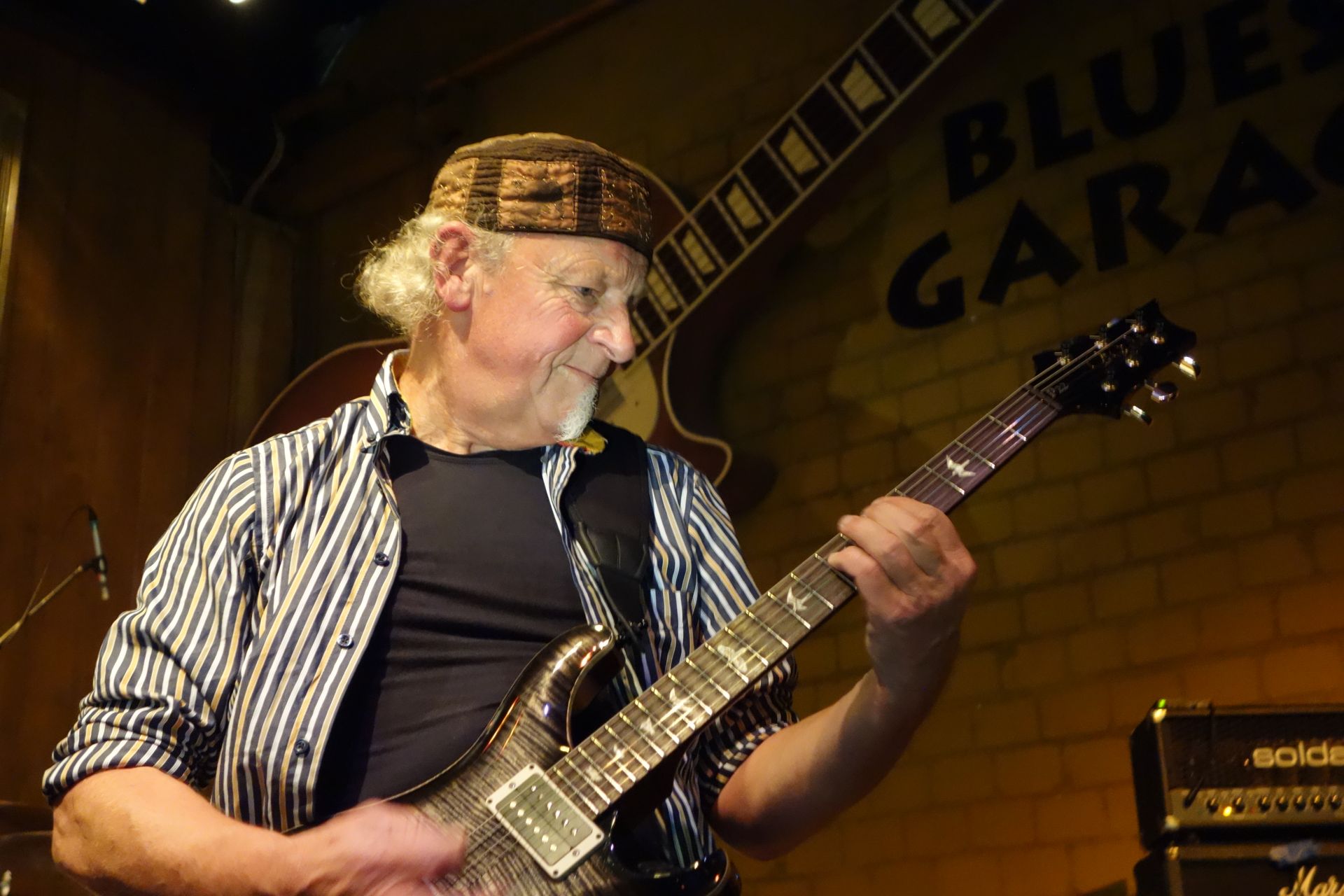
Martin Lancelot Barre (/bɑːr/; born 17 November 1946) is an English guitarist. He was lead guitarist of British rock band Jethro Tull, with whom he recorded and toured from 1968 until the band's initial dissolution in 2011. Barre played on all of Jethro Tull's studio albums from their 1969 album Stand Up (replacing Mick Abrahams, who played on their first album) to their 2003 album The Jethro Tull Christmas Album. He remains the longest-serving member of the band after founder and leader Ian Anderson. In the early 1990s he began a solo career, and he has recorded several albums as well as touring with his own live band.
He has also played the flute and other instruments such as the mandolin, both on stage for Jethro Tull and in his own solo work.
Martin Barre was born in Kings Heath, Birmingham, England, on 17 November 1946. His father was an engineer who had wanted to play the clarinet professionally. Barre played the flute at his grammar school. When Barre bought his first guitar, his father gave him albums by Barney Kessel, Johnny Smith and Wes Montgomery to broaden his musical perspectives.
In college, he studied architecture at Lanchester Polytechnic (now Coventry University) for three years, but did not complete his studies after failing Spanish and Atomic Science, subjects that he found to have little to do with designing buildings. After designing a road junction in Birmingham, England, he decided that a career in architecture was too boring, and switched to music.
In 1966, he moved to London with his friend, Chris Rodger, who had played the saxophone in their previous band, the Moonrakers. In London, Barre and Rodger got an audition for a band called the Noblemen, who were looking for two saxophonists. Barre bought a tenor saxophone, and after two days' practice was able to bluff his way through the audition. The band subsequently changed its name to the Motivation, and backed visiting soul artists such as the Coasters, the Drifters and Lee Dorsey. The band evolved through several musical styles, from soul to R&B to pop; in 1967, the band changed its name to the Penny Peeps. By this time, Barre was playing lead guitar. As the Penny Peeps the band released two singles in 1968, "Little Man With a Stick" backed by "Model Village", and "I See the Morning" backed with "Curly, Knight of the Road". Finally, in mid-1968, they became a blues band named Gethsemane, and played in pubs all over England, with Barre playing the guitar and flute.
When Gethsemane and the band Jethro Tull played at a blues club called the Van Dyke in Plymouth, the members of the two bands got acquainted. Then, four months later, while Gethsemane was playing in London and about to break up because of lack of money, Jethro Tull's manager, Terry Ellis, sent his card up from the audience asking Barre to audition for Jethro Tull. The audition did not go well. Barre was so nervous that he barely played; however, he arranged a second audition. This time, he was offered the job. He spent the Christmas holidays of 1968 learning material that was to become the album Stand Up.
On the first album that Barre recorded with Jethro Tull, Stand Up, he said that he was: "terrified because I had just joined the band. It really showed a change in direction for the band and when it was accepted and became a successful album, we gained a lot of confidence. We extended that confidence into the making of Benefit, in which we were a lot more at ease." On the next album, the world success Aqualung, Barre was more confident, stating that in the recording: "Everybody [the band] had input into the making of the album."
In the following period, his solos blended virtuosity with classical music, such as on Minstrel in the Gallery, where the opening track has a four-minute solo, or his piece (shared with Barrie Barlow) "Conundrum" and "Quatrain" on Bursting Out. Barre declared that much of the material from Jethro Tull catalogue was written by himself and Ian Anderson, with Anderson getting the credit for writing the lyrics and having the initial idea for the music: "then I, or someone else in the band, contribute parts to it." Two albums on which Barre is credited with having contributed "additional material", Songs from the Wood and Heavy Horses, are two of those which, he has stated, show his best playing.
Hub AI
Martin Barre AI simulator
(@Martin Barre_simulator)
Martin Barre
Martin Lancelot Barre (/bɑːr/; born 17 November 1946) is an English guitarist. He was lead guitarist of British rock band Jethro Tull, with whom he recorded and toured from 1968 until the band's initial dissolution in 2011. Barre played on all of Jethro Tull's studio albums from their 1969 album Stand Up (replacing Mick Abrahams, who played on their first album) to their 2003 album The Jethro Tull Christmas Album. He remains the longest-serving member of the band after founder and leader Ian Anderson. In the early 1990s he began a solo career, and he has recorded several albums as well as touring with his own live band.
He has also played the flute and other instruments such as the mandolin, both on stage for Jethro Tull and in his own solo work.
Martin Barre was born in Kings Heath, Birmingham, England, on 17 November 1946. His father was an engineer who had wanted to play the clarinet professionally. Barre played the flute at his grammar school. When Barre bought his first guitar, his father gave him albums by Barney Kessel, Johnny Smith and Wes Montgomery to broaden his musical perspectives.
In college, he studied architecture at Lanchester Polytechnic (now Coventry University) for three years, but did not complete his studies after failing Spanish and Atomic Science, subjects that he found to have little to do with designing buildings. After designing a road junction in Birmingham, England, he decided that a career in architecture was too boring, and switched to music.
In 1966, he moved to London with his friend, Chris Rodger, who had played the saxophone in their previous band, the Moonrakers. In London, Barre and Rodger got an audition for a band called the Noblemen, who were looking for two saxophonists. Barre bought a tenor saxophone, and after two days' practice was able to bluff his way through the audition. The band subsequently changed its name to the Motivation, and backed visiting soul artists such as the Coasters, the Drifters and Lee Dorsey. The band evolved through several musical styles, from soul to R&B to pop; in 1967, the band changed its name to the Penny Peeps. By this time, Barre was playing lead guitar. As the Penny Peeps the band released two singles in 1968, "Little Man With a Stick" backed by "Model Village", and "I See the Morning" backed with "Curly, Knight of the Road". Finally, in mid-1968, they became a blues band named Gethsemane, and played in pubs all over England, with Barre playing the guitar and flute.
When Gethsemane and the band Jethro Tull played at a blues club called the Van Dyke in Plymouth, the members of the two bands got acquainted. Then, four months later, while Gethsemane was playing in London and about to break up because of lack of money, Jethro Tull's manager, Terry Ellis, sent his card up from the audience asking Barre to audition for Jethro Tull. The audition did not go well. Barre was so nervous that he barely played; however, he arranged a second audition. This time, he was offered the job. He spent the Christmas holidays of 1968 learning material that was to become the album Stand Up.
On the first album that Barre recorded with Jethro Tull, Stand Up, he said that he was: "terrified because I had just joined the band. It really showed a change in direction for the band and when it was accepted and became a successful album, we gained a lot of confidence. We extended that confidence into the making of Benefit, in which we were a lot more at ease." On the next album, the world success Aqualung, Barre was more confident, stating that in the recording: "Everybody [the band] had input into the making of the album."
In the following period, his solos blended virtuosity with classical music, such as on Minstrel in the Gallery, where the opening track has a four-minute solo, or his piece (shared with Barrie Barlow) "Conundrum" and "Quatrain" on Bursting Out. Barre declared that much of the material from Jethro Tull catalogue was written by himself and Ian Anderson, with Anderson getting the credit for writing the lyrics and having the initial idea for the music: "then I, or someone else in the band, contribute parts to it." Two albums on which Barre is credited with having contributed "additional material", Songs from the Wood and Heavy Horses, are two of those which, he has stated, show his best playing.
Recent media