
Recent from talks
Martin Rushent
Knowledge base stats:
Talk channels stats:
Members stats:
Martin Rushent
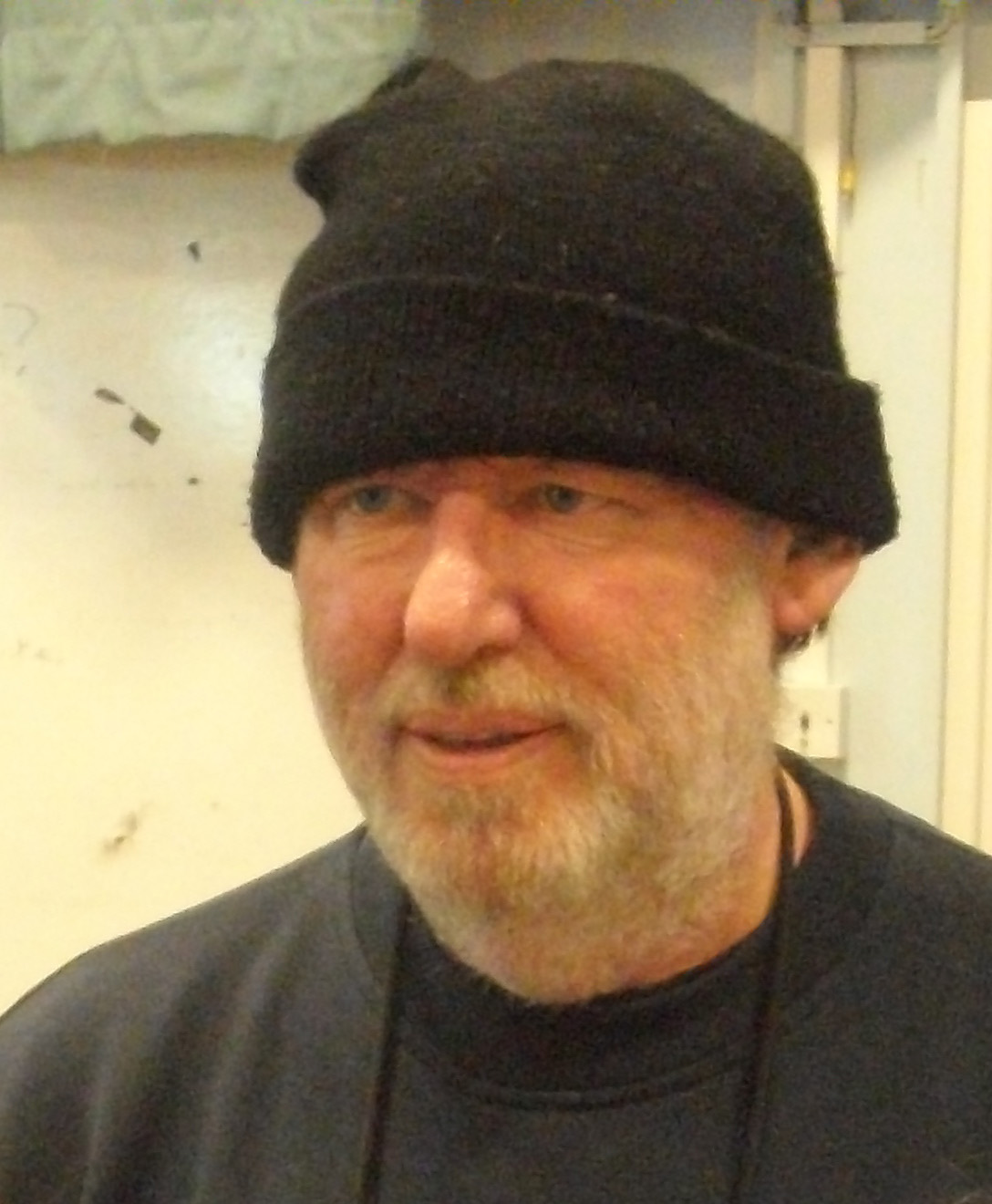
Martin Charles Rushent (11 July 1948 – 4 June 2011) was an English record producer, best known for his work with the Human League, the Stranglers and Buzzcocks.
Rushent was born on 11 July 1948 in Enfield, Middlesex. His father was a car salesman. Rushent attended Minchenden Grammar School in Southgate, Middlesex.
Rushent left school and started working at a local chemical factory and then with his father before embarking on his music career in the early 1970s as a studio engineer.
Rushent's first experience in a recording studio was at EMI House in London's Manchester Square, when his school band (of which he was the lead singer) had the opportunity to record a demo. After leaving school, Rushent, who had already experimented with his father's 4-track recorder, worked at a chemical factory before working for his father while applying for studio jobs. After numerous rejections, Rushent was employed by Advision Studios as a 35mm film projectionist. After approximately three months, Rushent began working in the audio department as a tape operator alongside Tony Visconti. He worked on sessions for Fleetwood Mac, T. Rex, Yes, Emerson, Lake & Palmer, Petula Clark, Jerry Lee Lewis and Osibisa. Rushent stated that while at Advision, Jerry Lee Lewis threw a tantrum as Yes had been booked into the studio when he was not ready to leave, and chased the studio staff around the complex until they locked themselves in a different studio.
Rushent progressed to senior assistant engineer, staff engineer, and eventually head engineer. He then began working freelance, where he built his reputation and was employed by United Artists (UA). While with UA, Rushent recorded sessions alongside Martin Davies, recording artists such as Shirley Bassey and Buzzcocks, as well as convincing the company to sign the Stranglers provided that he produced the band's material. Rushent produced the group's Rattus Norvegicus, No More Heroes and Black and White albums and recorded demos for Joy Division, before tiring of his commute to London and left UA at the end of the 1970s.
Rushent expressed a desire to move away from guitar bands, and bought a Linn LM-1 drum machine, Roland MC-8 Microcomposer and Jupiter-8 synthesiser to learn sequencing and synthesis techniques. In 1980, Rushent set up his own studio, Genetic, designed by renowned studio designer Eddie Veale, with Synclavier and Fairlight CMI synthesisers and an MCI console. He spent £35,000 on air conditioning alone, and had a Mitsubishi Electric digital recorder costing £75,000.
Rushent used his Roland equipment to record Pete Shelley's first solo album, Homosapien. Originally demos for the planned fourth Buzzcocks album, Shelley and Rushent deemed the recordings releasable, and Shelley was signed to Island Records. They were heard by Simon Draper of Virgin Records, who asked Rushent to produce for the Human League. Rushent's work on the group's 1981 album Dare earned him a BRIT Award in 1982 for Best British producer. Rushent's production on Dare frustrated the group's guitarist Jo Callis, as the only guitar on the album was used to trigger a gate on the synthesiser. Singer Susanne Sulley was also frustrated by the lengthy process of Rushent's synth programming. In 1983, Rushent walked out of his own studio after Sulley made an off-the-cuff comment toward him.
Rushent also produced albums by Generation X, Altered Images and the Go-Go's in the 1980s.
Hub AI
Martin Rushent AI simulator
(@Martin Rushent_simulator)
Martin Rushent
Martin Charles Rushent (11 July 1948 – 4 June 2011) was an English record producer, best known for his work with the Human League, the Stranglers and Buzzcocks.
Rushent was born on 11 July 1948 in Enfield, Middlesex. His father was a car salesman. Rushent attended Minchenden Grammar School in Southgate, Middlesex.
Rushent left school and started working at a local chemical factory and then with his father before embarking on his music career in the early 1970s as a studio engineer.
Rushent's first experience in a recording studio was at EMI House in London's Manchester Square, when his school band (of which he was the lead singer) had the opportunity to record a demo. After leaving school, Rushent, who had already experimented with his father's 4-track recorder, worked at a chemical factory before working for his father while applying for studio jobs. After numerous rejections, Rushent was employed by Advision Studios as a 35mm film projectionist. After approximately three months, Rushent began working in the audio department as a tape operator alongside Tony Visconti. He worked on sessions for Fleetwood Mac, T. Rex, Yes, Emerson, Lake & Palmer, Petula Clark, Jerry Lee Lewis and Osibisa. Rushent stated that while at Advision, Jerry Lee Lewis threw a tantrum as Yes had been booked into the studio when he was not ready to leave, and chased the studio staff around the complex until they locked themselves in a different studio.
Rushent progressed to senior assistant engineer, staff engineer, and eventually head engineer. He then began working freelance, where he built his reputation and was employed by United Artists (UA). While with UA, Rushent recorded sessions alongside Martin Davies, recording artists such as Shirley Bassey and Buzzcocks, as well as convincing the company to sign the Stranglers provided that he produced the band's material. Rushent produced the group's Rattus Norvegicus, No More Heroes and Black and White albums and recorded demos for Joy Division, before tiring of his commute to London and left UA at the end of the 1970s.
Rushent expressed a desire to move away from guitar bands, and bought a Linn LM-1 drum machine, Roland MC-8 Microcomposer and Jupiter-8 synthesiser to learn sequencing and synthesis techniques. In 1980, Rushent set up his own studio, Genetic, designed by renowned studio designer Eddie Veale, with Synclavier and Fairlight CMI synthesisers and an MCI console. He spent £35,000 on air conditioning alone, and had a Mitsubishi Electric digital recorder costing £75,000.
Rushent used his Roland equipment to record Pete Shelley's first solo album, Homosapien. Originally demos for the planned fourth Buzzcocks album, Shelley and Rushent deemed the recordings releasable, and Shelley was signed to Island Records. They were heard by Simon Draper of Virgin Records, who asked Rushent to produce for the Human League. Rushent's work on the group's 1981 album Dare earned him a BRIT Award in 1982 for Best British producer. Rushent's production on Dare frustrated the group's guitarist Jo Callis, as the only guitar on the album was used to trigger a gate on the synthesiser. Singer Susanne Sulley was also frustrated by the lengthy process of Rushent's synth programming. In 1983, Rushent walked out of his own studio after Sulley made an off-the-cuff comment toward him.
Rushent also produced albums by Generation X, Altered Images and the Go-Go's in the 1980s.
Recent media