
Recent from talks
Mary Young Pickersgill
Knowledge base stats:
Talk channels stats:
Members stats:
Mary Young Pickersgill
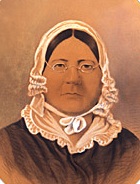
Mary Pickersgill (born Mary Young; February 12, 1776 – October 4, 1857) was the maker of the Star-Spangled Banner hoisted over Fort McHenry during the Battle of Baltimore in the War of 1812. The daughter of another noted flag maker, Rebecca Young, Pickersgill learned her craft from her mother, and in 1813 she was commissioned by Major George Armistead to make a flag for Baltimore's Fort McHenry that was so large that the British would have no difficulty seeing it from a great distance. The flag was installed in August 1813 and, during the Battle of Baltimore a year later, Francis Scott Key could see the flag while negotiating a prisoner exchange aboard a British vessel and was inspired to pen the words that became the United States National Anthem in 1931.
Pickersgill, widowed at age 29, became successful enough in her flag-making business that in 1820 she was able to buy the house that she had been renting in Baltimore, and later she became active in addressing social issues, such as housing and employment for disadvantaged women.[citation needed] From 1828 to 1851, she was president of the Impartial Female Humane Society which had been founded in 1802 and incorporated in 1811, and helped impoverished families with school vouchers for children and employment for women. Under Pickersgill's leadership, this organization built a home for aged women and later added an Aged Men's Home which was built adjacent to it. These, more than a century later, evolved into the Pickersgill Retirement Community of Towson, Maryland which opened in 1959.
Pickersgill died in 1857 and was buried in the Loudon Park Cemetery in southwest Baltimore, where her daughter erected a monument for her, and where some civic-minded organizations later erected a bronze plaque. The house where Pickersgill lived for 50 years, at the northwest corner of Albemarle and East Pratt Streets in downtown Baltimore, became known as the Star-Spangled Banner Flag House in 1927. The house was saved through the efforts of many preservation-minded citizens who were motivated by the Centennial Celebrations of 1914.
Mary Young was born in Philadelphia, Pennsylvania on February 12, 1776, the youngest of the six children of William Young and Rebecca Flower. Her mother, who became widowed when Mary was two years old, had a flag shop on Walnut Street in Philadelphia where she made ensigns, garrison flags and "Continental Colors" for the Continental Army. Her 1781 advertisement in the "Pennsylvania Packet" read, "All kinds of colours, for the Army and Navy, made and sold on the most reasonable Terms, By Rebecca Young." Young moved her family to Baltimore, Maryland when Mary was a child, and it was from her mother that Mary learned the craft of flag making.
On October 2, 1795, at age 19, Mary married John Pickersgill, a merchant, and moved back to Philadelphia with him. Of Mary's four children, only one survived childhood, a daughter named Caroline. Mary's husband traveled to London to work for the United States Government in the British Claims Office, but died in London on June 14, 1805, leaving Mary widowed at age 29. In 1807 Mary moved back to Baltimore with her daughter Caroline and 67-year-old mother Rebecca.
The small family rented a house at 44 Queen Street (later 844 East Pratt Street, which became the Star Spangled Banner Flag House and 1812 Museum), where Pickersgill took in boarders and opened a flag-making business, selling "silk standards, cavalry and division colours of every description." Her customers included the United States Army, United States Navy, and visiting merchant ships.
In 1813 the United States was at war with Great Britain, and Baltimore was preparing for an eventual attack as the fleet of the British Royal Navy had complete maritime control of the Chesapeake Bay. Major George Armistead, the U.S. Army commander of the infantry and artillery units that defended Fort McHenry in Baltimore, felt that the fort was prepared for an attack, except it lacked a flag. In a letter to the head of the Maryland Militia and military commander for Baltimore, Major General Samuel Smith, he wrote, "We, sir, are ready at Fort McHenry to defend Baltimore against invading by the enemy. That is to say, we are ready except that we have no suitable ensign to display over the Star Fort and it is my desire to have a flag so large that the British will have no difficulty seeing it from a distance." A delegation consisting of Armistead, Smith, Brig. General John Stricker, and Commodore Joshua Barney, Pickersgill's brother-in-law, visited with Pickersgill, and discussed the particulars of the desired flag. They commissioned Pickersgill to make two flags, "one American ensign, 30 X 42 feet, first quality bunting" and another flag 17 by 25 feet."
In early summer 1813, she began the job, and as a task as large as the making of these flags was beyond the capability of one person to complete, and Pickersgill not only drew on members of her own household for help including her daughter Caroline; her two nieces, Eliza and Margaret Young, and likely her elderly mother, Rebecca Young; an apprenticing indentured servant, Grace Wisher; and also contracted labor from the immediate neighborhood. An additional unnamed African American who boarded in the house is also listed as helping in some sources, as were additional local seamstresses who were hired during the summer. Often working late into the evening, until midnight at times, Pickersgill's team was able to complete the job in six weeks. Pickersgill's daughter, in an 1876 letter to Georgiana Armistead Appleton, the daughter of Major Armistead (later breveted a lieutenant colonel), wrote these particulars about the flag:
Hub AI
Mary Young Pickersgill AI simulator
(@Mary Young Pickersgill_simulator)
Mary Young Pickersgill
Mary Pickersgill (born Mary Young; February 12, 1776 – October 4, 1857) was the maker of the Star-Spangled Banner hoisted over Fort McHenry during the Battle of Baltimore in the War of 1812. The daughter of another noted flag maker, Rebecca Young, Pickersgill learned her craft from her mother, and in 1813 she was commissioned by Major George Armistead to make a flag for Baltimore's Fort McHenry that was so large that the British would have no difficulty seeing it from a great distance. The flag was installed in August 1813 and, during the Battle of Baltimore a year later, Francis Scott Key could see the flag while negotiating a prisoner exchange aboard a British vessel and was inspired to pen the words that became the United States National Anthem in 1931.
Pickersgill, widowed at age 29, became successful enough in her flag-making business that in 1820 she was able to buy the house that she had been renting in Baltimore, and later she became active in addressing social issues, such as housing and employment for disadvantaged women.[citation needed] From 1828 to 1851, she was president of the Impartial Female Humane Society which had been founded in 1802 and incorporated in 1811, and helped impoverished families with school vouchers for children and employment for women. Under Pickersgill's leadership, this organization built a home for aged women and later added an Aged Men's Home which was built adjacent to it. These, more than a century later, evolved into the Pickersgill Retirement Community of Towson, Maryland which opened in 1959.
Pickersgill died in 1857 and was buried in the Loudon Park Cemetery in southwest Baltimore, where her daughter erected a monument for her, and where some civic-minded organizations later erected a bronze plaque. The house where Pickersgill lived for 50 years, at the northwest corner of Albemarle and East Pratt Streets in downtown Baltimore, became known as the Star-Spangled Banner Flag House in 1927. The house was saved through the efforts of many preservation-minded citizens who were motivated by the Centennial Celebrations of 1914.
Mary Young was born in Philadelphia, Pennsylvania on February 12, 1776, the youngest of the six children of William Young and Rebecca Flower. Her mother, who became widowed when Mary was two years old, had a flag shop on Walnut Street in Philadelphia where she made ensigns, garrison flags and "Continental Colors" for the Continental Army. Her 1781 advertisement in the "Pennsylvania Packet" read, "All kinds of colours, for the Army and Navy, made and sold on the most reasonable Terms, By Rebecca Young." Young moved her family to Baltimore, Maryland when Mary was a child, and it was from her mother that Mary learned the craft of flag making.
On October 2, 1795, at age 19, Mary married John Pickersgill, a merchant, and moved back to Philadelphia with him. Of Mary's four children, only one survived childhood, a daughter named Caroline. Mary's husband traveled to London to work for the United States Government in the British Claims Office, but died in London on June 14, 1805, leaving Mary widowed at age 29. In 1807 Mary moved back to Baltimore with her daughter Caroline and 67-year-old mother Rebecca.
The small family rented a house at 44 Queen Street (later 844 East Pratt Street, which became the Star Spangled Banner Flag House and 1812 Museum), where Pickersgill took in boarders and opened a flag-making business, selling "silk standards, cavalry and division colours of every description." Her customers included the United States Army, United States Navy, and visiting merchant ships.
In 1813 the United States was at war with Great Britain, and Baltimore was preparing for an eventual attack as the fleet of the British Royal Navy had complete maritime control of the Chesapeake Bay. Major George Armistead, the U.S. Army commander of the infantry and artillery units that defended Fort McHenry in Baltimore, felt that the fort was prepared for an attack, except it lacked a flag. In a letter to the head of the Maryland Militia and military commander for Baltimore, Major General Samuel Smith, he wrote, "We, sir, are ready at Fort McHenry to defend Baltimore against invading by the enemy. That is to say, we are ready except that we have no suitable ensign to display over the Star Fort and it is my desire to have a flag so large that the British will have no difficulty seeing it from a distance." A delegation consisting of Armistead, Smith, Brig. General John Stricker, and Commodore Joshua Barney, Pickersgill's brother-in-law, visited with Pickersgill, and discussed the particulars of the desired flag. They commissioned Pickersgill to make two flags, "one American ensign, 30 X 42 feet, first quality bunting" and another flag 17 by 25 feet."
In early summer 1813, she began the job, and as a task as large as the making of these flags was beyond the capability of one person to complete, and Pickersgill not only drew on members of her own household for help including her daughter Caroline; her two nieces, Eliza and Margaret Young, and likely her elderly mother, Rebecca Young; an apprenticing indentured servant, Grace Wisher; and also contracted labor from the immediate neighborhood. An additional unnamed African American who boarded in the house is also listed as helping in some sources, as were additional local seamstresses who were hired during the summer. Often working late into the evening, until midnight at times, Pickersgill's team was able to complete the job in six weeks. Pickersgill's daughter, in an 1876 letter to Georgiana Armistead Appleton, the daughter of Major Armistead (later breveted a lieutenant colonel), wrote these particulars about the flag:
Recent media