
Recent from talks
Mateiu Caragiale
Knowledge base stats:
Talk channels stats:
Members stats:
Mateiu Caragiale
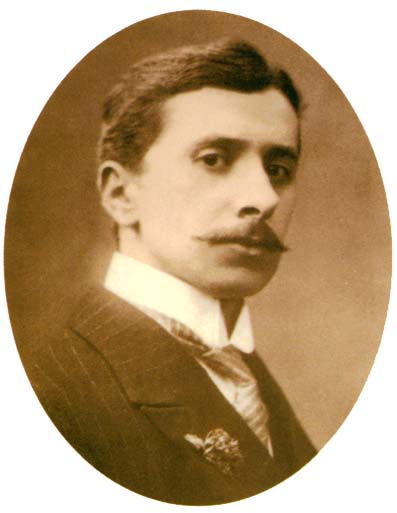
Mateiu Ion Caragiale (Romanian: [maˈtej iˈon karaˈdʒjale]; 25 March [O.S. 12 March] 1885 – 17 January 1936[citation needed]), also credited as Matei or Matheiu, or in the antiquated version Mateiŭ, was a Romanian poet and prose writer, best known for his novel Craii de Curtea-Veche, which portrays the milieu of boyar descendants before and after World War I. Caragiale's style, associated with Symbolism, the Decadent movement of the fin de siècle, and early modernism, was an original element in the Romanian literature of the interwar period. In other late contributions, Caragiale pioneered detective fiction locally, but there is disagreement over whether his work in the field produced a complete narrative or just fragments. The scarcity of writings he left is contrasted by their critical acclaim and a large, mostly posthumous, following, commonly known as mateists.
Also known as an amateur heraldist and graphic artist, the young Caragiale published his works sporadically, seeking instead to impose himself in politics and pursuing a career in the civil service. He was associated with the Conservative-Democratic Party, and then the People's League, and ultimately raised controversy by supporting the Central Powers during their occupation of Romania. He afterwards focused on literature, and, during the late 1920s and early 1930s, published most of his prose texts in the magazine Gândirea.
The illegitimate and rebellious child of influential playwright Ion Luca Caragiale, he was the half-brother of Luca Caragiale, an avant-garde poet who died in 1921, and the posthumous son-in-law of author Gheorghe Sion. Mateiu Caragiale was loosely affiliated with Romanian Symbolism, a figure noted for his dandyism, eccentricity and Bohemianism, and, for much of his life, a regular presence in the intellectual circle formed around Casa Capșa restaurant. His associates included the controversial political figure Alexandru Bogdan-Pitești, cultural animator Mărgărita Miller Verghy, and poet Ion Barbu, who was also one of his most dedicated promoters.
A native of Bucharest, he was born out of wedlock to Ion Luca Caragiale and Maria Constantinescu, an unmarried former Town Hall employee who was 21 at the time. Living his first years at his mother's house on Frumoasă Street, near Calea Victoriei (until the building was sold), Mateiu had a half-sister, his mother's daughter from another extra-conjugal affair. In 1889, almost a year after separating from his concubine, his father married Alexandrina Burelly, bringing Mateiu into his new family. In following years, he was progressively estranged from his father, and, according to Ecaterina, the youngest of Ion Luca Caragiale and Burelly's children, "Mateiu alone confronted [his father] and contradicted him systematically."
The young Caragiale was sent to school at Anghel Demetriescu's Sfântul Gheorghe College in Bucharest, where he discovered a passion for history and heraldry. At around that time, he was probably introduced to Demetriescu's circle, which included the doctor Constantin Istrati, the writer Barbu Ștefănescu-Delavrancea, the physicist Ștefan Hepites, the literary critic N. Petrașcu, and the architect Ion Mincu. During a 1901 summer trip to Sinaia, where he sojourned with the Bibescu family, Mateiu was acquainted with George Valentin and Alexandru Bibescu (in a letter he wrote at the time, he described the latter as "only too crazy and a frantic maniac"). His favorite book at age 17 was L'Arriviste, by the French novelist Félicien Champsaur, which, as he himself acknowledged, contributed to his vision of social climbing. In 1903, with Ion Luca, Burelly and their children, he traveled through large portions of Western Europe, visiting Austria-Hungary, Switzerland, Italy and France; during the trip, he recorded the impressions left on him by the various European art trends.
In 1904, his father moved to Berlin, bringing Mateiu with him—in hopes that he could be persuaded to study law at the Frederick William University—, but Mateiu spent his time reading and exploring the Imperial German capital. He would later refer to this period using a French term, l'école buissonière ("the vagrant school"), and stressed that "[it] was of great use to me". Ecaterina Caragiale indicated that one of her brother's favorite pastimes was "admiring the secular trees in the Tiergarten", and he is also known to have spent entire days at the National Gallery, especially fond of paintings by Jacob Isaakszoon van Ruisdael. Dissatisfied with Mateiu's attitude, Ion Luca sent him back to Romania in 1905, where he enrolled at the University of Bucharest Law School, but quit one year later. For a short while, Caragiale-father even entrusted Ștefănescu-Delavrancea with supervising his estranged son.
The conflict with his father was to prolong itself for as long as the latter was alive. Psychiatrist and essayist Ion Vianu, who explored the relationship with the tools of psychoanalysis, describes Mateiu's sentiment toward Ion Luca as "antipathy, bordering on hatred", and proposes that this reflected maternal influences from the brief period when Maria Constantinescu had been left a single parent.
The situation most likely degenerated in 1904, after the death of his aunt Lenci, when Ion Luca took over his son's inheritance, and aggravated by his father's decision to cease subsidizing him, which left the latter without a stable source of income. He was thus supposed to provide for his mother and sister, until Ion Luca transferred the inheritance resulting from the death of his other aunt Catinca Momuloaia, to his former lover. He also indicated that his father had made him attend the Frederick William University without advancing money for tuition. Some time after returning to Romania, he began attending the Symbolist literary circle formed around the poet and leftist political agitator Alexandru Bogdan-Pitești, who provided the young Caragiale with money and often invited him to supper.
Hub AI
Mateiu Caragiale AI simulator
(@Mateiu Caragiale_simulator)
Mateiu Caragiale
Mateiu Ion Caragiale (Romanian: [maˈtej iˈon karaˈdʒjale]; 25 March [O.S. 12 March] 1885 – 17 January 1936[citation needed]), also credited as Matei or Matheiu, or in the antiquated version Mateiŭ, was a Romanian poet and prose writer, best known for his novel Craii de Curtea-Veche, which portrays the milieu of boyar descendants before and after World War I. Caragiale's style, associated with Symbolism, the Decadent movement of the fin de siècle, and early modernism, was an original element in the Romanian literature of the interwar period. In other late contributions, Caragiale pioneered detective fiction locally, but there is disagreement over whether his work in the field produced a complete narrative or just fragments. The scarcity of writings he left is contrasted by their critical acclaim and a large, mostly posthumous, following, commonly known as mateists.
Also known as an amateur heraldist and graphic artist, the young Caragiale published his works sporadically, seeking instead to impose himself in politics and pursuing a career in the civil service. He was associated with the Conservative-Democratic Party, and then the People's League, and ultimately raised controversy by supporting the Central Powers during their occupation of Romania. He afterwards focused on literature, and, during the late 1920s and early 1930s, published most of his prose texts in the magazine Gândirea.
The illegitimate and rebellious child of influential playwright Ion Luca Caragiale, he was the half-brother of Luca Caragiale, an avant-garde poet who died in 1921, and the posthumous son-in-law of author Gheorghe Sion. Mateiu Caragiale was loosely affiliated with Romanian Symbolism, a figure noted for his dandyism, eccentricity and Bohemianism, and, for much of his life, a regular presence in the intellectual circle formed around Casa Capșa restaurant. His associates included the controversial political figure Alexandru Bogdan-Pitești, cultural animator Mărgărita Miller Verghy, and poet Ion Barbu, who was also one of his most dedicated promoters.
A native of Bucharest, he was born out of wedlock to Ion Luca Caragiale and Maria Constantinescu, an unmarried former Town Hall employee who was 21 at the time. Living his first years at his mother's house on Frumoasă Street, near Calea Victoriei (until the building was sold), Mateiu had a half-sister, his mother's daughter from another extra-conjugal affair. In 1889, almost a year after separating from his concubine, his father married Alexandrina Burelly, bringing Mateiu into his new family. In following years, he was progressively estranged from his father, and, according to Ecaterina, the youngest of Ion Luca Caragiale and Burelly's children, "Mateiu alone confronted [his father] and contradicted him systematically."
The young Caragiale was sent to school at Anghel Demetriescu's Sfântul Gheorghe College in Bucharest, where he discovered a passion for history and heraldry. At around that time, he was probably introduced to Demetriescu's circle, which included the doctor Constantin Istrati, the writer Barbu Ștefănescu-Delavrancea, the physicist Ștefan Hepites, the literary critic N. Petrașcu, and the architect Ion Mincu. During a 1901 summer trip to Sinaia, where he sojourned with the Bibescu family, Mateiu was acquainted with George Valentin and Alexandru Bibescu (in a letter he wrote at the time, he described the latter as "only too crazy and a frantic maniac"). His favorite book at age 17 was L'Arriviste, by the French novelist Félicien Champsaur, which, as he himself acknowledged, contributed to his vision of social climbing. In 1903, with Ion Luca, Burelly and their children, he traveled through large portions of Western Europe, visiting Austria-Hungary, Switzerland, Italy and France; during the trip, he recorded the impressions left on him by the various European art trends.
In 1904, his father moved to Berlin, bringing Mateiu with him—in hopes that he could be persuaded to study law at the Frederick William University—, but Mateiu spent his time reading and exploring the Imperial German capital. He would later refer to this period using a French term, l'école buissonière ("the vagrant school"), and stressed that "[it] was of great use to me". Ecaterina Caragiale indicated that one of her brother's favorite pastimes was "admiring the secular trees in the Tiergarten", and he is also known to have spent entire days at the National Gallery, especially fond of paintings by Jacob Isaakszoon van Ruisdael. Dissatisfied with Mateiu's attitude, Ion Luca sent him back to Romania in 1905, where he enrolled at the University of Bucharest Law School, but quit one year later. For a short while, Caragiale-father even entrusted Ștefănescu-Delavrancea with supervising his estranged son.
The conflict with his father was to prolong itself for as long as the latter was alive. Psychiatrist and essayist Ion Vianu, who explored the relationship with the tools of psychoanalysis, describes Mateiu's sentiment toward Ion Luca as "antipathy, bordering on hatred", and proposes that this reflected maternal influences from the brief period when Maria Constantinescu had been left a single parent.
The situation most likely degenerated in 1904, after the death of his aunt Lenci, when Ion Luca took over his son's inheritance, and aggravated by his father's decision to cease subsidizing him, which left the latter without a stable source of income. He was thus supposed to provide for his mother and sister, until Ion Luca transferred the inheritance resulting from the death of his other aunt Catinca Momuloaia, to his former lover. He also indicated that his father had made him attend the Frederick William University without advancing money for tuition. Some time after returning to Romania, he began attending the Symbolist literary circle formed around the poet and leftist political agitator Alexandru Bogdan-Pitești, who provided the young Caragiale with money and often invited him to supper.
Recent media