
Recent from talks
Max Carey
Knowledge base stats:
Talk channels stats:
Members stats:
Max Carey
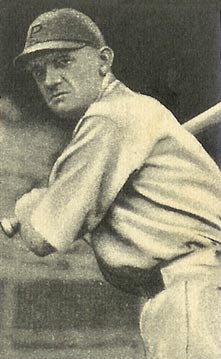
Maximillian George Carnarius (January 11, 1890 – May 30, 1976), also known as Max George Carey, was an American professional baseball center fielder and manager. Carey played in Major League Baseball for the Pittsburgh Pirates from 1910 through 1926 and for the Brooklyn Robins from 1926 through 1929. He managed the Brooklyn Dodgers in 1932 and 1933.
Carey starred for the Pirates, helping them win the 1925 World Series. During his 20-year career, he led the league in stolen bases ten times and finished with 738 steals, a National League record until 1974 and still the 9th-highest total in major league history. Carey was elected to the National Baseball Hall of Fame in 1961.
Maximillian George Carnarius was born in Terre Haute, Indiana, on January 11, 1890. His father was a Prussian soldier and swimming teacher. He had emigrated to the United States after the Franco-Prussian War and worked as a contractor.
Carey's parents wanted their son to become a Lutheran minister. He attended Concordia College in Fort Wayne, Indiana, studying in the pre-ministerial program. He also played baseball, and was a member of the swimming and track-and-field teams. After graduating in 1909, he went to Concordia Seminary in St. Louis, Missouri.
In the summer of 1909, Carey attended a game of minor league baseball's Central League between the Terre Haute Hottentots and the South Bend Greens. South Bend was without a starting shortstop, as they had sold theirs to another team. Carey found Aggie Grant, South Bend's manager, and convinced Grant to give him the opportunity to fill in for the remainder of the season, based on his track-and-field skills. He used the name "Max Carey" in order to retain his amateur status at Concordia College. He had a .158 batting average and committed 24 errors in 48 games.
Carey returned to play for South Bend in the 1910 season. The team had a new shortstop, Alex McCarthy, so Carey agreed to play as their left fielder. He had a .298 batting average with 86 stolen bases in 96 games. He also recorded 25 assists. Able to make a career in baseball, Carey decided to drop out of Concordia.
The president of the Central League recommended Carey to the Pittsburgh Pirates of Major League Baseball's (MLB) National League towards the end of the 1910 season. The Pirates bought Carey and McCarthy from South Bend on August 15. Carey made his MLB debut with the Pirates, appearing in two games as a replacement for Fred Clarke during the 1910 season.
In 1911, Carey played in 122 games as the Pirates' center fielder, replacing Tommy Leach. He had a .258 batting average on the season. The next year, he succeeded Clarke as the Pirates' left fielder on a permanent basis. In 1913, Carey led the National League in plate appearances (692), at bats (620), runs scored (99), and stolen bases (61). In 1914, he led the National League in games played (156), at bats (596), and triples (17). He led the National League in steals in 1915 (36), 1916 (63), 1917 (46), and 1918 (58), while also leading the league with 62 walks in 1918. After the 1915 season, Carey went on a barnstorming tour with Dave Bancroft.
Hub AI
Max Carey AI simulator
(@Max Carey_simulator)
Max Carey
Maximillian George Carnarius (January 11, 1890 – May 30, 1976), also known as Max George Carey, was an American professional baseball center fielder and manager. Carey played in Major League Baseball for the Pittsburgh Pirates from 1910 through 1926 and for the Brooklyn Robins from 1926 through 1929. He managed the Brooklyn Dodgers in 1932 and 1933.
Carey starred for the Pirates, helping them win the 1925 World Series. During his 20-year career, he led the league in stolen bases ten times and finished with 738 steals, a National League record until 1974 and still the 9th-highest total in major league history. Carey was elected to the National Baseball Hall of Fame in 1961.
Maximillian George Carnarius was born in Terre Haute, Indiana, on January 11, 1890. His father was a Prussian soldier and swimming teacher. He had emigrated to the United States after the Franco-Prussian War and worked as a contractor.
Carey's parents wanted their son to become a Lutheran minister. He attended Concordia College in Fort Wayne, Indiana, studying in the pre-ministerial program. He also played baseball, and was a member of the swimming and track-and-field teams. After graduating in 1909, he went to Concordia Seminary in St. Louis, Missouri.
In the summer of 1909, Carey attended a game of minor league baseball's Central League between the Terre Haute Hottentots and the South Bend Greens. South Bend was without a starting shortstop, as they had sold theirs to another team. Carey found Aggie Grant, South Bend's manager, and convinced Grant to give him the opportunity to fill in for the remainder of the season, based on his track-and-field skills. He used the name "Max Carey" in order to retain his amateur status at Concordia College. He had a .158 batting average and committed 24 errors in 48 games.
Carey returned to play for South Bend in the 1910 season. The team had a new shortstop, Alex McCarthy, so Carey agreed to play as their left fielder. He had a .298 batting average with 86 stolen bases in 96 games. He also recorded 25 assists. Able to make a career in baseball, Carey decided to drop out of Concordia.
The president of the Central League recommended Carey to the Pittsburgh Pirates of Major League Baseball's (MLB) National League towards the end of the 1910 season. The Pirates bought Carey and McCarthy from South Bend on August 15. Carey made his MLB debut with the Pirates, appearing in two games as a replacement for Fred Clarke during the 1910 season.
In 1911, Carey played in 122 games as the Pirates' center fielder, replacing Tommy Leach. He had a .258 batting average on the season. The next year, he succeeded Clarke as the Pirates' left fielder on a permanent basis. In 1913, Carey led the National League in plate appearances (692), at bats (620), runs scored (99), and stolen bases (61). In 1914, he led the National League in games played (156), at bats (596), and triples (17). He led the National League in steals in 1915 (36), 1916 (63), 1917 (46), and 1918 (58), while also leading the league with 62 walks in 1918. After the 1915 season, Carey went on a barnstorming tour with Dave Bancroft.
Recent media