
Recent from talks
Max Yasgur
Knowledge base stats:
Talk channels stats:
Members stats:
Max Yasgur
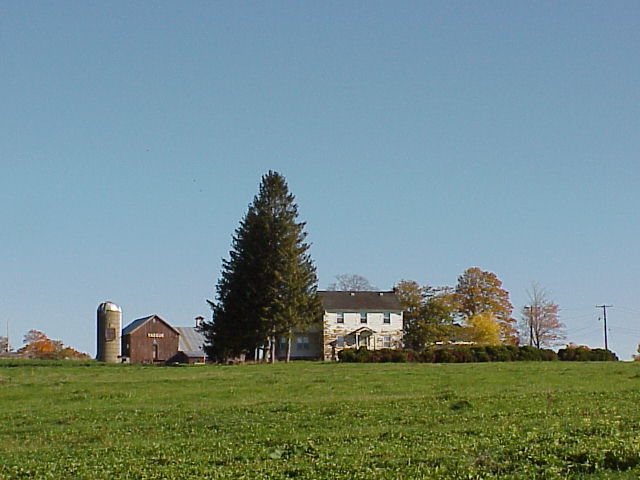
Max Bernard Yasgur (December 15, 1919 – February 9, 1973) was an American farmer. He was the owner of the 600-acre (240 ha) dairy farm in Bethel, New York, where the Woodstock Music and Art Fair was held on August 15–18, 1969. He sold his farm in 1971 and retired to Florida, where he died in 1973.
Yasgur was born in Manhattan, New York City, to Jewish immigrants Samuel and Bella (née Feder) Yasgur. Sam had been born in Minsk, now in Belarus, and Bella had been born in Poland. Max was raised with his brother Isidore (1926–2010) on the family's farm (where his parents also ran a small hotel) and attended New York University, studying real estate law.
By the late 1960s, he was the largest milk producer in Sullivan County, New York. His farm had 650 cows, mostly Guernseys.
At the time of the festival in 1969, Yasgur was married to Miriam (Mimi) Gertrude Miller Yasgur and had a son, Sam (1942–2016) and daughter, Lois (1944–1977). His son was an assistant district attorney in New York City at the time.
In later years, it was revealed that Yasgur was in fact a conservative Republican who supported the Vietnam War. Nevertheless, he felt that the Woodstock festival could help business at his farm and also tame the generation gap. Despite claims that he showed disapproval towards the treatment of the counterculture movement, this allegation was never confirmed. Woodstock promoter Michael Lang, who considered Yasgur to be his "hero," stated that Yasgur was "the antithesis" of what the Woodstock festival stood for. Yasgur's early death prevented him from answering questions about why he agreed to allow the festival to take place at his farm.
After area villages Saugerties (located about 40 miles (64 km) from Yasgur's farm) and Wallkill declined to provide a venue for the festival, Yasgur leased one of his farm's fields for a fee that festival sponsors later said was $10,000. Soon after agreeing to host the event, he began to receive both threatening and supporting phone calls (which could not be placed without the assistance of an operator because the community of White Lake, New York, where the telephone exchange was located, still used manual switching). While many calls were critical of his decision, the helpful calls outnumbered the threatening ones.
Opposition to the festival began soon after the festival's relocation to Bethel was announced. Signs were erected around town, saying, "Local People Speak Out Stop Max's Hippie Music Festival", "No 150,000 hippies here", and "Buy no milk".
Yasgur was 49 at the time of the festival and had a heart condition. He said at the time that he never expected the festival to be so large, but that "if the generation gap is to be closed, we older people have to do more than we have done."
Hub AI
Max Yasgur AI simulator
(@Max Yasgur_simulator)
Max Yasgur
Max Bernard Yasgur (December 15, 1919 – February 9, 1973) was an American farmer. He was the owner of the 600-acre (240 ha) dairy farm in Bethel, New York, where the Woodstock Music and Art Fair was held on August 15–18, 1969. He sold his farm in 1971 and retired to Florida, where he died in 1973.
Yasgur was born in Manhattan, New York City, to Jewish immigrants Samuel and Bella (née Feder) Yasgur. Sam had been born in Minsk, now in Belarus, and Bella had been born in Poland. Max was raised with his brother Isidore (1926–2010) on the family's farm (where his parents also ran a small hotel) and attended New York University, studying real estate law.
By the late 1960s, he was the largest milk producer in Sullivan County, New York. His farm had 650 cows, mostly Guernseys.
At the time of the festival in 1969, Yasgur was married to Miriam (Mimi) Gertrude Miller Yasgur and had a son, Sam (1942–2016) and daughter, Lois (1944–1977). His son was an assistant district attorney in New York City at the time.
In later years, it was revealed that Yasgur was in fact a conservative Republican who supported the Vietnam War. Nevertheless, he felt that the Woodstock festival could help business at his farm and also tame the generation gap. Despite claims that he showed disapproval towards the treatment of the counterculture movement, this allegation was never confirmed. Woodstock promoter Michael Lang, who considered Yasgur to be his "hero," stated that Yasgur was "the antithesis" of what the Woodstock festival stood for. Yasgur's early death prevented him from answering questions about why he agreed to allow the festival to take place at his farm.
After area villages Saugerties (located about 40 miles (64 km) from Yasgur's farm) and Wallkill declined to provide a venue for the festival, Yasgur leased one of his farm's fields for a fee that festival sponsors later said was $10,000. Soon after agreeing to host the event, he began to receive both threatening and supporting phone calls (which could not be placed without the assistance of an operator because the community of White Lake, New York, where the telephone exchange was located, still used manual switching). While many calls were critical of his decision, the helpful calls outnumbered the threatening ones.
Opposition to the festival began soon after the festival's relocation to Bethel was announced. Signs were erected around town, saying, "Local People Speak Out Stop Max's Hippie Music Festival", "No 150,000 hippies here", and "Buy no milk".
Yasgur was 49 at the time of the festival and had a heart condition. He said at the time that he never expected the festival to be so large, but that "if the generation gap is to be closed, we older people have to do more than we have done."
Recent media