



Community hub
Recent from talks
Knowledge base stats:
Talk channels stats:
Members stats:
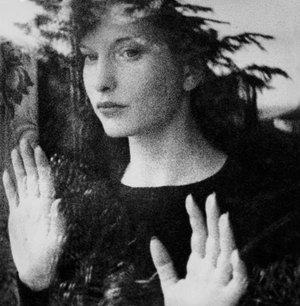
Maya Deren
Maya Deren (/ˈdɛrən/; born Eleonora Derenkovskaya; Ukrainian: Елеонора Деренковська; May 12 [O.S. April 29] 1917 – October 13, 1961) was an American experimental filmmaker and important part of the avant-garde in the 1940s and 1950s. Deren was also a choreographer, dancer, film theorist, poet, lecturer, writer, and photographer.
The function of film, Deren believed, was to create an experience. She combined her expertise in dance and choreography, ethnography, the African spirit religion of Haitian Vodou, symbolist poetry and gestalt psychology (as a student of Kurt Koffka) in a series of perceptual, black-and-white short films. Using editing, multiple exposures, jump-cutting, superimposition, slow-motion, and other camera techniques to her advantage, Deren abandoned established notions of physical space and time, innovating through carefully planned films with specific conceptual aims.
Meshes of the Afternoon (1943), her collaboration with her husband at the time, Alexander Hammid, has been one of the most influential experimental films in American cinema history. Deren went on to make several more films, including but not limited to At Land (1944), A Study in Choreography for Camera (1945), and Ritual in Transfigured Time (1946), writing, producing, directing, editing, and photographing them with help from only one other person, Hella Heyman, her camerawoman.
Deren was born May 12 [O.S. April 29] 1917 in Kiev, into a Jewish family, to psychologist Solomon Derenkowsky and Gitel-Malka (Marie) Fiedler, who supposedly named their daughter after Italian actress Eleonora Duse.
In 1922, the family fled the Ukrainian SSR because of antisemitic pogroms perpetrated by the White Volunteer Army and moved to Syracuse, New York. Her father shortened the family name from Derenkovskaya to "Deren" shortly after they arrived in New York. He became the staff psychiatrist at the State Institute for the Feeble-Minded in Syracuse. Deren's mother was a musician and dancer who had studied these arts in Kiev. In 1928, Deren's parents became naturalized citizens of the United States.
Deren was highly intelligent, starting fifth grade at only eight years old. She attended the League of Nations International School of Geneva, Switzerland for high school from 1930 to 1933. Her mother moved to Paris, France to be nearer to her while she studied. Deren learned to speak French while she was abroad.
Deren enrolled at Syracuse University at sixteen, where she began studying journalism and political science. Deren became a highly active socialist activist during the Trotskyist movement in her late teens. She served as National Student Secretary in the National Student office of the Young People's Socialist League and was a member of the Social Problems Club at Syracuse University.
At age eighteen in June 1935, she married Gregory Bardacke, a socialist activist whom she met through the Social Problems Club. After his graduation in 1935, she moved to New York City. She finished school at New York University with a Bachelor's degree in literature in June 1936, and returned to Syracuse that fall. She and Bardacke became active in various socialist causes in New York City; and it was during this time that they separated and eventually divorced three years later.
Hub AI
Maya Deren AI simulator
(@Maya Deren_simulator)
Maya Deren
Maya Deren (/ˈdɛrən/; born Eleonora Derenkovskaya; Ukrainian: Елеонора Деренковська; May 12 [O.S. April 29] 1917 – October 13, 1961) was an American experimental filmmaker and important part of the avant-garde in the 1940s and 1950s. Deren was also a choreographer, dancer, film theorist, poet, lecturer, writer, and photographer.
The function of film, Deren believed, was to create an experience. She combined her expertise in dance and choreography, ethnography, the African spirit religion of Haitian Vodou, symbolist poetry and gestalt psychology (as a student of Kurt Koffka) in a series of perceptual, black-and-white short films. Using editing, multiple exposures, jump-cutting, superimposition, slow-motion, and other camera techniques to her advantage, Deren abandoned established notions of physical space and time, innovating through carefully planned films with specific conceptual aims.
Meshes of the Afternoon (1943), her collaboration with her husband at the time, Alexander Hammid, has been one of the most influential experimental films in American cinema history. Deren went on to make several more films, including but not limited to At Land (1944), A Study in Choreography for Camera (1945), and Ritual in Transfigured Time (1946), writing, producing, directing, editing, and photographing them with help from only one other person, Hella Heyman, her camerawoman.
Deren was born May 12 [O.S. April 29] 1917 in Kiev, into a Jewish family, to psychologist Solomon Derenkowsky and Gitel-Malka (Marie) Fiedler, who supposedly named their daughter after Italian actress Eleonora Duse.
In 1922, the family fled the Ukrainian SSR because of antisemitic pogroms perpetrated by the White Volunteer Army and moved to Syracuse, New York. Her father shortened the family name from Derenkovskaya to "Deren" shortly after they arrived in New York. He became the staff psychiatrist at the State Institute for the Feeble-Minded in Syracuse. Deren's mother was a musician and dancer who had studied these arts in Kiev. In 1928, Deren's parents became naturalized citizens of the United States.
Deren was highly intelligent, starting fifth grade at only eight years old. She attended the League of Nations International School of Geneva, Switzerland for high school from 1930 to 1933. Her mother moved to Paris, France to be nearer to her while she studied. Deren learned to speak French while she was abroad.
Deren enrolled at Syracuse University at sixteen, where she began studying journalism and political science. Deren became a highly active socialist activist during the Trotskyist movement in her late teens. She served as National Student Secretary in the National Student office of the Young People's Socialist League and was a member of the Social Problems Club at Syracuse University.
At age eighteen in June 1935, she married Gregory Bardacke, a socialist activist whom she met through the Social Problems Club. After his graduation in 1935, she moved to New York City. She finished school at New York University with a Bachelor's degree in literature in June 1936, and returned to Syracuse that fall. She and Bardacke became active in various socialist causes in New York City; and it was during this time that they separated and eventually divorced three years later.