Hubbry Logo
Eleonora DuseEleonora DuseMain
Open search
Eleonora Duse
Community hub
Eleonora Duse
logo
8 pages, 0 posts
0 subscribers
Be the first to start a discussion here.
Eleonora Duse
Eleonora Duse
from Wikipedia

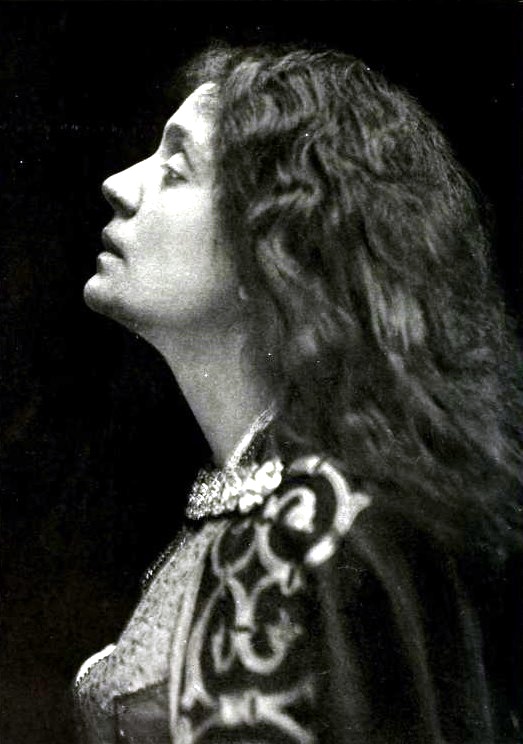
Eleonora Giulia Amalia Duse (/ˈdjz/ DEW-zay, Italian: [eleoˈnɔːra ˈduːze]; 3 October 1858 – 21 April 1924), often known simply as Duse, was an Italian actress, rated by many as the greatest of her time. She performed in many countries, notably in the plays of Gabriele D'Annunzio and Henrik Ibsen. Duse achieved a unique power of conviction and verity on the stage through intense absorption in the character, "eliminating the self" as she put it, and letting the qualities emerge from within, not imposed through artifice.

Key Information

Life and career

[edit]

Early life

[edit]

Duse was born in Vigevano, Lombardy, Austrian Empire, in 1858 to Alessandro Vincenzo Duse (1820–1892) and Angelica Cappelletto (1833–1906).[1] Lombardy would be taken from Austrian control the year after her birth by forces under the Kingdom of Sardinia, and would form part of the new Kingdom of Italy when she was about 3. Venice and some surrounding areas would remain part of the Austrian Empire until she was about 8.

Both her father and her grandfather, Luigi, were actors from Chioggia, near Venice, and she joined the troupe at age four.[2] Due to poverty, she initially worked continually, traveling from city to city with whichever troupe her family was currently engaged. She came to fame in Italian versions of roles made famous by Sarah Bernhardt, such as La Dame aux camélias.[2][3]

Career

[edit]

She gained her first major success in Europe, then toured South America, Russia and the United States in 1893; beginning the tours as a virtual unknown but leaving in her wake a general recognition of her genius. While she made her career and fame performing in the theatrical "warhorses" of her day, she is remembered for her association with the plays of Gabriele D'Annunzio[4] and Henrik Ibsen.

In 1879, while in Naples, she met journalist Martino Cafiero, and became involved in a love affair with him. However, less than a year later, while she was in mid-pregnancy, he left her. The baby did not survive birth, and shortly thereafter Cafiero died as well. Duse then joined Cesare Rossi's theater company, and met actor Tebaldo Checchi (pseudonym of Tebaldo Marchetti). The two married in 1881. By 1882, the couple had one daughter, Enrichetta Angelica, but separated after Duse became involved with another actor, Flavio Andò.

Eleonora Duse portrayed by Franz von Lenbach

By this time, her career was in full swing and her popularity was high in 1885.[4] She travelled on tour to South America, and upon her return a year later she formed her own company, meaning that she would assume the additional responsibilities of both manager and director.

Between 1887 and 1894, she had an affair with the Italian poet Arrigo Boito, perhaps best remembered as Verdi's librettist. Their relationship was carried out in a highly clandestine manner, presumably because of Boito's many aristocratic friends and acquaintances. (Despite this, their voluminous correspondence over the years survives.) In later years the two remained on good terms until his death in 1918.

In 1894 she met Gabriele D'Annunzio (1863–1938), who was five years her junior, in Venice and the two became involved romantically as well as collaborating professionally. Gabriele d'Annunzio wrote four plays for her. In contrast to her relations with Boito, her association with d'Annunzio was widely recognized. When d'Annunzio gave the lead for the premiere of the play La città morta [it] to Sarah Bernhardt instead of Duse, there was a furious fight, and Duse ended her affair with him.

In contrast to Bernhardt's outgoing personality, which thrived on publicity, Duse was introverted and private, rarely giving interviews. She found public appearances to be a distraction, and once remarked to a journalist that away from the stage, "I do not exist". Bernhardt and Duse were unspoken rivals for many years. Comparisons of Duse to Bernhardt with regard to their acting talent were common, with warring factions arguing over their relative merits. Those who thought Duse the greater artist included George Bernard Shaw, who saw both actresses in London within the span of a few days, in the same play. Shaw gave his nod to Duse and defended his choice in an adamant oratory quoted by biographer Frances Winwar. Dame Ellen Terry, who knew them both, observed, "How futile it is to make comparisons! Better far to thank heaven for both these women."

In 1896, Duse completed a triumphant tour of the United States; in Washington President Grover Cleveland and his wife attended every performance. Mrs. Cleveland shocked Washington society by giving, in Duse's honor, the first-ever White House tea held for an actress. In 1909, Duse retired from acting.

Other relationships

[edit]

Around the time of Duse's retirement, she met and became involved in an affair with Italian feminist Lina Poletti, a former lover of writer Sibilla Aleramo. The two lived together in Florence, Italy, for two years before ending the relationship. She is reported to have had a relationship with Russian count and painter Alexander Wolkoff and lived in his palace in Venice, now known as Palazzo Barbaro Wolkoff.[5]

Later life

[edit]
Time cover, 30 July 1923

Duse suffered from ill health (largely pulmonary) throughout most of her adult life, and the many years of touring had taken their toll. She retired from acting in 1909, but returned to the stage in 1921 in a series of engagements in both Europe and America.[6]

During this interval, in 1916, she made one film, Cenere ("Ashes"), prints of which still survive. She was very disappointed in her work in the film, and later wrote to the French singer Yvette Guilbert with the request not to see "that stupid thing, because you'll find nothing, or almost nothing, of me in that film". There was also a certain amount of professional correspondence between Duse and D. W. Griffith, though ultimately nothing came of this.

On 30 July 1923, Duse became the first woman (and Italian) to be featured on the cover of the nascent magazine Time.

Death

[edit]

Duse died of pneumonia at the age of 65 in Pittsburgh in Suite 524 of the Hotel Schenley while on the eastward return leg of a tour of the United States (the Hotel Schenley is now the William Pitt Union at the University of Pittsburgh). A bronze plaque in the lobby commemorates her death. After being moved to New York City, where she lay in state for four days before her funeral service, her body was returned to Italy (where another service was performed).

She is buried in Asolo – where she had made her home for the last four years of her life – at the cemetery of Sant' Anna.[7] Her daughter Enrichetta donated some of her mother's items to the state in 1933. These items are preserved in Asolo in the Museo Civico. In 1968 her granddaughter Eleonora Ilaria Bullough (aka Mary of St Mark as a Dominican nun) donated the last items to the Giorgio Cini Foundation in Venice.

Acting philosophy

[edit]
Eleonora Duse, early in her acting career

Duse was cryptic regarding her acting style. She claimed not to have a technique of any sort, and scorned at efforts to put her art into a science. What is known is that she had a highly heterodox, almost religious philosophy of acting, seeking to "eliminate the self" and become the characters she portrayed. It is a common misconception that her acting was purely intuitive and spontaneous, in reality she labored over her craft.

Duse wore little makeup[4] but "made herself up morally. In other words, she allowed the inner compulsions, grief and joys of her characters to use her body as their medium for expression, often to the detriment of her health."

According to the Encyclopædia Britannica, "her art depended on intense naturalness rather than stage effect, sympathetic force and poignant intellectuality rather than the theatrical emotionalism of the French tradition."[4]

Over the course of her career, Duse became well-known and respected for her assistance to young actors and actresses during the early stages of their careers. Among diverse artistic geniuses who acknowledged being inspired by Duse are modern dance pioneer Martha Graham and Imagist poetry pioneer Amy Lowell. She was great friends with actress Eva Le Gallienne, who wrote her biography.

Recognition

[edit]

Duse was the subject of the 1947 biographical film Eleonora Duse. The Teatro Duse in Bologna is named for her. On the occasion of the celebrations in Asolo for the 100th anniversary of Duse's death, an entire theatrical season was dedicated.[8]

The 2025 film Duse, directed by Pietro Marcello, stars Valeria Bruni Tedeschi as Duse and Noémie Merlant as Enrichetta Checchi.[9]

[edit]

References

[edit]
[edit]
Revisions and contributorsEdit on WikipediaRead on Wikipedia
from Grokipedia
Eleonora Duse (October 3, 1858 – April 21, 1924) was an Italian actress renowned for her pioneering naturalistic acting style, which emphasized emotional authenticity, subtle gestures, and the inner life of characters, revolutionizing modern theater in the late 19th and early 20th centuries. Born in , , into a family of touring performers, she debuted on stage at age four as in an adaptation of and became a leading lady by age fourteen, quickly establishing herself through psychologically realistic portrayals in works like Émile Zola's . Her career spanned decades, marked by international tours, management of her own theater company, and ventures into early cinema, including her only film appearance as the mother in the 1916 silent film Cenere (Ashes), adapted from Grazia Deledda's novel. Duse's personal life was as dramatic as her performances; she married actor Tebaldo Checchi in , with whom she had a daughter, Enrichetta, born in 1882, though the marriage ended in separation amid her rising fame. She formed significant romantic and artistic partnerships with composer and playwright , the latter inspiring roles tailored for her in a tumultuous affair that ended in 1904, leaving her in financial and emotional distress. Health issues, including inherited from her mother who died when Duse was fourteen, plagued her throughout her life, leading to a retirement from the stage in 1909 at age fifty due to illness and fading beauty, though she briefly managed theaters during this period. She staged a triumphant return in 1921 with Ibsen's The Lady from the Sea and continued touring, including a final American tour in 1923–1924. Duse died of pneumonia in Pittsburgh, Pennsylvania, on April 21, 1924, at age sixty-five, during that tour, and her body was returned to for burial in , where thousands mourned her as a national icon. Her influence extended beyond performance; she popularized Henrik Ibsen's plays in Italy, inspired and , and was praised by for her truthful emotional depth, setting standards for realistic acting that shaped 20th-century theater and film. Rivaling in fame but prioritizing simplicity over spectacle—using minimal makeup, edited texts, and sparse sets—Duse embodied a spiritual, ego-free artistry that continues to resonate as a cornerstone of dramatic expression.

Early Life

Family Background and Childhood

Eleonora Duse was born on October 3, 1858, in , a town in the region of , to the actors Vincenzo Alessandro Duse (1820–1892) and Angelica Cappelletto (1833–1873). Her father, a modestly successful performer and painter, immersed the family in the world of itinerant theater, while her mother, though less enthusiastic about the stage, also acted to support the household. The Duses originated from Chioggia, a coastal town near Venice, where theater was a family tradition spanning generations. Duse's paternal grandfather, Luigi Duse (1792–1854), played a pivotal role in establishing this legacy; he was a renowned known for his serious interpretations in Venetian and founded the Anfiteatro Luigi Duse (later known as Teatro Duse and then Teatro Garibaldi) in in 1834. Luigi directed a prominent touring company that included many family members, and by the time of his death, at least eighteen relatives were engaged in professional theater, reflecting the clan's entrenched involvement in the profession. This heritage profoundly influenced Duse's upbringing, embedding performance within the fabric of family life from her earliest days. The family's economic circumstances were marked by persistent , compelling them to lead a nomadic existence with a traveling starting when Duse was just four years old. This peripatetic lifestyle involved constant relocation across —often by foot or rudimentary transport—to perform in makeshift venues, exposing young Duse to instability, hunger, and the harsh realities of life for strolling players. Her early was correspondingly informal and fragmented, consisting primarily of basic lessons from her during brief respites on the road, supplemented by immersive observation of rehearsals and shows that served as her inadvertent training ground. These childhood hardships, born of financial necessity, forged Duse's resilience and intimate familiarity with the theater's demands long before her formal entry into the profession.

Debut and Formative Years

Eleonora Duse made her first stage appearance at the age of four in 1862, portraying in an Italian adaptation of Victor Hugo's with her family's traveling theater troupe. This early involvement in the Duse-Lagunaz company, rooted in her family's long-standing theatrical tradition, exposed her to the rigors of itinerant performance from childhood. By age 14, Duse had advanced to leading roles, achieving her professional debut as in Shakespeare's during a May 1873 performance in Verona's historic arena, where she captivated audiences with an intuitive emotional depth. Following her mother's death from in 1873, she continued performing in provincial Italian theaters, taking on demanding parts such as the protagonist in Émile Zola's to support herself amid the troupe's financial instability. In 1879, Duse joined Cesare Rossi's prestigious Turinese Compagnia Semistabile, where she honed her skills in classical repertory, including a notable interpretation of Marguerite Gautier in La Dame aux Camélias, emphasizing psychological nuance over declamatory style. Her rapid progression within the company marked her transition from child performer to prima attrice by age 21. Duse's formative years were fraught with professional and personal hardships, including frequent troupe bankruptcies that forced cast members into and occasional during tours. She contracted during her early adulthood, a severe illness that briefly halted her performances and underscored the physical toll of her nomadic lifestyle. These challenges, compounded by the era's unstable theater economy, forged her resilience and deepened her commitment to authentic on stage.

Professional Career

Rise to Prominence

In the mid-1880s, Eleonora Duse began gaining international recognition through tours, including a South American tour with Cesare Rossi's company in 1885, where she showcased her emerging talent in a repertoire that included French dramas by authors such as . These performances marked a pivotal shift from provincial Italian stages to broader acclaim, with critics praising her emotional depth and naturalistic style in roles like Marguerite Gautier in La Dame aux Camélias. Duse's interpretations earned widespread critical acclaim, particularly for her command of French dramas, where she was lauded for a "quiet intensity" and "dramatic insight" that distinguished her from more theatrical contemporaries. By 1885, through successful seasons in major Italian cities like and , Duse achieved , allowing her greater artistic control following her separation from her husband. In 1886, after returning from the South American tour, Duse left Rossi's troupe and formed her own theatrical company, the Drama Company of the City of , which enabled her to manage productions independently and expand her international presence. This venture solidified her status as a prominent , fostering a dedicated ensemble that supported her vision and contributed to her breakthrough as a dominant force in 19th-century European drama.

Key Roles and Collaborations

Eleonora Duse's collaboration with playwright Gabriele D'Annunzio marked a pivotal phase in her career, as he crafted several roles specifically for her interpretive depth and emotional intensity. Although D'Annunzio initially offered the premiere of La città morta (1898) to Sarah Bernhardt in Paris, Duse took on the lead role of Bianca Maria in subsequent Italian productions, including a notable performance in Milan in 1901. She also starred in the world premiere of his tragedy Francesca da Rimini on December 9, 1901, at the Teatro Costanzi in Rome, portraying the titular character in a production that highlighted her ability to embody passionate, tormented women amid the play's poetic and decadent aesthetic. Throughout their professional and personal partnership from 1894 to around 1904, Duse performed in at least four of D'Annunzio's works, including La Gioconda (1898) and Il sogno di un mattino di primavera (1897), delivering over a hundred performances across his oeuvre that showcased her naturalistic approach to his symbolist dramas. Duse's interpretations of Henrik Ibsen's characters further established her as a bridge between Scandinavian realism and Italian theatre, introducing his psychologically complex female leads to Italian audiences for the first time. She first played Nora Helmer in during its Italian premiere on February 9, 1891, at the Teatro dei Filodrammatici in , where her portrayal emphasized the character's inner turmoil and quest for autonomy, captivating viewers with subtle gestures over declamatory style. Duse revisited Ibsen's works repeatedly, notably as in , a role she performed in productions that explored themes of guilt and moral decay, often in collaboration with designer , whose innovative staging enhanced her introspective delivery. Her Ibsen repertoire, which also included Ella Rentheim in and Ellida in The Lady from the Sea, not only popularized his plays in Italy but also influenced her evolution toward a more intimate, truth-seeking acting method. Duse's international tours during the and early expanded her global reputation, allowing her to perform key roles in major venues while adapting to diverse cultural contexts. In 1891, she embarked on a groundbreaking tour of , presenting Ibsen and Italian classics in cities like and St. Petersburg, where her performances inspired emerging directors such as Konstantin Stanislavsky. She toured in 1893, following an earlier Latin American journey in 1885, bringing European drama to audiences in and Rio de Janeiro through her own company. Duse made multiple visits to the , in 1893 and 1902, performing at prestigious theaters including New York's Theatre, where she reprised Ibsen roles to enthusiastic acclaim. In , she frequently appeared at in , integrating dramatic works with operatic sensibilities in productions that underscored her versatility. Duse's longstanding relationship with composer and librettist Arrigo Boito, spanning from the 1880s until his death in 1918, infused her dramatic technique with operatic elements, blending vocal expressiveness and rhythmic precision into her spoken performances. Boito, known for his libretti to Verdi's Otello and Falstaff, advised Duse on roles like Cleopatra in his translation of Shakespeare's Antony and Cleopatra, which she debuted in 1888, emphasizing musicality in her delivery to evoke tragic grandeur. Their collaboration extended to her early portrayal of Santuzza in Verga's Cavalleria rusticana (1884), where Boito's insights into verismo opera influenced her raw, emotionally charged realism. This partnership not only shaped Duse's preparation—incorporating Boito's emphasis on textual rhythm and psychological depth—but also positioned her as a pioneer in merging theatrical and musical traditions.

Retirement and Final Performances

In 1909, Eleonora Duse abruptly announced her retirement from the stage after a triumphant tour in , amid lingering professional tensions with playwright that dated back to disputes over play rights and casting. These conflicts had intensified earlier when D'Annunzio assigned the lead role in the French premiere of his play La città morta (1898) to her rival , depriving Duse of what she viewed as her rightful opportunity to elevate his work to greater success. The fallout contributed to her decision to withdraw, marking the end of a once-close collaboration where she had starred in several of his dramas, though health concerns and exhaustion also played a role in her twelve-year hiatus from performing. During her retirement, Duse ventured briefly into cinema with her sole screen appearance in the 1916 silent film Cenere (Ashes), directed by Febo Mari and adapted from Grazia Deledda's 1904 novel. In the role of Rosalia Derios, a impoverished Sardinian mother who entrusts her illegitimate son Anania to his father and later searches desperately for him, Duse delivered a performance noted for its emotional depth and subtlety, though the film's static style ill-suited her naturalistic acting technique. Co-writing the screenplay with Mari, she hoped the project would revive her career and address financial strains from the war, but Cenere proved a commercial disappointment, reinforcing her reluctance toward film and solidifying her legacy as a theatrical artist. Duse returned to the theater in 1921 at age 63, opening in with Henrik Ibsen's The Lady from the Sea—ironically the same role she had performed just before her retirement—where her nuanced portrayal of Ellida Wangel earned widespread acclaim and revitalized her reputation across . She toured extensively in and major European cities in 1921 and 1922, despite recurring bronchial issues, before extending her engagements to and in 1923, drawing audiences eager for her interpretive genius in Ibsen adaptations and other works. Her final performances came during a 1923–1924 tour of the , organized by producer Morris Gest, where she reprised roles like Magda in Hermann Sudermann's play and appeared in Marco Praga's La porta chiusa (The Closed Door). On April 5, 1924, in Pittsburgh's , Duse gave her last show in The Closed Door, captivating the audience with her poignant intensity despite evident frailty from a recent rainstorm exposure. She fell ill shortly after, succumbing to on April 21, 1924, at age 65 in Suite 524 of Pittsburgh's Hotel Schenley, bringing a dramatic close to her career during what was intended as the eastward leg of her American tour.

Personal Life

Marriages and Romantic Relationships

Eleonora Duse married the Italian actor Tebaldo Checchi (also known as Tebaldo Marchetti) on September 7, 1881, at the age of 23, while both were performing in Cesare Rossi's theater company. The union produced a daughter, Enrichetta Angelica Checchi, born on January 7, 1882, but it deteriorated amid Duse's demanding touring schedule and personal strains, leading to their separation by 1885 following her return from a South American tour. Despite the split, Duse maintained a complex relationship with her daughter, who remained in contact with Checchi, though the marriage's emotional toll underscored Duse's early struggles to balance family and career. From 1887 to 1894, Duse engaged in a passionate affair with the composer and librettist , whom she had first met in 1884; their relationship, documented through extensive love letters, provided intellectual and emotional support during a formative period in her life. Boito, 15 years her senior, encouraged her to deepen her literary studies and refine her naturalistic acting approach, influencing her artistic choices as evidenced in their correspondence, which revealed mutual inspirations on performance and creativity. The affair ended amicably around 1894, but their bond persisted as a professional friendship until Boito's death in 1918, highlighting Duse's pattern of seeking intellectually stimulating partnerships. Duse's most tumultuous romance began in 1894 with the poet and playwright , evolving into an intense approximately ten-year liaison marked by profound passion and mutual artistic influence until its acrimonious end in 1904. She provided substantial financial support to D'Annunzio, funding his lavish lifestyle and enabling his literary output, while he crafted several plays tailored to her talents, intertwining their personal and creative lives. The relationship's public scandals, fueled by D'Annunzio's infidelities and Duse's displays of jealousy, exacted a heavy emotional toll; in 1904, Duse publicly burned his letters to symbolize the breakup, contributing to her decision to retire from the stage in 1909 amid exhaustion and heartbreak. In the , following her retirement, Duse entered a liaison with the feminist writer and actress , beginning around 1909 after Poletti's prior relationship with ended. This progressive relationship, characterized by Poletti's open expression of —she often dressed in male attire—aligned with Duse's evolving personal freedoms and interest in unconventional bonds during her later years. Though shorter than her earlier affairs, it reflected Duse's continued exploration of intimate connections beyond traditional norms, offering companionship amid her post-retirement solitude.

Later Personal Challenges and Interests

Following her retirement from the stage in 1909, Eleonora Duse faced significant personal challenges, particularly chronic health issues that included , , and bouts of depression, conditions she concealed from the public to maintain her image of resilience. These ailments, compounded by possible , intensified in her later years, limiting her physical activities and contributing to a period of emotional . The lingering effects of past romantic relationships further deepened her depressive episodes during this time. Duse turned to spiritual and intellectual pursuits as a means of , immersing herself in the study of and philosophers, which informed her and provided solace amid her isolation. Her interest in manifested in personal writings, including unpublished journals, letters to close friends and family—such as over 100 letters to a confidante spanning 1884 to 1920—and annotated scripts that offered glimpses into her reflective, philosophical inner life. These documents, often kept private, highlighted her contemplative nature and desire for deeper existential understanding. In addition to her personal endeavors, Duse engaged in , channeling her resources toward supporting emerging artists and humanitarian causes. She donated more than 2,000 books from her collection to establish the Actresses’ House Library in in 1914, fostering opportunities for young performers. During , she initially contributed through organizing for soldiers but shifted to efforts, providing essential aid to those affected by the conflict. Duse's residence patterns reflected her growing reclusiveness in the , as she withdrew from public view and favored quieter locales in , including periods spent abroad for health treatments. By the early , she settled into a more permanent, secluded home in , a hill town in , where she spent her final four years embracing a private, contemplative existence away from the demands of her former fame.

Acting Philosophy and Technique

Naturalistic Style and Innovations

Eleonora Duse was a pioneering advocate for and naturalism in theater, emphasizing psychological depth over melodramatic excess to portray characters with emotional authenticity and realism. Her approach aligned with the movement's focus on detailed observation of and inner truths, allowing her to depict modern heroines as complex individuals grappling with societal and personal conflicts rather than as exaggerated archetypes. This shift prioritized subtle exploration of motivations and , revealing characters' inner turmoil through nuanced emotional layers, as seen in her ability to convey unspoken thoughts via pauses and restrained expressions. Duse's commitment to realism manifested in her minimalist use of makeup, costumes, and gestures, stripping away artificial elements to achieve lifelike spontaneity and authenticity. Unlike the stylized excess of , whose performances relied on theatrical flourishes and pictorial poses, Duse favored simplicity—such as dressing Marguerite Gautier in virginal white to underscore inner purity amid external scandal—allowing the audience to focus on psychological truth rather than visual spectacle. This restraint extended to her gestures, which were subtle and integrated into a seamless flow, avoiding premeditated points to mimic natural human movement. Central to Duse's philosophy was the elimination of personal ego, enabling her to fully inhabit roles and make audiences forget the actress in favor of the character. She achieved this by subordinating her own presence to the narrative, creating an immersive experience where performances felt unpremeditated and character-driven. Drawing from her personal experiences enriched this empathy, as she infused roles with authentic emotions from her life, using objects like flowers to evoke deeper, relatable responses without overt display. Duse's style was profoundly influenced by Henrik Ibsen's realism, which she adapted to highlight inner turmoil over external , pioneering such works in through performances that reflected themes of self-knowledge and societal constraint. This Ibsen-inspired naturalism informed her interpretations, adapting roles to emphasize psychological conflict and emotional subtlety. For instance, in Gabriele D'Annunzio's plays, she applied these principles to convey characters' introspective struggles with restrained intensity.

Preparation and Performance Methods

Eleonora Duse approached role preparation with an intensity that blurred the boundaries between her and the characters she portrayed, often immersing herself so deeply that she lived as the character off-stage to achieve authentic emotional depth. From a young age, she demonstrated this method; at 14, while performing in , Duse described entering a "state of grace" where every word and resonated through her as if she were truly the character, allowing her to embody the role with profound conviction. This immersion extended to demanding her acting company to fully inhabit their roles, such as instructing them to understand the "Norwegian soul" to perform Ibsen's characters convincingly, fostering a collective psychological preparation that prioritized lived experience over mere recitation. Her rehearsal practices were rigorous and exhaustive, often marked by emotional outbursts she likened to "lava from a volcano," as seen during preparations for her 1906–1907 South American tour, where she pushed actors to explore inner motivations and refine performances through repeated, introspective sessions rather than rote memorization. Duse's vocal technique emphasized subtlety and natural inflection to convey nuanced emotions, eschewing the booming projections common in her era for a voice that mirrored everyday human speech. She trained her voice not through formal exercises but by honing its persuasive power to suggest inner turmoil or tenderness, as contemporaries noted its "heavenly" quality that shifted seamlessly with a character's psychological state, such as in her portrayal of Nora in , where tonal variations revealed unspoken conflicts without raising volume. This approach aligned with her naturalistic principles, using vocal restraint to draw audiences into the intimacy of the performance rather than overwhelming them with theatrical force. In collaborations with directors, Duse sought interpretive freedom, forming her own company in —the of the City of —to avoid rigid interpretations and fixed blocking that constrained her intuitive style. She worked closely with figures like Aurélien Lugné-Poe and Gordon Craig, granting them input on conceptual staging while insisting on spontaneity in movement and delivery, though her partnership with Craig on Ibsen’s (1906) collapsed due to clashes over control, underscoring her preference for fluid, actor-driven blocking that adapted nightly to emotional authenticity. Earlier mentorship under Giacinta Pezzana also shaped this collaborative ethos, emphasizing personal interpretation over prescriptive direction. For her extensive international tours, Duse adapted productions by simplifying sets and scenery to heighten the direct connection between actor and audience, allowing her immersive performances to take precedence in venues ranging from in 1885 to the in 1893 and 1923. This minimalist approach, evident in her European and Russian tours starting in 1891, reduced elaborate props to essentials, focusing resources on ensemble preparation and enabling quick setups across diverse theaters while maintaining the emotional intimacy central to her method.

Legacy and Recognition

Honors and Tributes

Eleonora Duse was featured on the cover of Time magazine on July 30, 1923, marking her as the first woman and the first Italian performer to receive this honor. The cover highlighted her as a leading figure in theater, underscoring her international stature shortly before her death. Following her death on April 21, 1924, in Pittsburgh, Duse's body was returned to Italy, where she received a solemn state funeral on May 11, 1924, at the Basilica of Santa Maria degli Angeli in Rome. The event drew massive crowds, with an estimated 100,000 people lining the streets as her coffin, adorned with laurel leaves, was borne through Rome in a procession organized by the Italian government. Tributes poured in from global figures, including playwright George Bernard Shaw, who had long praised Duse as a superior artist to contemporaries like Sarah Bernhardt for her naturalistic style. Several theaters and streets across Italy were named in Duse's honor, reflecting her enduring impact on the nation's cultural landscape. The Teatro Duse in Bologna, originally opened in 1822, was renamed for her in 1898 during her lifetime. Similarly, the Teatro Eleonora Duse in Asolo, designed by architect Francesco Forlati, was inaugurated in 1932 as a direct tribute to her legacy. Streets such as Via Eleonora Duse in Rome and Milan further commemorate her contributions to Italian theater. In 2024, the centenary of Duse's death was marked by celebrations in , the town where she spent her final years and is buried. The Museo Civico di unveiled a new dedicated room featuring her personal collection, including photographs, letters, and artifacts, to highlight her life and artistry. Performances at the Teatro Eleonora Duse included a dance-theater production on her life, blending historical reenactments with contemporary interpretations. These events, part of a national committee's initiatives, drew visitors to explore her profound influence on modern .

Cultural Influence and Modern Depictions

Eleonora Duse's naturalistic technique, characterized by emotional depth and psychological realism, served as a foundational influence on Konstantin Stanislavski's development of . Stanislavski, after witnessing her performances during her 1891 European tour, praised her as the epitome of truthful artistry and incorporated elements of her approach—such as internal emotional authenticity over external gesture—into his "system" for training actors at the . Duse also impacted Anton Chekhov's approach to character development in his plays. During her 1891 tour of , Chekhov was captivated by her portrayals, particularly her subtle embodiment of complex inner lives, which he later emulated in creating the character of Irina Arkadina in (1896), modeling the aging actress's vanity and vulnerability after Duse's own stage presence. Through her acclaimed interpretations, Duse played a pivotal role in popularizing the works of and on international stages, extending their reach beyond Europe and shaping modern theatrical repertoires. Her 1891 performance as Nora Helmer in Ibsen's A Doll's House electrified audiences and critics, bringing the play's themes of female autonomy to prominence and inspiring feminist readings of Ibsen's heroines, such as , as symbols of rebellion against patriarchal constraints. Similarly, Duse's close collaboration with D'Annunzio, including premiering his dramas like La città morta (1898) and (1902), elevated his decadent aesthetic to global audiences, influencing the integration of symbolism and eroticism into international theater. Duse's legacy endures in modern depictions across film, dance, and other media, often exploring her personal turmoil and artistic triumphs. The 1947 Italian biographical film Eleonora Duse, directed by Filippo Walter Ratti and starring Elisa Cegani as the titular actress, chronicles her rise from poverty to theatrical stardom, emphasizing her emotional intensity and rivalries. In the realm of dance, John Neumeier's 2012 ballet Duse: Choreographic Fantasies, premiered by the Ballet with in the lead role, abstracts her life through evocative movements inspired by her relationships and performances, set to music by and . More recently, Pietro Marcello's 2025 film Duse, starring as the aging actress reflecting on her career between and , blends documentary-style footage with fiction to portray her resilience and inner conflicts, earning acclaim at the for its intimate psychological portrait.

References

Add your contribution
Related Hubs
User Avatar
No comments yet.