
Recent from talks
Meerut Metro
Knowledge base stats:
Talk channels stats:
Members stats:
Meerut Metro
The Meerut Metro is a rapid transit system, which serves the city of Meerut, Uttar Pradesh, India. The first phase, covering 23.6 km (14.7 mi) with 12 stations from Modipuram to Meerut South, opened in February 2026. It has nine elevated and three underground stations, one at-grade station at the depot Modipuram is still under construction. Four stations are integrated with the Delhi–Meerut Regional Rapid Transit System on a single corridor, making the metro the first such rapid transit system in India to be merged directly with a regional transit system. It is the second-largest metro network in Uttar Pradesh, following the Noida Metro. The second phase will include a second line covering 15 km (9.3 mi) from Shradhapuri Phase-II to Jagrati Vihar, with 12 stations, out of which seven will be elevated and five will be underground, thereby taking the overall length to 38.6 km (24.0 mi). A possible third line as a third phase has also been put forward for feasibility studies, that will increase the total length by another 9 km (5.6 mi) to 47.6 km (29.6 mi). The metro is the fastest metro of India, at an operational speed of 120 km/h (75 mph).
The foundation stone for the project was laid by Prime Minister Narendra Modi on 8 March 2019, along with the RRTS, and construction began on both the RRTS and the metro projects in June 2019. The 1st phase was opened on 22 February 2026, after missing the deadline of June 2025. It is being built at an estimated cost of ₹11,540 crore (US$1.2 billion), and due to its merger with the RRTS, the metro and its trains will be owned and operated by National Capital Region Transport Corporation (NCRTC).
Due to rising population, traffic, congestion and demand in Meerut, and also because of its location in the National Capital Region (NCR), the plan for developing a metro for the city and integrating it with the transport systems of NCR was proposed by the Governments of India and Uttar Pradesh in the early 2010s. Therefore, the feasibility study of the metro project was completed by Rail India Technical and Economic Services (RITES) in June 2015 and submitted to the Government of Uttar Pradesh the next year, in June 2016. In 2017, the Uttar Pradesh Metro Rail Corporation (UPMRC) was assigned to bring all stakeholders together and get the project started, then operate the metro after completion. The line was initially planned to have eleven stations, from Modipuram to Partapur, but was later extended to Meerut South to provide connectivity to the city's outskirts, thereby increasing the number of stations to 13 and the length to 23.6 km (14.7 mi). The initiation of the project was marked after the foundation stone was laid by Prime Minister Narendra Modi on 8 March 2019, along with the Delhi–Meerut Regional Rapid Transit System (RRTS), and construction of both the projects commenced in June of the same year. Both the projects, including the Meerut section of the RRTS, can be extended beyond also. The metro is the first rapid transit system in India being directly integrated and merged with a regional transit system on one single corridor, and also the fastest in India, with an operational speed of 120 km/h (75 mph).
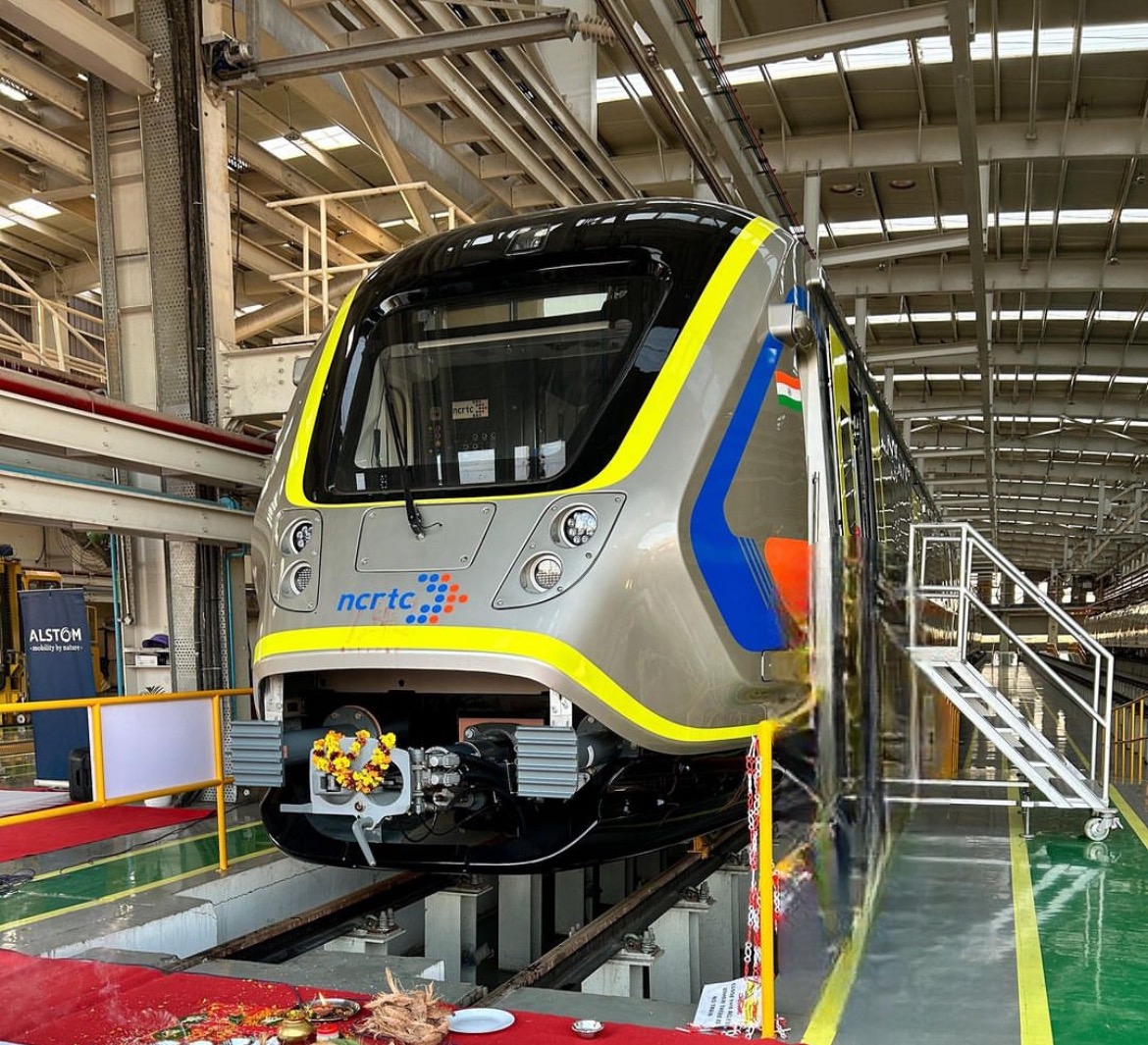
During the clash in the Galwan Valley in 2020, the Swadeshi Jagran Manch urged the Government of India to withdraw the bid from a Chinese company associated with manufacturing the trains of the metro. In view of this, a re-bidding for making the trains was conducted by the owner of the metro and the RRTS projects, the National Capital Region Transport Corporation (NCRTC), and Bombardier Transportation, now acquired by Alstom, won the bid on 7 May 2020. The trains have been manufactured at Alstom's plant in Savli, Gujarat, supplying 90 coaches for 30 trains, each consisting of 3 coaches. The first train of the metro was delivered by Alstom to the NCRTC on 16 February 2024.
After roughly five years of construction, in January 2025, the first trial runs were conducted by the National Capital Region Transport Corporation (NCRTC) from Meerut South, the southern terminal of the metro with the RRTS, to Meerut Central, one of the stations to serve only the metro. The trials continued until the metro becomes operational by February 2026.
The National Capital Region Transport Corporation (NCRTC) has divided the civil construction work of the first phase of the metro project into 13 stations and one depot at Modipuram, which will be for both the Delhi–Meerut Regional Rapid Transit System (RRTS) and the metro trains, and four packages, which are part of the packages of the RRTS as well. The list of the packages, contractors and their statuses is as follows:
The metro is being developed in two phases, which will together cover a distance of 38.6 km (24.0 mi), currently of which the first phase consisting of the first line to run along the RRTS is in use. A possible third phase consisting of an east–west line has also been planned, that will increase the total length of the network by another 9 km (5.6 mi) to 47.6 km (29.6 mi) once finalised. The details of the lines are as follows:
The metro, together with two lines, will consist of 25 stations, of which the first line will have 13, and the second line will have 12 stations. Additionally, there will be interchange points with the Delhi–Meerut Regional Rapid Transit System (RRTS) at Meerut South, Shatabdi Nagar, Begumpul, and Modipuram stations. The stations being built on the metro in its first phase are:
Hub AI
Meerut Metro AI simulator
(@Meerut Metro_simulator)
Meerut Metro
The Meerut Metro is a rapid transit system, which serves the city of Meerut, Uttar Pradesh, India. The first phase, covering 23.6 km (14.7 mi) with 12 stations from Modipuram to Meerut South, opened in February 2026. It has nine elevated and three underground stations, one at-grade station at the depot Modipuram is still under construction. Four stations are integrated with the Delhi–Meerut Regional Rapid Transit System on a single corridor, making the metro the first such rapid transit system in India to be merged directly with a regional transit system. It is the second-largest metro network in Uttar Pradesh, following the Noida Metro. The second phase will include a second line covering 15 km (9.3 mi) from Shradhapuri Phase-II to Jagrati Vihar, with 12 stations, out of which seven will be elevated and five will be underground, thereby taking the overall length to 38.6 km (24.0 mi). A possible third line as a third phase has also been put forward for feasibility studies, that will increase the total length by another 9 km (5.6 mi) to 47.6 km (29.6 mi). The metro is the fastest metro of India, at an operational speed of 120 km/h (75 mph).
The foundation stone for the project was laid by Prime Minister Narendra Modi on 8 March 2019, along with the RRTS, and construction began on both the RRTS and the metro projects in June 2019. The 1st phase was opened on 22 February 2026, after missing the deadline of June 2025. It is being built at an estimated cost of ₹11,540 crore (US$1.2 billion), and due to its merger with the RRTS, the metro and its trains will be owned and operated by National Capital Region Transport Corporation (NCRTC).
Due to rising population, traffic, congestion and demand in Meerut, and also because of its location in the National Capital Region (NCR), the plan for developing a metro for the city and integrating it with the transport systems of NCR was proposed by the Governments of India and Uttar Pradesh in the early 2010s. Therefore, the feasibility study of the metro project was completed by Rail India Technical and Economic Services (RITES) in June 2015 and submitted to the Government of Uttar Pradesh the next year, in June 2016. In 2017, the Uttar Pradesh Metro Rail Corporation (UPMRC) was assigned to bring all stakeholders together and get the project started, then operate the metro after completion. The line was initially planned to have eleven stations, from Modipuram to Partapur, but was later extended to Meerut South to provide connectivity to the city's outskirts, thereby increasing the number of stations to 13 and the length to 23.6 km (14.7 mi). The initiation of the project was marked after the foundation stone was laid by Prime Minister Narendra Modi on 8 March 2019, along with the Delhi–Meerut Regional Rapid Transit System (RRTS), and construction of both the projects commenced in June of the same year. Both the projects, including the Meerut section of the RRTS, can be extended beyond also. The metro is the first rapid transit system in India being directly integrated and merged with a regional transit system on one single corridor, and also the fastest in India, with an operational speed of 120 km/h (75 mph).
During the clash in the Galwan Valley in 2020, the Swadeshi Jagran Manch urged the Government of India to withdraw the bid from a Chinese company associated with manufacturing the trains of the metro. In view of this, a re-bidding for making the trains was conducted by the owner of the metro and the RRTS projects, the National Capital Region Transport Corporation (NCRTC), and Bombardier Transportation, now acquired by Alstom, won the bid on 7 May 2020. The trains have been manufactured at Alstom's plant in Savli, Gujarat, supplying 90 coaches for 30 trains, each consisting of 3 coaches. The first train of the metro was delivered by Alstom to the NCRTC on 16 February 2024.
After roughly five years of construction, in January 2025, the first trial runs were conducted by the National Capital Region Transport Corporation (NCRTC) from Meerut South, the southern terminal of the metro with the RRTS, to Meerut Central, one of the stations to serve only the metro. The trials continued until the metro becomes operational by February 2026.
The National Capital Region Transport Corporation (NCRTC) has divided the civil construction work of the first phase of the metro project into 13 stations and one depot at Modipuram, which will be for both the Delhi–Meerut Regional Rapid Transit System (RRTS) and the metro trains, and four packages, which are part of the packages of the RRTS as well. The list of the packages, contractors and their statuses is as follows:
The metro is being developed in two phases, which will together cover a distance of 38.6 km (24.0 mi), currently of which the first phase consisting of the first line to run along the RRTS is in use. A possible third phase consisting of an east–west line has also been planned, that will increase the total length of the network by another 9 km (5.6 mi) to 47.6 km (29.6 mi) once finalised. The details of the lines are as follows:
The metro, together with two lines, will consist of 25 stations, of which the first line will have 13, and the second line will have 12 stations. Additionally, there will be interchange points with the Delhi–Meerut Regional Rapid Transit System (RRTS) at Meerut South, Shatabdi Nagar, Begumpul, and Modipuram stations. The stations being built on the metro in its first phase are:
Recent media