
Recent from talks
Melvin Purvis
Knowledge base stats:
Talk channels stats:
Members stats:
Melvin Purvis
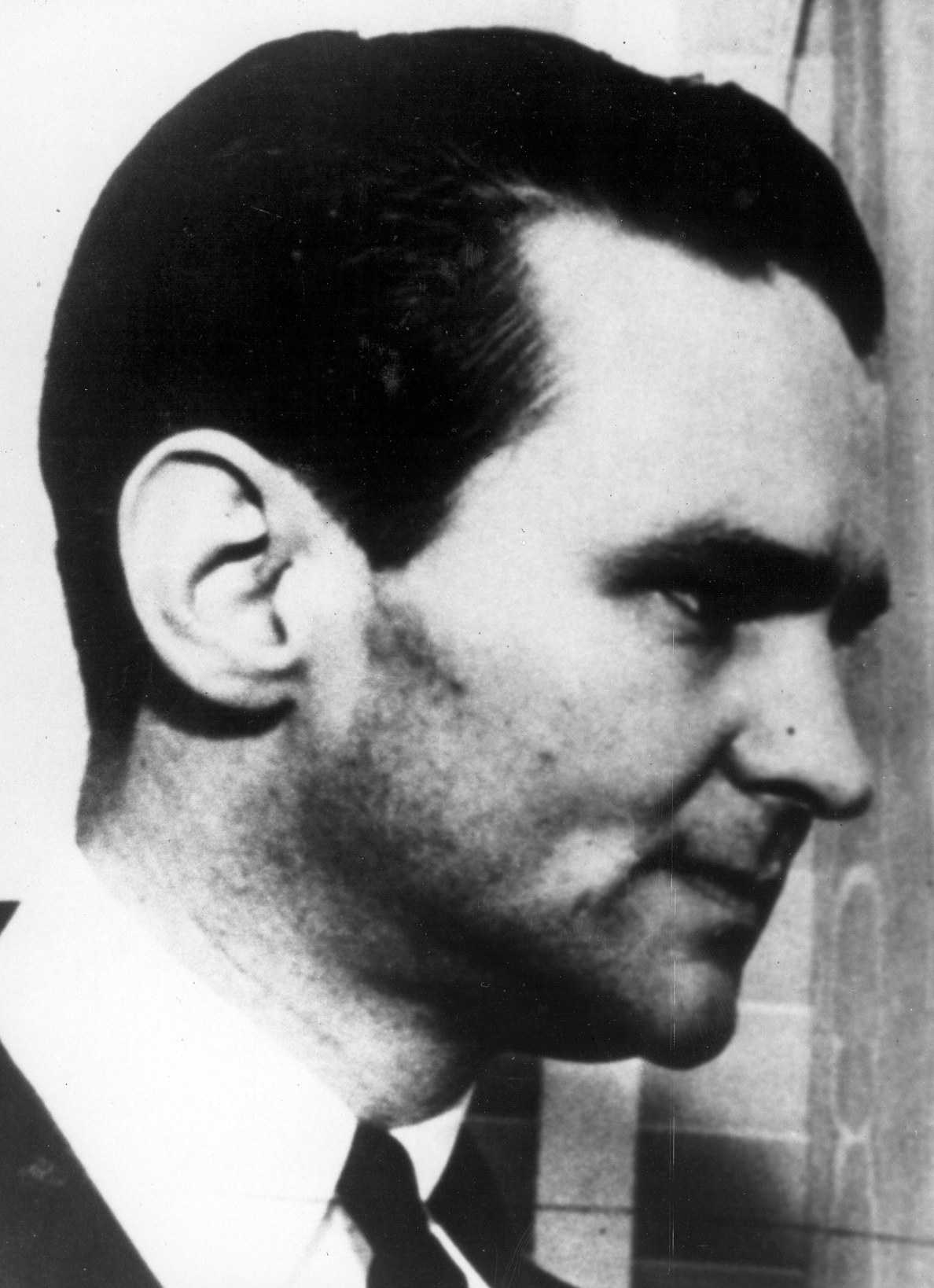
Melvin Horace Purvis II (October 24, 1903 – February 29, 1960) was an FBI agent who was instrumental in capturing bank robbers John Dillinger and Pretty Boy Floyd in 1934. In his later military career, he was directly involved with General George Patton, Hermann Göring, and the Nuremberg Trials.
Purvis was born in Timmonsville, South Carolina, to Melvin Horace Purvis Sr. (1869–1938), a tobacco farmer and businessman, and Janie Elizabeth (née Mims, 1874–1927); he was the fifth of eight siblings. He attended Timmonsville High School where in 1920 he was the yearbook's business manager, historian for his graduating class, on the football and baseball teams, was a president of the literary society, on the debate team, and played drums in the school orchestra. He then enrolled in the University of South Carolina and joined the Rho chapter of the Kappa Alpha Order there in 1921. He received his law degree from the University of South Carolina School of Law in 1922. Upon graduating, he passed the bar examination in South Carolina and practiced law in Florence as a junior attorney at the firm of Willcox & Hardee, for two years, and as an insurance adjuster for W. H. Clarkson & Co for 18 months. Seeking adventure, he went to Washington DC and unsuccessfully sought a job in the Foreign Service as a diplomat. He applied at the Justice Department and was hired by the Bureau of Investigation, the forerunner to the FBI, in December 1926 and began serving there in February 1927. BOI investigators looking into Purvis' character and background were told that he was honest, industrious and ambitious, but not brilliant or hard-working enough to be a "money maker."
Purvis' performance reviews always rated his appearance and loyalty to the Bureau at 100%. He rated lowest for his understanding of the Manual of Instruction and the Manual of Rules and Regulations, which stayed at about 80% and for which Bureau of Investigation Director J. Edgar Hoover once chided him as being unacceptable. Just before becoming Special Agent in Charge of Chicago, his score on the rules and instruction rose to 100% and stayed there. He rose quickly through the ranks and by 1932, he had headed the Bureau of Investigation offices in Birmingham, Alabama, then Oklahoma City followed by a move to Cincinnati. In 1932, Hoover placed him in charge of the Chicago office. He led an investigation into the crash of United Airlines Trip 23, which uncovered foul play as the cause of the crash.
As Special Agent in Charge at the Chicago office, Purvis investigated John Factor's kidnapping. It happened July 1, 1933, as Factor was returning home from an evening of gambling with friends near Elkhorn, Wisconsin. The man convicted of kidnapping him, Roger Touhy, claimed Factor faked his own kidnapping to avoid extradition to the United Kingdom for fraud. The FBI believed Touhy chose Factor as a victim, because extradition would make Factor avoid help from the authorities. This is what he had done when his son had been previously kidnapped. Factor's own kidnapping was reported, however; thus, the FBI was required to investigate. He was released after 11 days of captivity, burned and beaten. He remembered the face of his abductor, the voices of his captors and environmental details. The house where he was held was found, and from there, investigators tracked back to the Touhy gang. The gang had been arrested the day of Factor's release, their car filled with guns and the equipment used to tie kidnap victims in that era: linen strips and tough window sash cord. With the permission of Elkhorn's law enforcement, agents brought the gang to Purvis in Chicago without an extradition order. Roger Touhy was convicted of the kidnapping and lost on appeal before the Supreme Court of Illinois.
John Dilllinger was already a convicted felon, paroled on May 22, 1933, when he robbed a bank in New Carlisle, Ohio, on June 10 that year. By March 3, 1934, he formed a gang and robbed ten banks. None of these were federal crimes; it was not until Dillinger drove a car across a state boundary that the FBI could get involved in the hunt for him.
Dillinger and his gang had been on the run ever since his March 3 escape. They wanted to rest somewhere remote; the Little Bohemia Lodge in remote northern Wisconsin, came up in conversation in on April 19. The gang decided to hide there for a few days, and they arrived the afternoon of April 20. The next day, the owner, Emil Wanatka, and his wife had figured out who they were. Early the next morning Mrs. Wanatka got word out to her brother-in-law, Lloyd Voss, to call a federal authority they knew in Chicago. Purvis was contacted that morning but the lodge was in the jurisdiction of the St. Paul office, not Chicago. So he called that office and passed the tip to FBI Assistant Director Hugh Clegg, assigned by Hoover to oversee the pursuit of Dillinger, as well as FBI Inspector William Rorer and Special Agent in Charge at St. Paul, Werner Hanni. Clegg chartered a plane to carry him and other agents from St. Paul, Minnesota to Rhinelander, Wisconsin. Fifty miles from the lodge, this was the closest they could get by air. Hanni, afraid of flying, travelled with his agents by car and brought the tear gas equipment that the airlines refused to carry for safety reasons. Purvis and his Chicago agents flew in two other planes he chartered to Rhinelander to assist the Minnesota agents.
Clegg arrived first, and scoured the town for cars he could rent. Mr. Voss told him the gangsters had changed their plans and decided to leave that evening after dinner. Clegg sent Purvis and other agents out to pick up the cars he had earlier found at a Ford dealership. Purvis also commandeered the car belonging to the airport bystander who had given them a ride to the dealership.
The only guide the agents had was a diagram drawn by Voss, but they set out at dusk over the slushy, muddy, potholed roads. It took them two hours to reach the lodge, and two cars broke down on the way. The agents rode on the running boards of the remaining cars, clutching their machine guns as best they could. Clegg and Purvis approached the house together. There were no outdoor lights. The Wanatkas' dogs began barking. No one had told them about the dogs, nor about the three innocent diners inside. These three left the lodge and started up their car. Its radio blared loudly. The agents identified themselves, but the customers could not hear them over the radio. Clegg and Purvis simultaneously gave the order to shoot, but instead of gangsters, agents killed Eugene Boiseneau, a 33-year-old Civilian Conservation Corps worker, and wounded Tom Morris, a 59-year-old cook at the CCC camp, and gas station attendant John Hoffman. Purvis tried to return fire on a fleeing figure that fired on them in the dark, but his machine gun jammed. This was Babyface Nelson, who would later kill Special Agent W. Carter Baum, wound Special Agent Jay C. Newman, and wound Sheriff's Deputy Carl C. Christiansen. The car Newman was driving, which Nelson stole, was the one Purvis had commandeered. Agents sent to surround the lodge fell into a ditch in the dark while, unbeknownst to them, Dillinger's gang escaped through rear windows on the second story. Hanni arrived with the tear gas and agents fired the canisters into the house at daybreak, but the only people left were lodge employees and the gangsters' girlfriends.
Hub AI
Melvin Purvis AI simulator
(@Melvin Purvis_simulator)
Melvin Purvis
Melvin Horace Purvis II (October 24, 1903 – February 29, 1960) was an FBI agent who was instrumental in capturing bank robbers John Dillinger and Pretty Boy Floyd in 1934. In his later military career, he was directly involved with General George Patton, Hermann Göring, and the Nuremberg Trials.
Purvis was born in Timmonsville, South Carolina, to Melvin Horace Purvis Sr. (1869–1938), a tobacco farmer and businessman, and Janie Elizabeth (née Mims, 1874–1927); he was the fifth of eight siblings. He attended Timmonsville High School where in 1920 he was the yearbook's business manager, historian for his graduating class, on the football and baseball teams, was a president of the literary society, on the debate team, and played drums in the school orchestra. He then enrolled in the University of South Carolina and joined the Rho chapter of the Kappa Alpha Order there in 1921. He received his law degree from the University of South Carolina School of Law in 1922. Upon graduating, he passed the bar examination in South Carolina and practiced law in Florence as a junior attorney at the firm of Willcox & Hardee, for two years, and as an insurance adjuster for W. H. Clarkson & Co for 18 months. Seeking adventure, he went to Washington DC and unsuccessfully sought a job in the Foreign Service as a diplomat. He applied at the Justice Department and was hired by the Bureau of Investigation, the forerunner to the FBI, in December 1926 and began serving there in February 1927. BOI investigators looking into Purvis' character and background were told that he was honest, industrious and ambitious, but not brilliant or hard-working enough to be a "money maker."
Purvis' performance reviews always rated his appearance and loyalty to the Bureau at 100%. He rated lowest for his understanding of the Manual of Instruction and the Manual of Rules and Regulations, which stayed at about 80% and for which Bureau of Investigation Director J. Edgar Hoover once chided him as being unacceptable. Just before becoming Special Agent in Charge of Chicago, his score on the rules and instruction rose to 100% and stayed there. He rose quickly through the ranks and by 1932, he had headed the Bureau of Investigation offices in Birmingham, Alabama, then Oklahoma City followed by a move to Cincinnati. In 1932, Hoover placed him in charge of the Chicago office. He led an investigation into the crash of United Airlines Trip 23, which uncovered foul play as the cause of the crash.
As Special Agent in Charge at the Chicago office, Purvis investigated John Factor's kidnapping. It happened July 1, 1933, as Factor was returning home from an evening of gambling with friends near Elkhorn, Wisconsin. The man convicted of kidnapping him, Roger Touhy, claimed Factor faked his own kidnapping to avoid extradition to the United Kingdom for fraud. The FBI believed Touhy chose Factor as a victim, because extradition would make Factor avoid help from the authorities. This is what he had done when his son had been previously kidnapped. Factor's own kidnapping was reported, however; thus, the FBI was required to investigate. He was released after 11 days of captivity, burned and beaten. He remembered the face of his abductor, the voices of his captors and environmental details. The house where he was held was found, and from there, investigators tracked back to the Touhy gang. The gang had been arrested the day of Factor's release, their car filled with guns and the equipment used to tie kidnap victims in that era: linen strips and tough window sash cord. With the permission of Elkhorn's law enforcement, agents brought the gang to Purvis in Chicago without an extradition order. Roger Touhy was convicted of the kidnapping and lost on appeal before the Supreme Court of Illinois.
John Dilllinger was already a convicted felon, paroled on May 22, 1933, when he robbed a bank in New Carlisle, Ohio, on June 10 that year. By March 3, 1934, he formed a gang and robbed ten banks. None of these were federal crimes; it was not until Dillinger drove a car across a state boundary that the FBI could get involved in the hunt for him.
Dillinger and his gang had been on the run ever since his March 3 escape. They wanted to rest somewhere remote; the Little Bohemia Lodge in remote northern Wisconsin, came up in conversation in on April 19. The gang decided to hide there for a few days, and they arrived the afternoon of April 20. The next day, the owner, Emil Wanatka, and his wife had figured out who they were. Early the next morning Mrs. Wanatka got word out to her brother-in-law, Lloyd Voss, to call a federal authority they knew in Chicago. Purvis was contacted that morning but the lodge was in the jurisdiction of the St. Paul office, not Chicago. So he called that office and passed the tip to FBI Assistant Director Hugh Clegg, assigned by Hoover to oversee the pursuit of Dillinger, as well as FBI Inspector William Rorer and Special Agent in Charge at St. Paul, Werner Hanni. Clegg chartered a plane to carry him and other agents from St. Paul, Minnesota to Rhinelander, Wisconsin. Fifty miles from the lodge, this was the closest they could get by air. Hanni, afraid of flying, travelled with his agents by car and brought the tear gas equipment that the airlines refused to carry for safety reasons. Purvis and his Chicago agents flew in two other planes he chartered to Rhinelander to assist the Minnesota agents.
Clegg arrived first, and scoured the town for cars he could rent. Mr. Voss told him the gangsters had changed their plans and decided to leave that evening after dinner. Clegg sent Purvis and other agents out to pick up the cars he had earlier found at a Ford dealership. Purvis also commandeered the car belonging to the airport bystander who had given them a ride to the dealership.
The only guide the agents had was a diagram drawn by Voss, but they set out at dusk over the slushy, muddy, potholed roads. It took them two hours to reach the lodge, and two cars broke down on the way. The agents rode on the running boards of the remaining cars, clutching their machine guns as best they could. Clegg and Purvis approached the house together. There were no outdoor lights. The Wanatkas' dogs began barking. No one had told them about the dogs, nor about the three innocent diners inside. These three left the lodge and started up their car. Its radio blared loudly. The agents identified themselves, but the customers could not hear them over the radio. Clegg and Purvis simultaneously gave the order to shoot, but instead of gangsters, agents killed Eugene Boiseneau, a 33-year-old Civilian Conservation Corps worker, and wounded Tom Morris, a 59-year-old cook at the CCC camp, and gas station attendant John Hoffman. Purvis tried to return fire on a fleeing figure that fired on them in the dark, but his machine gun jammed. This was Babyface Nelson, who would later kill Special Agent W. Carter Baum, wound Special Agent Jay C. Newman, and wound Sheriff's Deputy Carl C. Christiansen. The car Newman was driving, which Nelson stole, was the one Purvis had commandeered. Agents sent to surround the lodge fell into a ditch in the dark while, unbeknownst to them, Dillinger's gang escaped through rear windows on the second story. Hanni arrived with the tear gas and agents fired the canisters into the house at daybreak, but the only people left were lodge employees and the gangsters' girlfriends.
Recent media